
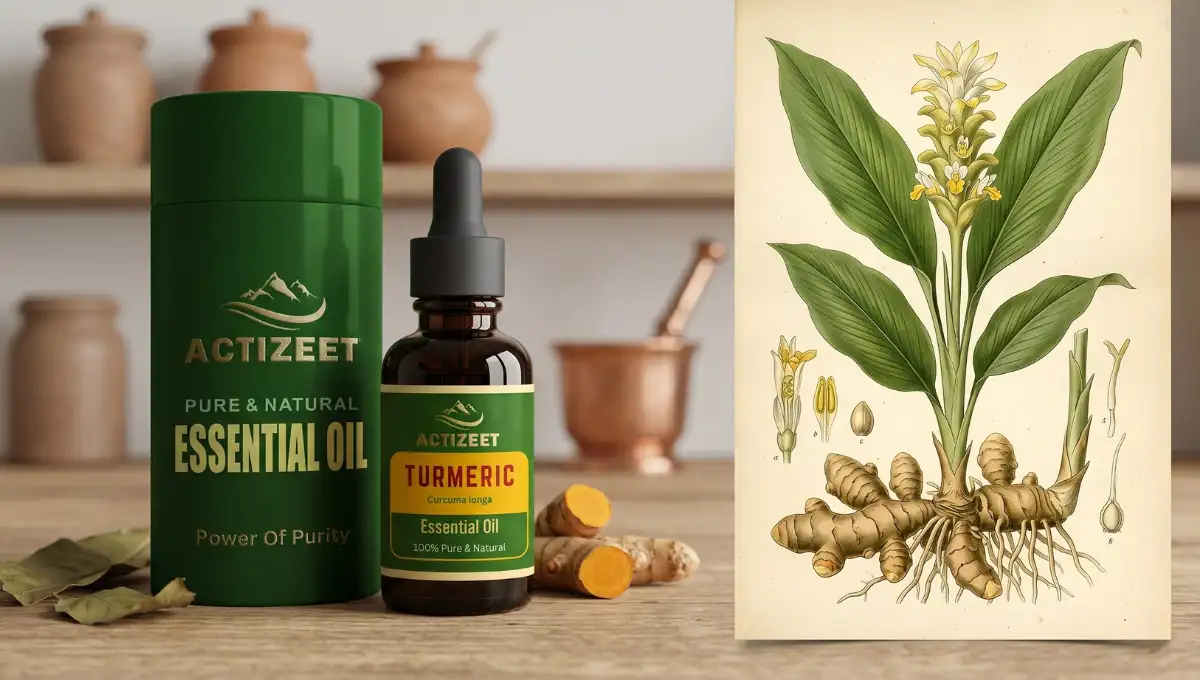
15 Turmeric Essential Oil Benefits That Go Far Beyond the Kitchen Spice
Turmeric has been at the heart of Indian medicine for more than 4,000 years. Its essential oil distils the most powerful aromatic and therapeutic compounds from the rhizome into a concentrated, versatile preparation that modern science is finally catching up to validate.
Most people know turmeric as the vivid golden spice that colours curries and chai. A growing number also know curcumin, the polyphenol compound that has generated significant interest in the health research world. But turmeric essential oil is something different entirely. It is the volatile, aromatic fraction of the turmeric rhizome, extracted by steam distillation, and it is primarily composed of sesquiterpene compounds called turmerones, not curcuminoids.
This distinction matters. Turmerones, particularly ar-turmerone, alpha-turmerone, and beta-turmerone, are lipophilic (fat-soluble) molecules that can penetrate cell membranes efficiently and, notably, cross the blood-brain barrier. This is a capability that curcumin lacks. As a result, turmeric essential oil has a distinct and in some ways broader biological profile, with particularly strong activity in the nervous system, immune system, and skin.
In this guide, we cover 15 specific turmeric essential oil benefits grounded in research, explain how each works, and show you how to use this powerful oil effectively. Whether you are new to essential oils or a seasoned aromatherapy practitioner, the breadth of this oil's therapeutic potential may genuinely surprise you.
Turmeric essential oil (Curcuma longa) is extracted by steam distillation of the dried rhizomes of the turmeric plant. The dried rhizome typically yields 3 to 6% essential oil by weight. Unlike turmeric powder or curcumin supplements, the essential oil does not contain curcuminoids. Its therapeutic profile is driven by sesquiterpene ketones (turmerones), sesquiterpene hydrocarbons (ar-curcumene, zingiberene), and a small percentage of monoterpenes. These compounds give the oil its warm, spicy, earthy aroma and its diverse biological activities.
Key Active Compounds in Turmeric Essential Oil
Turmeric essential oil from authenticated Indian sources is primarily composed of sesquiterpene ketones. These compounds drive the oil's therapeutic benefits and are responsible for its characteristic warm, earthy, slightly spicy aroma. Understanding the composition helps explain why this oil is so biologically active.
| Compound | Typical Content | Primary Therapeutic Action |
|---|---|---|
| Ar-Turmerone | 30-40% | Neuroprotective, neural stem cell stimulation, antimicrobial, anti-inflammatory, crosses blood-brain barrier |
| Alpha-Turmerone | 20-30% | Antioxidant, neuroprotective, anti-inflammatory, lipid-lowering |
| Beta-Turmerone | 15-25% | Anti-inflammatory, analgesic, antifungal |
| Curlone | ~12% | Antioxidant, anti-inflammatory, hepatoprotective |
| Ar-Curcumene | ~6% | Antimicrobial, anti-inflammatory |
| Beta-Elemene | Trace-Low | Neuroprotective, neurite outgrowth promotion, anti-tumour |
| Zingiberene | 1-3% | Anti-inflammatory, digestive support, warming |
| 1,8-Cineole | 1-3% | Decongestant, antimicrobial, respiratory support |
15 Turmeric Essential Oil Benefits
Among all turmeric essential oil benefits, its anti-inflammatory action is perhaps the most extensively studied and the most broadly relevant to everyday health. Chronic, low-grade inflammation is now recognized as an underlying driver of many of the most common diseases affecting people today, including cardiovascular disease, type 2 diabetes, neurodegenerative conditions, arthritis, and certain cancers. Anything that safely and consistently reduces inflammatory activity in the body has genuine preventive value.
Turmeric essential oil addresses inflammation through multiple molecular pathways. Its primary compounds inhibit key pro-inflammatory enzymes and signaling molecules, including COX-2, NF-kappaB, and pro-inflammatory cytokines such as TNF-alpha, IL-1beta, and IL-6. Ar-turmerone has been specifically studied for its ability to inhibit NF-kappaB activation, one of the central switches that turns on the inflammatory cascade at the cellular level.
A study published in PMC (NCBI) titled "An evaluation of antioxidant, anti-inflammatory, and antinociceptive activities of essential oil from Curcuma longa" tested turmeric oil in multiple validated models including carrageenan, dextran, and formalin-induced inflammation in mice. Results confirmed significant anti-inflammatory activity across all models tested. The main constituents identified were ar-turmerone (61.79%), curlone (12.48%), and ar-curcumene (6.11%), establishing a direct link between composition and anti-inflammatory potency.
For topical use, diluted turmeric essential oil massaged into areas of chronic inflammation, such as swollen joints, painful tendons, or inflamed skin, can deliver this anti-inflammatory action directly to affected tissue. Regular use as part of a daily routine may help manage the low-grade systemic inflammation that drives long-term health problems.
Oxidative stress, caused by an excess of free radicals relative to the body's antioxidant capacity, accelerates cellular aging and contributes to inflammation, DNA damage, and chronic disease. Turmeric essential oil is a potent free radical scavenger, with antioxidant activity validated across multiple testing methods in published research.
A study published in ScienceDirect confirmed that turmeric essential oil from Curcuma longa exhibits good antioxidant activity, with results suggesting it could serve as a potential source of eco-friendly, natural antioxidant compounds. The same study also confirmed antifungal activity, demonstrating the dual-action quality that makes turmeric oil so therapeutically versatile.
The sesquiterpene turmerones and curlone in the oil are particularly active as antioxidants. Alpha-turmerone has shown notable free radical scavenging capacity in vitro. When applied topically or inhaled aromatically, these compounds help protect cells from the oxidative damage that contributes to premature aging, skin deterioration, and cognitive decline.
This is perhaps the most scientifically compelling of all turmeric essential oil benefits, and the one that most clearly distinguishes it from curcumin supplements. Ar-turmerone, the dominant compound in authenticated turmeric essential oil, is lipophilic and bioavailable enough to cross the blood-brain barrier. Once inside the central nervous system, it exhibits a range of neuroprotective activities that are actively being studied in the context of neurodegenerative disease.
A comprehensive review published in MDPI Molecules (2024) documented that ar-turmerone and beta-elemene from turmeric essential oil have demonstrated the potential to regenerate neuronal tissue and show neuroprotective properties, positioning them as promising candidates for the prevention and treatment of neurodegenerative diseases. Ar-turmerone promotes dose-dependent differentiation and proliferation of neural stem cells both in vitro and in vivo. The review also documented that turmerone-based compounds inhibit beta-secretase activity, the enzyme involved in amyloid plaque formation associated with Alzheimer's disease pathogenesis.
Practically speaking, this means regular aromatherapy use of turmeric essential oil may provide meaningful neuroprotective support, particularly for those concerned about cognitive aging, mental fatigue, or early signs of memory changes. Inhaling the oil through a diffuser delivers turmerones directly to the olfactory system and, from there, to the brain tissue where their protective activity is most relevant.
🌿 Pure, steam-distilled ACTIZEET® Turmeric Essential Oil. Authentic Curcuma longa, no dilution, no adulterants.
Explore ACTIZEET® →Turmeric has been used in Ayurvedic medicine for the treatment of arthritis and rheumatic conditions for thousands of years. Modern pharmacological research has confirmed the biological basis for this use, with turmeric essential oil demonstrating significant anti-arthritic effects in animal models. The combination of anti-inflammatory, analgesic (pain-reducing), and antioxidant actions work together to address both the cause and the symptoms of joint disease.
The sesquiterpenes in turmeric oil, particularly the turmerones, reduce the inflammatory mediators responsible for joint swelling and pain. Zingiberene adds warming properties that improve local circulation when massaged into stiff joints, helping deliver nutrients and remove waste products from inflamed tissue. The antinociceptive activity of the oil, which reduces the nervous system's sensitivity to pain signals, has also been validated in research, confirming that the pain relief from turmeric oil goes beyond simple anti-inflammation.
For people managing osteoarthritis, rheumatoid arthritis, or general joint stiffness, a regular topical massage with turmeric essential oil diluted in a warming carrier oil such as castor or sesame oil is one of the most practical applications of this herb's therapeutic potential.
Turmeric has long been used in traditional medicine as a natural antiseptic and antimicrobial agent. Its essential oil delivers this antimicrobial action in a concentrated, topically applicable form. Research has confirmed activity against both gram-positive and gram-negative bacteria, making it relevant for a broad range of common bacterial concerns including wound infection, acne, and skin surface bacteria.
In traditional medicine, turmeric is used for treating hepatic and gastrointestinal disorders, arthritis, rheumatism, skin diseases, fever, inflammation, and sepsis. The sepsis application is particularly notable as it directly reflects the antimicrobial relevance. Ar-turmerone and beta-turmerone are identified as the primary contributors to this antimicrobial activity, along with 1,8-cineole which adds additional antiseptic properties.
For practical antimicrobial applications, turmeric essential oil diluted in a carrier oil can be applied to minor wounds, cuts, or areas prone to skin infection. Diffusing it in enclosed spaces also reduces airborne microbial load, making it a useful natural air purifier in addition to its topical applications.
Fungal infections of the skin, nails, and scalp are common and often persistent problems that conventional antifungal medications do not always fully resolve. Turmeric essential oil has demonstrated meaningful antifungal activity that makes it a compelling natural complementary option.
Research published in ScienceDirect confirmed that turmeric essential oil exhibits strong antifungal activity, specifically against Fusarium verticillioides, a pathogenic fungus. The same study also found that the oil inhibited the production of fumonisins (mycotoxins produced by fungi), suggesting that its antifungal activity works at multiple levels including both growth inhibition and toxin suppression. Beta-turmerone and ar-turmerone are identified as the primary antifungal compounds in the oil's profile.
For skin and nail fungal concerns, regular topical application of diluted turmeric essential oil can help control fungal overgrowth while simultaneously reducing associated inflammation and protecting the healing skin from secondary bacterial infection.
Turmeric's role in skin health is one of its oldest and most deeply rooted traditional applications across South Asia. Turmeric paste has been used on the skin for thousands of years in Ayurvedic practice, applied for weddings, healing rituals, and daily skincare. The essential oil brings together the antimicrobial, anti-inflammatory, and antioxidant actions of the plant into a form that is particularly well-suited for topical skin use.
For acne-prone skin, turmeric essential oil's antibacterial compounds target Propionibacterium acnes, the primary bacteria responsible for acne formation, while its anti-inflammatory compounds reduce the redness and swelling that make breakouts visible and painful. For aging skin, its antioxidant activity protects against the oxidative damage that degrades collagen and elastin. For hyperpigmentation and uneven tone, the oil has shown ability to modulate melanin production and reduce the appearance of dark spots and scars.
In South Asia and Ayurvedic medicine, turmeric has been used for centuries as a natural remedy to treat skin conditions including curbing acne, reducing blemishes and scars, and improving overall skin clarity. A 1% turmeric essential oil formulation has also been clinically studied for reducing unwanted facial hair growth in women, with positive results noted in research literature.
The aromatic use of turmeric essential oil for mood support is backed by both traditional practice and emerging clinical research. In Ayurvedic aromatherapy, turmeric has long been used to promote a clear, positive mental state and to dispel emotional heaviness, irritability, and mental fog.
A clinical study measuring patient EEG data during inhalation of turmeric essential oil found that the aroma was associated with more positive mood states in participants. This neurological response is consistent with the ability of ar-turmerone to cross the blood-brain barrier and influence the central nervous system directly, beyond the simple olfactory pleasure that any pleasant scent provides. The sesquiterpenes in turmeric oil appear to have genuine psychoactive effects that contribute to mood stabilization and mental clarity.
For people dealing with low mood, mental fatigue, brain fog, or general emotional heaviness, diffusing turmeric essential oil in a workspace or living area can provide a steady, grounding aromatic influence that supports clearer thinking and a more positive baseline emotional state throughout the day.
🌿 ACTIZEET® Turmeric Essential Oil: steam-distilled from authentic Indian Curcuma longa rhizomes for real therapeutic potency.
Shop Now →The hepatoprotective (liver-protective) properties of turmeric are among its most established traditional applications. In Ayurveda, turmeric has been used for centuries in the treatment of biliary disorders, hepatic ailments, digestive complaints, and gastrointestinal infections. Turmeric essential oil's compounds, particularly ar-turmerone, alpha-turmerone, curlone, and curcumenol, have demonstrated hepatoprotective effects by modulating liver-protective signaling pathways in preclinical research.
For digestive support, the oil's antispasmodic properties help relieve cramping and discomfort in the gut. Zingiberene contributes carminative (gas-relieving) activity. The antimicrobial compounds address gut pathogens that contribute to infection-driven digestive distress including diarrhea, bloating, and cramping. For topical digestive application, diluted turmeric oil massaged gently over the abdomen can provide localized relief from digestive tension and discomfort.
Turmeric essential oil shows several properties relevant to cardiovascular health. Animal studies have shown improved lipid profiles in rats and Syrian hamsters given turmeric oil, with reductions in LDL cholesterol and improvements in the overall lipid balance. Ar-turmerone has specifically been identified for its antiplatelet properties, meaning it reduces the tendency of platelets to aggregate (clump together) in the bloodstream, which is directly relevant to the prevention of blood clots that cause heart attacks and strokes.
The oil's anti-inflammatory action also matters here. Atherosclerosis, the hardening and narrowing of arteries that drives most heart disease, is fundamentally an inflammatory process. By reducing vascular inflammation and oxidative damage to arterial walls, turmeric essential oil contributes to the kind of cardiovascular protection that lifestyle-focused medicine increasingly prioritizes.
Turmeric essential oil research suggests utility in managing inflammation-driven, infectious, and neurodegenerative conditions, with cardiovascular inflammation being a key category within this broader profile.
Turmeric essential oil brings its antibacterial, antifungal, and anti-inflammatory properties to hair and scalp care in a uniquely effective way. Scalp inflammation, dandruff, follicle congestion, and microbial imbalances are among the most common contributors to hair thinning and poor scalp health, and turmeric oil addresses all of these simultaneously.
Its antifungal compounds specifically target Malassezia fungi, which are the primary microbial driver of dandruff and seborrheic dermatitis. Its anti-inflammatory compounds calm the scalp irritation that leads to scratching, flaking, and follicle damage. The warming and circulation-enhancing properties of the oil, when delivered through a scalp massage, increase blood flow to hair follicles, improving their access to the oxygen and nutrients essential for healthy hair growth.
For a practical scalp treatment, mix 4 to 5 drops of turmeric essential oil into two tablespoons of warm coconut or castor oil. Massage deeply into the scalp, leave for 30 to 45 minutes, then wash out with a gentle shampoo. Regular use twice weekly can produce noticeable improvements in scalp health and hair texture within a few weeks.
One of the more specific and practically useful turmeric essential oil benefits documented in recent research is its ability to reduce unwanted facial hair growth in women. This application has roots in ancient Ayurvedic and South Asian beauty traditions where turmeric pastes were applied to the face to gradually reduce fine and coarse facial hair, and it has now received clinical attention.
A clinical study referenced in a comprehensive 2026 pharmacology review found positive results in reducing facial hair growth in females using a 1% turmeric oil formulation. The mechanism is thought to involve the modulation of androgen-sensitive hair follicles, though the precise molecular pathway is still being investigated. For women dealing with hirsutism (excess facial or body hair) or simply unwanted fine hair, this is a gentle, non-invasive option worth exploring as part of a broader skincare approach, with results typically developing over weeks of consistent use.
Turmeric essential oil has demonstrated insecticidal and insect-repellent properties, making it a useful natural alternative to synthetic chemical repellents for home and personal use. The sesquiterpene compounds in the oil, particularly ar-turmerone and related compounds, are toxic to a range of common household insects and may disrupt the olfactory systems of mosquitoes and other biting insects.
For practical use, diluting turmeric essential oil in a carrier oil and applying it to exposed skin before outdoor activities provides a naturally scented barrier against insect bites. Diffusing it in a room can help deter indoor insects. This application is especially relevant during the monsoon and summer months in India when mosquito activity peaks, offering a chemical-free option that also provides all the other aromatherapeutic benefits of the oil simultaneously.
Turmeric has traditionally been used across India for respiratory conditions including cough, bronchial congestion, and upper respiratory infections. The essential oil brings these properties into an aromatic form that is particularly well-suited to respiratory support through steam inhalation and diffusion. The 1,8-cineole content of turmeric oil contributes decongestant properties that help open airways, reduce mucus viscosity, and ease breathing during colds or seasonal respiratory challenges.
The antimicrobial compounds in the oil target the bacteria and viruses responsible for respiratory infections when inhaled as steam. The anti-inflammatory compounds reduce the bronchial inflammation that makes coughs productive and airways tight. For people with chronic respiratory conditions like mild asthma or allergic rhinitis, turmeric oil steam inhalation during flares can provide meaningful relief, though it should be used as a complementary approach alongside appropriate medical management.
The immune-supporting properties of turmeric essential oil represent its most holistic benefit and the one that ties together many of its other therapeutic actions. Rather than simply stimulating immune activity (which can be counterproductive in conditions involving immune overactivation), turmeric oil appears to modulate immune function, helping it respond appropriately to genuine threats while dampening the excessive inflammatory responses that drive chronic disease.
Its favorable safety profile and growing clinical validation suggest utility in managing inflammation-driven, infectious, and neurodegenerative conditions, reflecting the broad immune-relevant scope of the oil's pharmacological activity. The anti-inflammatory compounds reduce unnecessary immune activation. The antimicrobial compounds support the immune system's front-line defense against pathogens. The antioxidant activity protects immune cells from the oxidative damage that impairs their function.
Regular aromatic use of turmeric essential oil, particularly during the seasonal transitions when immune vulnerability tends to rise, creates a protective aromatic environment that supports immune balance in a way that is consistent with Ayurvedic principles of disease prevention and whole-system health maintenance.
ACTIZEET® Turmeric Essential Oil is steam-distilled from authenticated Indian Curcuma longa rhizomes at peak maturity. Single ingredient, no adulterants, no synthetic additives. Each batch preserves the high turmerone content that drives the therapeutic benefits documented in research. Genuine turmeric oil that delivers the benefits this plant is known for.
🌿 Shop ACTIZEET® Turmeric Essential Oil →How to Use Turmeric Essential Oil
Turmeric essential oil is a concentrated therapeutic preparation that should always be diluted before skin contact. Its warm, earthy, spicy aroma also means a little goes a long way in aromatherapy applications. Here are the most practical and effective methods.
Aromatherapy Diffusion
Add 3 to 5 drops to a water diffuser. Blend with lemon, ginger, or frankincense for a warm, grounding aromatic atmosphere. Use for 30 to 60 minutes at a time for mood, cognitive, and immune support.
Topical Joint Massage
Dilute 3 to 4 drops in one teaspoon of sesame or castor oil. Massage deeply into swollen or painful joints. The warming effect and anti-inflammatory action work synergistically for joint relief.
Scalp Treatment
Mix 4 drops into one tablespoon of coconut oil. Massage into the scalp for 10 minutes. Leave 30 to 45 minutes before washing out. Use twice weekly for dandruff and scalp health improvement.
Face Oil for Skin Clarity
Add 1 to 2 drops to one teaspoon of jojoba oil. Apply to cleansed skin, avoiding the eye area. Use at night to benefit from its antibacterial, anti-inflammatory skin-clearing action while you sleep.
Steam Inhalation
Add 2 to 3 drops to a bowl of hot water. Drape a towel over your head and inhale for 5 to 10 minutes. Excellent for respiratory congestion, sinus relief, and mood support during illness.
Warming Bath Soak
Mix 6 to 8 drops into one tablespoon of carrier oil or bath salts. Dissolve in warm bathwater. Note: turmeric oil can temporarily stain light surfaces, so rinse the bath immediately after use.
Safety Guidelines and Precautions
- Always dilute before skin application. A 1 to 2% dilution (2 to 4 drops per teaspoon of carrier oil) is appropriate for most adults. For facial skin, use 1% or less.
- Patch test before widespread use. Apply diluted oil to the inner wrist and wait 24 hours to check for any sensitivity reaction, especially for those with reactive skin.
- Staining risk. Turmeric oil can stain light-coloured fabrics, surfaces, and even skin temporarily. Use dark carrier oils and old towels when applying topically. The yellow tint on skin typically fades within 24 hours.
- Pregnancy and nursing. Turmeric essential oil should be used with caution during pregnancy. Consult a healthcare provider before use, particularly in the first trimester.
- Blood thinning interaction. Ar-turmerone has antiplatelet properties. People on blood-thinning medications (warfarin, aspirin, etc.) should consult their doctor before regular use.
- Not for direct eye contact. If accidental eye contact occurs, flush immediately with a carrier oil, then rinse with clean water.
- Store correctly. Keep in a sealed amber glass bottle away from direct sunlight and heat. Shelf life is typically 3 to 5 years with proper storage.
- Photosensitivity. While less photosensitizing than citrus oils, avoid prolonged direct sun exposure on skin where turmeric oil has been applied.
Oils That Blend Well With Turmeric Essential Oil
Turmeric essential oil's warm, earthy, spicy base note pairs beautifully with the following oils for both therapeutic and aromatic synergy:
- Ginger essential oil: Amplifies the warming, anti-inflammatory, and digestive benefits
- Frankincense: Deepens the neuroprotective and grounding aromatic profile
- Black pepper essential oil: Enhances absorption of active compounds and adds a warming, circulatory boost
- Lemon or orange essential oil: Brightens the aroma and adds antimicrobial and mood-lifting action
- Lavender: Balances the spicy warmth and adds calming, skin-healing properties
- Eucalyptus: Excellent for respiratory blends alongside turmeric's decongestant cineole content
- Sandalwood: Creates a deeply grounding, skin-nourishing aromatic blend for meditation or skincare
Frequently Asked Questions
Final Thoughts: A Spice Cabinet Staple Deserves a Wellness Cabinet Spot
The 15 turmeric essential oil benefits covered in this guide collectively make a powerful case for taking this oil seriously as a therapeutic tool, not just a culinary or fragrance ingredient. From its validated anti-inflammatory and antioxidant activity to its genuinely remarkable neuroprotective properties driven by turmerones that can penetrate the blood-brain barrier, this oil operates at a biological level that few botanicals can match.
What makes turmeric essential oil particularly compelling in 2025 is the growing body of research that is now catching up to what Ayurvedic medicine has known for millennia. The pharmacological evidence is building steadily, with studies from PMC, MDPI, ScienceDirect, and multiple peer-reviewed journals all pointing in the same direction: this oil has real, measurable, multi-system therapeutic value.
The key to accessing that value is choosing a pure, well-sourced product. Compositional variation and adulteration are genuine issues in the turmeric oil market, and a diluted or substituted product simply will not deliver what the research demonstrates.
ACTIZEET® Turmeric Essential Oil is steam-distilled from authenticated Indian Curcuma longa with no additives or adulterants, giving you access to the genuine therapeutic profile this remarkable plant has to offer.
Latest From Our Blog

Best Frankincense Oil in India 2026: A Complete Buyer’s Guide to Pure, Authentic Boswellia Essential Oil
Looking for the best frankincense oil in India? Discover why...

15 Cedarwood Essential Oil Benefits: How Cedrus atlantica Cedrol and Alpha-Cedrene Deliver Deep Sleep, Hair Growth, Anxiety Relief, and Complete Wellness
Discover 15 proven cedarwood essential oil benefits—from sleep support and...

Best Marigold Oil in India 2026: A Complete Buyer’s Guide to Pure, Authentic Tagetes erecta Essential Oil
Looking for the best marigold oil in India in 2026?...

15 Green Apple Essential Oil Benefits That Prove This Crisp, Everyday Fruit Is One of Nature’s Most Complete Healers
Discover 15 science-backed green apple essential oil benefits. From antioxidant...