Best Ashok Chhal Powder in India 2026: How to Identify Pure Saraca asoca Inner Bark, Verify Therapeutic Quality, and Why ACTIZEET® Is India's Most Trusted Choice
Ashok Chhal powder — the inner bark of Saraca asoca, India's sacred women's herb — is one of the most widely sold Ayurvedic herbal powders in India. It is also one of the most commonly adulterated and most frequently misidentified. The specific plant part (inner bark, not outer bark, not leaves), the correct botanical species (Saraca asoca, not Polyalthia longifolia which is frequently substituted), and the processing quality (appropriate particle size from fresh bark, no bleaching or excessive drying that degrades leucocyanidins) together determine whether the Ashok Chhal powder you buy delivers the documented uterotonic, haemostatic, and hormonal benefits — or simply the color and aroma of bark powder without its therapeutic substance.
Ashok Chhal powder's market in India has expanded dramatically with rising awareness of Ayurvedic women's health preparations — driven by growing interest in natural menstrual health support, the documented benefits of the formulation Ashokarishta, and the increasing number of Indian women looking for alternatives to pharmaceutical hormonal management for menstrual disorders, PCOS, and perimenopausal symptoms. As demand has grown, the quality and authenticity of products available in this category have become more variable rather than more consistent — with a significant proportion of "Ashok Chhal powder" in India's market having quality, species, and plant-part issues that meaningfully reduce their therapeutic value.
The three quality challenges most prevalent in India's Ashok Chhal powder market in 2026 are: species substitution (selling Polyalthia longifolia — the "false ashoka" or Mast tree — in place of or mixed with genuine Saraca asoca, a substitution that is visually difficult to detect but creates a completely different and therapeutically inferior compound profile), plant part confusion (using whole bark including the therapeutically less potent outer bark rather than the specifically documented inner bark), and processing quality issues (bark collected from immature trees, improperly dried, bleached with chemicals for improved color appearance, or adulterated with other bark powders). This guide equips Indian buyers with the knowledge to distinguish genuine therapeutic-grade Ashok Chhal powder from the many inferior alternatives available in 2026.
Saraca asoca (Genuine Ashoka): The classical medicinal Ashoka documented in Charaka Samhita, Sushruta Samhita, and the entire Ayurvedic women's health tradition. Characteristic orange-red flower clusters. Compound pinnate leaves. Member of the Leguminosae family. Primary bioactive compounds: leucocyanidins, haematoxylon, catechins, quercetin, beta-sitosterol, calcium oxalate, tannins. These are the compounds responsible for every therapeutic benefit documented in classical and modern research. Polyalthia longifolia (False Ashoka — Mast Tree): A completely different species visually resembling the Ashoka tree — commonly planted in Indian streets, gardens, and temple grounds and often mistaken for the genuine Ashoka. Member of the Annonaceae family. Different compound profile: contains polyalthine, clerodane diterpenes, and other Annonaceae alkaloids that have completely different pharmacological properties than Saraca asoca's therapeutic compounds. NOT the medicinal Ashoka of Ayurvedic tradition. Has no documented uterotonic, haemostatic, or female hormonal support applications. Practical identification tip: Genuine Saraca asoca has brilliant orange to red flowers in dense drooping clusters. Polyalthia longifolia has greenish-yellow flowers and distinctive drooping branches giving it the "weeping willow" appearance commonly seen in Indian street plantings. The trees look similar in leaf and bark — but the flowers are unmistakably different. Always purchase from verified botanical suppliers who can confirm Saraca asoca species authentication.
Why Species Authentication Is the #1 Quality Priority for Ashok Chhal
Unlike most herbal quality challenges — where the correct botanical species is well-established and the quality variables are compound concentration and processing quality — Ashok Chhal faces a species authentication challenge that is unusual in the Ayurvedic market because the incorrect substitute species is so widely and so visually prominently present in Indian public spaces. Polyalthia longifolia (the "false ashoka" or Mast Tree) is planted so extensively in Indian road medians, school campuses, temple gardens, and public spaces — specifically because it visually resembles the sacred Ashoka tree — that it is more commonly encountered by most Indians than the genuine Saraca asoca. This visual ubiquity of the false ashoka creates the market substitution opportunity: bark from Polyalthia longifolia is readily available, produces a powder that looks similar to genuine Ashok Chhal, and is sold by many unscrupulous suppliers at lower cost because there is no botanical authentication cost to bear when species verification is not performed.
The therapeutic consequence of species substitution is complete loss of the documented Ashok Chhal benefits. The uterotonic leucocyanidins — the primary compounds responsible for menstrual regulation, uterine toning, and haemostatic activity — are specific to Saraca asoca and are absent from Polyalthia longifolia's Annonaceae alkaloid compound profile. A woman taking Polyalthia longifolia bark powder labeled as "Ashok Chhal" is receiving a completely different botanical product with completely different (and inadequately studied) pharmacological activity. Species authentication through supplier documentation and botanical specification is the single most important quality requirement for Ashok Chhal powder, and no other quality criterion can compensate for getting this foundational identification wrong.
Inner Bark vs Whole Bark — The Compound Quality Difference That Matters
Classical Ayurvedic texts are specific about which part of the Saraca asoca tree to use: tvak (bark) — and specifically the inner bark (antar tvak) — is the prescribed plant part for the gynecological applications. This specificity is pharmacologically justified: the inner bark of Saraca asoca concentrates leucocyanidins, haematoxylon, and the therapeutically decisive compounds at significantly higher concentrations than the outer bark, which is primarily composed of structural phloem tissue with lower bioactive compound density. Products using whole bark (inner and outer bark combined) without inner bark selection dilute the therapeutic compound concentration proportionally to the outer bark fraction included — potentially reducing the leucocyanidin and haematoxylon content by 30 to 50% compared to properly selected inner bark powder.
The visual difference between inner bark powder and whole bark powder is not easily identifiable from appearance — both produce similar colored brown powders with the characteristic Ashoka aromatic. The distinction must come from supplier documentation of the plant part used. Suppliers who specify "inner bark" (as opposed to simply "bark" or "chhal") demonstrate the botanical knowledge and quality commitment that indicates they understand the therapeutic distinction and have specifically selected and processed the higher-value plant part.
🍂 ACTIZEET® Ashok Chhal Powder: verified Saraca asoca (not Polyalthia longifolia) inner bark, processed to optimal particle size, with leucocyanidin-preserving processing methods — India's most transparently quality-verified Ashok Chhal powder in 2026.
Shop ACTIZEET® →6 Quality Criteria for the Best Ashok Chhal Powder in India
The label and product documentation must specify Saraca asoca (Roxb.) Willd. or Saraca indica Lam. as the botanical source — both names refer to the same genuine medicinal Ashoka species. The label should not simply say "Ashoka powder" or "Ashok chhal" without the Latin species name, because these common names apply to both the genuine Saraca asoca and its frequently substituted false-ashoka Polyalthia longifolia. A responsible supplier who is sourcing genuine Saraca asoca will always specify the Latin species name because this is the only unambiguous botanical identifier that confirms the correct species. Ask for the species name specifically if it is not on the label — inability to confirm the Latin species name from a "Ashok Chhal" powder supplier is a significant quality accountability failure.
The product documentation should specify "inner bark" as the plant part — not simply "bark," "chhal," or "stem bark" without clarification. "Chhal" in Hindi technically refers to bark but without inner bark specification it may include outer bark that significantly dilutes the therapeutic compound concentration. Inner bark specification demonstrates the supplier's understanding of the classical Ayurvedic pharmacological guidance and their commitment to the higher-value plant part processing that authentic therapeutic-grade Ashok Chhal requires. ACTIZEET® specifies inner bark specifically on its product documentation because this distinction is therapeutically meaningful and represents a genuine quality investment.
Ashoka tree bark compound concentration — particularly leucocyanidin and haematoxylon content — increases significantly with tree maturity. Bark from immature trees (under 10 to 15 years) has substantially lower therapeutic compound concentrations than bark from mature established trees. Wild-harvested or plantation-grown Saraca asoca from established forest or cultivation stands where tree age and species identity have been verified produces the most consistently high-compound-concentration inner bark available. Suppliers with documented sourcing relationships with verified Saraca asoca stands — either through forest department collection permits or established Ayurvedic herb cultivation partnerships — demonstrate the supply chain accountability that therapeutic-grade quality requires. ACTIZEET® maintains documented sourcing relationships that confirm Saraca asoca species and appropriate tree maturity for their Ashok Chhal Powder.
The leucocyanidin compounds that provide Ashok Chhal's primary uterotonic activity are sensitive to processing conditions — specifically, they are degraded by excessive heat during drying (above 55 to 60 degrees Celsius), chemical bleaching to improve powder color appearance, and excessive moisture that triggers fermentation and compound degradation. The best Ashok Chhal powder is processed from freshly collected bark through shade-drying or low-temperature drying followed by milling to appropriate particle size — without chemical treatment, without bleaching, and without the heat processing that reduces leucocyanidin content. The resulting powder should have a natural reddish-brown to brown color that reflects the bark's natural polyphenol content — not an unnaturally pale or uniform appearance that might indicate bleaching or over-processing.
Ashok Chhal is traditionally used in decoction form (boiling in water) or as a milk preparation — applications where particle size directly affects the completeness of bioactive compound extraction. Coarsely ground bark powder extracts a smaller fraction of the total leucocyanidin and tannin content in standard decoction times than finely ground powder, because the smaller particle size dramatically increases the surface area available for extraction solvent contact. The best Ashok Chhal powder has a fine particle size (80 to 100 mesh) that maximizes extraction efficiency during decoction preparation without being so fine that it creates dusty handling difficulties. ACTIZEET®'s Ashok Chhal Powder is milled to the optimal particle size for traditional decoction preparation — verified against the classical Ayurvedic preparation methods documented in the texts that specified this plant's use.
The best Ashok Chhal powder contains only one ingredient — pure Saraca asoca inner bark powder. Many products in India's herbal powder market contain unnamed "other bark powders," rice flour, or other fillers that dilute the actual Saraca asoca content without disclosure. A full ingredient list reading only "Saraca asoca (Ashoka) inner bark" provides the single-ingredient transparency that allows buyers to assess actual product content. Multi-ingredient lists on an "Ashok Chhal" label should prompt scrutiny — the active plant's name and its purity percentage should be unambiguously identifiable from the ingredient declaration.
Red Flags to Avoid When Buying Ashok Chhal Powder in India
- No Latin species name on the label. "Ashoka powder" or "Ashok Chhal" without Saraca asoca Latin species confirmation could be Polyalthia longifolia or another substitute. Never purchase Ashok Chhal for therapeutic use without confirmed Latin species identification.
- Unusually pale, uniform, or bright-colored powder. Natural Saraca asoca inner bark powder is reddish-brown to brown — the characteristic color of its polyphenol-rich compound profile. Unnaturally pale powder suggests bleaching or dilution. Unnaturally bright reddish color in a fine powder may suggest artificial coloring.
- Very low price for claimed therapeutic-grade inner bark. Genuine Saraca asoca sourcing (distinguishing from Polyalthia longifolia), inner bark selection, and leucocyanidin-preserving processing require quality investments that establish a price floor. Products priced at commodity herb powder levels that claim therapeutic-grade inner bark quality are likely using shortcuts that compromise the specific quality features that therapeutic-grade demands.
- No specification of plant part (inner bark vs bark vs whole plant). If the product documentation says only "Ashoka" or "bark" without specifying inner bark, the product may use whole bark or outer bark that produces lower therapeutic compound concentration than inner bark — even if the species is correctly identified.
- Products also marketed as or confused with Polyalthia longifolia (Debdaru tree) in product descriptions. Sellers who use Ashoka and Debdaru (Polyalthia longifolia) interchangeably in their product descriptions are demonstrating species confusion that undermines confidence in their botanical sourcing accuracy.
- Multi-ingredient label without clear Saraca asoca content percentage. Products where Saraca asoca is one ingredient among several without disclosure of its percentage concentration do not provide the transparency needed to confirm that the actual Saraca asoca content is at therapeutic concentration.
India Ashok Chhal Powder Market 2026: Comparison
| Market Category | S. asoca Confirmed | Inner Bark Specified | Processing Quality | Single Ingredient | Therapeutic Value |
|---|---|---|---|---|---|
| Unverified "Ashoka Powder" Common market generic |
Unconfirmed — possible P. longifolia | Not specified | Unknown | Possibly mixed | Potentially zero if wrong species |
| Whole Bark Ashoka Powder Correct species, suboptimal part |
Usually S. asoca | Whole bark — outer included | Moderate | Often single | Moderate — diluted by outer bark |
| Mid-Tier Inner Bark Genuine, limited documentation |
Usually confirmed | Often specified | Adequate — unverified | Usually | Good — unverified compound quality |
| ACTIZEET® Ashok Chhal Powder Full species and part documentation |
Yes — S. asoca verified | Yes — inner bark confirmed | Yes — leucocyanidin-preserving | Yes — single ingredient | Highest — documented quality |
Why ACTIZEET® Is the Best Ashok Chhal Powder in India 2026
ACTIZEET® Ashok Chhal Powder — Saraca asoca Species Verified, Inner Bark Confirmed, Leucocyanidin-Preserving Processing, India's Most Transparently Quality-Documented Ashoka Bark Powder
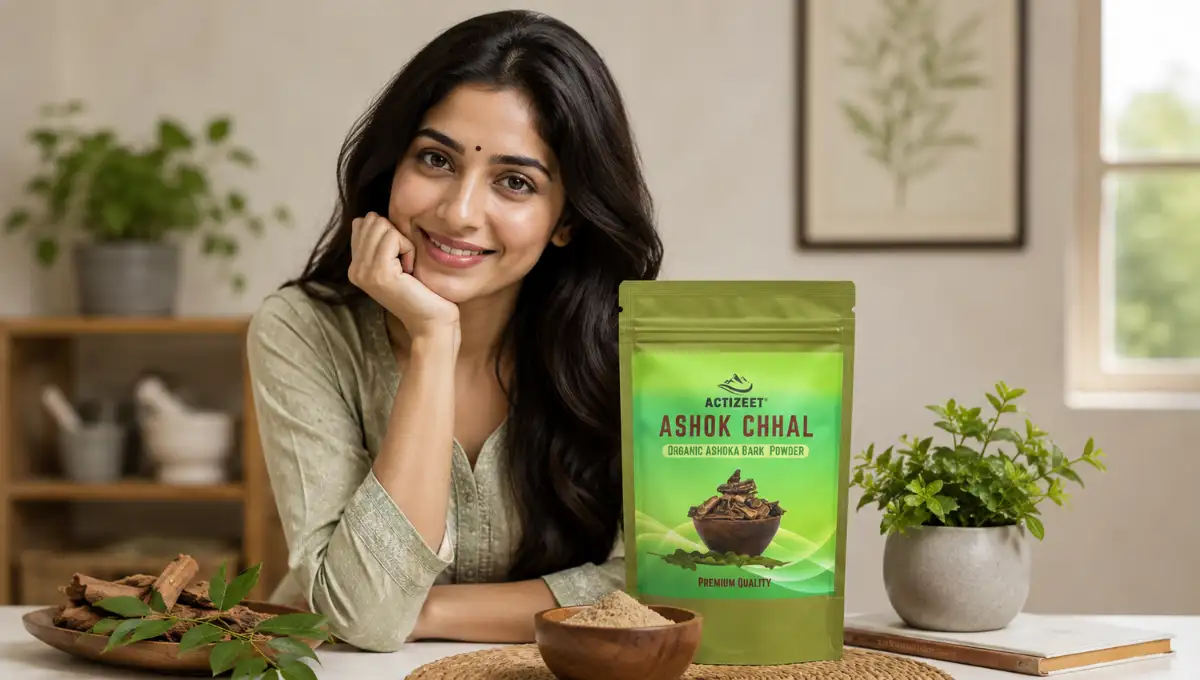
ACTIZEET® Ashok Chhal Powder addresses every quality challenge in India's 2026 Ashoka powder market. Saraca asoca botanical species clearly specified on every package — eliminating the Polyalthia longifolia species substitution that undermines a significant proportion of India's "Ashok Chhal" offerings. Inner bark plant part confirmed — the classical Ayurvedic specification that maximizes leucocyanidin and haematoxylon therapeutic compound concentration over whole bark preparations. Leucocyanidin-preserving low-temperature processing — no bleaching, no excessive heat, no chemical treatment. Single-ingredient transparency — pure Saraca asoca inner bark with no fillers or adulterant bark powders. Available in a 300-gram value pack — the practical minimum quantity for the 2 to 3 cycle consistent use that the hormonal and uterine benefits require to establish. The sacred women's tree of ancient India — in the most quality-verified, most therapeutically complete, and most honestly documented powder form available in 2026.
- Saraca asoca species confirmed — the foundational quality requirement that eliminates the Polyalthia longifolia substitution affecting India's most prevalent Ashok Chhal quality problem.
- Inner bark specification — the classical Ayurvedic plant part requirement that maximizes leucocyanidin and haematoxylon uterotonic therapeutic compound concentration.
- Leucocyanidin-preserving processing without bleaching or excessive heat treatment — maintaining the natural polyphenol compound integrity that determines uterotonic, haemostatic, and anti-inflammatory therapeutic activity.
- Optimal particle size for traditional decoction extraction — maximizing bioactive compound extraction in the ksheer pak and water decoction preparations that are the most therapeutically complete delivery methods.
- Single ingredient purity and 300-gram value pack — the complete, unadulterated preparation in the quantity that supports the consistent 2 to 3 cycle minimum therapeutic protocol.
Getting the Most from ACTIZEET® Ashok Chhal Powder
Traditional Water Decoction
Boil 1 teaspoon (3 to 5 g) in 2 cups water for 10 to 15 minutes until reduced to 1 cup. Strain well, drink warm twice daily. This maximizes extraction of water-soluble leucocyanidins, tannins, and glycosides. The most traditionally documented and most compound-complete preparation. Add a pinch of rock salt or jaggery if the astringency is too strong initially.
Ksheer Pak (Milk Decoction)
Simmer 1 teaspoon in equal parts milk and water until water evaporates. Strain, drink warm. The classical preparation documented in Ashtanga Hridayam for gynecological conditions. Milk provides lipophilic carrier for fat-soluble sterols including beta-sitosterol for phytoestrogenic hormonal support. Best for perimenopausal and PCOS applications.
Cycle-Appropriate Timing
For heavy periods: begin 7 days before expected menstruation. For irregular cycles: consistent daily use throughout the cycle. For dysmenorrhea: decoction from cycle day 14 through menstruation. For uterine tonic: consistent twice-daily preparation daily regardless of cycle phase. Timing alignment with cycle phase meaningfully optimizes which mechanism is most active.
Classical Herb Combinations
For maximum women's health support, combine the decoction with shatavari powder or lodhra powder per an Ayurvedic physician's guidance. These traditional combinations are documented in classical texts as synergistically more effective than Ashok Chhal alone for specific gynecological presentations. Never combine with pharmaceutical hormonal preparations without physician guidance on potential phytoestrogenic interactions.
Duration — 300g for Complete Protocol
At the standard 3 to 5 grams twice daily, a 300-gram pack provides approximately 30 to 50 days of supplementation — covering at least 1 to 2 complete menstrual cycles. For the 2 to 3 cycle minimum that the hormonal normalization and uterine tonic mechanisms require, 2 to 3 packs provides the appropriate treatment duration. The 300g value pack from ACTIZEET® is sized specifically for the 45 to 60-day initial protocol period.
Essential Safety Reminders
Avoid completely during pregnancy — uterotonic properties may cause pregnancy loss. Medical evaluation before starting for any new menstrual symptoms. Discuss with gynecologist if on hormonal contraceptives or hormone therapy. Monitor blood glucose if on diabetes medications. Physician consultation is essential for any therapeutic use — this is a medicinally active herb, not a casual supplement.
Pure Saraca asoca inner bark. Species verified — not Polyalthia longifolia. Inner bark plant part confirmed — not whole bark. Leucocyanidin-preserving low-temperature processing — no bleaching, no chemical treatment. Optimal particle size for maximum decoction extraction. Single ingredient — no fillers, no adulterants. Available in a 300-gram value pack sized for the complete 2 to 3 cycle therapeutic protocol. The best Ashok Chhal powder in India 2026 — because every quality specification that matters for genuine therapeutic benefit is specifically and transparently confirmed.
🍂 Order ACTIZEET® Ashok Chhal Powder 300g →Frequently Asked Questions
Best Ashok Chhal Powder in India 2026: Species Authenticity, Inner Bark Quality, and Honest Documentation — ACTIZEET® Delivers All Three
Finding the best Ashok Chhal powder in India in 2026 requires navigating a quality landscape where the most critical challenge — species authentication between genuine Saraca asoca and its visually similar but therapeutically worthless Polyalthia longifolia substitute — is invisible to most consumers without supplier documentation. Beyond species authentication, the inner bark specification, leucocyanidin-preserving processing, optimal particle size, and single-ingredient purity together determine whether the Ashok Chhal powder you purchase delivers the menstrual regulation, haemostatic, hormonal balance, and uterine tonic benefits documented in three millennia of Ayurvedic clinical observation and confirmed by modern pharmacological research — or simply the appearance of a bark powder without its therapeutic substance.
ACTIZEET® Ashok Chhal Powder answers every one of these quality questions with documentation. The species is confirmed. The inner bark is specified. The processing is leucocyanidin-preserving. The product is single-ingredient. The 300-gram value pack is sized for the complete protocol. This is what the best Ashok Chhal powder in India 2026 looks like — not by label claim alone, but by documented quality specification that every Indian woman who depends on this sacred herb for her reproductive health deserves.
Latest From Our Blog

Unlock the Power: How Moringa Powder is Used
Discover the versatile uses of Moringa powder, from culinary delights...

Ashwagandha and Sexual Health: Rediscover Passion, Balance, and Energy Naturally
Explore the benefits of Ashwagandha and Sexual Health. Learn how...

Can I Take Triphala Powder Daily? Everything You Need to Know
Learn if you can take Triphala powder daily. Explore its...

Moringa for Cognitive Health: A Natural Brain Wellness Guide
Discover how Moringa for Cognitive Health supports memory, focus, and...