
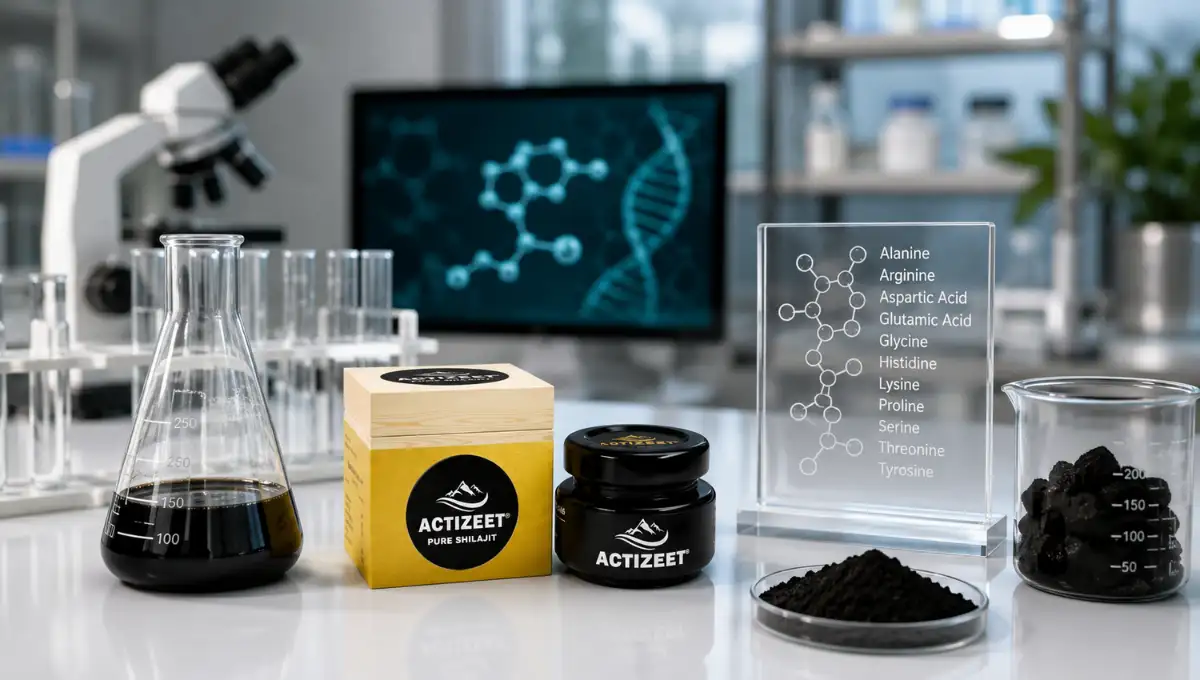
Amino Acids in Shilajit: Which Ones Are Present, What They Do, and Why the Fulvic Acid Context Makes All the Difference
Genuine Himalayan shilajit resin is not just a mineral supplement — it is a bioactive complex that includes free amino acids, humic acid-bound amino acid fragments, and the fulvic acid carrier system that makes these compounds exceptionally bioavailable at the cellular level. Understanding the amino acids in shilajit helps explain why this ancient Himalayan substance addresses such a wide range of health conditions — from muscle repair and cognitive function to immunity, collagen synthesis, and detoxification. This guide covers what is there, why it matters, and why ACTIZEET® delivers the real thing.
When most people think about shilajit, the conversation centers on its mineral content, its fulvic acid percentage, or its dibenzo-alpha-pyrone (DBP) compounds. These are rightfully the headline bioactives — they drive the blood glucose support, the testosterone optimization, the mitochondrial energy mechanisms that make shilajit clinically interesting. But alongside these compounds, genuine high-altitude Himalayan shilajit contains something that is far less frequently discussed and that contributes meaningfully to its comprehensive health effects: a profile of free amino acids and amino acid fragments derived from the millions-of-years-long humification of plant biomass that creates shilajit in Himalayan rock fissures.
Shilajit is not a protein supplement — the amino acids it contains are present at much lower concentrations than in whey protein or a dal serving. But their presence is not trivial. These amino acids exist in shilajit in a specific biological context — bound within the humic-fulvic acid matrix in forms that are immediately bioavailable through the fulvic acid trans-membrane carrier system — that may make them more effectively utilized at the cellular level than equivalent amino acids consumed through dietary sources requiring standard digestive processing. Understanding this context helps explain why traditional Ayurvedic texts describe shilajit as building all seven dhatu (tissue layers) — a traditional way of capturing the observation that this substance supports fundamental protein-dependent biological structures across multiple body systems simultaneously.
Shilajit forms over millions of years through the slow compression and humification of ancient plant material — primarily decomposed mosses, herbs, and other vegetation — trapped between Himalayan rock layers at high altitude. This humification process, driven by microbial activity and the pressure-heat-freeze cycling of Himalayan geology, breaks down plant proteins over geological timescales into their constituent amino acids and amino acid fragments. These become incorporated into the humic and fulvic acid polymer matrix of the resulting shilajit resin. The amino acids present in genuine shilajit are therefore not added ingredients — they are intrinsic components of the geological-biological formation process, present in the organic matrix as both free amino acids and as amino acid peptide fragments bound within the fulvic acid polymer chains. Genuine high-altitude Himalayan shilajit resin from ACTIZEET® contains this complete organic amino acid matrix as a natural component of the authentic botanical geological source material.
of years
Which Amino Acids Are Present in Shilajit
Analytical studies on authenticated Himalayan shilajit samples — using techniques including amino acid hydrolysis followed by HPLC chromatographic analysis — have consistently identified a broad spectrum of amino acids present in the organic matrix of genuine shilajit resin. The concentrations vary between samples based on geographic source, altitude, and formation geology, but the profile of which amino acids are present is relatively consistent across authentic Himalayan shilajit sources.
| Amino Acid | Type | Primary Biological Role in Shilajit Context |
|---|---|---|
| Glycine | Non-essential (conditionally) | The most abundant amino acid in shilajit analysis. Primary building block of collagen (one-third of all collagen residues). Precursor to glutathione (with cysteine and glutamate) — the body's master antioxidant. Inhibitory neurotransmitter in the spinal cord and brainstem that promotes sleep-facilitating neural inhibition. Supports creatine synthesis for energy and muscle performance. In shilajit's fulvic acid context, glycine contributes to the collagen-supporting, antioxidant-building, and sleep-promoting dimensions of genuine shilajit's comprehensive effect profile |
| Glutamic Acid / Glutamate | Non-essential | The primary excitatory neurotransmitter and a critical fuel for rapidly dividing immune cells. Precursor to GABA (gamma-aminobutyric acid) — the brain's primary inhibitory neurotransmitter — through glutamate decarboxylase enzyme activity. Supports nitrogen disposal through the urea cycle. Serves as a key metabolic fuel for intestinal enterocytes maintaining gut barrier integrity. In shilajit, glutamate contributes to both the GABA-precursor sleep-and-anxiety-relevant neurological activity and to the gut integrity support that genuine shilajit is documented to provide |
| Aspartic Acid / Aspartate | Non-essential | Participates in the urea cycle for nitrogen waste removal; supports purine and pyrimidine nucleotide synthesis (DNA and RNA building blocks); energy shuttle function in the malate-aspartate shuttle that transfers NADH reducing equivalents across the mitochondrial membrane for efficient ATP production. Shilajit's aspartate content complements its DBP-CoQ10 mitochondrial energy mechanisms by supporting the metabolic shuttle system that feeds electrons into the electron transport chain |
| Alanine | Non-essential | Gluconeogenic amino acid — can be converted to glucose via the glucose-alanine cycle that transfers energy equivalents from muscle to liver during prolonged physical activity; supports nitrogen transport from peripheral tissues to the liver; involved in the transfer of pyruvate between tissues for energy metabolism. Present in shilajit as part of the amino acid profile that supports the metabolic energy and gluconeogenic pathways relevant to sustained physical performance |
| Proline | Non-essential (conditionally) | Essential structural component of collagen and elastin — collagen contains approximately 20% proline and hydroxyproline, making proline availability a direct determinant of collagen synthesis rate; supports wound healing through collagen repair; antioxidant in plasma through metal-chelating activity; contributes to protein structural stability through its unique cyclic structure that introduces conformational constraints in polypeptide chains. In shilajit, proline alongside glycine supports the collagen-protective and wound-healing dimensions of the complete amino acid profile |
| Histidine | Essential (adults — conditionally) | Precursor to histamine (the immune and gastric acid signaling molecule); precursor to carnosine (the dipeptide antioxidant and intramuscular pH buffer important for exercise performance); involved in zinc and iron transport in blood; participates in the active sites of many enzymes. Shilajit's histidine content supports the carnosine synthesis that benefits athletic performance and the metal-transport activity consistent with shilajit's overall mineral bioavailability-enhancing function |
| Threonine | Essential | Required for intestinal mucus glycoprotein synthesis — threonine is the most abundant amino acid in intestinal mucin proteins that form the protective mucus layer of the gut lining; required for glycine synthesis (threonine aldolase pathway); immune function through immunoglobulin protein synthesis; liver fat metabolism. Shilajit's threonine content connects to its documented gut-protective and immune-supporting properties through the mucus layer and immunoglobulin synthesis pathways |
| Serine | Non-essential | Required for sphingolipid synthesis (primary lipid component of neurological myelin sheaths); involved in one-carbon metabolism for DNA methylation and neurotransmitter synthesis; contributes to phospholipid synthesis for cell membrane integrity; participates in the synthesis of cysteine (and thereby glutathione). Shilajit's serine content supports the neurological myelin maintenance and one-carbon metabolic pathways relevant to the cognitive support mechanisms of genuine shilajit |
| Glutamine | Non-essential (conditionally essential under stress) | Primary fuel for rapidly dividing immune cells (lymphocytes, macrophages) and gut enterocytes; most abundant amino acid in blood and muscle tissue; supports nitrogen balance during stress; required for purine and pyrimidine synthesis; the precursor for GABA synthesis alongside glutamate. Becomes conditionally essential during illness, high physical stress, and recovery periods when endogenous synthesis cannot meet demand — precisely the contexts in which shilajit supplementation is most commonly sought |
| Leucine / Isoleucine / Valine (BCAAs) | Essential | The branched-chain amino acids present in smaller but meaningful quantities. Leucine is the primary mTOR-activating amino acid that initiates muscle protein synthesis. Isoleucine supports glucose uptake in muscle and hemoglobin synthesis. Valine supports nervous system function and muscle metabolism. At the concentrations present in shilajit, the BCAA contribution is meaningful as a complement to the fulvic acid-enhanced bioavailability context rather than as a standalone muscle-building protein source |
Why the Fulvic Acid Context Makes Shilajit's Amino Acids Uniquely Bioavailable
Understanding why the amino acids in shilajit matter requires understanding the specific biological context in which they are delivered — because the same amino acid consumed through dietary protein versus through the fulvic acid matrix of genuine shilajit arrives at the cellular level through meaningfully different mechanisms.
Standard dietary amino acids are released from food protein through digestive protease enzyme activity in the stomach and small intestine, absorbed through intestinal enterocyte amino acid transporter proteins, entered into portal circulation, processed by the liver, and then distributed to peripheral tissues through systemic circulation and standard nutrient transport mechanisms. This is a well-functioning system, but it involves multiple steps, is subject to competition between amino acids for the same transporter proteins, and depends on digestive efficiency that varies significantly between individuals and decreases with age.
The amino acids in shilajit's fulvic acid matrix enter cells partly through a different mechanism: the fulvic acid carrier system. Fulvic acid molecules are small enough to cross cellular membranes directly and are documented to carry small molecules — including minerals, amino acids, and amino acid fragments bound within the fulvic polymer chains — across cell membranes through this carrier function without requiring standard amino acid transporter proteins. This trans-membrane carrier delivery means that some of the amino acid-related bioactivity of genuine shilajit operates at the cellular level more directly than standard dietary amino acid delivery achieves, potentially making small amounts of amino acids in shilajit disproportionately effective relative to their absolute concentration. This is one reason why shilajit's amino acid content, while not quantitatively large, is qualitatively significant — the delivery mechanism amplifies the effective cellular availability of these compounds beyond what their absolute concentration would suggest if evaluated by standard protein supplement metrics.
🏔️ ACTIZEET® Himalayan Shilajit Resin: genuine high-altitude Himalayan resin with the complete amino acid matrix intact within the fulvic acid carrier system — the biological context that makes shilajit's amino acids disproportionately bioavailable compared to their absolute concentration.
Shop ACTIZEET® →Key Functions of the Amino Acids in Shilajit
Glutathione Synthesis — The Master Antioxidant Connection
One of the most therapeutically significant amino acid-related functions in genuine shilajit is the support for glutathione synthesis. Glutathione — the body's primary intracellular antioxidant — is a tripeptide synthesized from three amino acids: glycine, cysteine, and glutamic acid. Genuine shilajit contains meaningful quantities of both glycine and glutamic acid, the two amino acids that are most commonly the limiting factors for glutathione synthesis in the Indian population where cysteine (from sulfur-containing foods) is more readily available than glycine (present primarily in collagen-rich foods that Indian vegetarian and vegetable-dominant diets often contain in lower quantities).
Glutathione depletion is one of the most significant markers of oxidative stress-driven biological aging and of the chronic disease conditions — cardiovascular disease, diabetes, cognitive decline — that are driving India's non-communicable disease burden. By providing the glycine and glutamic acid precursors within the fulvic acid carrier system, genuine shilajit supports glutathione replenishment through a supply-side mechanism that complements the antioxidant-direct scavenging activity of fulvic acid itself — addressing oxidative stress through two independent complementary mechanisms simultaneously.
Muscle Repair, Collagen Synthesis, and Connective Tissue Support
Collagen is the most abundant protein in the human body — the structural scaffold of skin, tendons, ligaments, joint cartilage, bone matrix, blood vessel walls, and the connective tissue that gives every organ its structural integrity. Collagen synthesis requires two amino acids in particular: glycine (which constitutes approximately one-third of all collagen residues in the triple-helix collagen structure) and proline (approximately 20% of collagen residues as proline and hydroxyproline). These are precisely the amino acids present in highest concentrations in genuine shilajit's organic matrix.
For Indian adults managing the joint pain and cartilage degradation of arthritis, the skin aging that accelerates with the Indian climate's UV and pollution oxidative stress, the wound healing demands of a physically active population, or the connective tissue repair needs of athletic training, the glycine-proline combination in shilajit's amino acid matrix provides specific building block availability for the collagen synthesis that underpins all of these tissue repair processes. The fulvic acid carrier delivery enhances the cellular availability of these collagen precursors directly to the fibroblasts and chondrocytes responsible for collagen production.
The branched-chain amino acids (BCAAs) — leucine, isoleucine, and valine — are present in genuine shilajit at the lower-concentration end of the amino acid profile but with specific relevance to the muscle protein synthesis pathway that makes shilajit's complete compound profile particularly interesting for athletes and for Indian adults managing age-related muscle loss (sarcopenia). Leucine specifically activates the mTOR (mechanistic target of rapamycin) signaling pathway — the primary molecular switch that initiates muscle protein synthesis in response to both amino acid availability and resistance training. Even small amounts of leucine can contribute to mTOR activation when present alongside the other anabolic signals that shilajit provides: testosterone through HPG axis support, growth factor signaling through IGF-1 pathway modulation, and the mitochondrial energy through DBP-CoQ10 recycling that provides the cellular ATP required for protein synthesis to proceed.
This is the synergy that makes shilajit's amino acid profile greater than the sum of its parts: the leucine initiates the protein synthesis signaling cascade, the testosterone and growth hormone environment that shilajit's adaptogenic mechanisms optimize provides the hormonal anabolic context, and the mitochondrial energy that shilajit's DBP compounds support provides the cellular fuel that protein synthesis consumes. Each component enhances the effectiveness of the others in a genuinely synergistic network rather than simply providing independent additive benefits.
Brain Function and Mood — The Neurotransmitter Precursor Amino Acids
Glutamate and GABA Balance
The glutamate in shilajit's amino acid matrix is the precursor to GABA — the brain's primary inhibitory neurotransmitter — through the glutamate decarboxylase enzymatic conversion that happens primarily in GABAergic neurons. Adequate glutamate availability supports GABA synthesis, contributing to the anxiolytic and sleep-facilitating neurological tone that makes genuine shilajit relevant for India's anxiety and sleep disruption burden. This glutamate-GABA precursor connection complements the magnesium in shilajit's ionic mineral complex that supports GABA receptor function — shilajit addresses the GABA system from both the synthesis side (glutamate as precursor) and the receptor function side (magnesium as cofactor) simultaneously.
Glycine's Inhibitory Neurotransmitter Role
Glycine — the most abundant amino acid in shilajit — serves as an inhibitory neurotransmitter specifically in the spinal cord and brainstem, where it activates strychnine-sensitive glycine receptors that reduce motor neuron excitability and support the transition to sleep. Research has confirmed that supplemental glycine improves sleep quality, reduces sleep onset latency, and improves subjective sleep quality scores through this spinal inhibitory mechanism — with doses as low as 3 grams showing measurable effects in clinical trials. The glycine in shilajit is present in lower absolute amounts than research doses, but within the fulvic acid carrier context and alongside the other sleep-supporting mechanisms of genuine shilajit, contributes meaningfully to the overall sleep quality improvement that consistent shilajit use provides.
Immune System Support and Detoxification
Glutamine and Immune Cell Fueling
Glutamine is the primary metabolic fuel for lymphocytes, macrophages, and other rapidly dividing immune cells — these cells consume glutamine at extremely high rates during immune activation, and glutamine availability during illness, stress, and infection is a direct determinant of immune response magnitude and duration. Glutamine is also conditionally essential — the body can normally synthesize it, but during periods of high immune demand (illness, high physical stress, recovery from surgery or injury), endogenous glutamine synthesis cannot keep pace with immune system consumption, and dietary and supplemental glutamine becomes critical. Shilajit's glutamine content, delivered through the fulvic acid carrier in a form particularly bioavailable to the immune cells that need it, contributes to the immune-supporting dimension of genuine shilajit that complements its documented mineral-based immune support through zinc, selenium, and the other immune-critical minerals in its ionic complex.
Glycine and Glutathione — Cellular Detoxification
Glutathione's role extends beyond antioxidant protection into active cellular detoxification — glutathione S-transferase enzymes use glutathione to conjugate and neutralize heavy metals, environmental toxins, and the byproducts of pharmaceutical drug metabolism. This detoxification function is particularly relevant for Indian users facing the compound toxic load of urban air pollution, dietary pesticide residues, heavy metal exposure through food and water, and the pharmaceutical load of India's significant chronic disease management needs. By supporting glutathione synthesis through glycine and glutamic acid availability, shilajit's amino acid profile contributes to the cellular detoxification capacity that traditional Ayurvedic practitioners have always associated with shilajit's purifying rasayana properties — connecting the ancient empirical observation to the specific molecular mechanism now understood to underlie it.
Shilajit vs Protein Supplements — Setting the Right Expectation
This comparison is important to address honestly, because misunderstanding shilajit's amino acid content as equivalent to protein supplementation would lead to unrealistic expectations and poor purchase decisions.
A serving of whey protein provides 20 to 30 grams of amino acids — 20,000 to 30,000 milligrams — in precisely calibrated ratios optimized for muscle protein synthesis. A serving of ACTIZEET® Himalayan Shilajit Resin (300 to 500 mg) contains amino acids in the range of tens to low hundreds of milligrams total — a fraction of what protein supplements provide. Shilajit is not a protein supplement, and it should not be evaluated or purchased as one.
What shilajit's amino acid profile provides is best understood as a biological complement — specific amino acids in the fulvic acid carrier context that support the particular metabolic pathways (glutathione synthesis, collagen production, neurotransmitter precursor availability, GABA support) where these specific amino acids are most limiting in the Indian population, delivered through a carrier mechanism that may produce disproportionate cellular benefit relative to absolute amino acid quantity. The value is specificity and carrier-enhanced bioavailability, not volume. Combining shilajit with adequate dietary protein or a quality protein supplement produces a more complete anabolic and recovery support approach than either alone — shilajit optimizing the hormonal and metabolic environment for protein synthesis, the protein supplement providing the substrate volume that synthesis requires.
Why ACTIZEET® Delivers the Complete Amino Acid Profile
The amino acids in shilajit are an intrinsic component of the genuine humic-fulvic acid matrix of authentic high-altitude Himalayan shilajit resin — they are part of the geological-biological formation product, not added ingredients. This means the amino acid profile is only present in its complete, biologically embedded form in genuine resin from verified Himalayan sources. It is absent or severely depleted in synthetic fulvic acid preparations (which contain only the extracted fulvic acid fraction without the protein-derived amino acid organic matrix), in shilajit powder preparations (where heat and processing degrade the amino acid content and the fulvic carrier structure that makes them bioavailable), and in low-grade non-Himalayan humic deposit extracts where the botanical source material and formation conditions differ from authentic Himalayan shilajit.
- Genuine high-altitude Himalayan resin — the geological source that forms the complete amino acid matrix. The millions-of-years humification process of specific Himalayan plant biomass at high altitude produces the amino acid-rich organic matrix that is intrinsic to authentic shilajit. ACTIZEET® sources from verified high-altitude Himalayan regions where this formation process is authentic.
- Resin form preserving the fulvic acid carrier structure that makes amino acids bioavailable. The amino acids in shilajit are embedded within the fulvic acid polymer matrix that serves as their cellular delivery vehicle. Cold-processed resin preservation maintains this carrier-amino acid structural relationship. Heat-processing into powder degrades both the fulvic carrier structure and the amino acid content simultaneously.
- Fulvic acid at 60%+ confirming the carrier matrix is intact and functional. The verified fulvic acid content that ACTIZEET® confirms through independent third-party analysis is also the confirmation that the amino acid carrier system is present at therapeutic functional concentrations.
- Single ingredient transparency — no protein powder additions masking inadequate shilajit quality. Some shilajit supplement products add protein powder, collagen peptides, or amino acid blends to appear to have more complete amino acid profiles than the shilajit itself provides. ACTIZEET®'s single-ingredient transparency means the amino acids present are genuinely from the Himalayan shilajit resin source, not from added non-shilajit proteins.
- Heavy metal testing ensuring safe long-term consumption of this mineral and amino acid-rich geological concentrate. The concentrated geological origin of shilajit that creates its rich mineral and amino acid matrix also requires independent safety verification. ACTIZEET®'s batch-specific heavy metal testing confirms that the amino acid and mineral richness is delivered safely.
ACTIZEET® Himalayan Shilajit Resin delivers the complete, genuine Himalayan shilajit bioactive complex — fulvic acid at 60% and above as the amino acid carrier matrix, DBPs preserved for mitochondrial energy support, 84+ ionic minerals for comprehensive micronutrient delivery, and the intrinsic amino acid organic matrix — glycine, glutamate, glutamine, proline, histidine, threonine, BCAAs, and the full spectrum of protein-derived organic compounds — embedded within the fulvic acid carrier structure of authentic high-altitude Himalayan geological formation. Not synthetic fulvic acid. Not powder. Not adulterated. The complete botanical geological product that traditional Ayurvedic medicine described as building all seven dhatu and that modern biochemistry now explains through the amino acid, mineral, and DBP mechanisms this guide covers.
🏔️ Order ACTIZEET® Himalayan Shilajit Resin →Frequently Asked Questions
Amino Acids in Shilajit: A Crucial Part of the Complete Bioactive Picture
The amino acids in genuine Himalayan shilajit are not an afterthought in its biochemistry — they are intrinsic components of the geological-biological organic matrix that makes shilajit the most comprehensively bioactive single natural substance available from any geological source. Glycine and proline for collagen synthesis and glutathione production. Glutamate and glutamine for GABA precursor synthesis and immune cell fueling. Histidine for carnosine and metal transport. Threonine for gut mucus integrity. Branched-chain amino acids for mTOR muscle protein synthesis initiation. All embedded within the fulvic acid carrier that makes them available at the cellular level through the trans-membrane delivery mechanism that potentially amplifies their effectiveness beyond what absolute concentration alone would predict.
Understanding this amino acid dimension of shilajit helps explain why traditional Ayurvedic medicine described shilajit as building all seven body tissue types — it was capturing the clinical observation of comprehensive tissue support that the collagen, glutathione, GABA, immune, and muscle protein synthesis contributions of the amino acid-mineral-DBP complex simultaneously provide. ACTIZEET® Himalayan Shilajit Resin delivers this complete organic matrix — the amino acids, the fulvic acid carrier, the ionic minerals, and the DBP compounds — in the genuine, verified, cold-processed resin form that preserves every component of what millions of years of Himalayan geological formation created.
Latest From Our Blog

Shilajit for Gym: How Himalayan Resin Builds Strength, Boosts Endurance, Accelerates Recovery, and Optimizes Testosterone for Indian Athletes and Gym-Goers
Discover how shilajit for gym workouts boosts strength, endurance, testosterone,...

Shilajit for Depression: How the Himalayan Resin Supports Mood, Dopamine, and Brain Resilience Through Multiple Pathways
Discover how Shilajit for depression works through dopamine support, HPA...

What is Himalayan Shilajit? The Ancient Resin That Connects You to the Heart of the Himalayas
What is Himalayan Shilajit? Discover the origin, benefits, and unique...