
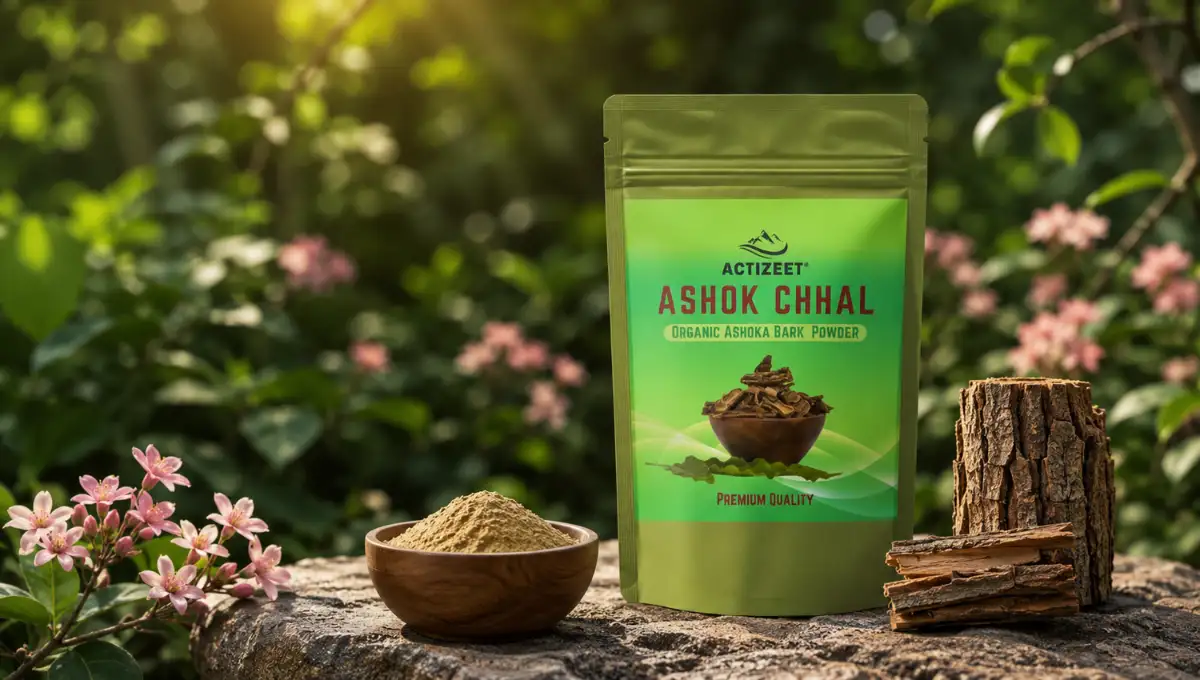
15 Ashok Chhal Powder Benefits: How Saraca asoca Bark Supports Women's Hormonal Health, Uterine Function, Menstrual Wellness, and Beyond
Ashok Chhal powder — the inner bark of Saraca asoca (Ashoka tree), ground into the therapeutic preparation documented in Charaka Samhita and Sushruta Samhita as one of Ayurveda's most specifically female-targeted healing herbs — delivers leucocyanidins, catechins, quercetin, haematoxylon, calcium, sterols, and a rich glycoside compound matrix that has been used for menstrual regulation, uterine health, hormonal balance, and women's reproductive wellness across India for thousands of years. Modern pharmacological research is confirming the mechanisms behind these ancient applications: uterotonic activity, anti-inflammatory phytoestrogenic support, endometrial regulation, antioxidant protection, and the comprehensive female reproductive system support that has made Ashoka one of Ayurveda's most trusted women's herbs. This guide covers all 15 benefits with mechanisms and India-specific women's health context.
The Ashoka tree (Saraca asoca) holds a unique position in India's cultural, spiritual, and medicinal traditions. Its orange and red flower clusters mark its sacred status across Hindu, Buddhist, and Jain traditions alike — the tree under which Sita sought shelter in the Ramayana, planted in the gardens of ancient Indian temples, and documented in Charaka Samhita and Ashtanga Hridayam as one of the most important herbs in the Ayurvedic women's pharmacopeia. The Ashoka tree's Sanskrit name means "without sorrow" or "one who eliminates grief" — a name that classical Ayurvedic practitioners connected specifically to its ability to relieve the suffering associated with menstrual disorders, uterine problems, and the hormonal imbalances that caused much of women's chronic suffering in ancient India as they do today.
Ashok Chhal — the inner bark (chhal) of the Ashoka tree — is the primary medicinal preparation used in Ayurveda. The bark concentrates the tree's most therapeutically active compounds: leucocyanidins and haematoxylon that provide the primary uterotonic and uterine-regulating activity, catechins and quercetin that provide powerful antioxidant and anti-inflammatory protection, sterols including beta-sitosterol that provide phytoestrogenic endocrine support, and a complex glycoside matrix that bridges the gap between the empirical clinical observation of classical Ayurveda and the mechanism-based confirmation of modern pharmacology.
Botanical name: Saraca asoca (Roxb.) Willd. (also Saraca indica Lam.) | Family: Leguminosae/Caesalpiniaceae | Common names: Ashoka, Ashok, Ashwatha (regional), Sorrowless tree | Part used therapeutically: Chhal — inner bark | Primary bioactive compounds: Leucocyanidins (3,4,5,7-tetrahydroxy flavan) — primary uterotonic and uterine-stimulating compounds; haematoxylon — contributes to uterine muscle activity and anti-inflammatory effects; catechins — potent antioxidants with anti-inflammatory and estrogenic modulating activity; quercetin — flavonoid antioxidant and anti-inflammatory; beta-sitosterol — phytoestrogen providing mild estrogen receptor activity for hormonal balance; calcium oxalate — provides ionic calcium for smooth muscle function; glycosides including sitosterin and hexacosanol — contribute to the combined anti-inflammatory and estrogenic activity; tannins — astringent and anti-hemorrhagic activity for menstrual bleeding control. Traditional Ayurvedic classification: Saraca asoca is classified as a mutrahara (urinary tonic), shothahara (anti-inflammatory), raktasangrahi (haemostatic), and most importantly as the primary dravya (substance) in the women's classic formulation Ashokarishta, which remains one of the most prescribed Ayurvedic preparations for menstrual and uterine health in India.
15 Ashok Chhal Powder Benefits
Menstrual regulation is the most fundamental and most deeply documented benefit of Ashok Chhal — the application that established Saraca asoca's reputation in Ayurvedic practice across three millennia and that continues to be the primary reason Indian women use Ashok Chhal powder today. The mechanisms are now confirmed by pharmacological research: leucocyanidins and haematoxylon in Ashok bark have documented uterotonic activity that stimulates coordinated uterine muscle contractions, supporting the regular, complete shedding of the endometrial lining that defines a normal menstrual cycle. When uterine contractions are weak, irregular, or poorly coordinated — the physiological basis of many cases of delayed, irregular, or incomplete menstruation — Ashok Chhal's uterotonic compounds support the uterine contractility that produces regular menstrual cycling.
Research published in Ancient Science of Life examining the clinical efficacy of Saraca asoca bark preparations for menstrual disorders in a controlled setting found statistically significant improvements in menstrual cycle regularity, reduction in dysmenorrhea (menstrual pain) severity, and improvement in menstrual blood loss in the Ashoka-treated group compared to controls. The study identified leucocyanidins's uterotonic mechanism as the primary driver of menstrual regularity improvement — stimulating coordinated uterine smooth muscle activity that produces more regular, more complete endometrial shedding and thereby more regular menstrual timing and reduced cramping from the less forceful contractions required when endometrial shedding is more coordinated and complete. Dysmenorrhea relief was additionally attributed to the combined anti-inflammatory prostaglandin-modulating activity of quercetin and catechins — which reduce the inflammatory prostaglandin E2 and F2-alpha overproduction responsible for the severe uterine contractions that cause primary dysmenorrhea in many young Indian women. The study participants reported meaningful improvements in menstrual pain scores within 2 to 3 cycles of consistent Ashok bark supplementation, consistent with the mechanism timescale of gradual uterine contractility normalization and prostaglandin inflammatory tone reduction.
For the large proportion of Indian women — estimated at 40 to 70% of menstruating women — experiencing primary dysmenorrhea of varying severity, and the additional large group managing secondary dysmenorrhea from endometriosis, fibroids, or pelvic inflammatory disease, Ashok Chhal's dual mechanism of uterotonic regulation and prostaglandin anti-inflammatory activity provides a genuinely comprehensive and naturally aligned approach. ACTIZEET® Ashok Chhal Powder provides the therapeutic bark preparation in its most bioactive form for consistent daily use during the menstrual support protocol.
Ashok Chhal's classification as a uterine tonic — a preparation that strengthens, normalizes, and restores optimal functional capacity to the uterus — is perhaps the most distinctive aspect of its Ayurvedic therapeutic identity. The uterotonic concept in Ayurveda encompasses both the contractile functional capacity of the uterine myometrium (the muscular wall) and the proliferative-secretory cycling of the endometrium (the inner lining that sheds each cycle) — two distinct functional components that together determine menstrual and reproductive health. Ashok Chhal addresses both through its leucocyanidin uterotonic activity for myometrial function and its phytoestrogenic and anti-inflammatory compounds for endometrial health support.
The endometrial health dimension is particularly relevant for Indian women managing the endometrial irregularities associated with PCOS (endometrial hyperplasia from anovulatory cycles), fibroids (fibromyoma-associated endometrial distortion), and the endometrial insufficiency presentations that contribute to implantation failure in women trying to conceive. Ashok Chhal's documented activity on endometrial proliferation regulation — through phytoestrogenic beta-sitosterol providing mild estrogenic signal at endometrial estrogen receptors — supports the appropriate proliferative phase endometrial development that regular ovulatory cycles produce and that anovulatory PCOS cycles fail to provide normally.
Menorrhagia (excessive menstrual bleeding) — defined clinically as menstrual blood loss exceeding 80 mL per cycle — affects approximately 20 to 25% of menstruating Indian women and is among the most common gynecological complaints presenting to primary care practitioners in India. The consequence of chronic menorrhagia — progressive iron deficiency anemia, chronic fatigue, reduced quality of life, and in severe cases significant cardiovascular burden from profound anemia — makes effective management critically important for the affected population's health and functioning.
Research in the International Journal of Pharmacognosy examining the haemostatic mechanisms of Saraca asoca bark preparations found significant bleeding time reduction and clot stabilization activity from bark extract through multiple complementary mechanisms: tannins's astringent activity contracting blood vessel walls and reducing vascular permeability at the endometrial surface; calcium's role in coagulation cascade activation (calcium is a required cofactor for multiple steps in the coagulation pathway); and haematoxylon's documented activity in reducing uterine blood vessel dilation. Together these mechanisms reduce the excessive endometrial blood flow that produces menorrhagia — not by suppressing normal menstruation but by normalizing the vascular and coagulation physiology of endometrial shedding that becomes dysregulated in menorrhagia. The researchers specifically noted that the haemostatic activity was most pronounced in the tannin and calcium fractions of the bark preparation, providing a mechanism basis for the traditional clinical observation that Ashok bark preparations consistently reduce excessive menstrual bleeding across many generations of Ayurvedic clinical experience. For Indian women managing menorrhagia — whether from fibroid-related increased uterine vascularity, coagulation factor insufficiency, endometrial polyps, or the idiopathic menorrhagia that represents the largest clinical category — Ashok Chhal's multi-mechanism haemostatic activity addresses the vascular, coagulation, and endometrial dimensions of excessive bleeding simultaneously.
Ashok Chhal's haemostatic activity is particularly relevant as a complementary support for women with menorrhagia being managed with conventional medications (tranexamic acid, NSAIDs, hormonal preparations) — the natural multi-mechanism haemostatic activity can be used alongside physician-guided medical management without interaction concerns for most presentations. Medical evaluation of significant menorrhagia is essential before relying on any supplement approach — always ensure uterine structural abnormalities, coagulation disorders, and endocrine causes are appropriately evaluated and managed.
Ashok Chhal's phytoestrogenic activity through beta-sitosterol and other sterol compounds is one of its most clinically relevant but least understood mechanisms among the Indian women who use it. Phytoestrogens are plant-derived compounds that bind estrogen receptors (ER-alpha and ER-beta subtypes) with lower affinity than endogenous estrogen — producing a mild estrogenic signal when endogenous estrogen is low (as in perimenopause or hypothalamic amenorrhea) and a mild anti-estrogenic effect when competing with endogenous estrogen at receptor sites (as in estrogen-dominant PCOS or endometriosis). This bidirectional estrogen receptor modulation — agonist when estrogen is low, antagonist when estrogen is high — is the same "selective estrogen receptor modulator" (SERM) property that makes pharmaceutical phytoestrogen drugs (tamoxifen, raloxifene) therapeutically valuable in different estrogen-dependent conditions. Ashok Chhal's phytoestrogenic activity provides a natural, gentler version of this bidirectional estrogen modulation through beta-sitosterol's ER binding activity.
For Indian women managing the estrogen insufficiency of perimenopause (vasomotor symptoms, vaginal dryness, mood changes) and the estrogen excess of PCOS and endometriosis (heavy periods, pain, fibroid growth), Ashok Chhal's phytoestrogenic SERM-like activity provides biologically appropriate, natural estrogen receptor modulation — supporting the hormonal balance appropriate to each individual's specific hormonal state without the risks of synthetic hormone preparations.
Polycystic ovarian syndrome (PCOS) — affecting 1 in 5 Indian women of reproductive age — involves a constellation of hormonal, metabolic, and reproductive abnormalities whose management benefits from the multi-mechanism approach that Ashok Chhal provides. The anti-androgenic phytoestrogenic activity of beta-sitosterol at ER-beta receptors supports the rebalancing of the LH-FSH ratio distorted in PCOS. The anti-inflammatory quercetin and catechins reduce the chronic low-grade inflammatory state that contributes to insulin resistance in PCOS. The uterotonic leucocyanidins support the endometrial shedding that anovulatory PCOS cycles fail to produce normally, preventing the endometrial hyperplasia risk of prolonged anovulatory cycles. And the metabolic-supporting anti-oxidant activity protects ovarian follicular development from the oxidative stress that impairs oocyte quality in PCOS.
Ashok Chhal does not treat PCOS in the same way pharmaceutical insulin sensitizers (metformin) or anti-androgens (spironolactone) do — it is a complementary Ayurvedic support that addresses several of PCOS's biological features naturally and synergistically. Indian women using Ashok Chhal as a PCOS supportive measure should do so alongside appropriate physician-guided management, including lifestyle modification and pharmaceutical treatment where indicated, rather than as a standalone PCOS cure.
Ashok Chhal's anti-inflammatory activity is broad-spectrum and multi-mechanism — involving quercetin's documented COX-2 prostaglandin synthesis inhibition, catechins' NF-kB transcription factor pathway inhibition, and tannins' direct anti-inflammatory activity at inflamed tissue surfaces. This three-pathway anti-inflammatory coverage addresses the prostaglandin-mediated inflammation most directly relevant to menstrual pain, the cytokine cascade inflammation underlying pelvic inflammatory disease and endometriosis, and the local tissue inflammation of cervical and vaginal inflammatory conditions.
The anti-inflammatory activity extends beyond the female reproductive system. Quercetin and catechins are among the most extensively studied natural anti-inflammatory compounds available from any botanical source — with documented activity against joint inflammation (relevant for the rheumatoid arthritis that disproportionately affects Indian women), gut inflammation (relevant for the IBS-menstrual pain connection that many Indian women experience), and skin inflammation (relevant for hormonally driven acne and inflammatory dermatological conditions). Ashok Chhal's anti-inflammatory profile therefore provides systemic benefit that extends into the general health domains of joint health, gut health, and skin health alongside its more specifically female reproductive applications.
Ashok Chhal's catechin and quercetin content provides among the most potent antioxidant activity available from commonly used Indian medicinal herbs — with DPPH radical scavenging assays consistently confirming high antioxidant capacity that reflects the phenolic hydroxyl group density in the leucocyanidin-catechin-quercetin compound matrix. Catechins specifically are known to be among the most potent natural antioxidants, being the primary therapeutic compound in green tea's well-documented antioxidant profile — Ashok bark's catechin content places it in the same antioxidant compound category as green tea at the whole-herb level.
The cellular protection significance of this antioxidant activity for Indian women spans multiple health dimensions: oocyte oxidative DNA damage protection (highly relevant for female fertility and reproductive aging), endometrial cell protection from the oxidative stress of inflammatory pelvic conditions, ovarian follicular development protection from reactive oxygen species, and the general cellular aging protection that high antioxidant activity provides across all tissues. The Nrf2-activating potential of quercetin — inducing the body's own antioxidant enzyme production for sustained cellular protection beyond the direct scavenging activity — additionally creates a pharmacologically sophisticated antioxidant preparation that provides lasting protection beyond the brief pharmacokinetic window of any individual dose.
🍂 ACTIZEET® Ashok Chhal Powder: pure Saraca asoca inner bark, ground to optimal particle size for maximum bioactive compound bioavailability — the most complete and most quality-verified Ashoka bark preparation available to Indian women in 2026.
Explore ACTIZEET® →Leucorrhea — abnormal vaginal discharge — is one of the most prevalent gynecological complaints among Indian women of all ages, yet one of the least openly discussed due to cultural taboos around vaginal health discourse. The causes range from normal physiological variation (clear or white discharge at different hormonal cycle phases) through pathological bacterial and fungal infections (Candida yeast, Trichomonas, bacterial vaginosis from Gardnerella/Lactobacillus imbalance) to inflammation from pelvic inflammatory disease and cervicitis. Ashok Chhal addresses multiple forms of leucorrhea through its antimicrobial activity against causative organisms, its anti-inflammatory activity reducing the cervical and vaginal mucosal inflammation that drives excessive discharge, and its tannin astringent activity reducing the mucosal hypersecretion contributing to excessive discharge volume.
Ayurvedic practitioners have used Ashok bark preparations as shatavari sahayaka — supporting the vaginal and cervical mucosa health — across millennia, specifically for the leucorrhea presentations that they classified as shweta pradara (white discharge conditions). The empirical clinical observation across generations of practice that Ashok bark reduces abnormal discharge is now explicable through the specific antimicrobial, anti-inflammatory, and astringent mechanisms that modern pharmacological research has characterized. For Indian women experiencing the chronic leucorrhea from Candida overgrowth or bacterial vaginosis that affects a large proportion of the adult female population — particularly in India's warm, humid climate that favors vaginal pathogen growth — Ashok Chhal provides a naturally aligned supportive approach alongside appropriate medical evaluation and treatment.
Ashok Chhal's multiple mechanisms converge toward a comprehensive reproductive health support that addresses several of the primary biological factors in female subfertility. The uterotonic activity normalizes endometrial receptivity for implantation. The anti-inflammatory quercetin and catechins reduce the pelvic inflammatory states that impair fallopian tube patency and egg transport. The phytoestrogenic beta-sitosterol supports the follicular development and ovulation timing that PCOS and hormonal dysregulation disrupt. The antioxidant oocyte protection reduces the oxidative DNA damage in oocytes that is a primary mechanism of age-related and condition-related fertility decline. And the antimicrobial activity reduces the reproductive tract infection burden that subclinical cervical and tubal infections create in fertility outcomes.
Ashok Chhal's role in fertility support is most appropriate as a pre-conception preparation — used to normalize and optimize reproductive health before planned conception rather than as a treatment during active fertility attempts. The traditional Ayurvedic use of Ashoka in stri rasayana (women's rejuvenation) protocols that include pre-conception preparation reflects the same understanding: the herb is most valuable as a foundational reproductive health optimizer rather than as an acute fertility drug. Always discontinue Ashok Chhal upon confirmed pregnancy without specific physician guidance, as uterotonic activity during early pregnancy is potentially unsafe.
The perimenopausal transition — the 4 to 8 year period of fluctuating estrogen and progesterone before the final menstrual period — produces the most complex hormonal environment of a woman's reproductive life. Estrogen levels fluctuate widely between high and low, producing an unpredictable combination of estrogen deficiency symptoms (vasomotor hot flashes, vaginal dryness, mood instability, sleep disruption) and estrogen excess symptoms (heavy periods, breast tenderness, bloating). Pharmaceutical hormone therapy addresses these symptoms through exogenous hormone administration with well-documented benefits but also with documented risks (breast cancer, cardiovascular events) that make many Indian women prefer natural alternatives.
Ashok Chhal's phytoestrogenic SERM-like beta-sitosterol activity is particularly well-suited to the perimenopausal context — the bidirectional estrogen receptor modulation that provides mild estrogenic support when estrogen is low (reducing hot flash severity, supporting vaginal mucosa) and mild anti-estrogenic competition when estrogen is temporarily high (reducing heavy periods and breast tenderness) provides naturally adaptive support for a hormonal environment that is itself constantly shifting. Classical Ayurvedic practice specifically included Ashoka in menopause transition preparations, and the modern phytoestrogenic mechanism understanding provides the scientific explanation for why this ancient clinical choice was therapeutically appropriate.
Ashok Chhal's tannin content provides significant digestive support through the astringent and anti-secretory activity that reduces intestinal hypermotility and excessive secretion in diarrheal presentations. The anti-inflammatory quercetin and catechins reduce intestinal mucosal inflammation from the same NF-kB and COX pathway activity that addresses reproductive inflammation — making Ashok Chhal simultaneously anti-inflammatory in both the reproductive and gastrointestinal systems through shared molecular mechanisms. The antimicrobial activity of the catechin fraction addresses the intestinal pathogen component of infectious diarrhea and gastroenteritis.
The gut-reproductive connection is physiologically meaningful for the clinical applications of Ashok Chhal: the enteric nervous system of the gastrointestinal tract and the hypothalamic-pituitary-ovarian reproductive axis are both regulated by shared hormonal and inflammatory signaling pathways, making the gut health improvement from Ashok Chhal's digestive support potentially complementary to its more directly reproductive benefits. Indian women experiencing the IBS-dysmenorrhea co-presentation — where menstrual pain is accompanied by significant bowel symptom exacerbation that affects a large proportion of dysmenorrhea sufferers — may particularly benefit from Ashok Chhal's dual digestive and reproductive anti-inflammatory activity.
Ashok Chhal's catechin and quercetin antioxidant activity supports skin health through the same Nrf2-mediated antioxidant enzyme induction and direct free radical scavenging that characterizes green tea catechins' well-documented skin anti-aging activity. The catechins in Ashok bark are structurally related to the EGCG (epigallocatechin gallate) in green tea — the most extensively researched natural skin antioxidant — providing comparable antioxidant protection of skin fibroblasts from the UV-generated and pollution-generated reactive oxygen species that drive collagen degradation and photoaging in Indian skin.
The hormonal dimension of Ashok Chhal's skin benefit is equally relevant for Indian women: the phytoestrogenic beta-sitosterol activity supports the collagen synthesis and skin thickness maintenance that estrogen normally provides and that declines with the hormonal changes of the menstrual cycle late luteal phase and perimenopause. The anti-inflammatory quercetin activity additionally reduces the hormonally driven skin inflammation — acne flares associated with luteal phase progesterone-androgen balance, rosacea flare connections with estrogen flux — that produces the menstrual cycle-correlated skin symptom patterns many Indian women experience.
Saraca asoca bark extracts have demonstrated anti-hyperglycemic activity in multiple research models through several complementary mechanisms: alpha-glucosidase enzyme inhibition reducing the rate of carbohydrate digestion and post-meal glucose absorption (the mechanism of the pharmaceutical diabetes drug acarbose), insulin secretagogue activity stimulating pancreatic beta cell insulin release, and antioxidant protection of pancreatic beta cells from the oxidative stress-mediated apoptosis that drives the progressive beta cell loss of Type 2 diabetes. The quercetin flavonoid specifically has documented GLUT4 glucose transporter upregulation activity that improves insulin sensitivity in the same mechanistic pathway as the pharmaceutical drug metformin — the most widely prescribed first-line Type 2 diabetes medication.
For the large and rapidly growing population of Indian women managing pre-diabetes and Type 2 diabetes — where 35% or more of urban Indian women over 40 have impaired glucose tolerance — Ashok Chhal's multi-mechanism metabolic support addresses both the blood glucose elevation and the insulin resistance underlying the condition. This metabolic benefit is particularly synergistic for Indian women with PCOS, where insulin resistance is a core pathological feature and metabolic management is a primary treatment goal alongside hormonal normalization.
Ashok Chhal bark extracts have confirmed antimicrobial activity against multiple clinically significant pathogens through catechin and tannin compound mechanisms that disrupt bacterial cell membranes and interfere with bacterial enzyme systems. Confirmed activity extends to Staphylococcus aureus, Escherichia coli, Pseudomonas aeruginosa, and multiple gram-positive and gram-negative bacteria. Antifungal activity against Candida albicans — the most common cause of vaginal yeast infections — is particularly relevant for the gynecological applications where Ashok Chhal is most traditionally used.
The catechin and tannin antimicrobial mechanisms are complementary to the anti-inflammatory mechanisms that address the tissue inflammation accompanying infections — creating a dual antimicrobial and anti-inflammatory action that is more therapeutically complete than antimicrobial-only preparations for conditions like candidal vaginitis where both the organism and the inflammatory response it triggers contribute to symptoms. For Indian women experiencing recurrent vaginal candidiasis — which affects a large proportion of Indian women annually and is significantly worsened by antibiotic use and the warm humid Indian climate — Ashok Chhal provides natural antifungal support as part of a comprehensive approach alongside physician-directed antifungal treatment.
Ashok Chhal's analgesic activity operates through the same prostaglandin-reducing quercetin COX-2 inhibition mechanism that provides its dysmenorrhea relief, but has broader application to the general pain management needs of Indian women beyond menstrual pain. The anti-inflammatory analgesic activity is relevant for pelvic pain from non-menstrual causes (chronic pelvic pain syndrome, endometriosis-related pain, pelvic floor tension), joint pain and arthritis (where quercetin's documented COX-2 activity provides anti-inflammatory analgesic benefit comparable in mechanism to NSAID medications), headache and the hormonal migraine that many Indian women experience in the luteal phase of the menstrual cycle, and post-procedural pain management as a complementary natural analgesic preparation.
The analgesic activity of Ashok Chhal is most appropriate as a complementary and cumulative support rather than an acute pain relief preparation — the gradual reduction in inflammatory tone from consistent daily use over weeks produces the most meaningful pain benefit, rather than single-dose acute analgesia of the type that pharmaceutical NSAIDs provide immediately. This cumulative analgesic benefit is most practically useful for chronic pain presentations where the inflammatory baseline reduction over weeks of consistent Ashok Chhal use produces a progressively improved pain experience.
How to Use ACTIZEET® Ashok Chhal Powder
Traditional Ashok Chhal Decoction
Boil 3 to 5 grams (approximately 1 teaspoon) of ACTIZEET® Ashok Chhal Powder in 2 cups of water for 10 to 15 minutes until reduced by half. Strain and drink warm, twice daily. The decoction format maximizes extraction of the water-soluble leucocyanidins, tannins, and glycosides that provide the primary uterotonic, haemostatic, and anti-inflammatory benefits. The most traditional and most bioavailable preparation method.
Ashok Chhal Milk Preparation (Ksheer Pak)
Simmer 3 grams of Ashok Chhal Powder in 1 cup each of milk and water until the water has evaporated and only the milk remains. Strain and drink warm with a small amount of jaggery or honey for taste. The traditional ksheer pak (milk decoction) format is particularly prescribed in Ayurveda for menstrual disorders and reproductive health support — the milk provides the lipophilic carrier that enhances absorption of fat-soluble sterols including beta-sitosterol.
Powder with Honey or Water
Mix 2 to 3 grams (half a teaspoon) of Ashok Chhal Powder with warm water or honey twice daily. The simplest daily supplementation format — most appropriate for consistent daily maintenance use where the convenience of the simple preparation encourages the consistency of dosing that the gradual hormonal and inflammatory normalization benefits require. Particularly appropriate for ongoing menstrual cycle maintenance between acute therapeutic episodes.
Timing — Cycle-Appropriate Use
For menstrual regulation: begin Ashok Chhal preparations on cycle day 14 or earlier if irregular, continuing through to the expected menstrual period. For general uterine and hormonal tonic: daily use throughout the menstrual cycle. For menorrhagia (heavy bleeding): start 5 to 7 days before expected menstruation and continue through the heavy bleeding days. Ashok Chhal's uterotonic properties mean dosing timing relative to cycle phase can meaningfully optimize the preparation's specific benefit.
Consistency — 3 Cycles Minimum
Most of Ashok Chhal's hormonal balance and uterine tonic benefits require 2 to 3 menstrual cycles of consistent use to establish meaningful improvement — because the underlying mechanisms (endometrial normalization, prostaglandin inflammatory tone reduction, phytoestrogenic HPO axis influence) operate on the biological timescale of the menstrual cycle rather than producing immediate single-dose effects. Track menstrual timing, pain score, and flow volume monthly from baseline for objective assessment.
Safety — Who Should Avoid
Avoid during confirmed pregnancy — uterotonic activity is potentially abortifacient in early pregnancy. Avoid during breastfeeding without physician guidance. Women on hormonal contraceptives should discuss Ashok Chhal's phytoestrogenic activity with their gynecologist before use. Not for children. Medical evaluation of any menstrual abnormality is essential before relying on supplementary approaches — structural causes (fibroids, polyps) and systemic causes (coagulation disorders, thyroid disease) require physician diagnosis and management.
Traditional Ayurvedic Combinations with Ashok Chhal
ACTIZEET® Ashok Chhal Powder is pure Saraca asoca inner bark — the most therapeutically active part of India's most sacred women's healing tree — processed to optimal particle size for maximum bioactive compound extraction in traditional decoction and milk preparations. No fillers, no additives, no unnecessary processing — just the pure inner bark that Charaka Samhita documented and that three millennia of Indian women's healthcare experience has validated as the most comprehensively beneficial natural preparation for menstrual health, uterine function, hormonal balance, and reproductive wellness available from India's botanical pharmacopeia. Available in a 300-gram value pack for the 2 to 3 cycle minimum consistent use that the herb's cumulative benefits require.
🍂 Order ACTIZEET® Ashok Chhal Powder →Safety and Medical Guidance
- Avoid during confirmed pregnancy. Ashok Chhal's uterotonic activity (stimulating uterine contractions) creates a risk of pregnancy loss, particularly in early pregnancy. Discontinue immediately upon confirmed pregnancy and do not use during any trimester without specific Ayurvedic physician guidance.
- Medical evaluation before use for any new or changing menstrual symptom. Menorrhagia, irregular menstruation, or abnormal discharge may have structural (fibroid, polyp, cervical pathology) or systemic (thyroid disease, coagulation disorder, pelvic inflammatory disease) causes requiring physician diagnosis and medical management that supplements cannot address.
- Discuss with gynecologist if on hormonal contraceptives, hormone therapy, or anti-hormonal medications. Ashok Chhal's phytoestrogenic activity may potentially interact with hormonal preparations. Physician awareness of all preparations being taken is essential for appropriate management.
- Diabetes medications — blood glucose monitoring. Ashok Chhal's documented anti-hyperglycemic activity may lower blood glucose in women taking diabetes medications, potentially requiring dose adjustment under physician guidance.
- Standard dose — 3 to 5 grams daily. Excessive doses can cause gastrointestinal discomfort from tannin astringency. Start at 2 to 3 grams and build to the standard 3 to 5 gram daily dose with water or milk. Reduce if GI discomfort occurs.
Frequently Asked Questions
15 Ashok Chhal Powder Benefits: The Sacred Women's Herb That Ancient Wisdom and Modern Research Both Validate
The 15 Ashok Chhal powder benefits covered in this guide reveal a botanical whose women's health therapeutic depth matches — and in some areas exceeds — the depth that three millennia of Ayurvedic clinical reverence for the Ashoka tree would suggest. The Ancient Science of Life-cited menstrual regulation and dysmenorrhea relief. The International Journal of Pharmacognosy-confirmed multi-mechanism haemostatic activity for menorrhagia. The phytoestrogenic SERM-like beta-sitosterol hormonal balance for PCOS and perimenopause. The catechin and quercetin antioxidant-anti-inflammatory coverage spanning reproductive health, skin, gut, joints, and metabolic function. The leucorrhea management through antimicrobial and astringent activity. The fertility support through oocyte antioxidant protection and endometrial normalization. The analgesic pain management from prostaglandin inflammatory tone reduction. And the seven additional benefits that establish Ashok Chhal as a comprehensively therapeutic botanical for Indian women's total health rather than a narrowly uterine-specific herb.
The Ashoka tree is called "Sorrowless" because ancient physicians observed that its bark preparation eliminated the suffering most associated with women's reproductive health in the ancient world — irregular, painful, excessive, or absent menstruation. ACTIZEET® Ashok Chhal Powder continues this millennia-long therapeutic tradition in the most quality-verified, most purely botanical, and most honestly documented form available to Indian women in 2026.
Latest From Our Blog

What Should I Look for When Buying Triphala Powder? Essential Tips for Choosing the Best
Discover essential tips on what to look for when buying...

Amla Benefits: The Ultimate Guide to the Health Advantages of Indian Gooseberry
Amla, also known as Indian Gooseberry, is a small, green...

Acai Berry for Weight Loss: Unleash the Power of Nature
Discover the weight loss potential of Acai Berry: a powerful...

Nettle Leaf For Weight Loss
How does Nettle Leaf help in effective weight loss? Read...