
Best Myrrh Oil in India 2026: A Complete Buyer's Guide to Pure, Authentic Commiphora myrrha Essential Oil
Myrrh essential oil from Commiphora myrrha is one of humanity's oldest medicines, mentioned in the Ayurvedic texts as Bola or Bol, in the Bible, the Torah, the Quran, and the ancient Egyptian medical papyri. In 2026, with published research confirming anti-inflammatory, antimicrobial, antifungal, and wound-healing properties through specific molecular mechanisms, finding authentic quality separates ancient healing legacy from expensive smoky fragrance.
Few aromatic substances carry the weight of history that myrrh does. This ancient resin, exuded from wounded Commiphora trees growing in the arid regions of northeastern Africa and the Arabian Peninsula, has been a precious commodity of healing and spiritual practice since before recorded history. The ancient Egyptians used myrrh for embalming, wound treatment, and ritual. The ancient Greeks and Romans valued it as medicine and incense. Indian Ayurvedic tradition calls it Bola or Bol and documents its applications for oral health, respiratory conditions, joint pain, and skin healing in classical texts. It is one of the three gifts of the Magi in the Christian tradition. And it appears in Islamic medicine as a primary oral and wound healing substance.
This extraordinary cross-cultural, cross-religious, cross-millennial therapeutic consistency is not coincidence or cultural borrowing. Every healing tradition that encountered myrrh empirically discovered the same pharmacological reality that contemporary research is now confirming: the terpenoid compounds in myrrh resin, particularly the furanoeudesma sesquiterpenes including curzerene, furanodiene, and lindestrene, have genuine, documented anti-inflammatory, antimicrobial, analgesic, and wound-healing properties through specific molecular mechanisms. India's growing wellness market in 2026 is rediscovering this ancient medicine in its concentrated essential oil form.
This guide gives every Indian buyer the knowledge to identify genuine, therapeutic-quality myrrh oil and understand what makes ACTIZEET® the most trustworthy source for this extraordinary ancient botanical in India's 2026 market.
What Makes Myrrh Oil Genuinely Therapeutic in 2026?
Botanical name: Commiphora myrrha (Nees) Engl. (primary therapeutic species) | Family: Burseraceae | Common names: Myrrh, Bol, Bola (Sanskrit/Hindi), Mo Yao (Chinese) | Formation: Steam distilled from dried oleo-gum-resin exuded from tree wounds | Primary therapeutic compounds: Curzerene (sesquiterpene furanone, 25 to 45%+), furanodiene, lindestrene, beta-elemene, beta-caryophyllene, alpha-pinene; terpenoid content accounts for documented pharmacological activity | Aroma: Warm, earthy, smoky-balsamic, slightly bitter-sweet, resinous depth; ancient, complex, deeply grounding
Understanding Myrrh Species: Why Commiphora myrrha Matters in 2026
The genus Commiphora contains over 190 species, and multiple species produce commercially available resins and essential oils labeled as "myrrh." Understanding which species produces the most therapeutically documented and most Ayurvedically authentic myrrh is essential for Indian buyers in 2026.
| Species | Common Name | Origin | Primary Use | Quality Note |
|---|---|---|---|---|
| Commiphora myrrha | True myrrh / Herabol myrrh | Somalia, Ethiopia, Yemen, Oman | Primary therapeutic and Ayurvedic applications; highest curzerene and furanoterpenoid therapeutic compound profile | Best choice for therapeutic and Ayurvedic applications |
| Commiphora molmol | Somalian myrrh / Hirabol myrrh | Somalia, Ethiopia | Closely related to C. myrrha; often used interchangeably; overlapping therapeutic profile | Acceptable alternative; often both species are sold as "myrrh" |
| Commiphora wightii | Indian myrrh / Guggul | India (Rajasthan, Gujarat) | Ayurvedic Guggul formulations; different resin composition; primarily steroid-like guggulsterone compounds rather than the terpenoid profile of Arabian myrrh | Different species with different compounds; valuable but distinct from Arabian myrrh EO |
| Opopanax / Sweet Myrrh | Bisabol myrrh / Sweet myrrh | Somalia, Kenya | Perfumery; softer, sweeter aroma than true myrrh; different compound profile from C. myrrha | Different product; pleasant in perfumery but not the traditional therapeutic myrrh |
For Indian buyers seeking the therapeutic myrrh of Ayurvedic tradition (Bola), biblical/Quranic tradition (both specify myrrha-type Commiphora), and contemporary pharmacological research, Commiphora myrrha or C. molmol is the authentic source. ACTIZEET® specifies the Commiphora species, providing the botanical accountability that serious therapeutic myrrh buyers require.
Six Quality Markers for the Best Myrrh Oil in India in 2026
Botanical Name
Must show Commiphora myrrha or C. molmol. "Myrrh oil" without the Latin name cannot distinguish between authentic therapeutic myrrh, opopanax sweet myrrh, Indian guggul (C. wightii), or various other Commiphora species with different compound profiles.
Deep Smoky-Balsamic Aroma
Authentic Commiphora myrrha essential oil has a deep, warm, earthy-smoky, slightly bitter-sweet resinous character immediately recognizable as the ancient sacred incense aroma. A thin, light, or overly sharp aroma indicates inferior or adulterated product.
Resin Steam Distillation
Must specify steam distillation from dried oleo-gum-resin. The therapeutic terpenoids including curzerene are captured through steam distillation of the resin. Solvent extraction of myrrh absolute produces a different preparation with different consistency and compound profile.
Appropriate Viscosity
Genuine steam-distilled myrrh essential oil has a notably thick, slow-flowing consistency due to its high sesquiterpene and resinous compound content. Very thin, freely flowing products are likely significantly diluted in carrier oil or are inferior preparations.
Realistic Pricing
Myrrh oleo-gum-resin collection from wild Commiphora trees in Somalia, Ethiopia, and Yemen involves labor-intensive hand harvesting in arid terrain. Genuine myrrh essential oil pricing reflects the collection difficulty and limited geographic sourcing. Dramatically low prices indicate quality compromises.
Brand Transparency
Species name, country of origin (Somalia, Ethiopia, Yemen, Oman), extraction method, and ideally resin collection method should all be specified. Brands providing this depth of transparency demonstrate genuine botanical knowledge and sourcing accountability.
Why Myrrh Oil Deserves Serious Attention From Indian Buyers in 2026
For India's Oral Health and Dental Wellness Market
Myrrh's application for oral health is one of its most ancient, most cross-culturally documented, and most pharmacologically validated therapeutic uses. Charaka Samhita and Sushruta Samhita both document Bola (myrrh) for oral conditions including gum disease, oral infections, and wound healing in the mouth. Contemporary research confirms myrrh's antimicrobial activity against oral pathogens including the bacteria and fungi responsible for gum disease, oral thrush, and dental infections. The anti-inflammatory curzerene and other sesquiterpene compounds reduce gingival inflammation. The astringent and toning properties of myrrh support gum tissue health and wound healing. And the antimicrobial activity addresses the bacterial biofilm of dental plaque. A traditional Ayurvedic oil pulling practice enhanced with one or two drops of myrrh essential oil in coconut oil provides a genuinely comprehensive natural oral health support that honors both the ancient Ayurvedic tradition and the contemporary pharmacological evidence for this application.
For India's Skin Care and Wound Healing Market
Skin healing and wound care are among myrrh's most documented traditional and contemporary applications, with published research confirming the wound-healing acceleration, scar-reducing cicatrisant activity, anti-inflammatory cytokine suppression, and antimicrobial infection-preventing properties that together create a comprehensive natural wound-care botanical. The ancient Egyptian application of myrrh in wound dressings, the Islamic medical tradition of topical myrrh for wound healing, and the Indian Ayurvedic classification of Bola as a skin-healing agent all reflect empirical observation of these genuine tissue-healing properties. For India's skin care market in 2026, where post-acne scarring, hyperpigmentation, wound healing after minor injuries, and dry skin conditions are among the most prevalent concerns, myrrh oil's multi-mechanism approach of antimicrobial protection, anti-inflammatory reduction of scarring inflammation, cicatrisant cell regeneration, and antioxidant oxidative protection provides one of the most comprehensively supported natural skin healing active preparations available.
For India's Spiritual and Meditative Practice Community
Myrrh's cross-religious sacred significance provides Indian spiritual practitioners of every tradition with a genuine, historically authenticated aromatic connection to contemplative practice. For India's Hindu practitioners, myrrh corresponds to the ancient Indian tradition of dhoop and havan offerings that include resinous botanicals for their consciousness-affecting aromatic properties. For India's Muslim community, myrrh's specific documentation in Islamic medicine and its use in Arabic and Persian religious practice provides a culturally resonant sacred aromatic. For India's Christian community, the biblical significance of myrrh connects this oil to the most foundational sacred narratives of that tradition. The deep, warm, smoky-balsamic quality of myrrh essential oil in a diffuser creates the contemplative aromatic atmosphere that every sacred tradition using myrrh empirically discovered promotes inner stillness, devotional focus, and the specific quality of presence that spiritual practice cultivates.
🪐 ACTIZEET® Myrrh Essential Oil: authenticated Commiphora myrrha with genuine curzerene-rich sesquiterpene profile for India's oldest and most cross-culturally sacred healing resin in its most concentrated therapeutic form.
Explore ACTIZEET® →How to Use Myrrh Oil Effectively in India in 2026
Sacred Diffusion
2 to 3 drops in a large diffuser or 1 drop on a terracotta disc. Myrrh's deep, smoky-balsamic quality creates the most ancient sacred aromatic environment available in essential oil form. Blend with frankincense and sandalwood for India's most profound spiritual aromatic practice.
Anti-Aging Skin Serum
1 to 2 drops in 1 tsp rosehip or jojoba oil. Apply nightly. The cicatrisant, antioxidant, anti-inflammatory, and antimicrobial properties work overnight for comprehensive skin healing and regeneration. Particularly effective for dry, mature, or scarring-prone skin types.
Oral Health Oil Pull
1 drop of myrrh oil in 1 tbsp coconut oil for oil pulling. Swish for 10 to 20 minutes then spit completely. Never swallow. The antimicrobial sesquiterpenes target oral pathogens, anti-inflammatory curzerene soothes gum tissue, and astringent properties tone gum health.
Joint and Muscle Support
2 to 3 drops in 2 tsp warm sesame carrier oil. Massage into aching joints or inflamed muscles. The curzerene and beta-elemene anti-inflammatory compounds plus the beta-caryophyllene CB2 receptor-activating analgesic properties provide genuinely effective Ayurvedic joint support.
Wound and Scar Care
1 drop in 1 tsp carrier oil. Apply to healing wounds, scars, and dry skin patches. The cicatrisant, antimicrobial, anti-inflammatory, and antioxidant properties work together for wound healing as they have for 5,000 years of traditional application across the ancient world.
Respiratory Support Inhalation
3 drops in a bowl of hot water for steam inhalation (close eyes, keep 30 cm from water). The antimicrobial and expectorant properties support respiratory health for colds, coughs, and congestion. Consistent with Ayurvedic Bola's documented respiratory applications.
What to Avoid When Buying Myrrh Oil in India in 2026
- Opopanax or sweet myrrh labeled as or substituted for genuine myrrh. Opopanax (Commiphora guidottii) is a related species that produces "sweet myrrh" or "bisabol myrrh" with a distinctly different aroma (sweeter, less bitter, less deeply smoky) and a different compound profile from therapeutic Commiphora myrrha. While opopanax is a pleasant oil in its own right, it should not be presented as genuine myrrh. The aroma test is reliable: genuine C. myrrha has a characteristically slightly bitter, deeply smoky, resinous depth. Opopanax smells sweeter and more floral-balsamic without the characteristic myrrh bitterness.
- Guggul (Commiphora wightii) labeled as "Indian myrrh" essential oil. While Guggul is a legitimate and highly valued Indian Ayurvedic botanical medicine from an Indian-grown Commiphora species, its therapeutic compound profile (primarily guggulsterones, not the furanoterpenoid sesquiterpenes of C. myrrha) is completely different from Arabian myrrh. Products using "Indian myrrh" or "Guggul essential oil" as interchangeable terms for traditional myrrh are conflating different species with different therapeutic profiles.
- Products without a specific Commiphora species name. "Myrrh oil" without species identification cannot verify whether the product contains C. myrrha (primary therapeutic species), C. molmol (acceptable closely related species), opopanax, or a blend of multiple Commiphora species. For buyers seeking the therapeutic myrrh of Ayurvedic and Islamic traditional medicine, species identification is the essential quality accountability standard.
- Very thin, pale-colored myrrh oil products. Steam-distilled Commiphora myrrha essential oil has a notably thick consistency and ranges from pale yellow to dark amber or reddish-brown depending on resin quality and distillation conditions. Very pale, thin, or water-white "myrrh oil" is likely either heavily diluted in carrier oil or significantly adulterated. The characteristic thickness reflects the genuine sesquiterpene-rich composition of authentic myrrh resin distillate.
- Using myrrh essential oil during pregnancy. Myrrh has documented emmenagogue properties (promoting menstruation) and is classified in traditional medicine texts as uterine-stimulating at therapeutic doses. This makes myrrh essential oil one of the more specifically cautioned essential oils during pregnancy. Avoid myrrh essential oil entirely during pregnancy without specific medical guidance. This applies to topical application and is a standard guidance in professional aromatherapy literature.
ACTIZEET® — Best Myrrh Oil in India 2026
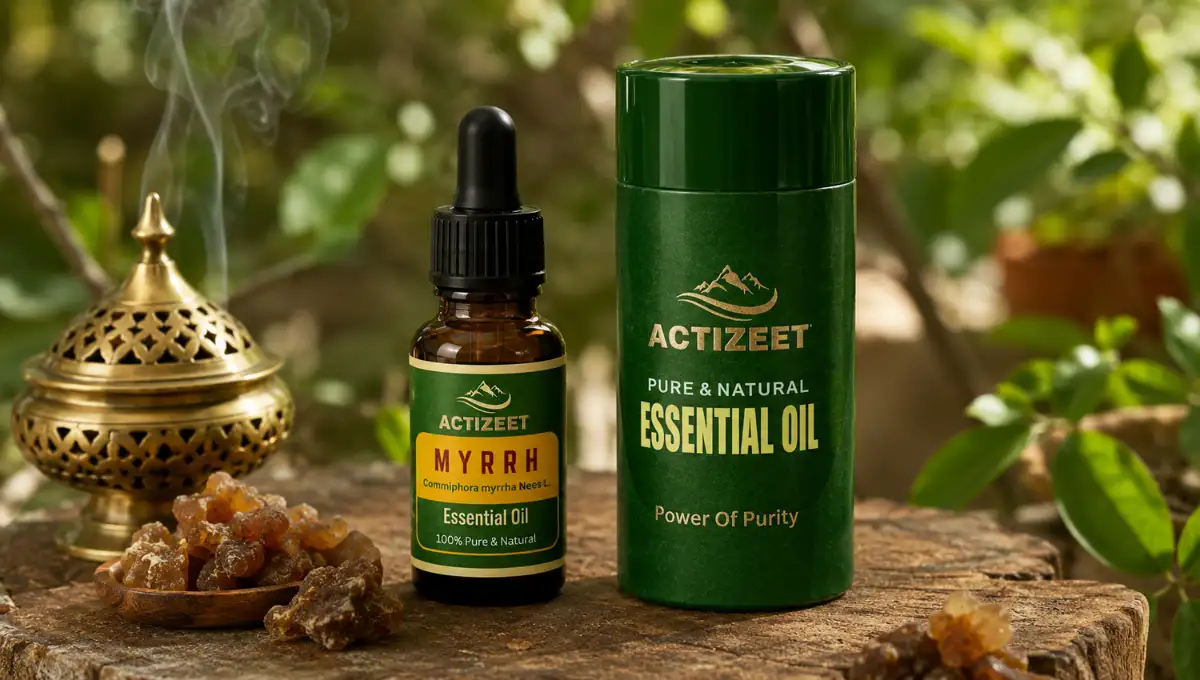
ACTIZEET® Myrrh Essential Oil is steam-distilled from authenticated Commiphora myrrha dried oleo-gum-resin with clear species specification, resin source identification, appropriate viscosity, and the genuinely deep, warm, smoky-balsamic aromatic character that confirms authentic curzerene-rich sesquiterpene content. India's most trusted choice for genuine therapeutic myrrh essential oil in 2026.
🪐 Buy ACTIZEET® Myrrh Essential Oil →Why ACTIZEET® Is the Right Myrrh Oil Choice for India in 2026
- Verified Commiphora myrrha species with dried resin steam distillation confirmed. ACTIZEET® provides the botanical species name and extraction method specification that confirms buyers are receiving genuine therapeutic myrrh with the curzerene and furanoterpenoid sesquiterpene profile documented in traditional medicine and contemporary pharmacological research
- Authentic deep smoky-balsamic aromatic character confirming genuine C. myrrha compound integrity. The distinctively deep, warm, earthy-smoky, slightly bitter-sweet aromatic character of genuine Commiphora myrrha is the most immediately perceptible quality confirmation distinguishing ACTIZEET® from opopanax substitution, carrier oil dilutions, or inferior resin sources
- Appropriate viscosity confirming single-ingredient resin distillate purity. ACTIZEET® Myrrh Essential Oil's characteristic thickness confirms genuine undiluted sesquiterpene-rich resin distillate without carrier oil additions that would reduce the curzerene concentration below therapeutic effectiveness levels
- Cross-traditional sacred heritage honored with transparent quality standards. ACTIZEET® sources myrrh with genuine respect for its extraordinary 5,000-year history of therapeutic and sacred application across Hindu, Islamic, Christian, Jewish, and ancient Egyptian traditions, and provides the botanical accountability that makes this sacred heritage practically accessible to India's most serious wellness buyers
- India's trusted aromatherapy brand with consistent quality accountability. Actizeet.in maintains botanical species verification, extraction method transparency, and quality documentation across its full range, providing the consistent quality assurance that India's most informed buyers require from every essential oil investment, particularly for premium and historically significant categories like myrrh
Frequently Asked Questions
Finding the best myrrh oil in India in 2026 requires two non-negotiable quality verifications: Commiphora myrrha or C. molmol species confirmation (not opopanax sweet myrrh, not guggul, not unspecified Commiphora blend), and the deeply warm, smoky-balsamic, slightly bitter aromatic character that immediately identifies genuine therapeutic myrrh resin distillate. ACTIZEET® Myrrh Essential Oil meets both standards with the botanical transparency, appropriate resin viscosity, and authentic aromatic depth that connect India's most serious wellness buyers to one of humanity's oldest healing medicines in its most genuine, most concentrated, and most therapeutically credible form available in 2026.
Latest From Our Blog

Best Patchouli Oil in India 2026: A Complete Buyer’s Guide to Pure, Authentic Pogostemon cablin Essential Oil
Looking for the best patchouli oil in India in 2026?...

Can Rosemary Oil Help with Acne? An Indian Journey to Clearer, Calmer Skin
Wondering if rosemary oil can help with acne? Learn how...

15 Tuberose Essential Oil Benefits That Make This “Queen of the Night” Worth Every Drop
Discover 15 powerful tuberose essential oil benefits backed by aromatherapy...

Nourish Your Mane: The Best Essential Oil for Hair Growth Revealed
Discover the best essential oils for hair growth. Lavender, rosemary,...