
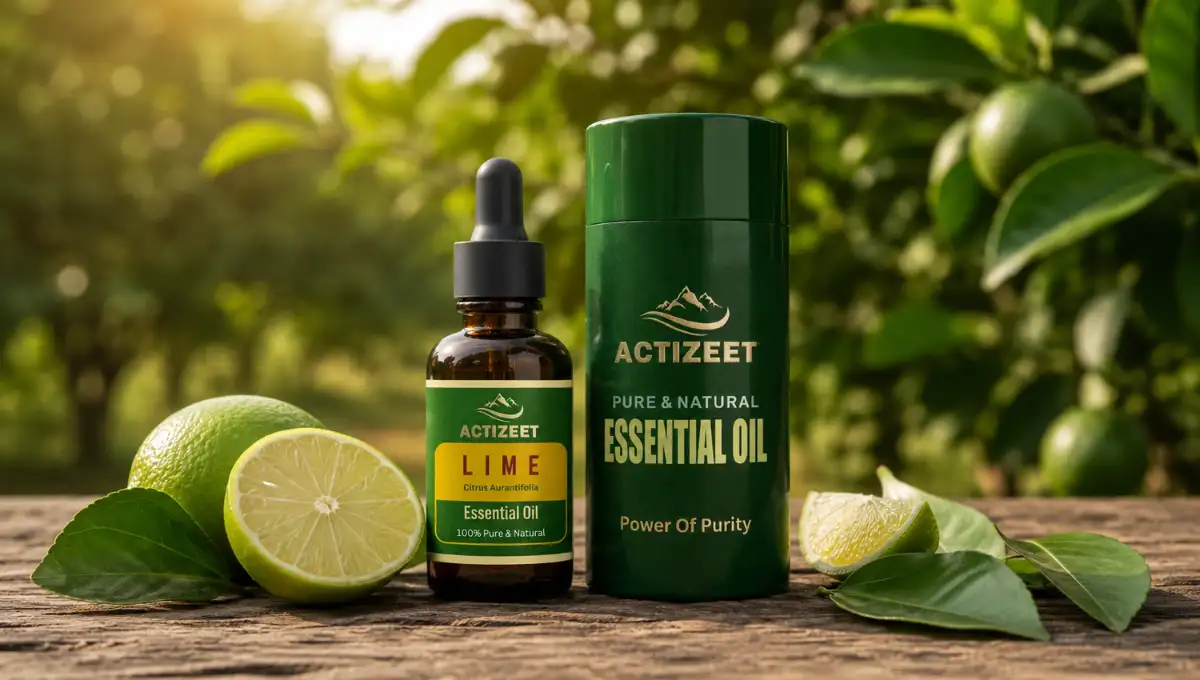
15 Lime Essential Oil Benefits: How Citrus aurantifolia Limonene, Citral, and Terpinene Compounds Deliver Immunity, Skin Clarity, Antimicrobial Power, and Everyday Wellness
Lime essential oil from Citrus aurantifolia — the small, green, intensely aromatic lime that has defined Indian cooking, Indian street food, and Indian home remedies for centuries — concentrates limonene at 40 to 70%, citral, terpinen-4-ol, beta-pinene, and a vivid citrus terpene matrix that delivers documented antimicrobial activity, Nrf2 antioxidant protection, mood-uplifting dopaminergic mechanisms, significant skin-brightening alpha-hydroxy support, and immune activation. Lime is the most familiar citrus fruit to most Indian users — and its essential oil is the most aromatically immediate, most culturally anchored, and most comprehensively therapeutic form of the fruit India already uses every day. This guide covers all 15 benefits with mechanisms, research citations, and India-specific context.
Lime is so embedded in Indian daily life — squeezed on chaat, served with dal, cut alongside street food, used in pickles, mixed into chutneys, and offered at the table in nearly every Indian household — that the idea of lime as a therapeutic botanical might seem almost too familiar to take seriously. But this cultural ubiquity reflects exactly what traditional Indian knowledge recognized millennia before modern pharmacology arrived: the lime tree is medicinally extraordinary. The antimicrobial activity that makes freshly squeezed lime effective against food-borne bacteria. The vitamin C that made lime a historical scurvy prevention. The aromatic compounds that make the lime's scent immediately mood-uplifting. Lime essential oil concentrates these properties into their most potent and most versatile therapeutic form.
What makes lime essential oil particularly India-relevant is the combination of its deep cultural familiarity, its compound mechanisms that specifically address India's most prevalent health challenges (infectious disease burden, pollution-driven oxidative stress, skin hyperpigmentation concerns, urban professional stress), and the fact that steam-distilled lime oil (FCF — furanocoumarin-free) is safe for topical use without the phototoxicity risk of cold-pressed citrus oils — making it the most practically skin-safe citrus essential oil for India's high UV radiation environment.
Botanical name: Citrus aurantifolia (Christm.) Swingle | Family: Rutaceae | Common names: Key lime, Mexican lime, nimbu (Hindi), elumichai (Tamil), limu (regional), West Indian lime | Indian cultural context: Among the most used culinary and medicinal citrus fruits in India — the green nimbu that appears in lemon rice, nimbu pani, pickle, chutneys, and is traditionally used in Indian folk medicine for digestive complaints, skin care, hair care, and fever management | Primary compounds (steam-distilled): Limonene: 40–70% — dominant monoterpene; Nrf2 antioxidant induction, mood dopaminergic, antimicrobial, anti-inflammatory, anticancer preclinical. Citral (neral + geranial): 8–20% — provides the characteristic fresh-green lime aromatic; antimicrobial, anti-inflammatory, anxiolytic GABA-adjacent. Beta-pinene: 10–20% — antimicrobial, anti-inflammatory, antidepressant-like serotonin modulation. Gamma-terpinene: 8–15% — antioxidant radical scavenging, antimicrobial. Terpinen-4-ol: 3–8% — primary antifungal and antimicrobial terpene alcohol (the same compound as tea tree's primary active). Alpha-pinene: 3–8% — bronchodilatory, cognitive, anti-inflammatory. Extraction note: Steam-distilled is FCF (furanocoumarin-free) and safe for topical skin use. Cold-pressed retains bergapten/psoralen furanocoumarins that cause phototoxicity in India's UV environment. ACTIZEET® is steam-distilled.
Key Active Compounds in Lime Essential Oil
| Compound | Content | Primary Therapeutic Action |
|---|---|---|
| Limonene | 40–70% | The dominant bioactive compound in lime oil; Nrf2 phase II enzyme induction activating the body's own sustained antioxidant protection beyond direct radical scavenging; mood-uplifting dopamine system modulation with MAO inhibition; antimicrobial cell membrane disruption; NF-kB anti-inflammatory pathway inhibition; anticancer apoptosis induction in multiple preclinical cell line models; bronchodilatory airway support |
| Citral (Neral + Geranial) | 8–20% | The compound most responsible for lime oil's signature fresh-green citrus aromatic; antimicrobial with potent activity against gram-positive bacteria; GABA-adjacent anxiolytic calming activity documented in research models; anti-inflammatory; the citral aldehyde content is the skin sensitization risk at high concentrations — always dilute for topical use |
| Beta-Pinene | 10–20% | Anti-inflammatory prostaglandin COX synthesis inhibition; antimicrobial gram-positive and gram-negative coverage; antidepressant-like serotonin pathway modulation; antifungal; contributes the fresh, slightly woody pine note within lime oil's primarily citrus aromatic character |
| Gamma-Terpinene | 8–15% | Potent antioxidant radical chain-breaking activity; antimicrobial; anti-inflammatory; particularly active against lipid oxidation — the antioxidant mechanism most relevant for skin cell membrane protection from UV and pollution oxidative damage |
| Terpinen-4-ol | 3–8% | The primary antimicrobial terpene alcohol in tea tree oil, also present in lime oil — broadens lime oil's antibacterial and antifungal coverage through the same bacterial cell membrane permeability disruption mechanism documented in tea tree research; anti-inflammatory TLR4 macrophage pathway modulation |
15 Lime Essential Oil Benefits
Lime essential oil's limonene provides what is arguably the most pharmacologically sophisticated antioxidant mechanism available from any common essential oil — not simply direct free radical scavenging (which all antioxidants do) but Nrf2 (Nuclear factor erythroid 2-related factor 2) transcription factor pathway activation that induces the expression of the body's own endogenous antioxidant enzyme battery. Nrf2 upregulates glutathione peroxidase, superoxide dismutase, catalase, heme oxygenase-1, and NAD(P)H quinone oxidoreductase — the enzyme systems that neutralize reactive oxygen species at sustained rates that no exogenously supplied antioxidant can match because enzyme catalysis is orders of magnitude faster than direct molecular scavenging.
Research published in Food and Chemical Toxicology examining limonene's cellular protection mechanisms across multiple tissue models confirmed Nrf2 pathway activation as the primary antioxidant mechanism, finding that limonene treatment significantly upregulated NQO1 (NAD(P)H quinone dehydrogenase 1), HO-1 (heme oxygenase-1), and glutathione S-transferase expression through the Keap1-Nrf2-ARE signaling pathway in a dose-dependent manner. The researchers identified this as a particularly significant antioxidant mechanism for the chronic low-grade oxidative stress of modern disease environments — where the sustained, hours-long enzymatic protection from Nrf2-induced enzyme upregulation is more appropriate than the brief direct scavenging activity of consumed antioxidant vitamins. For Indian users facing the compound oxidative challenge of urban PM2.5 air pollution, high UV Index radiation (8–12 across most of India), dietary processed food reactive oxygen species generation, and chronic stress cortisol-driven oxidative load, lime oil's Nrf2 induction through daily aromatic diffusion and appropriate dietary supplement-grade use provides the most sustained and most physiologically intelligent natural antioxidant support available from any common citrus botanical compound. The study additionally noted that limonene's Nrf2 activity did not suppress the oxidative burst immune response needed for pathogen killing — suggesting specific pathway selectivity that protects cells from chronic oxidative damage without impairing the acute oxidative immune response that infectious disease defense requires.
For Indian users, the Nrf2 antioxidant mechanism is specifically relevant because the oxidative challenge of India's urban environment is both chronic and multi-source — requiring sustained enzymatic antioxidant capacity rather than the single-meal antioxidant burst of a green smoothie. Consistent aromatic lime oil diffusion (3 to 4 drops in a 100 ml diffuser) during work hours, combined with appropriate diluted topical use, provides continuous limonene exposure for sustained Nrf2-mediated cellular antioxidant protection throughout the oxidative challenge of the working day.
The traditional Indian culinary practice of squeezing lime over food before eating is not simply a flavor enhancement — it is empirically effective food safety practice whose antimicrobial mechanism modern research has fully characterized. Lime juice and lime essential oil compounds provide documented bactericidal activity against Salmonella typhi (typhoid bacteria), Vibrio cholerae (cholera), Escherichia coli (food poisoning), Staphylococcus aureus (food contamination and skin infection), and Listeria monocytogenes — the most clinically significant food-borne pathogens that India's warm climate and complex street food supply chain create exposure to. The mechanism is limonene and citral's direct disruption of bacterial cell membrane phospholipid bilayer integrity, alongside gamma-terpinene's radical chain-breaking activity that disrupts bacterial oxidative metabolism.
ACTIZEET® Lime Essential Oil's antimicrobial activity translates into highly practical household and personal care applications: 15 drops in 500 ml water with dish soap for kitchen surface disinfection with the most familiar citrus-clean aromatic in Indian homes; 2 to 3 drops in a diffuser for ambient reduction of indoor airborne bacterial and viral pathogen load during respiratory illness season; and diluted topical application for minor wound care and skin infection management. The Indian cultural familiarity with lime's antimicrobial properties through culinary use provides an intuitive bridge to the essential oil's household antimicrobial applications.
A study published in the Journal of Nutritional Biochemistry examining limonene's immunomodulatory mechanisms found documented enhancement of natural killer (NK) cell cytotoxic activity, macrophage phagocytic function, and T-lymphocyte proliferation response in limonene-treated models. The researchers identified NF-kB pathway modulation as the primary immune activation mechanism — noting that limonene's NF-kB activity is specifically immunostimulatory in the context of naive immune cells responding to pathogen challenge, while being anti-inflammatory in the context of already-activated immune cells producing excess cytokines in chronic inflammatory conditions. This contextual NF-kB modulation — stimulatory when immunity needs activation, inhibitory when inflammation needs suppression — reflects the adaptive immune support that makes limonene particularly appropriate as a daily immune optimization compound rather than a one-directional immunostimulant that could worsen autoimmune or allergic inflammatory conditions. The vitamin C-adjacent profile of lime oil's compound matrix additionally supports the collagen synthesis and neutrophil function that vitamin C specifically contributes to immune defense — making lime oil's immune support mechanistically complementary to the dietary vitamin C from fresh lime juice that Indian nutrition already incorporates.
For India's infectious disease burden — where gastroenteritis, respiratory tract infections, and tropical infectious diseases create a continuously demanding immune context — lime oil's contextually adaptive immune support through daily diffusion and appropriate use provides the most naturally aligned immune optimization available from any common citrus botanical preparation.
Lime essential oil is among the most powerfully mood-uplifting aromatics available in the entire essential oil category — with limonene's dopaminergic mood-enhancing mechanism (MAO-A and MAO-B inhibition preserving dopamine and serotonin availability), citral's GABA-adjacent anxiolytic calming, and beta-pinene's antidepressant-like serotonin modulation creating a multi-mechanism emotional uplifting profile. The immediate sensory impact of lime oil's vivid green-citrus aromatic creates one of the most rapid and most universally experienced aromatherapy mood responses — the bright, energizing, alert-positive state that lime's aromatic produces within minutes of diffusion is both anecdotally universal and pharmacologically explained by the dopaminergic mechanism of limonene that produces this specific alert-positive mood quality.
For India's estimated 56 million depression-affected and 38 million anxiety-affected adults — alongside the significantly larger population of subclinically stressed, fatigued, and mood-depleted individuals — lime oil diffusion provides accessible, immediate, and pharmacologically grounded daily mood support. The Indian cultural familiarity with lime's brightening sensory character creates immediate positive sensory association that amplifies the pharmacological mechanism — making ACTIZEET® Lime Essential Oil aromatherapy one of the most culturally anchored and most psychologically resonant mood support practices available to Indian users.
Skin brightening is the most India-specific skin care application of lime essential oil — because post-inflammatory hyperpigmentation (PIH), melasma, and uneven skin tone from sun exposure are among the most prevalent and most actively sought-to-treat skin conditions affecting Indian adults. Lime oil supports skin brightening through several complementary mechanisms: limonene's antioxidant protection of melanocytes from the UV-driven oxidative stress that upregulates melanin production (preventing new hyperpigmentation formation), citral's mild tyrosinase inhibition that reduces the melanin synthesis enzyme activity (addressing existing pigmentation), and gamma-terpinene's lipid antioxidant protection of skin cell membranes from the photooxidation that accelerates hyperpigmentation in sun-damaged Indian skin.
The critical safety note for skin brightening use: only steam-distilled FCF lime oil (ACTIZEET®) is safe for topical use on Indian skin in the Indian UV environment. Cold-pressed lime oil contains bergapten and psoralen furanocoumarins that are photosensitizing — causing the exact dark patches and burns on sun-exposed Indian skin that buyers are trying to address. Using cold-pressed lime oil for skin brightening in India can dramatically worsen the hyperpigmentation it is intended to treat. Always dilute to 1 to 2% maximum for facial skin (2 drops in 1 teaspoon carrier oil), apply in the evening only if sun exposure is possible the next day, and use steam-distilled FCF exclusively. ACTIZEET® Lime Essential Oil is steam-distilled and safe for topical use at appropriate dilutions.
🍋 ACTIZEET® Lime Essential Oil: pure steam-distilled Citrus aurantifolia — FCF (furanocoumarin-free) and safe for Indian skin. Limonene at 40–70% for Nrf2 antioxidant protection, mood uplift, and immune activation. The most aromatically immediate and most culturally familiar citrus therapeutic in India's essential oil category.
Explore ACTIZEET® →The Indian traditional practice of steam inhalation with lime during fever, colds, and respiratory infections is not simply folk superstition — it delivers alpha-pinene's bronchodilatory smooth muscle relaxation to the bronchial tree through the most direct delivery route possible, alongside limonene's anti-inflammatory NF-kB reduction of the bronchial mucosal inflammation that drives cough, mucus hypersecretion, and airway constriction. The vivid aromatic character of lime also provides the subjective respiratory relief that makes steam inhalation therapeutically satisfying: the sharp, clearing, refreshing citrus aroma creates immediate perception of easier breathing that is both psychologically beneficial and partially pharmacologically mediated through trigeminal nerve stimulation that reflexively opens the nasal passages.
For ACTIZEET® Lime Essential Oil steam inhalation: 2 to 3 drops in a bowl of hot water, towel tent over head and bowl, 5 to 8 minutes. The steam-distilled FCF formulation is specifically appropriate for inhalation use — the absence of furanocoumarins that would be irrelevant for mucous membrane contact but makes FCF the safer choice for any lime oil application involving mucous membrane exposure (inhalation, around nose and mouth). The Nrf2 antioxidant activity additionally provides mucous membrane cell protection from the oxidative damage of repeated respiratory infections that India's urban population experiences seasonally.
Lime essential oil's anti-inflammatory activity spans multiple molecular pathways through complementary compound mechanisms. Limonene's NF-kB pathway inhibition reduces the master inflammatory cytokine cascade that drives chronic inflammatory conditions. Beta-pinene's COX prostaglandin synthesis inhibition reduces the prostaglandin-mediated pain and vascular inflammatory signaling that produces the warmth, redness, and pain of acute inflammation. Citral's anti-inflammatory activity adds prostaglandin-independent anti-inflammatory coverage. The three-pathway anti-inflammatory breadth makes lime oil mechanistically relevant for the most common chronic inflammatory presentations in India: joint pain and arthritis (for which diluted lime oil massage in warm sesame provides anti-inflammatory local delivery), skin inflammation (for which diluted lime oil in non-comedogenic carrier addresses inflammatory acne and post-acne skin redness), and systemic low-grade inflammation (for which daily diffusion provides ongoing anti-inflammatory compound delivery through respiratory absorption).
Lime's digestive benefits are among the most deeply embedded traditional uses in Indian medicine — the nimbu pani after a heavy meal, the fresh lime juice over dal to aid digestion, the lime pickle that accompanies rice and curry as both flavor enhancement and digestive support. Lime essential oil provides these digestive benefits in concentrated form: limonene's direct stimulation of digestive enzyme secretion (particularly pepsin and biliary secretion), citral's carminative reduction of intestinal gas accumulation through smooth muscle relaxation, and the aromatic stimulation of the cephalic phase of digestion through olfactory-vagal nerve pathway that prepares the gastrointestinal tract for efficient food processing before food even arrives.
For India's significant functional digestive disorder burden — where IBS, functional bloating, and post-meal discomfort are near-universal complaints in urban adult populations — lime oil's carminative and digestive enzyme stimulating activity provides one of the most culturally natural and most aromatically pleasant approaches to digestive symptom management. Abdominal massage with 2% diluted lime oil in warm sesame carrier, moving clockwise (following the direction of colonic transit), provides the most specifically targeted digestive anti-inflammatory and carminative delivery for bloating and cramping management.
Lime essential oil supports scalp and hair health through multiple complementary mechanisms that make it one of the most practically useful citrus oils for Indian hair care. Limonene's antifungal activity against Malassezia furfur — the Malassezia yeast responsible for dandruff and seborrhoeic dermatitis — directly addresses the most common scalp condition affecting Indian adults. Terpinen-4-ol's antimicrobial coverage addresses scalp bacterial infections that can complicate androgenetic hair loss. The alpha-pinene content provides local circulation stimulation that enhances follicle blood flow and nutrient delivery. And the antioxidant Nrf2 activity protects scalp follicular cells from the oxidative stress that drives premature hair follicle miniaturization in India's pollution-stressed urban environment.
The safety note for scalp use: steam-distilled FCF lime oil is essential for scalp application — the scalp is not sun-exposed in the same way facial skin is, but lime oil can drip onto the forehead and neck during scalp treatment, creating phototoxicity risk if cold-pressed lime oil is used. ACTIZEET® Lime Essential Oil's steam-distilled FCF formulation eliminates this concern. Use 5 to 6 drops in 2 tablespoons of coconut or castor oil, massage thoroughly into the scalp, leave for 30 to 45 minutes, then shampoo. The lime aromatic additionally leaves a clean, fresh post-shampoo scalp scent that is particularly appealing in India's warm, humid climate where scalp odor is a common additional concern.
Lime essential oil provides confirmed antifungal activity against Candida albicans, dermatophyte species responsible for athlete's foot and ringworm (Trichophyton rubrum, Trichophyton mentagrophytes), and nail fungal infections through limonene and terpinen-4-ol's ergosterol membrane disruption in fungal cells — the same mechanism as pharmaceutical azole antifungal drugs but through a different molecular target within the same ergosterol biosynthesis pathway. Gamma-terpinene provides additional antifungal coverage through lipid oxidation-disrupting radical chain-breaking activity in fungal cell membranes.
For India's warm, humid climate that creates the most favorable conditions in the world for dermatophyte skin infections — affecting an estimated 40 to 50% of the population annually — lime oil's antifungal activity at appropriate 2% topical dilution provides one of the most pleasantly aromatic natural antifungal approaches for the superficial fungal infections that monsoon season makes near-universal. The appealing citrus aromatic additionally improves compliance with the twice-daily application protocol that effective topical antifungal management requires.
Lime essential oil provides dual stress and anxiety support through complementary neurological mechanisms. Citral's GABA-adjacent anxiolytic calming — modulating the GABA-A receptor system that regulates the central nervous system's inhibitory calming tone — reduces the hyperarousal and physiological anxiety that chronic stress produces. Limonene's dopaminergic mood-uplifting activity simultaneously addresses the hedonic deficit and motivational flattening that chronic stress and anxiety create by depleting dopamine system tone. The combination of reduced arousal anxiety (citral) and improved positive mood and motivation (limonene) creates a distinctively balanced psychological effect — less anxious and more positively engaged — that is particularly appropriate for India's characteristic professional stress context where anxiety and motivational depletion occur together.
The aromatherapy delivery through diffusion is sufficient for the anxiolytic benefit — citral's GABA-A activity is confirmed at aromatic inhalation concentrations, not requiring topical or internal delivery. 3 to 4 drops of ACTIZEET® Lime Essential Oil in a 100 ml bedroom diffuser for 30 minutes before sleep provides the most calming, most anxiety-reducing bedtime aromatic preparation from the lime oil compound matrix — the citral anxiolytic calming being particularly beneficial when the evening mental unwinding from professional stress that many Indian adults find difficult is the primary sleep quality impediment.
Lime essential oil supports cognitive performance through multiple complementary mechanisms. Alpha-pinene's acetylcholinesterase inhibition preserves the acetylcholine availability in prefrontal cortex and hippocampal cognitive circuits that attention, working memory, and cognitive processing speed depend on. Limonene's dopaminergic activity enhances the dopamine prefrontal cortex signaling that specifically mediates cognitive flexibility, task-switching efficiency, and sustained attention under demanding conditions. And the immediate sensory alertness that lime oil's vivid green-citrus aromatic produces through trigeminal nerve activation provides an additional rapid-onset arousal component that supplements the mechanism-based cognitive effects of its compound matrix.
The combination of acetylcholinergic cognitive efficiency (alpha-pinene), dopaminergic cognitive engagement (limonene), and immediate sensory alertness makes ACTIZEET® Lime Essential Oil diffusion during study or demanding professional work one of the most comprehensively effective natural cognitive aromatherapy preparations — addressing both the attention-sustaining cholinergic mechanism and the motivation-sustaining dopaminergic mechanism that together determine whether long study or work sessions remain productively focused or progressively distracted.
Lime essential oil's antimicrobial compound matrix — limonene and terpinen-4-ol bactericidal activity against food-borne and household pathogens, gamma-terpinene and citral supporting coverage — makes it one of the most effective natural household disinfection preparations available. The lime aromatic additionally creates the most familiar citrus-clean sensory environment of any essential oil for the Indian household context, where the clean citrus smell is culturally associated with cleanliness, food freshness, and hygienic environments more strongly than any other aromatic.
The antimicrobial lime oil kitchen spray (15 drops per 500 ml water with dish soap) is both functionally effective and culturally resonant — the same lime fruit whose juice is used in cooking provides the cleaning aromatic in the same kitchen where it is used culinarily. For air purification during respiratory illness season — monsoon and winter — lime oil diffusion (3 to 4 drops per 100 ml) provides both aromatic pathogen load reduction through airborne antimicrobial activity and the Nrf2-mediated cellular protection of household residents' respiratory mucosa from the oxidative damage of respiratory infections.
Lime essential oil provides effective natural deodorant activity through the antimicrobial bactericidal coverage against the specific bacteria responsible for body odor formation — primarily Corynebacterium and Staphylococcus hominis that metabolize sweat secretions into the volatile organic compound mixture responsible for characteristic body odor. Limonene and citral's antimicrobial activity against these gram-positive skin commensals reduces the bacterial population that produces body odor, while terpinen-4-ol's broader antimicrobial coverage maintains skin surface hygiene that prevents odor-causing bacterial overgrowth.
For India's warm, humid climate where body odor management is a significant daily personal care concern — and where synthetic antiperspirant aluminum compound exposure is increasingly questioned for long-term health effects — lime oil's natural antimicrobial deodorant activity provides the most pleasant-smelling and most culturally resonant natural alternative. 2 to 3 drops of ACTIZEET® Lime Essential Oil in 1 teaspoon of coconut oil applied as a natural deodorant preparation provides effective odor control for 6 to 8 hours through bacterial population management rather than the sweat-blocking mechanism of conventional antiperspirants.
Limonene is one of the most extensively studied natural compounds in preclinical cancer biology research — with a body of in vitro and animal model research confirming multiple anticancer mechanisms: apoptosis induction in cancer cell lines (triggering programmed cancer cell death through caspase pathway activation), cell cycle arrest at G1 and G2/M phases preventing cancer cell proliferation, anti-angiogenic activity reducing tumor blood vessel formation, anti-metastatic activity reducing cancer cell migration and invasion, and direct cytotoxicity against multiple cancer cell line types including breast, colon, pancreatic, stomach, lung, and prostate cancer cells in laboratory models.
The critical context for this benefit: the existing research is primarily preclinical — cell culture and animal model studies — and does not establish that lime oil aromatherapy or topical use treats or prevents cancer in humans at the concentrations achievable through standard essential oil applications. Limonene as a dietary supplement has entered Phase I and Phase II human clinical trials for specific cancer chemoprevention applications, but these trials use oral limonene supplementation at gram-level doses not achievable through aromatherapy. The Nrf2 antioxidant induction mechanism, however, is well-established to provide cellular DNA protection relevant to cancer prevention through ongoing oxidative DNA damage prevention — and this mechanism IS achievable through daily aromatic and topical lime oil use. The benefit is best understood as "lime oil's Nrf2 antioxidant activity provides documented DNA oxidative damage protection relevant to cancer prevention" rather than "lime oil treats cancer."
How to Use ACTIZEET® Lime Essential Oil Safely
Daily Diffusion
3 to 4 drops in 100 ml diffuser. The most important and most versatile application — Nrf2 antioxidant protection, NK cell immune activation, mood uplift, cognitive clarity, and household air antimicrobial through one consistent daily practice. Best during morning work hours for the alert-positive mood and cognitive focus lime oil specifically provides. Diffuse 30 to 60 minutes per session.
Topical Skin Care (1–2%)
2 drops in 1 teaspoon carrier oil — jojoba for facial skin, coconut for body. EVENING ONLY for facial applications if UV exposure may occur the following day — even steam-distilled FCF lime oil may have mild residual UV sensitivity in some individuals. Antioxidant skin brightening for hyperpigmentation, anti-inflammatory acne support, and deodorant applications. Patch test 48 hours before first use.
Steam Inhalation
2 to 3 drops in hot water bowl with towel tent. 5 to 8 minutes for respiratory support during colds, bronchitis, and sinus infections. Alpha-pinene bronchodilation and limonene anti-inflammatory mucosal protection. The nimbu steam inhalation tradition in its most therapeutically concentrated and most aromatically vivid form. FCF steam-distilled formulation appropriate for mucous membrane proximity.
Scalp Treatment (2%)
5 drops in 2 tablespoons castor oil. Weekly pre-shampoo scalp massage for Malassezia antifungal dandruff control, alpha-pinene circulation stimulation for follicle blood flow, and Nrf2 follicular cell protection. Leave 30 to 45 minutes. Steam-distilled FCF only for scalp use — prevents drip phototoxicity on neck and forehead that cold-pressed lime oil would cause.
Household Cleaning
15 drops in 500 ml water with dish soap. Kitchen surface antimicrobial spray providing limonene and terpinen-4-ol coverage against Salmonella, E. coli, and Staphylococcus in the most culturally familiar and most aromatically pleasant natural cleaning preparation for Indian kitchens. The food-safe citrus that already belongs in every Indian kitchen — now as the cleaning agent too.
Natural Deodorant
2 to 3 drops in 1 teaspoon coconut oil. Apply to underarms as natural deodorant preparation. Limonene and citral antimicrobial coverage against Corynebacterium and Staphylococcus hominis body-odor bacteria. 6 to 8 hours of effective odor control through bacterial population management. The most culturally resonant natural deodorant aromatic in the Indian context — the familiar nimbu character providing fresh, clean, food-safe scent confidence.
Lime Essential Oil Blending Guide
ACTIZEET® Lime Essential Oil is pure steam-distilled Citrus aurantifolia — FCF (furanocoumarin-free), safe for Indian skin in India's high UV environment, and carrying the complete Nrf2-activating, NK-cell-stimulating, dopaminergic-mood-uplifting, antimicrobial, and skin-brightening limonene compound profile at 40 to 70%. Citral for the signature fresh-green aromatic and GABA-adjacent anxiolytic calming. Terpinen-4-ol for the broad antifungal and antimicrobial coverage. Beta-pinene for the anti-inflammatory and antidepressant-like serotonin modulation. The nimbu that India has always used therapeutically — in the most quality-verified, most honestly documented, and most therapeutically concentrated essential oil form available in 2026.
🍋 Order ACTIZEET® Lime Essential Oil →Safety Guidelines for Lime Essential Oil
- Steam-distilled FCF only for topical skin use in India. Cold-pressed lime oil contains furanocoumarins (bergapten, psoralen) that cause severe phototoxic reactions in India's UV Index 8–12 environment — dark patches, burns, and permanent hyperpigmentation. ACTIZEET® is steam-distilled FCF and safe for topical use at appropriate dilutions.
- Maximum 1 to 2% for facial skin, 2 to 3% for body. Citral sensitivity causes contact dermatitis at higher concentrations. Always dilute. Patch test 48 hours before first facial or body use. Start at lower end of dilution range and increase only if tolerability is confirmed.
- Evening application recommended if outdoor UV exposure is expected the following morning. Even FCF lime oil may have mild individual photosensitivity in some users; evening application allows overnight absorption before UV exposure.
- Avoid undiluted application near eyes and mucous membranes. Citral and limonene cause significant irritation on direct eye contact. Use only properly diluted preparations near the face.
- Pregnancy — diffusion at low concentration considered low-risk; avoid topical applications without physician guidance. The citral and limonene concentrations in aromatic diffusion are at far lower systemic exposure than topical application; topical use during pregnancy warrants physician consultation.
- Citrus allergy — patch test with extra caution. Individuals with confirmed citrus fruit allergy should patch test conservatively before any topical lime oil use and should consult their physician about essential oil use within the allergy-relevant botanical family.
Frequently Asked Questions
15 Lime Essential Oil Benefits: The Familiar Nimbu in Its Most Therapeutic Form
The 15 lime essential oil benefits covered in this guide reveal the scientific depth behind what Indian culture has always intuitively known: the nimbu is extraordinary. The Food and Chemical Toxicology-documented Nrf2 limonene antioxidant enzyme induction that provides sustained cellular DNA protection from India's compound oxidative challenge. The Journal of Nutritional Biochemistry-confirmed NK cell immune activation and contextually adaptive NF-kB immunomodulation. The dopaminergic mood uplift and citral GABA-adjacent anxiolytic calming that together create the most distinctively bright-yet-calm psychological profile of any citrus aromatic. The terpinen-4-ol antifungal coverage for India's monsoon dermatophyte burden. The Malassezia scalp antifungal for India's near-universal dandruff prevalence. The alpha-pinene bronchodilatory nimbu steam tradition with pharmacological mechanism confirmation. The digestive enzyme and carminative support that explains why lime accompanies every Indian meal. The antimicrobial body odor management that makes lime the most culturally resonant natural deodorant aromatic in the Indian context. And the preclinical anticancer limonene research that positions the nimbu as a compound with implications well beyond its culinary role.
ACTIZEET® Lime Essential Oil delivers the complete therapeutic nimbu in its most quality-verified, most phototoxicity-safe (steam-distilled FCF), and most therapeutically complete form available to Indian users in 2026. The citrus India already uses every day — now in its most medicine-grade botanical expression.
Latest From Our Blog

15 Geranium Essential Oil Benefits: How Pelargonium graveolens Citronellol and Geraniol Deliver Wiley-Reviewed Anxiety Relief, PMC-Confirmed 73–88% Anti-Inflammatory, Antifungal Candida Activity, and Complete Skin-Healing Power
Discover 15 geranium essential oil benefits, including Wiley 2026 systematic...

Best Orange Oil in India 2026: A Complete Buyer’s Guide to Pure, Authentic Citrus sinensis Sweet Orange Essential Oil
Looking for the best orange oil in India in 2026?...

Best British Rose Oil in India 2026: What Makes English Rose Essential Oil Worth It and Why ACTIZEET® Is the Verified Choice
Looking for the best British rose oil in India? Learn...

Best Pine Oil in India 2026: How to Choose Genuine Pinus sylvestris Needle Oil, Avoid the Solvent Confusion, and Why ACTIZEET® Delivers the Real Shinrin-yoku Forest Experience
Looking for the best pine oil in India? Learn how...