
Triphala for Digestion: The 5,000-Year-Old Gut Formula That Modern Research Keeps Validating
Constipation, bloating, slow digestion, and an imbalanced gut microbiome are modern problems. Triphala is an ancient three-fruit Ayurvedic formula that addresses all of them through mechanisms that scientists are still uncovering and confirming.
Most digestive supplements target one problem: a fiber supplement for constipation, a probiotic for gut bacteria, a digestive enzyme for bloating, or an antispasmodic for cramping. Triphala is different. This ancient Ayurvedic formulation, composed of three dried fruits in equal proportions, addresses the full spectrum of digestive function simultaneously, and it has been doing so in Indian medicine for at least 5,000 years.
What makes Triphala remarkable from a scientific standpoint is not just its longevity in traditional use, though that cross-generational consensus carries significant weight in herbal medicine. It is the fact that modern researchers keep publishing studies that validate specific mechanisms behind the digestive benefits that Ayurvedic practitioners observed empirically over centuries. From its effects on constipation and bowel regularity, to its prebiotic modulation of the gut microbiome, to its anti-inflammatory protection of the intestinal lining, Triphala is showing up as relevant in the most current gastroenterology and microbiome research.
This guide covers how Triphala for digestion actually works, what the research confirms, who benefits most, and how to use it effectively through the high-quality ACTIZEET® Triphala Powder that brings this ancient formula into your daily wellness routine.
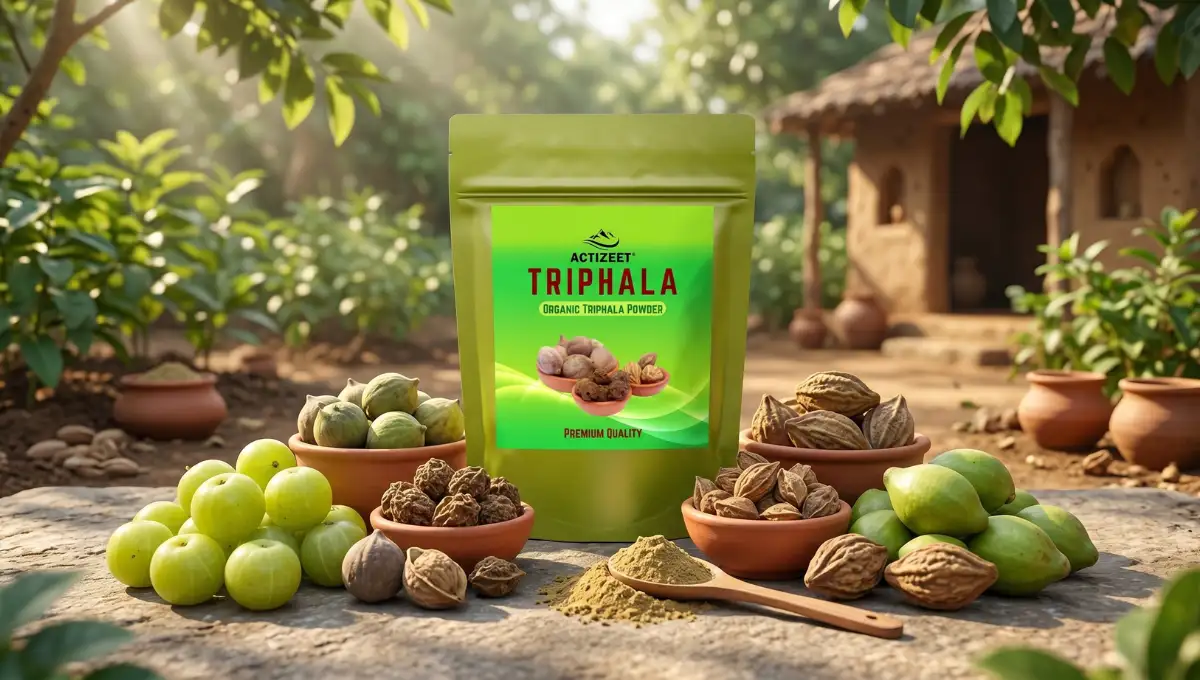
Triphala (meaning "three fruits" in Sanskrit) is one of the most foundational and widely used formulations in Ayurvedic medicine. It is an equal-parts combination of three dried fruits: Amla (Emblica officinalis or Indian gooseberry), Haritaki (Terminalia chebula), and Bibhitaki (Terminalia bellirica). Each fruit has its own distinct therapeutic profile, and the combination creates synergistic effects that exceed what any single fruit achieves alone. The formulation is rich in bioactive polyphenols including tannins, gallic acid, ellagic acid, chebulinic acid, emblicanin A and B, quercetin, luteolin, and saponins, alongside exceptionally high vitamin C content from Amla. These compounds drive the formula's broad digestive and systemic benefits.
The Three Fruits and Their Individual Digestive Roles
Understanding each fruit's contribution helps explain why the combination is more powerful than any single ingredient and why Triphala addresses such a broad range of digestive concerns simultaneously.
Amla
Emblica officinalis (Indian Gooseberry)Contains 20 times the vitamin C of an orange and is the most potent antioxidant in the trio. In the gut, Amla reduces oxidative stress in intestinal tissue, acts as a digestive tonic, supports liver function (directly linked to digestive bile production), reduces gastric acid excess, and serves as a gentle laxative. Particularly effective for balancing Pitta dosha, which governs gastric fire and acid production.
Haritaki
Terminalia chebula (Black Myrobalan)Called the "king of medicines" in Tibetan medicine. In Ayurveda, Haritaki is the primary digestive tonic in Triphala, with direct laxative, carminative (gas-relieving), and antispasmodic properties. It promotes peristalsis, improves bowel transit time, reduces bloating, and has been specifically studied for its antimicrobial activity against gut pathogens. It balances all three doshas.
Bibhitaki
Terminalia bellirica (Bastard Myrobalan)The strongest astringent in the trio, Bibhitaki tones and strengthens intestinal tissue, reduces excessive mucus in the gut, supports liver and kidney detoxification, and provides broad antibacterial and antifungal activity against gut pathogens. Its tannin-rich profile gives Triphala its distinctive astringent quality that supports intestinal wall integrity and healthy bowel tone.
Triphala for Constipation and Bowel Regularity
Constipation is the most consistently documented and most practically supported of all digestive applications of Triphala. The evidence spans animal studies, clinical trials, and traditional practice across thousands of years, and the mechanisms are well-understood from a pharmacological perspective.
A comprehensive review published in PMC on "Triphala: current applications and new perspectives on the treatment of functional gastrointestinal disorders" compiled evidence from multiple studies on Triphala's effects on constipation and bowel function. The review confirmed Triphala's laxative properties are driven by its anthraquinone content (particularly from Haritaki), which stimulates peristalsis, and its saponin content, which draws water into the intestinal lumen to soften stool. A 2011 study cited in the review showed that a herbal laxative formulation containing Triphala extract was an effective, safe, and non-habit-forming remedy for constipation relief. The review also noted that Triphala helps improve peristalsis, the movement of the intestines to remove waste, and may help treat constipation.
What makes Triphala particularly valuable for constipation compared to conventional laxatives is the "non-habit-forming" classification. Most pharmaceutical laxatives, particularly stimulant laxatives, create dependency over time, where the gut becomes reliant on the external stimulus to move and loses its own natural peristaltic capacity. Triphala's gentle, multi-mechanistic approach supports rather than replaces natural bowel motility.
How Triphala Relieves Constipation
The constipation-relief mechanism is multi-layered. The anthraquinone compounds in Haritaki stimulate the nerves of the large intestine to increase peristaltic contractions, moving waste through more effectively. The saponins in all three fruits act as surfactants that draw water into the intestinal contents, softening hard stool. Amla's high vitamin C content creates an osmotic effect that also softens stool and promotes regularity. The combination acts simultaneously on the muscular, fluid, and nerve components of the bowel movement process.
A 2017 study in BMC Complementary Medicine and Therapies found that individuals who supplemented daily with Triphala experienced significant improvements in digestion, less bloating, and more regular bowel movements, providing direct human evidence for the outcomes that traditional practitioners have observed across generations.
🌾 ACTIZEET® Triphala Powder: pure, equal-ratio Amla, Haritaki, and Bibhitaki for complete digestive support. No fillers, no additives.
Explore ACTIZEET® →Relieves Bloating, Gas, and Digestive Discomfort
Bloating and excess gas (flatulence) are among the most common digestive complaints worldwide, and they significantly affect quality of life. The causes are varied: slow gut motility that allows fermentation of undigested food, imbalanced gut bacteria producing excess gas, insufficient digestive enzyme activity, and intestinal inflammation that disrupts normal gas handling.
Triphala addresses all of these simultaneously. Its carminative properties, primarily from Haritaki, help dispel trapped gas by relaxing the intestinal smooth muscle spasms that trap gas pockets. Its digestive enzyme-stimulating effects speed up the breakdown and clearance of food from the stomach and small intestine before it can undergo excess fermentation in the colon. Its antimicrobial compounds reduce gas-producing pathogenic bacteria populations. And its anti-inflammatory properties calm the intestinal inflammation that makes the gut oversensitive to normal amounts of gas.
Triphala effectively alleviates symptoms like constipation, indigestion, and bloating by enhancing digestive enzyme activity and regulating gut motility, supporting optimal digestive function. The antispasmodic properties of Bibhitaki and Haritaki are particularly relevant to the cramping pain that accompanies bloating, providing direct smooth muscle relaxation that relieves the discomfort even as the underlying causes are addressed.
Triphala as a Gut Microbiome Modulator and Prebiotic
The relationship between the gut microbiome (the trillions of bacteria, fungi, and viruses that inhabit the gastrointestinal tract) and overall health has emerged as one of the most significant scientific discoveries of the past two decades. An imbalanced microbiome, known as dysbiosis, is now recognized as a contributing factor in conditions ranging from inflammatory bowel disease and IBS to diabetes, obesity, depression, and even cardiovascular disease. Triphala's influence on the gut microbiome is therefore one of its most systemically important digestive effects.
A study published in ScienceDirect (2025) titled "Levying evidence of the impact of Triphala in the mildly constipated human colon microbiota" used an in vitro Simulator of the Human Intestinal Microbial Ecosystem (SHIME) to study the fermentation of a standardized Triphala extract in the gut microbiota of constipated individuals. Key findings included: Triphala boosted Akkermansia muciniphila populations in the colonic ecosystem. Metabolic profiling showed increased phenolic species and antioxidant potential during Triphala fermentation. The study found reduced ammonia, valeric acid, isovaleric acid, and isobutyric acid levels, all of which are potentially harmful fermentation byproducts associated with protein putrefaction in the gut. The researchers noted these changes potentially benefit intestinal health, especially in the context of constipation.
The Akkermansia muciniphila finding is particularly significant. This bacterium is one of the most health-promoting species in the human gut microbiome, associated with reduced intestinal permeability (tight junctions in the gut wall), better metabolic health, and reduced systemic inflammation. Low levels of Akkermansia are associated with obesity, diabetes, and inflammatory conditions. Triphala's ability to specifically boost this bacterium positions it as a meaningful microbiome-supporting intervention.
Triphala as a Prebiotic
A major review highlighted Triphala's role as a prebiotic, noting that its polyphenols can modulate the human gut microbiome. A four-week, randomized, double-blind, placebo-controlled pilot trial assessed the effects of Triphala supplementation on gut microbiota in healthy individuals consuming 2,000 mg daily. The study observed trends indicating a decreased Firmicutes-to-Bacteroidetes ratio, a shift that researchers associate with improved metabolic health and reduced inflammation. It also showed an increased relative abundance of Akkermansia muciniphila, consistent with the 2025 SHIME findings.
Unlike conventional prebiotics that simply provide fermentable fiber, Triphala's prebiotic effect is driven primarily by its polyphenol content. Gut bacteria metabolize Triphala's polyphenols into bioactive compounds that then influence the broader bacterial community. This makes Triphala a genuinely novel prebiotic mechanism different from conventional fiber-based prebiotics.
Triphala for IBS and Functional Gut Disorders
Irritable bowel syndrome (IBS) affects 10 to 15% of the global population and is one of the most common gastrointestinal conditions presenting to primary care physicians. It is characterized by chronic abdominal pain, bloating, and altered bowel habits (diarrhea, constipation, or alternating between both) without any identifiable structural cause. Management is notoriously challenging, and many patients find inadequate relief from conventional treatments.
Research confirms that Triphala could help treat irritable bowel syndrome. The authors note that taking Triphala with or without probiotics could be a beneficial addition to IBS treatment. Another review suggested that Triphala could help treat IBS, reflecting a consistent recognition in functional gastroenterology literature that this formulation has relevant properties for IBS management.
The IBS-relevant mechanisms in Triphala are multiple. Its antispasmodic properties reduce the visceral hypersensitivity that characterizes IBS, where normal intestinal contractions are perceived as painful. Its anti-inflammatory action reduces the subtle mucosal inflammation now recognized as a feature of post-infectious IBS. Its microbiome-modulating effects address the gut dysbiosis that is increasingly understood as a driver of IBS symptoms. And its gut motility-regulating properties help normalize the dysregulated bowel transit that produces the alternating constipation and diarrhea pattern characteristic of mixed-type IBS.
Triphala and Inflammatory Bowel Conditions
Beyond IBS, Triphala's anti-inflammatory and antioxidant properties have been studied in the context of inflammatory bowel disease (IBD). The ability to regulate gut motility, reduce mucosal inflammation, and maintain a healthy microbial ecosystem makes Triphala relevant in integrative medicine approaches to managing IBD conditions alongside appropriate medical treatment. Chebulinic acid from Haritaki has been specifically identified as potentially affecting COX-2 expression through its gut microbial biotransformation, providing an anti-inflammatory mechanism operating through the gut-liver axis.
Reduces Gut Inflammation and Protects the Intestinal Lining
Chronic low-grade inflammation in the gut lining is increasingly recognized as a root driver of numerous digestive conditions. It compromises the tight junction proteins that keep the intestinal wall selectively permeable, contributing to "leaky gut" (intestinal hyperpermeability) that allows bacterial products to enter the bloodstream and drive systemic inflammation. It increases sensitivity to pain and discomfort. And it disrupts the normal ecology of the microbiome.
Triphala's polyphenol profile, including gallic acid, ellagic acid, quercetin, and luteolin, provides powerful anti-inflammatory activity in the gut lining through multiple mechanisms. These compounds inhibit NF-kappaB signaling (the master switch for inflammatory gene expression), reduce pro-inflammatory cytokine production, and protect intestinal epithelial cells from oxidative damage. The anthraquinone metabolites produced when gut bacteria ferment Triphala's tannins add additional anti-inflammatory activity that operates at the intestinal surface where it is needed most.
Amla's exceptionally high vitamin C content adds a free radical-scavenging layer that protects the intestinal mucosa from the oxidative stress generated by gut inflammation, creating a protective cycle where inflammation is reduced and the damage from existing inflammation is simultaneously repaired.
Stimulates Digestive Enzymes and Improves Nutrient Absorption
Good digestion is not just about moving food through the gut efficiently. It also requires adequate enzymatic breakdown of proteins, carbohydrates, and fats into forms that can be absorbed across the intestinal wall. When digestive enzyme production is insufficient, food passes through without full nutrient extraction, leading to deficiencies, fermentation of undigested food by bacteria, and the bloating and discomfort that follow.
Triphala stimulates the production and activity of digestive enzymes through multiple pathways. The bitter compounds in Haritaki stimulate the production of digestive secretions including bile, gastric acid, and pancreatic enzymes through the enteroendocrine system. Amla supports liver function, which directly governs bile production and the emulsification of dietary fats for absorption. The improved gut motility produced by Triphala ensures that food is in contact with digestive enzymes and the absorptive surface of the small intestine for an optimal duration.
Triphala supports digestion and promotes a healthy gut microbiome. With an affinity for the entire GI tract and digestive system, it works to enhance digestion and absorption. This enhanced absorption benefit is particularly relevant for people who have been dealing with malabsorption-related issues including nutritional deficiencies despite adequate dietary intake.
How Triphala Works for Digestion: The Key Mechanisms
A summary of the primary biological mechanisms that drive Triphala's comprehensive digestive benefits helps explain why this simple three-fruit formula has such broad-reaching effects on the gastrointestinal system.
| Mechanism | Key Compounds Responsible | Digestive Benefit |
|---|---|---|
| Peristalsis stimulation | Anthraquinones (Haritaki) | Relieves constipation; improves bowel transit time |
| Osmotic softening | Saponins; Vitamin C (Amla) | Softens stool; prevents hard, difficult bowel movements |
| Carminative action | Volatile compounds (Haritaki, Bibhitaki) | Disperses gas; reduces bloating and flatulence |
| Anti-inflammatory | Gallic acid, ellagic acid, quercetin, luteolin | Reduces gut mucosal inflammation; protects intestinal lining |
| Prebiotic fermentation | Polyphenols metabolized by gut bacteria | Boosts Akkermansia muciniphila; modulates microbiome |
| Antimicrobial | Tannins, chebulinic acid (all three fruits) | Controls pathogenic bacteria; prevents gut infections |
| Digestive enzyme stimulation | Bitter compounds (Haritaki) | Enhances protein, fat, and carbohydrate digestion |
| Antioxidant protection | Emblicanins, Vitamin C (Amla) | Protects intestinal cells from oxidative damage |
How to Use Triphala Powder for Digestion
Using Triphala correctly makes a meaningful difference in the results you experience. The timing, dose, and preparation method all influence the therapeutic outcome.
The Traditional Warm Water Method
Mix half a teaspoon (approximately 2 to 3 grams) of Triphala powder into a glass of warm water. Let it steep for a few minutes and then drink it. This is the classical Ayurvedic preparation that has been used for thousands of years and remains one of the most effective delivery methods because warm water enhances the release and absorption of the polyphenol compounds.
Timing Matters
For constipation relief and overall bowel regularity: take Triphala at night, 30 to 60 minutes before sleep. The gentle laxative effect typically works overnight, producing comfortable bowel movements in the morning. For general digestive support, digestive enzyme stimulation, and microbiome health: take it first thing in the morning on an empty stomach. The bitter compounds stimulate digestive secretions that prime the gut for the day's food intake.
Dosage Reference
- General digestive support and gut health: 1/4 to 1/2 teaspoon (1 to 2 grams) daily in warm water. Morning on empty stomach or at night.
- Constipation relief: 1/2 to 1 teaspoon (2 to 4 grams) in warm water at night. Start with the lower dose and increase gradually over a week.
- Microbiome support and IBS: 1/2 teaspoon twice daily (morning and evening). Some clinical trials used up to 2,000 mg (approximately one teaspoon) daily.
- First-time users: Always start at the lowest effective dose (1/4 teaspoon) and increase gradually over 7 to 10 days. This allows the gut to adjust without excessive looseness.
- Duration: Triphala produces cumulative benefits with consistent use. A minimum of 4 to 6 weeks is needed to assess full digestive improvement, particularly for microbiome modulation.
Practical Preparation Tips
Triphala has a distinctive earthy, astringent, slightly bitter taste that some people find challenging. Adding a small amount of raw honey to the warm Triphala water softens the astringency significantly. Alternatively, mixing the powder into a small amount of warm ghee before dissolving in water is the traditional Ayurvedic method that also enhances absorption of fat-soluble compounds. Over time, most users find that their palate adjusts and the taste becomes neutral or even pleasant.
ACTIZEET® Triphala Powder is made from equal, authenticated proportions of Amla (Emblica officinalis), Haritaki (Terminalia chebula), and Bibhitaki (Terminalia bellirica), precisely as the classical Ayurvedic formulation specifies. No fillers, no additives, no incorrect ratios. Just pure, finely milled Triphala powder that honors both the tradition and the research that validates it.
🌾 Shop ACTIZEET® Triphala Powder →Why ACTIZEET® Triphala Powder for Digestion
Not all Triphala products deliver the results that research and tradition document. Product quality, fruit ratios, processing methods, and ingredient authenticity all determine whether a Triphala powder actually works as this guide describes.
- Authentic equal-ratio formulation. Classical Ayurvedic texts specify equal proportions of all three fruits. Some commercial products use unequal ratios to reduce costs by using more of the cheaper fruit. ACTIZEET® maintains the authentic 1:1:1 ratio that the traditional formula and the clinical research both refer to.
- Verified botanical sources. The therapeutic potency of Triphala depends entirely on authentic Emblica officinalis, Terminalia chebula, and Terminalia bellirica from correct species and harvest stages. ACTIZEET® sources from verified botanical suppliers with confirmed species identification.
- Fine milling for optimal absorption. Properly fine-milled powder dissolves more completely in water and allows better extraction of the polyphenol compounds during digestion. ACTIZEET® Triphala Powder is processed to the fineness that traditional preparations use.
- No artificial additives or fillers. The product contains only the three fruits and nothing else. No flowing agents, no preservatives, no binding agents. What you see on the label is exactly what goes into your body.
- Quality-controlled manufacturing. ACTIZEET® products are manufactured under food safety compliance standards with consistent batch quality, giving you confidence that each pack performs as the last.
- Transparent product information. ACTIZEET® provides clear information about ingredients, sourcing, and preparation, because in the herbal supplement category, transparency is itself a quality marker.
Frequently Asked Questions
Final Thoughts: Ancient Formula, Modern Validation
Triphala for digestion represents one of the most complete natural digestive interventions available, precisely because it was designed to address the full spectrum of digestive function rather than targeting a single symptom. Its ability to simultaneously relieve constipation, reduce bloating, modulate the gut microbiome, reduce intestinal inflammation, stimulate digestive enzymes, and improve nutrient absorption through a single daily preparation is genuinely remarkable.
What makes the current moment particularly compelling is the pace at which modern research is confirming and expanding on what Ayurvedic practitioners knew empirically for five millennia. The 2025 SHIME study on Triphala's microbiome effects, the randomized trials on its IBS relevance, and the growing body of polyphenol research on its anti-inflammatory mechanisms all point in the same direction: this ancient formula works, and it works through mechanisms that are now becoming scientifically understood.
If you are dealing with chronic constipation, frequent bloating, a sluggish digestive system, or the more complex challenge of IBS, Triphala is one of the most well-validated natural approaches you can integrate into your daily wellness practice. The key is choosing a genuinely pure, correctly formulated product from a source that takes the tradition and the science equally seriously.
ACTIZEET® Triphala Powder gives you authentic, equal-ratio Triphala from verified botanical sources, in the form that both tradition and research recognize as genuinely effective.
Latest From Our Blog

Can I Mix Triphala Powder with Tea or Juice? A Complete Guide
Learn whether you can mix Triphala powder with tea or...

Can Triphala Powder Improve Eyesight? Benefits, Science, and Usage Explained
Learn if Triphala powder can improve eyesight. Explore its benefits...

Can I Use Triphala Powder for Skin Care? The Ultimate Guide to Healthy, Glowing Skin
Discover the benefits of using Triphala powder for skin care....

What is the Recommended Dosage for Triphala Powder? A Detailed Guide
Learn about the recommended dosage for Triphala powder, including tips...