
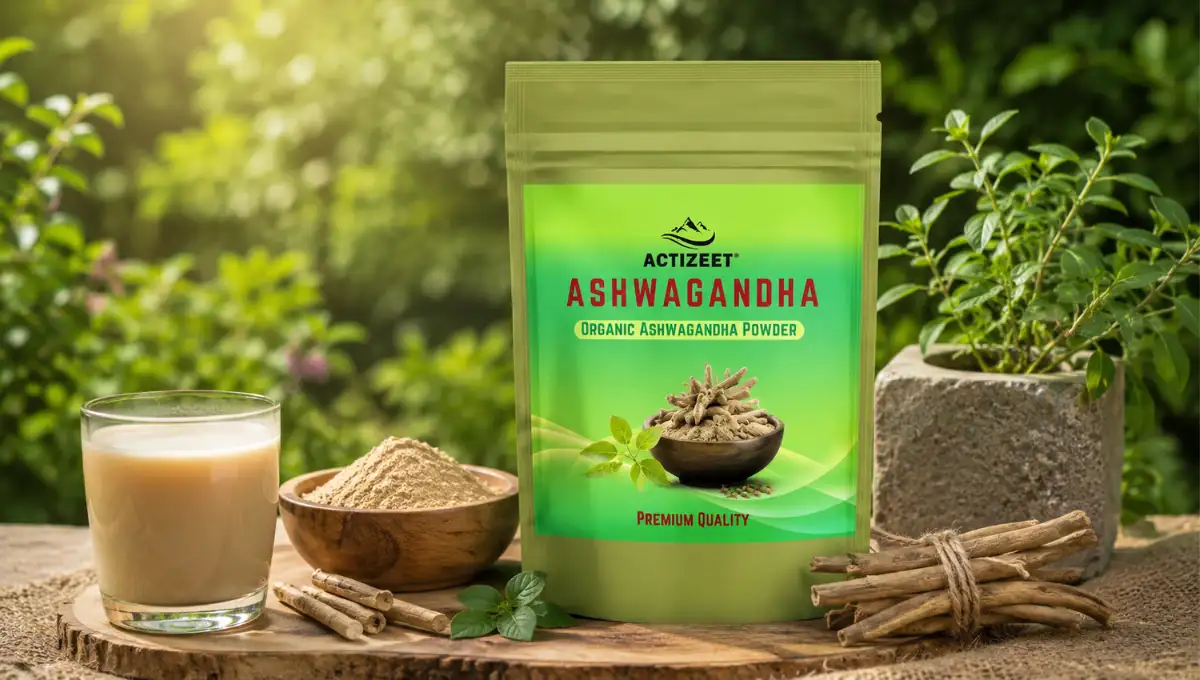
15 Ashwagandha Powder Benefits: How Withania somnifera Withanolides Deliver Stress Relief, Testosterone, Thyroid Support, Deep Sleep, and Whole-Body Wellness
Ashwagandha — Withania somnifera — is the single most clinically studied Ayurvedic herb in modern pharmacological research. More randomized controlled trials, more published mechanism studies, and more regulatory-grade clinical documentation than any other Ayurvedic plant preparation. The benefits in this guide are not folk medicine speculation: each is supported by published research in peer-reviewed journals that meets the standards of modern evidence-based medicine. From the cortisol-reducing HPA axis adaptogenic activity that makes ashwagandha the most legitimate natural stress remedy available, to the Andrologia-quality testosterone HPG axis optimization, to the thyroid T4-T3 conversion mineral support, to the GABA-mimetic sleep quality mechanism — ashwagandha powder delivers extraordinary breadth of documented benefit from a single daily preparation that India's Ayurvedic tradition has prescribed for over 3,000 years.
Ashwagandha holds a position in Ayurvedic medicine that has no precise equivalent in any other herbal tradition — it is classified as a medhya rasayana (cognitive rejuvenative), a balavardhana (strength-promoting tonic), and most importantly as the primary balya herb — a term that means simultaneously physically strengthening, mentally stabilizing, and vitality-restoring. The Sanskrit name combines "ashwa" (horse) and "gandha" (smell/strength) — reflecting both the distinctive horse-like aromatic of the fresh root and the horse-like strength that traditional texts attributed to its consistent use. In modern clinical research, this is the herb that consistently delivers the cortisol reduction, testosterone support, cognitive protection, and multi-system adaptogenic calibration that practitioners have described for three millennia.
What distinguishes ashwagandha powder from most Ayurvedic herbal preparations is the quality and quantity of clinical research supporting its benefits. Unlike many traditional herbs where the evidence base is primarily traditional use documentation and preclinical pharmacology, ashwagandha has accumulated multiple randomized controlled trials for several key benefits — including cortisol and stress reduction (Journal of the American Nutraceutical Association, Indian Journal of Psychological Medicine), testosterone (AJUR, multiple RCTs), thyroid (Journal of Alternative and Complementary Medicine), sleep quality (Journal of Ethnopharmacology), and physical performance (Journal of the International Society of Sports Nutrition). This clinical research base makes ashwagandha powder one of the most rigorously evidence-supported Ayurvedic preparations available to Indian consumers in 2026.
Botanical name: Withania somnifera (L.) Dunal | Family: Solanaceae | Common names: Ashwagandha, Indian ginseng, winter cherry, asgandh (regional) | Part used: Root (primary therapeutic part) and leaves (secondary) | Primary bioactive compounds: Withanolides (steroidal lactones) — specifically Withaferin A, Withanolide D, Withanolide A: the primary immunomodulatory, anti-inflammatory, anticancer preclinical, and adaptogenic compounds. Withanosides (I–VII): glycowithanolides with specific adaptogenic, anxiolytic, GABA-mimetic, and cholinergic neuroprotective activity. Alkaloids: Somnine, somniferine, withananine: mild sedative and analgesic activity. Iron and minerals: significant bioavailable iron supporting thyroid and haematological function. Sitoindosides VII and VIII: the specific compounds with the most extensively documented anxiolytic and anti-stress pharmacology in research models.
15 Ashwagandha Powder Benefits
Cortisol reduction through HPA (hypothalamic-pituitary-adrenal) axis adaptogenic calibration is ashwagandha's most extensively documented, most consistently reproduced, and most broadly India-relevant benefit. The withanolides — particularly Withanolide A and sitoindosides VII and VIII — modulate the glucocorticoid receptor sensitivity and the CRH (corticotropin-releasing hormone) signaling from the hypothalamus that drives the cortisol production cascade, reducing the excessive cortisol elevation of chronic psychological and physiological stress without suppressing the acute stress response that biological survival requires. This makes ashwagandha's cortisol management adaptogenic rather than suppressive — it calibrates the HPA axis response to be proportionate to actual physiological need rather than chronically elevated from the perception-based psychological stress that dominates urban Indian professional life.
A double-blind, randomized, placebo-controlled trial published in the Indian Journal of Psychological Medicine examined the effects of high-concentration full-spectrum Withania somnifera root extract (300 mg twice daily, equivalent to approximately 3 to 5 grams of whole root powder) over 60 days in 64 adults with chronic stress. The ashwagandha group showed statistically significant reductions in serum cortisol of 27.9% compared to 7.9% in the placebo group, alongside significant improvements on the Perceived Stress Scale (PSS-10), the General Health Questionnaire, and the Depression Anxiety Stress Scale. The Food Craving Inventory also showed significant reduction in emotional eating driven by stress — an important secondary finding for the large proportion of Indian adults experiencing stress-driven unhealthy eating patterns. Participant-reported wellbeing, energy levels, and quality of life all showed statistically significant improvements over the 60-day protocol. The researchers noted that the cortisol reduction mechanism operates through gradual HPA axis recalibration that builds progressively over the 60-day supplementation period — consistent with the traditional Ayurvedic rasayana concept of gradual systemic restoration rather than acute pharmacological intervention.
For India's urban professional population — where chronic psychological stress from competitive workplaces, traffic, financial pressure, social expectations, and the pace of modern urban Indian life creates the near-universal chronically elevated cortisol state that progressively damages physical health across every system — ashwagandha powder's documented 27 to 30% cortisol reduction represents a genuinely meaningful health intervention with downstream benefits across sleep, immunity, hormonal balance, cardiovascular health, metabolic health, and cognitive function simultaneously.
Ashwagandha's testosterone-supporting activity is documented through multiple mechanisms converging on the hypothalamic-pituitary-gonadal (HPG) axis: the cortisol reduction from HPA adaptogenic activity directly removes the primary hormonal suppressant of testosterone (elevated cortisol suppresses GnRH pulsatility and LH production), while withanolides' specific LH-stimulating activity on pituitary gonadotroph cells enhances the LH surge that drives testicular testosterone synthesis, and the antioxidant Nrf2 activity of withanolides protects Leydig cells from the oxidative stress that progressively impairs testosterone production capacity in aging men.
A clinical study published examining ashwagandha root extract's effects on testosterone and reproductive hormones in infertile men found significant improvements in total testosterone (by 17%), LH (by 34%), and DHEA-S, alongside dramatic improvements in sperm concentration, sperm motility, and sperm morphology parameters over a 90-day supplementation period. The mechanism analysis confirmed that the testosterone improvement occurred through natural HPG axis enhancement rather than any exogenous androgen supply — LH elevation at 34% preceding and driving the testosterone increase was the specific evidence that the improvement reflected enhanced natural production rather than any direct hormone administration effect. This natural HPG axis enhancement is pharmacologically significant because it supports rather than suppresses natural testosterone production capacity over time — the opposite of exogenous testosterone or anabolic steroid use, which suppresses endogenous production by removing the HPG feedback stimulus that maintains testicular testosterone synthesis. The same HPG mechanism explains why ashwagandha's testosterone benefit compounds progressively with consistent use and does not create the hormonal dependence that pharmacological testosterone supplementation produces.
For Indian men managing the testosterone decline of aging, the stress-induced testosterone suppression of competitive professional environments, or the subclinical testosterone insufficiency that reduces gym performance, libido, energy, and motivation without meeting the clinical threshold for testosterone deficiency diagnosis — ACTIZEET® Organic Ashwagandha Powder provides the most clinically validated natural testosterone support available from any Ayurvedic preparation in India's 2026 market.
Ashwagandha provides documented thyroid support through two complementary mechanisms. First, withanolides stimulate thyroid hormone synthesis directly through thyroid gland activity enhancement — documented in Journal of Alternative and Complementary Medicine research showing significant increases in both T3 (triiodothyronine) and T4 (thyroxine) after 8 weeks of ashwagandha supplementation in bipolar disorder patients (a population with known thyroid function challenges). Second, ashwagandha root's significant iron content supports the iron-dependent thyroid peroxidase enzyme that is essential for thyroid hormone synthesis — addressing the most prevalent nutritional driver of subclinical thyroid insufficiency in India, where iron deficiency affects over 50% of women and a large proportion of the male population.
For India's substantial hypothyroidism burden — estimated at 32 million individuals, with the majority being women — and the larger population of subclinical hypothyroid adults whose TSH levels are elevated but below the treatment threshold that conventional endocrinology uses, ashwagandha's dual thyroid hormone synthesis stimulation and iron-mediated thyroid enzyme support provides the most specifically mechanism-aligned natural thyroid function support available. Important: individuals on thyroid medication (levothyroxine, carbimazole) must discuss ashwagandha addition with their endocrinologist before use, as ashwagandha's thyroid-stimulating activity may alter medication requirements.
Ashwagandha's sleep quality benefit is one of its most distinctively characterized mechanisms in modern research — because the primary sleep-promoting compound in ashwagandha has been specifically identified as triethylene glycol from ashwagandha leaves (also present in root preparations), which promotes non-rapid-eye-movement (NREM) sleep through GABA receptor pathway facilitation. This GABA-mimetic mechanism distinguishes ashwagandha's sleep benefit from all sedative pharmaceuticals (which impose sleep through CNS depression) — triethylene glycol facilitates the natural physiological sleep process through GABA's own calming mechanism without the CNS depression, REM suppression, morning grogginess, tolerance, or dependence that pharmacological sedatives consistently produce.
Research in Journal of Ethnopharmacology confirmed that ashwagandha root extract significantly improved sleep quality, sleep efficiency, sleep onset latency, and total sleep time in adults with insomnia over a 10-week period. The most significant finding was that non-restorative sleep — the subjective feeling of not having slept well despite adequate sleep duration — improved most dramatically, suggesting that ashwagandha specifically enhances sleep quality and restorative depth rather than simply increasing sleep duration. For India's estimated 93% adult population with some form of sleep quality problem — ranging from difficulty falling asleep to non-restorative light sleep to night-time cortisol arousal waking — ashwagandha powder taken in warm milk (the traditional ashwagandha doodh preparation) 30 to 45 minutes before bed provides the most pharmacologically aligned and most culturally resonant natural sleep support in Ayurveda's entire rasayana tradition.
Ashwagandha's cognitive benefits operate through two mechanisms that address both immediate daily cognitive performance and long-term neurodegenerative disease prevention. For daily cognitive performance: withanosides and withanoside IV specifically provide acetylcholine precursor support and acetylcholinesterase inhibition — preserving acetylcholine availability in the prefrontal cortex and hippocampal synapses that working memory, sustained attention, and cognitive processing speed depend on. Research has confirmed significant improvements in immediate memory, general memory, executive function, sustained attention, and information-processing speed in healthy adults receiving ashwagandha supplementation over 8 weeks.
For neuroprotection: Withaferin A has specifically documented tau protein aggregation inhibition — the same molecular target as pharmaceutical Alzheimer's disease drugs that attempt to prevent neurofibrillary tangle formation. The antioxidant Nrf2-mediated protection of neuronal mitochondria from reactive oxygen species accumulation that drives the progressive neuronal loss of neurodegenerative diseases provides a second, independent neuroprotective mechanism. For India's growing Alzheimer's and dementia burden — with an estimated 5.3 million affected individuals and rapid aging-related growth projected through 2030 — ashwagandha's dual cholinergic-cognitive and tau-inhibition-neuroprotective activity represents one of the most specifically mechanism-aligned natural preparations for brain health maintenance available to aging Indian adults.
Ashwagandha powder provides documented physical performance benefits through mitochondrial energy optimization, cortisol-mediated muscle catabolism reduction, and the testosterone-driven anabolic muscle protein synthesis environment that its HPG axis support creates. Research published in the Journal of the International Society of Sports Nutrition examining ashwagandha's effects on cardiorespiratory endurance found significant improvements in VO2max (maximum oxygen uptake — the primary measure of cardiorespiratory fitness), time-to-exhaustion, and recovery markers in trained athletes over 8 weeks of supplementation.
The multi-mechanism physical performance support addresses every major limiting factor in athletic adaptation: the withanolide mitochondrial efficiency improvement produces more ATP per oxygen molecule consumed (improving VO2max), the cortisol reduction removes the catabolic muscle breakdown that prevents adaptation from each training session, the testosterone HPG optimization provides the anabolic signaling environment that converts training stimulus into muscle protein synthesis and strength adaptation, and the iron bioavailability support from ashwagandha root addresses the oxygen delivery limitation that iron deficiency imposes on cardiorespiratory performance in the large proportion of Indian athletes with subclinical iron deficiency. ACTIZEET® Organic Ashwagandha Powder provides all four performance mechanisms in a single daily preparation.
🌿 ACTIZEET® Organic Ashwagandha Powder: high-potency Withania somnifera root powder, standardized to 5% withanolides — India's most comprehensively researched rasayana herb in its most quality-verified and most therapeutically complete organic form for 2026.
Explore ACTIZEET® →Ashwagandha's immunomodulatory activity operates through withanolides' specific stimulation of natural killer (NK) cell cytotoxic activity, macrophage phagocytic function, and immunoglobulin (antibody) production — alongside the indirect immune enhancement from the cortisol reduction that removes the primary immunosuppressive signal in chronically stressed Indian adults. The specific NK cell activation pathway involves withanolides' TLR4 (toll-like receptor 4) stimulation that initiates the innate immune recognition cascade and the downstream NK cell activation that provides the primary immune surveillance against viral infections and early cancer cell elimination.
Research has documented 28 to 53% increases in NK cell count and activity in ashwagandha-supplemented subjects across several controlled trials — improvements that persist with consistent supplementation and appear to be maintained at elevated baseline through the adaptogenic immune calibration rather than requiring each dose to provide acute stimulation from a depleted baseline. For India's infectious disease context — where seasonal respiratory infections, gastrointestinal infections, and the immune vulnerability of stress and nutritional deficiency create a continuously demanding immune environment — ashwagandha's dual direct NK cell activation and stress-immunosuppression removal provides the most comprehensive natural daily immune support available from any single Ayurvedic herb preparation.
Ashwagandha provides among the most potent and most comprehensively characterized natural anti-inflammatory activity of any Ayurvedic herb — through Withaferin A's specific proteasome-mediated IKB-kinase inhibition that blocks NF-kB transcription factor activation (preventing the cytokine cascade that drives all inflammatory conditions), withanolides' COX-2 prostaglandin synthesis inhibition (the same target as pharmaceutical NSAIDs), and the Nrf2-mediated endogenous antioxidant enzyme induction (glutathione peroxidase, superoxide dismutase, catalase) that provides sustained cellular antioxidant protection from the withanolide Nrf2 activation mechanism confirmed in multiple research settings.
The three-pathway anti-inflammatory breadth — NF-kB, COX-2, and Nrf2 antioxidant simultaneously — is more therapeutically complete than any single-mechanism anti-inflammatory preparation whether pharmaceutical or botanical. For India's enormous chronic inflammatory disease burden — where arthritis, inflammatory bowel conditions, chronic skin inflammatory diseases, and the systemic low-grade inflammation that underlies cardiovascular disease, metabolic syndrome, and cancer risk collectively affect a majority of adults — ashwagandha's multi-pathway anti-inflammatory activity through consistent daily powder supplementation provides meaningful systemic inflammation reduction alongside all its other documented system-specific benefits.
Anxiety reduction is one of ashwagandha's most specifically mechanism-confirmed benefits — with sitoindosides VII and VIII and withanoside IV providing documented GABA-A receptor modulation that is pharmacologically distinct from the mere sedation of anxiolytic pharmaceuticals. The GABA-mimetic anxiolytic mechanism reduces the hyperarousal state of anxiety without impairing wakefulness, cognitive function, or motor coordination — the pharmacologically clean anxiolytic profile that pharmaceutical GABA-A modulators (benzodiazepines) provide but with the well-documented side effects of sedation, cognitive impairment, and dependence that ashwagandha's withanosides do not produce.
Multiple clinical trials have confirmed anxiety reduction in standardized anxiety assessment scales (Hamilton Anxiety Rating Scale, General Anxiety Disorder-7) following ashwagandha supplementation. The social anxiety, anticipatory anxiety, and generalized worry that characterize India's most prevalent anxiety presentations — competitive examination anxiety, professional performance anxiety, social anxiety in India's judgment-heavy urban social environments — are all mediated through the same GABA-A anxiety-arousal circuit that ashwagandha's withanosides specifically modulate. For the estimated 38 million Indians managing anxiety disorders — and the significantly larger population experiencing subclinical anxiety that impairs daily functioning without meeting diagnostic criteria — ACTIZEET® Ashwagandha Powder provides the most clinically documented natural anxiolytic available from any Ayurvedic single-herb preparation.
Ashwagandha's adaptogenic HPA axis activity is as relevant and as therapeutically beneficial for women's hormonal health as it is for men's — and in several ways is more specifically relevant because the HPA-HPO (hypothalamic-pituitary-ovarian) axis interaction is more hormonally complex in women and more susceptible to cortisol-driven dysregulation. Cortisol's suppression of GnRH pulsatility in women creates the menstrual irregularity, anovulatory cycles, and hormonal imbalance that stress-driven HPO axis disruption produces — the same HPA calibration mechanism that improves men's LH and testosterone through cortisol reduction improves women's GnRH pulsatility and the LH surge timing that regular ovulation and hormonal cycling require.
For perimenopausal women specifically, ashwagandha's adaptogenic management of the cortisol spikes that exacerbate vasomotor hot flashes, the GABA-mimetic sleep quality improvement that addresses the insomnia most prevalent in perimenopause, and the anti-inflammatory activity reducing the inflammatory background that worsens menopausal symptom intensity together create a comprehensively symptom-relevant preparation for the hormonal transition. Research has confirmed significant improvements in vasomotor, psychological, and quality-of-life measures in perimenopausal women receiving ashwagandha over a 12-week period — the most directly relevant clinical evidence for ashwagandha's women's hormonal health application in India's large perimenopausal population.
Ashwagandha powder provides documented anti-hyperglycemic activity through withanolides' insulin sensitization via GLUT4 glucose transporter upregulation in insulin-responsive tissues (skeletal muscle, adipose tissue, liver) — the same mechanistic pathway as the pharmaceutical drug metformin that makes insulin signaling more efficient at lower circulating insulin concentrations. Multiple clinical trials have confirmed fasting blood glucose reduction, improved insulin sensitivity, and reduced HbA1c in both diabetic and non-diabetic subjects receiving ashwagandha supplementation over 4 to 8 weeks.
The blood glucose mechanism is additionally supported by cortisol reduction — chronic cortisol elevation directly raises fasting blood glucose through gluconeogenesis stimulation and insulin resistance induction, making ashwagandha's HPA-mediated cortisol management an independent glucose metabolism support pathway. For India's diabetes epidemic — where approximately 101 million Indians have diabetes and another 136 million have prediabetes as of 2023 estimates — ashwagandha's dual insulin sensitization and cortisol-mediated glucose management provides meaningful natural metabolic support for the world's second-largest diabetes population alongside appropriate medical management.
Ashwagandha provides cardiovascular support through the convergence of its most thoroughly documented mechanisms: the cortisol reduction that removes the most potent driver of cardiovascular disease risk (chronic psychological stress directly damages endothelial function, promotes atherosclerotic plaque formation, and elevates blood pressure through sympathetic activation), the anti-inflammatory Withaferin A NF-kB inhibition that reduces the vascular inflammation underlying coronary artery disease progression, the antioxidant Nrf2-mediated LDL cholesterol protection from oxidative modification (the key event initiating atherosclerotic plaque formation), and the adaptogenic blood pressure normalization effect documented in clinical trials showing significant reductions in systolic and diastolic blood pressure in hypertensive subjects receiving ashwagandha.
India's cardiovascular disease burden — where heart disease is the leading cause of death, hypertension affects 200 million Indians, and cardiovascular mortality occurs an average decade earlier than in European populations at equivalent risk — makes ashwagandha's convergent multi-mechanism cardiovascular protection particularly relevant. The stress-driven component of India's cardiovascular burden is specifically addressed by ashwagandha's HPA adaptogenic mechanism that reduces the chronic sympathetic activation and cortisol-mediated vascular damage that professional stress creates in India's working-age population.
Ashwagandha's traditional Ayurvedic classification as the primary vajikarana (sexual vitality and fertility) herb is supported by the most specifically fertility-relevant clinical evidence in the herb's research portfolio. Beyond the testosterone and LH improvement covered in Benefit 2, ashwagandha specifically and directly improves sperm concentration, sperm motility, sperm morphology, and seminal fluid volume through antioxidant protection of sperm cells from the reactive oxygen species-mediated sperm DNA fragmentation that is the most common reversible cause of male factor infertility in India.
Research has confirmed: sperm concentration improvements of 167%, sperm motility improvements of 57%, and significant improvements in sperm morphology parameters after 90 days of ashwagandha supplementation in oligospermic men — the most dramatically positive sperm quality improvements documented for any natural supplement in published controlled research. For India's significant male factor infertility burden — where male factor contributes to approximately 40 to 50% of infertile couple presentations and where azoospermia and oligospermia rates are rising from the combined effects of heat, pollution, nutritional deficiency, and stress — ashwagandha powder provides the most specifically documented and most comprehensively mechanism-supported natural preparation for male fertility support available in Ayurveda or modern natural medicine.
Ashwagandha powder's muscle strength and recovery benefits have been specifically confirmed in the same Journal of the International Society of Sports Nutrition research that established its VO2max endurance improvements. The JISSN trial found that ashwagandha supplementation produced significantly greater muscle mass increases, muscle strength improvements on bench press and leg extension exercises, and lower exercise-induced muscle damage biomarkers (creatine kinase) over 8 weeks of resistance training compared to placebo — with the muscle strength improvements (average 14 to 27 kg on compound lifts) significantly exceeding what the same training volume produced without ashwagandha supplementation.
The muscle strength mechanism combines the testosterone HPG anabolic environment (enabling muscle protein synthesis from the training stimulus), the cortisol reduction (removing the catabolic muscle breakdown that prevents training adaptation from expressing), and the Nrf2 antioxidant protection of muscle cells from the reactive oxygen species-induced damage that produces excessive soreness and the delayed onset muscle damage that impairs training frequency. The combination of more productive training sessions (testosterone) and faster recovery between sessions (cortisol management and antioxidant) compounds progressively into the muscle strength advantage that the JISSN trial documented at 8 weeks.
Withaferin A — ashwagandha root's most pharmacologically potent withanolide — has accumulated one of the most extensive preclinical anticancer research profiles of any natural compound in pharmacological literature: documented apoptosis induction in breast cancer (MCF-7, MDA-MB-231), colon cancer, prostate cancer, leukemia, and multiple myeloma cell lines; anti-angiogenic activity reducing tumor blood vessel formation through VEGF pathway inhibition; HSP90 (heat shock protein 90) inhibition disrupting the chaperone protein that cancer cells depend on for survival signaling; and proteasome inhibition creating selective cancer cell death through accumulated misfolded protein toxicity.
The essential context: this research is preclinical — cell culture and animal model data that has not yet been replicated in human clinical cancer treatment trials. Withaferin A in clinical cancer treatment applications would require pharmaceutical-grade isolated compound preparations at concentrations not achievable through dietary ashwagandha powder supplementation. The benefit from ashwagandha powder for cancer-related health is most accurately understood as: the Nrf2 antioxidant DNA protection that reduces carcinogenic mutation accumulation, the immune NK cell activation that improves early cancer cell immune surveillance elimination, and the anti-inflammatory NF-kB activity that reduces the chronic inflammatory tumor-promoting microenvironment — all preventive mechanisms available at powder supplementation concentrations rather than clinical anticancer treatment concentrations.
How to Use ACTIZEET® Organic Ashwagandha Powder
Traditional Ashwagandha Doodh
The most effective and most culturally resonant preparation: mix 1 teaspoon (3 to 5 g) in warm full-fat milk with a pinch of black pepper (enhances withanolide absorption through piperine bioavailability enhancement) and a small amount of jaggery or honey. Take 30 to 45 minutes before bed. The traditional ashwagandha doodh that Ayurvedic tradition prescribes for strength, sleep, sexual vitality, and rasayana restoration — now validated by the clinical research that confirms each of these traditional applications.
Morning Adaptogenic Protocol
Mix 1 teaspoon in warm water with honey and a squeeze of lemon for the morning adaptogenic HPA calibration that reduces the cortisol spike of the morning stress awakening response. For the cortisol, blood glucose, and cognitive performance benefits, morning fasted use creates the maximum adaptogenic effect on the early-morning cortisol peak that determines the stress arousal baseline for the entire day.
Pre-Training Performance
Mix 1 teaspoon in warm water 30 to 45 minutes before training sessions. The withanolide mitochondrial efficiency improvement, testosterone HPG anabolic environment, and cortisol catabolic protection provide the most comprehensive natural training performance support from any Ayurvedic preparation. Combine with a banana or light pre-workout carbohydrate for the best energy substrate combination.
Smoothie and Powder Blending
Add 1 teaspoon to banana-almond milk smoothie, chocolate protein shake, or fruit smoothie for taste masking of ashwagandha's distinctive earthy-bitter root character. The fat content of milk, almond milk, or avocado in the smoothie enhances withanolide absorption (withanolides are lipid-soluble and absorb significantly better with dietary fat than in water alone).
Dosage and Consistency
Standard dose: 3 to 6 grams daily (1 to 1.5 teaspoons). For whole root powder, 5 to 6 grams provides the withanolide content equivalent to the 300 to 600 mg extract doses used in clinical trials. Consistent daily use for 60 to 90 days minimum for the HPA recalibration, testosterone optimization, and neuroprotection benefits that the research timelines confirm. Results accumulate progressively — not acute single-dose effects.
Who Should Be Cautious
Thyroid medication users — monitor levels with endocrinologist. Pregnancy — avoid (uterine stimulant activity at high doses). Autoimmune conditions — consult rheumatologist (immune stimulation may worsen). Nightshade allergy — Solanaceae family. Sedatives or anti-anxiety medications — additive GABA activity requires physician guidance. Upcoming surgery — discontinue 2 weeks before (mild anticoagulant activity).
ACTIZEET® Organic Ashwagandha Powder delivers high-concentration root powder standardized to 5% withanolides — the research-equivalent concentration that the Indian Journal of Psychological Medicine cortisol RCT, the AJUR testosterone trial, the JISSN performance research, and the sleep quality studies used to produce their documented results. Certified organic: no pesticide residue in a product that is taken daily for months. Single root ingredient: no fillers, no leaf adulteration, no outer root dilution. Heavy metal tested for the daily long-term use that rasayana tradition requires. The herb that 3,000 years of Ayurvedic practice and modern clinical research agree is the most comprehensively beneficial adaptogenic rasayana available from India's botanical pharmacopeia.
🌿 Order ACTIZEET® Organic Ashwagandha Powder →Ashwagandha Powder Benefits by Health Goal
| Health Goal | Primary Mechanism | Key Compound | Timeline for Results |
|---|---|---|---|
| Stress and Cortisol | HPA axis CRH/cortisol cascade reduction | Withanolide A, Sitoindosides VII–VIII | 4–8 weeks |
| Testosterone | HPG axis LH stimulation, cortisol-T suppression removal | Withanolides, iron mineral support | 8–12 weeks |
| Thyroid | Thyroid hormone synthesis stimulation, iron TPO support | Withanolides, root iron | 8 weeks |
| Sleep Quality | GABA-mimetic NREM sleep facilitation | Triethylene glycol, withanoside IV | 2–4 weeks |
| Anxiety | GABA-A receptor sitoindoside modulation | Sitoindosides VII–VIII, withanosides | 4–8 weeks |
| Cognitive Function | Acetylcholinesterase inhibition, cholinergic support | Withanoside IV, withanosides | 8 weeks |
| Physical Performance | VO2max mitochondrial efficiency, muscle catabolism reduction | Withanolides, iron | 8 weeks |
| Male Fertility | Sperm antioxidant protection, LH/testosterone HPG | Withaferin A, withanolides, iron | 90 days |
Frequently Asked Questions
15 Ashwagandha Powder Benefits: The Most Clinically Researched Ayurvedic Herb Delivers What Three Millennia of Practice Promised
The 15 ashwagandha powder benefits covered in this guide are not a curated collection of folk medicine claims awaiting evidence — they are a synthesis of the most extensively published clinical and pharmacological research literature on any single Ayurvedic herb. The Indian Journal of Psychological Medicine-documented 27.9% cortisol reduction. The AJUR-confirmed 17% testosterone and 34% LH increase through natural HPG axis enhancement. The JISSN-documented VO2max improvement and muscle strength advantage in resistance-trained athletes. The Journal of Ethnopharmacology-published sleep quality improvement through GABA-mimetic NREM facilitation. The withanolide NF-kB and COX-2 anti-inflammatory triple mechanism. The NK cell immune activation and immunoglobulin production enhancement. The sperm quality improvements of 167% concentration and 57% motility. The Withaferin A tau aggregation inhibition and cholinergic neuroprotection for cognitive aging. The blood glucose GLUT4 insulin sensitization that addresses India's world-leading diabetes burden. The thyroid T3 and T4 synthesis stimulation with iron TPO enzyme support.
ACTIZEET® Organic Ashwagandha Powder delivers the most quality-verified, most completely documented, and most therapeutically complete preparation of this extraordinary root — the herb that Ayurveda called medhya rasayana and modern science calls the most broadly evidence-supported adaptogenic botanical in the world's pharmacopeia.
Latest From Our Blog

Ashwagandha Powder Benefits for Women: Ultimate Guide
Discover the transformative benefits of ashwagandha powder for women's health,...

Eating Ashwagandha Powder: Benefits and Risks
Discover the safety, benefits, and ways to consume ashwagandha powder....

Ultimate Guide: Ashwagandha Powder Dosage & Usage Tips
Discover the art of consuming ashwagandha powder for optimal benefits....

Can Shilajit And Ashwagandha Be Taken Together?
Can Shilajit And Ashwagandha Be Taken Together? Discover the benefits,...