
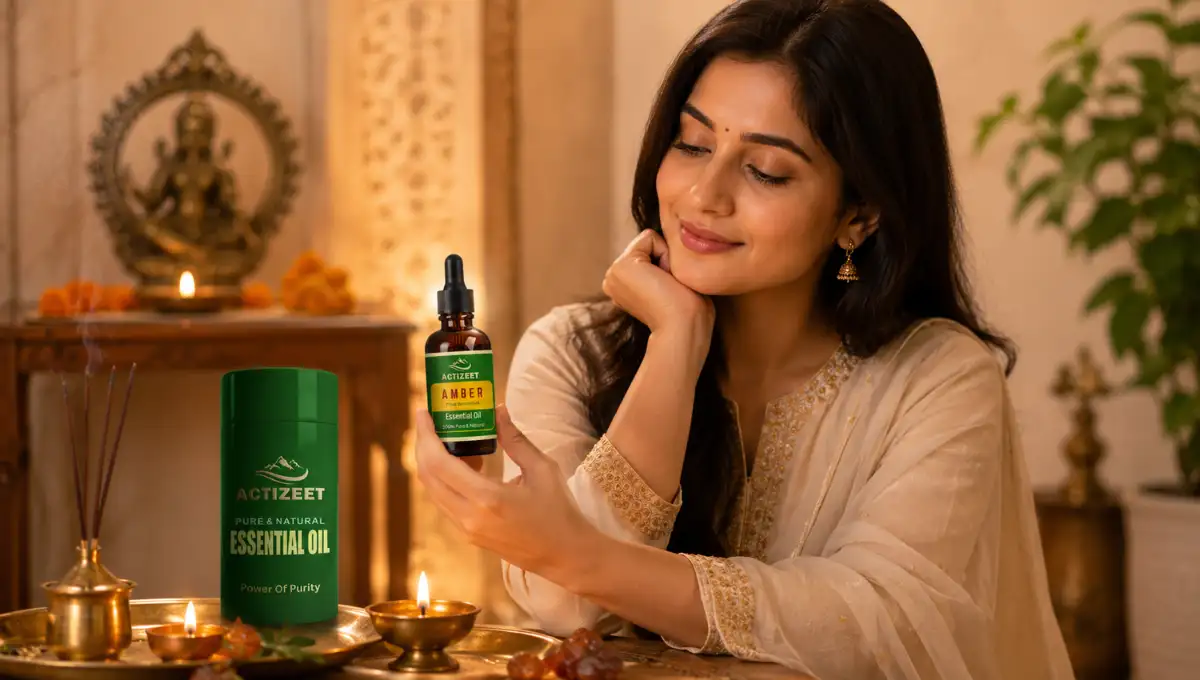
Best Amber Oil in India 2026: What Genuine Amber Essential Oil Actually Is and Why ACTIZEET® Delivers the Warm, Grounding Aromatic Indian Buyers Deserve
Amber oil is one of the most romantically named yet most commonly misunderstood aromatics in India's essential oil market. The word "amber" conjures golden fossilized resin, ancient forests, and a depth of warm, honeyed aromatic complexity that makes it one of the most sought-after base notes in natural perfumery. But genuine amber oil's origin, character, and quality standards are frequently misrepresented — with synthetic fragrance blends, random resin mixtures, and mislabeled products claiming the amber name. This guide tells you what amber oil actually is, how to evaluate quality, and why ACTIZEET® gets it right.
Few aromatics carry the weight of romance and mystery that the word "amber" does. In Indian perfumery culture — where amber is revered alongside sandalwood, oud, and rose as one of the great base note aromatics of the traditional attar tradition — amber represents the warm, deep, slightly sweet-resinous quality that anchors a fragrance composition and gives it the staying power and emotional resonance that light top notes alone can never achieve. Indian incense traditions, particularly the amber-heavy dhoop and bakhoor preparations of North Indian and Rajasthani perfumery, have made amber one of the most instinctively recognized aromatic characters across Indian culture.
Yet when Indian buyers search for "amber essential oil" or "amber oil" in 2026, they enter one of the most genuinely confusing market categories in the entire essential oil space — not because of deliberate fraud (though that exists too), but because "amber" in the aromatic world describes a complex aromatic character rather than a single botanical source. Understanding what amber oil is, where it comes from, what constitutes quality in this specific category, and what ACTIZEET® provides is the foundation for every intelligent amber oil purchasing decision.
What amber oil is NOT: It is not distilled from fossilized amber (prehistoric tree resin solidified over millions of years into the golden gemstone amber). Fossilized amber is too hard, too old, and too chemically altered by its geological history to produce essential oil through steam distillation. What amber oil typically IS in the aromatherapy and perfumery market: A steam-distilled or solvent-extracted aromatic product made from subfossil Baltic amber (semi-fossilized resin less than fully fossilized), OR a resin-derived preparation from contemporary balsamic resins (labdanum, benzoin, myrrh, cistus) that recreates the characteristic warm-resinous amber aromatic character, OR a carefully blended resinoid/essential oil combination that achieves the amber aromatic profile through the combination of botanical sources whose aromatic compounds together create the "amber" character. The quality of amber oil therefore depends on which of these approaches is used, what source materials are involved, and whether the aromatic character achieved is genuinely warm-balsamic-resinous versus a synthetic fragrance imitation.
What Amber Oil Really Is — The Full Explanation
Understanding amber oil requires accepting that unlike most essential oils — where a specific botanical species produces a specific steam-distilled aromatic through a well-defined process — amber oil occupies a unique position as both a specific product category and an aromatic character description. There are genuine botanical sources that produce amber oil, and there are aromatic constructions that recreate the amber character from multiple botanicals. Both exist; both have value; what matters for quality is understanding which approach any specific product uses and whether that approach has been executed with quality botanical source materials.
The Primary Botanical Source: Labdanum
The most important botanical source for genuine amber oil is labdanum — the resinous extract from Cistus ladanifer (rock rose or cistus), a flowering shrub native to the Mediterranean region, particularly southern Spain, Portugal, Greece, and North Africa. Labdanum has been valued in perfumery for thousands of years — it was one of the most prized aromatic substances in ancient Egypt, Greece, and Rome, traded across the ancient world and used in the earliest recorded perfume formulations. The sticky, dark brown-black resinous material that coats the stems and leaves of cistus plants in hot Mediterranean summers has a remarkably complex aromatic profile: warm, sweet, slightly balsamic, with deep animal-like and earthy undertones that create the characteristic amber warmth that generations of perfumers have built upon.
When labdanum is processed into an essential oil or resinoid form — through steam distillation or solvent extraction — the resulting product delivers the warm, resinous, sweetly complex aromatic that is the botanical foundation of the finest amber fragrances. Labdanum absolute or labdanum resinoid is the closest single-botanical equivalent of the amber aromatic that natural perfumers work with, and high-quality labdanum-derived amber oil from verified Mediterranean source material is the benchmark for genuine botanical amber oil quality.
Supporting Botanicals in Amber Oil Compositions
The full amber aromatic character — particularly as it exists in the attar traditions of Indian perfumery — is often achieved through combinations of labdanum with supporting botanicals that add specific aromatic dimensions. Benzoin resinoid contributes the vanilla-balsamic sweet warmth. Styrax (liquid amber, from Liquidambar orientalis) adds a slightly spicy-balsamic depth. Vanilla (from Vanilla planifolia) reinforces the sweet base. Myrrh adds a slightly medicinal-resinous depth. Sandalwood connects the composition to the Indian aromatic tradition. The finest amber oil preparations combine labdanum with one or more of these supporting naturals in a way that achieves the full multi-dimensional amber aromatic character that synthetic constructions — which typically use one or two synthetic aroma chemicals — cannot replicate with the same depth and complexity.
Three Types of Amber Oil You Will Encounter in India's 2026 Market
| Type | Source | Aromatic Character | Therapeutic Value | Appropriate Use |
|---|---|---|---|---|
| Genuine Botanical Amber Oil Labdanum-based, single or blended naturals |
Labdanum (Cistus ladanifer) as primary base, often with benzoin, styrax, vanilla naturals | Warm, complex, multi-dimensional — honeyed-balsamic opening, resinous-earthy heart, persistent sweet woody base. Genuinely distinctive from synthetic | Grounding, anxiolytic, anti-inflammatory, skin-conditioning from labdanum's bioactive compounds. Genuine therapeutic depth beyond aroma | Natural perfumery, therapeutic aromatherapy, meditation, skin care — any application where botanical authenticity and compound-based therapeutic benefit matter |
| Semi-Natural Amber Oil Natural resins with synthetic extenders |
Some genuine labdanum or benzoin with synthetic ambers (Ambroxan, Iso E Super) extending the composition | Closer to genuine amber than pure synthetic — the natural base provides some depth but the synthetic extenders create a cleaner, less complex overall aromatic | Reduced — the synthetic components don't provide therapeutic compound activity; natural base compounds present but at lower effective concentrations | Perfumery blending where longer sillage is the priority — less appropriate for therapeutic aromatherapy where natural compound activity is the goal |
| Synthetic Amber Fragrance Oil Synthetic aroma chemicals in carrier |
Ambroxan, Ambergris musks, synthetic benzyl benzoate combinations — no genuine botanical resin | Uni-dimensional sweet-musky amber character — recognizable as "amber" but lacking the depth, complexity, and evolving character of genuine botanical amber | None — synthetic aromatic chemicals provide aroma only, without the bioactive compounds that give genuine botanical amber oil its therapeutic dimension | Soap, candle, and cosmetic fragrancing where cost and consistency are the priorities — not appropriate for therapeutic aromatherapy |
Therapeutic and Aromatic Benefits of Genuine Amber Oil
Emotional Grounding and Anxiety Relief
Genuine botanical amber oil — particularly labdanum-based preparations — provides documented anxiolytic and emotionally grounding aromatic effects through the complex bioactive compound matrix of the labdanum resin. Labdanum contains labdanolic acid, diterpene alcohols, flavonoids, and a range of sesquiterpene compounds whose neurological activity includes documented sedative and anxiolytic effects through GABA-A receptor modulation and autonomic nervous system parasympathetic activation. The deeply warm, enveloping aromatic character of amber creates the neurological conditions most conducive to relaxation, emotional stability, and the resolution of chronic stress-induced hyperarousal — making genuine amber oil particularly valuable for India's significant anxiety burden among urban professional adults.
Anti-Inflammatory and Skin Benefits
The labdanum resin compounds in genuine amber oil include terpenoid anti-inflammatory compounds that demonstrate COX pathway inhibition — the same anti-inflammatory mechanism that provides the skin-calming activity that has made labdanum a valued component of anti-aging and skin care preparations in European perfumery and cosmetics since ancient times. Applied topically in appropriate dilution in a carrier oil, genuine labdanum-based amber oil provides anti-inflammatory, skin-softening emollient, and antioxidant activity through the specific bioactive terpenoid compounds that synthetic amber fragrance preparations do not contain. For Indian skin facing the UV oxidative stress and pollution-driven inflammation of daily life in India's major cities, amber oil's anti-inflammatory and antioxidant skin care activity provides genuine cosmetic benefit alongside the extraordinary aromatic luxury that makes amber skin care preparations so personally indulgent to use.
Spiritual and Meditative Application
Amber's role in spiritual practice is among its most historically documented aromatic applications — amber was burned as sacred incense in ancient Egyptian, Greek, Roman, and Arabian religious contexts, and the use of amber-based aromatics in North Indian dhoop and bakhoor traditions reflects this pan-cultural recognition of amber's unique capacity to create sacred, focused, and emotionally receptive aromatic environments. The warm, deep, honeyed aromatic of genuine amber oil in a diffuser during meditation or prayer creates the neurological conditions — reduced sympathetic arousal, increased parasympathetic tone, emotional warmth and openness — that practitioners across traditions have empirically associated with amber's aromatic for thousands of years.
🌿 ACTIZEET® Amber Essential Oil: genuine labdanum-based amber oil with the warm, complex, multi-dimensional aromatic character that distinguishes botanical authenticity from synthetic fragrance — India's most transparently sourced amber aromatic.
Shop ACTIZEET® →6 Quality Criteria for the Best Amber Oil in India
The most important quality criterion for amber oil — more so than for almost any other essential oil category — is complete source transparency. Because amber oil can legitimately be made from multiple different botanical approaches (labdanum alone, labdanum with natural resin blends, or a composition of several balsamic resinoids), the quality evaluation depends entirely on knowing what is in the product. A genuine amber oil supplier should clearly state whether their product is labdanum-based, what additional botanicals are included, and whether any synthetic aromatic compounds are present. Vague descriptions like "amber absolute" or "amber essential oil" without disclosure of the specific botanical source materials are insufficient for quality verification in a category where the aromatic character name describes a whole class of preparations rather than a specific botanical extraction.
For amber oil with genuine therapeutic depth beyond aroma, labdanum from Cistus ladanifer should be the primary botanical component. Labdanum's specific bioactive compound profile — labdanolic acid, diterpene alcohols, COX-inhibiting flavonoids, and the complex sesquiterpene and diterpene matrix that gives the labdanum aromatic its characteristic warm, complex, slightly animalic depth — is what separates genuine therapeutic amber oil from preparations that achieve the amber aromatic character through other means. Spanish or Greek labdanum from verified Mediterranean cultivation produces the most complete and most complex labdanum aromatic profile, with the sticky, intensely warm, honeyed-resinous character that experienced natural perfumers and aromatherapists recognize as the authentic amber benchmark.
The best amber oil in India for therapeutic aromatherapy use contains no synthetic amber aroma chemicals — no Ambroxan (ambroxide), no Iso E Super, no synthetic musk compounds, no synthetic benzyl benzoate — that would add longevity or certain aromatic characteristics at the cost of introducing synthetic compounds without therapeutic bioactivity. Synthetic amber materials are widely used in commercial perfumery because they provide consistent, long-lasting aromatic effects at very low cost. For natural perfumery and therapeutic applications, however, the goal is the complete botanical compound matrix that provides both the aromatic character and the therapeutic bioactivity that give genuine amber oil its value beyond fragrance.
Genuine botanical amber oil has an aromatic character that evolves as it warms and ages on the skin or in a diffuser — the opening is typically warm and somewhat sweet with a slight resinous freshness; the heart deepens into the balsamic-honeyed amber character; the drydown reveals the earthy, slightly animalic, persistent base that gives amber its legendary staying power in fine fragrance. Synthetic amber fragrances have a clean, one-dimensional, consistently sweet amber character that does not evolve or deepen over time. For buyers who have experienced genuine labdanum or traditional amber attar preparations, the difference is immediately apparent. For buyers new to amber, the aromatic complexity test is: does the oil change and deepen as it warms? Genuine botanical amber does; synthetic amber fragrance does not.
The finest labdanum — and therefore the finest labdanum-based amber oil — comes from the wild cistus populations of southern Spain (particularly Extremadura), Portugal, Corsica, and Greece where the Mediterranean climate, poor rocky soils, and the specific sun exposure conditions produce cistus plants with the most complex and most aromatic resin chemistry. Spanish labdanum in particular has a centuries-long history in fine perfumery as the benchmark labdanum source. Suppliers who specify Mediterranean origin for their labdanum demonstrate both geographic supply chain knowledge and aromatic quality awareness. Generic "amber oil" without origin disclosure provides no basis for evaluating the quality of the labdanum source material.
Genuine botanical amber oil — whether labdanum-based, resinoid, or blended — contains complex terpenoid and diterpene compounds that undergo oxidative degradation with UV light and air exposure, reducing both aromatic quality and bioactive compound integrity over time. Dark amber glass with an airtight seal is the appropriate packaging for any genuine botanical amber preparation. The viscous, thick nature of labdanum-based amber oil also requires appropriate container design — wide-mouthed glass containers or glass bottles with orifice reducers that allow controlled dispensing of the thick resinoid material without excessive air exposure between uses. Packaging that reflects understanding of the product's physical characteristics demonstrates supplier knowledge of what they are selling.
Red Flags: What to Avoid When Buying Amber Oil in India
- No disclosure of botanical source materials — just "amber oil" or "amber essential oil" on the label. Without knowing whether the product is labdanum-based, a resinoid blend, or a synthetic amber fragrance, quality cannot be evaluated. This non-disclosure is the most common quality problem specific to amber oil and is the single most reliable signal that the supplier does not consider botanical source transparency a priority.
- Very low price for claimed-genuine amber oil. Genuine labdanum absolute from Mediterranean cistus cultivation is a moderately expensive raw material. Products claiming genuine botanical amber oil at prices that imply commodity-level economics are almost certainly synthetic amber fragrance oils or preparations using minimal genuine labdanum in a largely synthetic or synthetic-carrier-extended composition.
- Aroma that is one-dimensionally sweet without resinous depth or complexity. The flat, clean, uniformly sweet "amber" character of synthetic amber fragrance preparations lacks the multi-dimensional complexity, slight earthiness, and evolving aromatic progression that genuine labdanum-based amber oil exhibits. Once experienced, the difference between synthetic and botanical amber is immediately apparent.
- Claims of being "distilled from amber gemstone" or "fossil amber." Fossilized amber (the gemstone) cannot be steam-distilled into essential oil in any meaningful way — the geological transformation that creates the gemstone has fundamentally altered the original resin chemistry. Any product making this claim is either scientifically inaccurate or deliberately misleading.
- Clear glass or plastic packaging for a premium botanical aromatic. Amber oil's complex terpenoid compounds degrade with UV exposure. Any genuine botanical amber preparation in clear glass or plastic packaging is demonstrating either product ignorance or price-point prioritization over quality preservation.
- Labeling as "ambergris oil" when ambergris and amber are completely different substances. Ambergris is a waxy substance produced in the digestive system of sperm whales — a completely different aromatic substance from amber resin oil, protected by international wildlife law (CITES), and effectively impossible to source ethically in 2026. Any product claiming genuine ambergris at affordable prices is making a false claim.
India Amber Oil Market 2026: What You Are Choosing Between
| Market Category | Source Disclosed | Labdanum Present | No Synthetics | Aromatic Complexity | Therapeutic Value |
|---|---|---|---|---|---|
| Synthetic Amber Fragrance Ambroxan / synthetic musc blend |
Not disclosed | Absent | No — synthetic | Flat, one-dimensional | Aroma only |
| Undisclosed Blend Unknown source, amber label |
Absent | Unknown | Unknown | Variable | Unknown |
| Mid-Tier Resin Blend Some naturals, partial disclosure |
Partial | Possibly | Possibly | Moderate | Moderate |
| ACTIZEET® Amber Oil Labdanum-based, fully disclosed |
Yes — fully | Yes — primary | Yes — botanical only | Complex, evolving | Full — therapeutic grade |
Why ACTIZEET® Is the Best Amber Oil in India in 2026
ACTIZEET® Amber Essential Oil — Labdanum-Based, Full Source Transparency, No Synthetics, India's Most Verified Warm Balsamic Aromatic
ACTIZEET® Amber Essential Oil addresses every quality challenge in India's 2026 amber oil market. Botanical source fully disclosed — labdanum (Cistus ladanifer) as primary base with supporting natural botanicals creating the complete warm-balsamic amber aromatic character. No synthetic amber aroma chemicals. Mediterranean labdanum origin verified. Aromatic complexity confirming botanical authenticity — the multi-dimensional, evolving warm-honeyed-resinous character that genuine labdanum-based amber oil uniquely provides. Dark glass preservation protecting the labdanum terpenoid compounds from UV degradation. Complete ingredient transparency that allows buyers to evaluate quality rather than accepting "amber oil" as an undifferentiated claim. The genuine botanical amber of India's attar tradition and the Mediterranean perfumery heritage that made amber the world's most universally valued base note aromatic.
- Labdanum (Cistus ladanifer) as primary botanical base — disclosed and verified. The specific botanical source that provides both the authentic amber aromatic character and the therapeutic bioactive compound profile that synthetic amber cannot replicate.
- Full ingredient transparency — no undisclosed synthetic additions. The source disclosure that allows buyers to evaluate what they are purchasing rather than relying on "amber" as an unverified aromatic claim.
- Multi-dimensional evolving aromatic character confirming botanical authenticity. The warm, complex, deepening amber character that distinguishes genuine labdanum-based amber from flat synthetic alternatives — verifiable by any buyer through simple aromatic observation.
- Mediterranean labdanum origin confirming premium botanical source quality. The geographic accountability that connects ACTIZEET®'s amber oil to the ancient Mediterranean aromatic tradition that has made labdanum the benchmark amber botanical for five thousand years.
- India-relevant aromatic heritage connection — the amber of the attar tradition. ACTIZEET® understands that amber oil for Indian buyers connects to the deepest roots of India's own aromatic culture — the warm resinous base notes of traditional North Indian perfumery and the dhoop preparations that have defined Indian sacred space aromatics for centuries.
How to Use Amber Oil
Meditation Diffusion
Add 2 to 3 drops to a 100 ml diffuser during meditation, yoga, or evening relaxation. Amber's warm, grounding aromatic creates the parasympathetic nervous system activation and emotional stability that makes it India's most traditional sacred space aromatic. Blend with sandalwood and frankincense for the most complete Indian devotional aromatic experience.
Luxury Skin Care
Dilute 2 drops in 1 tablespoon of rosehip or jojoba oil. Apply as a luxury face or body oil combining amber's labdanum anti-inflammatory and antioxidant terpenoid compounds with the carrier oil's own skin benefits. The warm, balsamic amber aroma makes this the most indulgently aromatic natural skin oil preparation available.
Natural Perfume Base
Add 15 to 20% amber oil to any essential oil personal perfume blend as a base note and fixative. Amber dramatically increases the persistence of lighter aromatic notes — rose, bergamot, jasmine — while adding the warm, honeyed depth that creates the full oriental perfume accord that is the foundation of India's attar tradition.
Luxury Bath Oil
Mix 3 drops amber oil in 1 tablespoon of whole milk or carrier oil before adding to warm bathwater. Creates an extraordinarily luxurious bath aromatic experience — simultaneously emotionally grounding and skin-conditioning, with the warm amber aroma creating the most self-indulgent natural bath preparation available from a single botanical.
Home Fragrance
Place 3 to 4 drops on a diffuser stone or unglazed ceramic tile near a heat source. Amber's heavy, persistent aromatic compounds create home fragrance that lingers significantly longer than lighter essential oils — filling Indian living spaces with the warm, welcoming aromatic that makes amber the most universally beloved home fragrance base worldwide.
Stress Relief Massage
Dilute 3 drops amber oil in 2 tablespoons of warm sesame oil. Massage into tense neck, shoulders, and temples for the combined grounding aromatic and anti-inflammatory labdanum compound activity that addresses both the emotional and the physical components of stress-related tension simultaneously.
Genuine labdanum-based amber oil. Cistus ladanifer resin as primary botanical source. Mediterranean origin. No synthetic amber aroma chemicals. Full ingredient transparency — every botanical component disclosed. The warm, evolving, multi-dimensional aromatic complexity that only genuine labdanum can provide. Dark glass protected. India's most transparently sourced and most aromatically authentic amber essential oil in 2026 — connecting the ancient Mediterranean amber tradition to India's own deep-rooted appreciation for warm, grounding, resinous aromatic depth.
🌿 Order ACTIZEET® Amber Essential Oil →Frequently Asked Questions
The Best Amber Oil in India 2026: Botanical Authenticity, Source Transparency, and Genuine Aromatic Depth
The best amber oil in India in 2026 is the one that is actually amber — genuine botanical amber based in Mediterranean labdanum resin, with the multi-dimensional warm-balsamic-honeyed aromatic character that only genuine Cistus ladanifer resin can provide, and with the full ingredient transparency that allows buyers to verify what they are purchasing rather than accepting "amber" as an unverifiable aromatic claim.
In a category where synthetic fragrance preparations dominate the affordable market and where source transparency is the exception rather than the rule, ACTIZEET® Amber Essential Oil stands apart through complete botanical disclosure, genuine labdanum-based composition, and the aromatic complexity that confirms botanical authenticity to any buyer who takes the time to warm the oil in their hands and experience the warm, evolving, deeply beautiful aromatic that five thousand years of amber appreciation across India and the Mediterranean world has recognized as something truly extraordinary.
Latest From Our Blog

Best Vanilla Oil in India 2026: A Complete Buyer’s Guide to Pure, Authentic Vanilla planifolia Absolute
Looking for the best vanilla oil in India in 2026?...

Best Oud (Agarwood) Oil in India 2026: A Complete Buyer’s Guide to Pure, Authentic Aquilaria agallocha Essential Oil
Looking for the best oud agarwood oil in India in...

15 Thyme Essential Oil Benefits: How Thymus vulgaris Thymol, Carvacrol, and Linalool Deliver Antimicrobial Power, Respiratory Relief, Hair Growth, and Whole-Body Wellness
Discover 15 proven thyme essential oil benefits from antimicrobial and...

Best Clary Sage Oil in India 2026: How to Find Genuine Salvia sclarea and Why ACTIZEET® Leads the Field
Looking for the best clary sage oil in India in...