
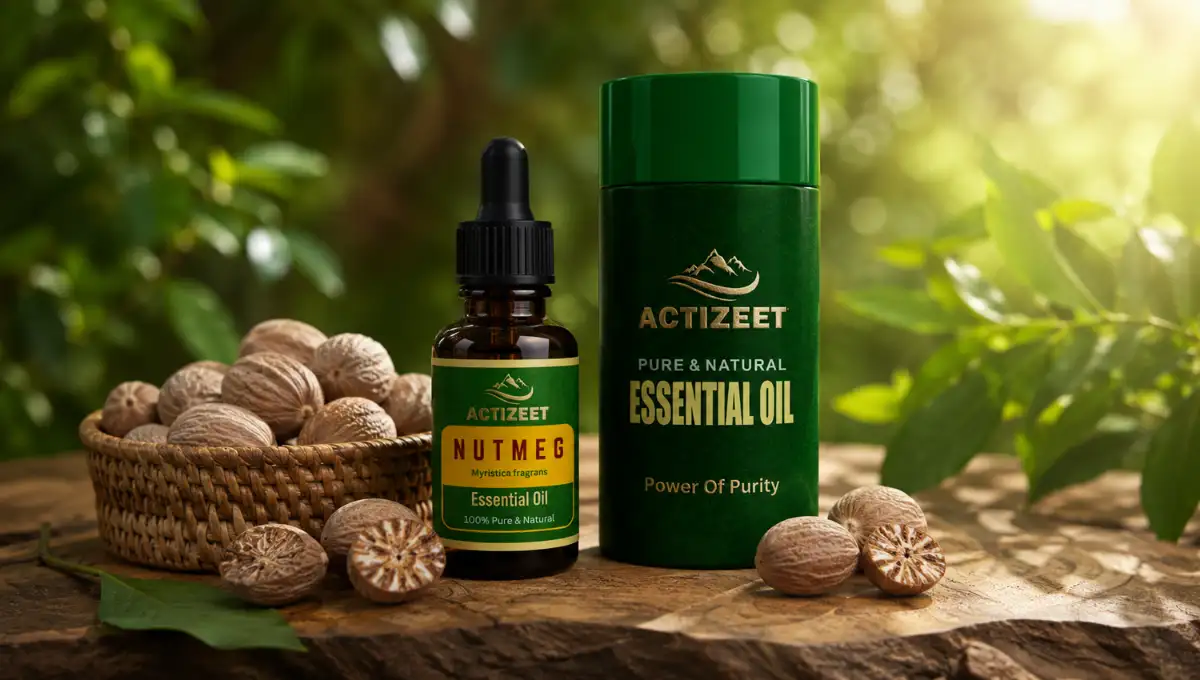
Best Nutmeg Oil in India 2026: A Complete Buyer's Guide to Pure, Authentic Myristica fragrans Essential Oil
Nutmeg essential oil from Myristica fragrans is India's ancient Jaiphal in its most concentrated therapeutic form, with documented analgesic, anti-inflammatory, antimicrobial, digestive, and mood-supporting properties spanning Ayurvedic tradition and contemporary pharmacology. In 2026, understanding what genuine quality looks like separates therapeutic from recreational misuse of one of Ayurveda's most potent spice oils.
Nutmeg essential oil is a potent therapeutic oil that contains myristicin and elemicin, which at very high doses can produce adverse neurological effects. At appropriate therapeutic dilutions (1 to 2% topical; 2 to 3 drops in diffusion), nutmeg oil is safe and beneficial. It should never be consumed in large quantities. All guidance in this article refers to appropriate external aromatherapy and diluted topical use only. ACTIZEET® Nutmeg Essential Oil is intended for adult therapeutic aromatherapy and diluted topical application by informed users.
Nutmeg, or Jaiphal as it is known across India, is one of the most familiar spices in the Indian kitchen. It appears in biryanis, desserts, chai masala, and the garam masala that forms the aromatic foundation of Indian cooking. But the concentrated essential oil of Myristica fragrans carries this spice's properties in a form that is far more therapeutically potent than the powder, and delivers benefits that extend well beyond cooking into genuine Ayurvedic and aromatherapy medicine.
Kerala, particularly the Malabar Coast, has been producing nutmeg for centuries. India was historically the world's primary source of nutmeg until the Dutch colonial monopoly attempted to restrict its cultivation. India continues to produce genuine Myristica fragrans across Kerala, Assam, and Tamil Nadu, making nutmeg essential oil from Indian-grown botanical sources both pharmacologically authentic and domestically significant. The Charaka Samhita and Sushruta Samhita both document Jaiphal's Ayurvedic applications for digestive disorders, pain relief, sleep support, and as a stimulant and carminative, establishing 2,000 years of clinical observation that contemporary pharmacology is now confirming with documented antimicrobial, anti-inflammatory, antioxidant, and analgesic properties.
This guide helps every Indian buyer identify authentic therapeutic-quality nutmeg oil in 2026 and understand why ACTIZEET® delivers this ancient Ayurvedic spice's healing properties in their most genuine form.
What Makes Nutmeg Oil Genuinely Therapeutic in 2026?
Botanical name: Myristica fragrans Houtt. | Family: Myristicaceae | Indian name: Jaiphal | Indian cultivation: Kerala (primary), Tamil Nadu, Assam, Karnataka | Medicinal part: Dried kernel/nutmeg seed (steam distillation) | Primary therapeutic compounds: Sabinene (15 to 30%), alpha-pinene (12 to 25%), beta-pinene (10 to 18%), alpha-terpinene, terpinen-4-ol (5 to 10%), myristicin (2 to 13%), elemicin (2 to 5%), safrole (trace), eugenol (trace), linalool | Aroma: Warm, spicy, woody, slightly sweet; distinctly nutmeg-spice character; deeply familiar as both Ayurvedic and culinary Indian spice
The therapeutic complexity of nutmeg essential oil is created by the interaction of its terpene hydrocarbon fraction (sabinene, alpha- and beta-pinene, terpinene), its oxygenated monoterpene fraction (terpinen-4-ol, linalool), and its phenylpropanoid fraction (myristicin, elemicin). The terpene fraction drives the anti-inflammatory, antimicrobial, and antioxidant properties. The oxygenated fraction provides the analgesic and muscle-relaxing activity. The phenylpropanoid myristicin contributes the most pharmacologically interesting and most discussed of nutmeg's properties, including its documented anti-inflammatory, antidepressant research, and the psychoactive properties that make appropriate dosage the most critical quality and safety variable for this specific oil.
Key Active Compounds and Their Roles
| Compound | Typical Content | Primary Therapeutic Role |
|---|---|---|
| Sabinene | 15–30% | Anti-inflammatory; antimicrobial; antioxidant; primary aromatic monoterpene contributor; the largest compound fraction in most quality nutmeg oils |
| Alpha-Pinene | 12–25% | Anti-inflammatory; bronchodilatory; antimicrobial; memory-supportive; antifungal; significant contribution to overall terpene therapeutic profile |
| Beta-Pinene | 10–18% | Anti-inflammatory; antimicrobial; antioxidant; analgesic; synergizes with alpha-pinene in anti-inflammatory activity |
| Terpinen-4-ol | 5–10% | Antimicrobial; anti-inflammatory; analgesic; the same compound that drives tea tree oil's therapeutic activity; a significant quality marker |
| Myristicin | 2–13% | Anti-inflammatory; antidepressant research; monoamine oxidase inhibitor activity; the most pharmacologically complex and most discussed nutmeg compound; quality and safety-relevant |
| Elemicin | 2–5% | Anti-inflammatory; sedative research; synergizes myristicin activity; phenylpropanoid contributing to nutmeg's distinctive warming properties |
| Eugenol (trace) | Trace–3% | Anti-inflammatory (COX inhibition); antimicrobial; analgesic; clove-type activity contributing additional anti-inflammatory depth |
Six Quality Markers for the Best Nutmeg Oil in India in 2026
Botanical Name
Must show Myristica fragrans Houtt. "Nutmeg oil" without the Latin name cannot confirm the species and prevents any verification of the compound profile, geographic origin, or therapeutic quality.
Seed / Kernel Source
Must specify "seed essential oil" or "kernel steam distillate." Nutmeg oil comes from the dried nutmeg kernel. Mace (the red aril covering the nutmeg seed) produces a different oil with a different compound profile. Both are from M. fragrans but have distinct therapeutic properties.
Authentic Warm Spice Aroma
Genuine nutmeg essential oil has a distinctive, complex warm-spicy character immediately recognizable as nutmeg, with woody depth and subtle sweetness. Flat or purely "sharp spice" aromas without the woody complexity may indicate old, degraded, or partially adulterated product.
Myristicin Range Declared
Quality brands specify the myristicin percentage (appropriate therapeutic quality typically 2 to 13%). Very low myristicin indicates poor-quality fruit or old oil. Very high myristicin (above 15 to 20%) may indicate poorer-quality starting material and requires extra dilution caution.
Indian or Indonesian Origin
India's Kerala-grown Myristica fragrans and Indonesian (Banda Islands) nutmeg are the two most authenticated sources with the most thoroughly documented traditional medicine and pharmacological records. Origin specification provides the botanical traceability that therapeutic quality demands.
Safety Guidance Provided
Responsible nutmeg oil brands specifically provide dilution guidance and safety information for this particular oil. A brand that sells nutmeg oil without any safety context is either uninformed about its specific safety considerations or indifferent to buyer wellbeing. Safety disclosure is a quality signal here.
Why Nutmeg Oil Deserves Serious Attention From Indian Buyers in 2026
For India's Joint and Muscle Pain Burden
Nutmeg essential oil has one of the most specifically documented pain-relief profiles of any Ayurvedic spice oil, with published research confirming analgesic activity through multiple mechanisms including terpinen-4-ol's documented pain receptor interaction, alpha-pinene's anti-inflammatory analgesic activity, and eugenol's COX enzyme inhibition. The Ayurvedic tradition of applying Jaiphal oil mixed with sesame for joint pain, back pain, and muscle aching reflects centuries of empirical observation of these genuine analgesic compounds. For India's enormous musculoskeletal pain burden, where osteoarthritis affects an estimated 180 million people and back pain is the most common work-related complaint in the country, nutmeg oil's warm-spicy, penetrating analgesic massage application provides one of the most specifically Ayurveda-validated, most culturally familiar, and most pharmacologically credible natural pain support options available.
For India's Digestive Wellness Tradition
Nutmeg's Ayurvedic classification as a Deepana (digestive stimulant), Pachana (digestive), and carminative herb reflects the most ancient of its clinical applications in Indian traditional medicine. The Charaka Samhita prescribes Jaiphal specifically for digestive disorders, flatulence, and nausea, with the warm, carminative essential oil compounds driving these effects through intestinal smooth muscle modulation and digestive secretion stimulation. Contemporary research confirms that the terpene fraction of nutmeg oil has antispasmodic activity on intestinal smooth muscle and carminative effects reducing bloating and gas. The combination of myristicin's mild digestive stimulant effects and the overall warming quality of the spice oil in a gentle abdominal massage creates a genuinely pleasant, deeply Ayurvedic digestive support practice. For Indian buyers familiar with the use of Jaiphal in cooking specifically for digestive reasons, nutmeg essential oil in a carrier oil provides the most concentrated, most directly delivered version of these traditional culinary medicine benefits.
For India's Sleep and Nervous System Challenges
Sleep support and nervous system calming are among nutmeg oil's most specifically documented traditional applications in Ayurveda, where small quantities of Jaiphal have been prescribed for centuries as a sleep aid. The sedative properties of nutmeg at low therapeutic doses are supported by the elemicin and myristicin fraction's documented CNS-modulating activity, the linalool content's GABA-related calming properties, and the overall warm, heavy, comforting aromatic quality of the spice oil that encourages nervous system relaxation. For India's sleep-deprived urban population of 2026, diffusing a small amount of nutmeg oil in the bedroom before sleep, or applying a very diluted amount to the soles of the feet (a traditional Ayurvedic application point), creates a genuinely Ayurveda-consistent, pharmacologically credible sleep support practice. The key is appropriate quantity: the sedative and calming properties of nutmeg oil appear at low therapeutic doses, not at excessive amounts.
🍁 ACTIZEET® Nutmeg Essential Oil: authenticated Myristica fragrans with genuine therapeutic terpene and myristicin profile for India's most ancient spice oil in its most concentrated therapeutic form. For informed adult therapeutic use.
Explore ACTIZEET® →How to Use Nutmeg Oil Safely and Effectively in India in 2026
Joint and Muscle Massage
2 to 3 drops in 2 tsp warm sesame or carrier oil (1 to 1.5% dilution maximum). Massage into aching joints, sore muscles, or lower back. The analgesic terpinen-4-ol, alpha-pinene anti-inflammatory, and eugenol COX-inhibiting compounds penetrate deeply. The warm sesame carrier amplifies the heat-penetrating Ayurvedic effect.
Evening Sleep Diffusion
1 to 2 drops MAXIMUM in a large water diffuser. Nutmeg oil is potent: fewer drops than most oils. Evening diffusion 30 minutes before sleep supports the sedative and nervous system-calming properties documented in the Ayurvedic tradition. Blend with lavender for enhanced sleep support.
Digestive Support Massage
1 to 2 drops in 1 tsp carrier oil. Warm clockwise abdominal massage after meals. The carminative and antispasmodic terpene compounds reduce bloating, gas, and digestive cramping. The most directly Ayurvedic application of Jaiphal oil for the digestive conditions Charaka documented.
Winter Warming Skin Oil
1 drop in 2 tsp body carrier oil. Apply to dry winter skin. The warming, penetrating spice compounds improve circulation to skin, reduce dryness-related aching, and provide the most warming, most distinctively Indian-spice aromatic winter body oil experience available in natural aromatherapy.
Toothache Pain Relief
1 drop diluted in a teaspoon of carrier oil. Apply a cotton swab dipped in this dilution to the gum area around the aching tooth. The eugenol and terpinen-4-ol antimicrobial and analgesic compounds provide temporary dental pain relief, consistent with Jaiphal's traditional use for dental conditions.
Seasonal Warming Blend
Blend 2 drops nutmeg with 3 drops orange and 2 drops clove in diffuser. The warming Indian spice blend creates the most distinctively Ayurvedic aromatic experience available in essential oil aromatherapy and provides combined antimicrobial, warming, and mood-supporting benefits for winter wellness.
Critical Things to Avoid When Buying and Using Nutmeg Oil in India in 2026
- Never exceed recommended dilutions. This is the most important quality and safety guidance for nutmeg essential oil buyers. Myristicin at very high doses produces adverse neurological effects. At appropriate therapeutic dilutions of 1 to 2% topical and 1 to 3 drops maximum in diffusion, nutmeg oil is safe and beneficial. Products should be used exactly as recommended and excessive "more is better" thinking that applies to some gentle oils is inappropriate for nutmeg specifically.
- Do not purchase without Myristica fragrans botanical name specified. Generic "nutmeg oil" without species confirmation may be from a different Myristica species with different compound profiles, or may be a synthetic nutmeg fragrance with no genuine botanical content. The therapeutic properties of authentic M. fragrans oil depend on the specific terpene and myristicin profile of this species specifically.
- Not appropriate for pregnancy. Nutmeg oil's myristicin and elemicin content with documented uterine-stimulating properties at excessive doses, combined with the general principle of avoiding potent spice essential oils during pregnancy, makes nutmeg oil one of the more specifically cautioned oils during pregnancy and breastfeeding. Avoid entirely during pregnancy without specific medical guidance.
- Never use with children under 12. Nutmeg oil's myristicin content makes it inappropriate for use with children. The sedative and CNS-active properties at inappropriately high doses are particularly concerning for children whose nervous systems are more sensitive. This oil should be kept completely out of reach of children.
- Avoid unverified online marketplace sellers. Nutmeg oil's specific safety profile makes product authenticity and quality more critical than for gentler oils. An adulterated product with synthetic myristicin or incorrect myristicin levels, or an overly concentrated product with unverified compound ratios, creates specific safety risks that product authenticity from trusted brands is the best protection against.
ACTIZEET® — Best Nutmeg Oil in India 2026
ACTIZEET® Nutmeg Essential Oil is steam-distilled from authenticated Myristica fragrans kernel with clear botanical species specification, seed source identification, appropriate compound profile, and the distinctive warm, spicy, woody aromatic character of genuine Indian Jaiphal essential oil. For informed adult therapeutic use with appropriate safety awareness. India's most trusted source for genuine nutmeg essential oil.
🍁 Buy ACTIZEET® Nutmeg Essential Oil →Why ACTIZEET® Is the Right Nutmeg Oil Choice for India in 2026
- Verified Myristica fragrans species with seed (kernel) steam distillation confirmed. ACTIZEET® provides the botanical species name and plant part specification that confirms buyers are receiving genuine nutmeg kernel essential oil with the sabinene, pinene, terpinen-4-ol, myristicin, and elemicin therapeutic profile documented in Ayurvedic tradition and contemporary pharmacological research
- Authentic warm-spicy-woody aromatic character confirming genuine M. fragrans compound integrity. The distinctively warm, complex, spicy-woody aroma of genuine Indian Jaiphal oil is the most immediately perceptible quality confirmation distinguishing ACTIZEET® from synthetic nutmeg fragrance or adulterated preparations
- Responsible safety information provided alongside quality product. ACTIZEET® provides the specific dilution guidance and safety context that nutmeg essential oil specifically requires, demonstrating both genuine knowledge of this particular oil and genuine commitment to buyer wellbeing beyond simple sales
- India's own Jaiphal heritage honored through authentic Indian-species sourcing. ACTIZEET® sources from India's own Myristica fragrans cultivation tradition, honoring the Ayurvedic documentation of Jaiphal's therapeutic applications with the quality accountability that India's most discerning wellness consumers deserve
- India's trusted aromatherapy brand with consistent botanical quality and transparency. Actizeet.in maintains species authentication, extraction method disclosure, and quality documentation across its full essential oil range, providing the consistent purchase confidence that informed Indian buyers bring to every therapeutic essential oil decision
Frequently Asked Questions
Finding the best nutmeg oil in India in 2026 requires combining three essential practices: confirming Myristica fragrans botanical identity and kernel seed source, selecting from brands that provide specific safety guidance alongside quality specifications, and understanding that appropriate use at therapeutic dilutions is what separates genuinely beneficial Ayurvedic spice oil therapy from unnecessary risk. ACTIZEET® Nutmeg Essential Oil meets all three standards. India's Jaiphal, the warming Ayurvedic analgesic that Charaka prescribed and Indian grandmothers applied to aching joints for generations, is available in its most concentrated, most authentic, and most therapeutically genuine form for India's most informed wellness buyers in 2026.
Latest From Our Blog

Best Vanilla Oil in India 2026: A Complete Buyer’s Guide to Pure, Authentic Vanilla planifolia Absolute
Looking for the best vanilla oil in India in 2026?...

15 Clary Sage Essential Oil Benefits: How Salvia sclarea Linalool and Sclareol Deliver Hormonal Balance, Anxiety Relief, Skin Care, Antimicrobial Power, and Complete Wellness
Discover 15 proven clary sage essential oil benefits—from hormonal balance...

Best Hibiscus Oil in India 2026: A Complete Buyer’s Guide to Pure, Authentic Hibiscus rosa-sinensis Essential Oil
Looking for the best hibiscus oil in India in 2026?...

Best Saffron Oil in India: A Complete Buyer’s Guide to Choosing Pure, Potent Saffron Oil
Looking for the best saffron oil in India? Discover what...