Best Hibiscus Oil in India 2026: A Complete Buyer's Guide to Pure, Authentic Hibiscus rosa-sinensis Essential Oil
Hibiscus oil from Hibiscus rosa-sinensis, the sacred Gudhal that blooms in India's courtyards and temple gardens, is one of Ayurveda's most specifically documented hair care and skin brightening botanicals. With anthocyanins, quercetin, and cyanidin providing documented antioxidant, anti-inflammatory, and hair follicle-stimulating properties, knowing how to identify genuine quality separates therapeutic Gudhal from generic floral carrier preparations in 2026.
Few plants in India carry the simultaneous weight of sacred ritual and therapeutic reputation that hibiscus does. The bright red Gudhal flower (Hibiscus rosa-sinensis) is among the most specifically sacred florals in Hindu devotional tradition, offered to the goddess Kali, to Ganesha, and to the Sun god Surya in daily worship across the country. The same flower has been used in Indian Ayurvedic hair care for centuries, with hibiscus flower and leaf preparations forming the core of traditional hair oil formulations for hair growth stimulation, scalp health, and hair strengthening that generations of Indian women have trusted.
India's domestic cultivation of Hibiscus rosa-sinensis spans virtually every state, from the temple gardens of Tamil Nadu to the house courtyards of Bengal where the Joba flower holds a specific sacred significance, from the Rajasthani gardens where the deep red varieties thrive in warm sun to the Himalayan foothills where pink hibiscus varieties bloom alongside other medicinal botanicals. The ubiquity of hibiscus in Indian domestic and temple gardens makes it among the most genuinely Indian of all botanical aromatics available in 2026.
In 2026, as India's wellness market increasingly demands genuine therapeutic quality over marketing claims, understanding what authentic hibiscus oil is and how to distinguish it from the infused carrier oils, synthetic hibiscus fragrance, and diluted preparations that dominate India's market is the most important quality knowledge any hibiscus oil buyer can have. This guide provides exactly that, alongside the understanding of why ACTIZEET® delivers India's sacred Gudhal in its most genuine and most therapeutically credible form.
What Makes Hibiscus Oil Genuinely Therapeutic in 2026?
Botanical name: Hibiscus rosa-sinensis L. | Family: Malvaceae | Indian names: Gudhal, Joba (Bengali), China Rose, Juvika (Sanskrit) | Sacred significance: Offered to Kali, Ganesha, and Surya in Hindu worship; specifically associated with Shakti and Kali Puja | Primary therapeutic compounds: Anthocyanins (cyanidin-3-sophoroside, cyanidin-3-glucoside — responsible for the deep red-magenta color and primary antioxidant activity), quercetin, flavonoids, hibiscin, polyphenols, organic acids including malic acid and citric acid, mucilage compounds | Hair care mechanism: 5-alpha-reductase inhibition (the enzyme converting testosterone to DHT, which drives hair loss); documented follicle stimulation; scalp circulation improvement | Aroma: Delicate, slightly sweet, floral-green with a characteristic hibiscus freshness; less intensely aromatic than jasmine or rose
Hibiscus Flower Oil vs Hibiscus Seed Oil: The Critical Product Distinction
One of the most important quality distinctions for Indian hibiscus oil buyers in 2026 is understanding the significant difference between oil produced from hibiscus flowers and oil produced from hibiscus seeds. Both are marketed as "hibiscus oil" in India's wellness market but have completely different compositions, different colors, different textures, and different therapeutic applications.
| Feature | Hibiscus Flower Oil | Hibiscus Seed Oil |
|---|---|---|
| Source | Petals and flower of H. rosa-sinensis; often infused into carrier oil (usually coconut or sesame) or solvent extracted | Seeds of Hibiscus sabdariffa or H. rosa-sinensis; cold pressed to produce a carrier/vegetable oil |
| Primary compounds | Anthocyanins, flavonoids, quercetin, polyphenols, organic acids — water-soluble compounds; captured through infusion or extraction | Oleic acid, linoleic acid (omega-6, 35 to 40%), palmitic acid, tocopherols; a fatty acid-based carrier/vegetable oil profile |
| Color | Deep pink to red-magenta in infused preparations; reflects anthocyanin content | Golden yellow to amber; no red pigmentation; a carrier oil appearance |
| Consistency | Depends on carrier: typically a colored liquid oil if flower-infused in carrier; can be thicker in concentrated preparations | Light to medium carrier oil consistency; freely flowing vegetable oil |
| Primary therapeutic use | Hair growth stimulation (5-alpha-reductase inhibition), scalp health, skin brightening through anthocyanin antioxidants, anti-inflammatory skin care | Skin moisturizing, barrier-strengthening, anti-aging through linoleic acid ceramide precursor, antioxidant tocopherols; excellent for dry skin |
| India 2026 recommendation | Best choice for hair growth and scalp health applications; the traditional Ayurvedic Gudhal tel therapeutic preparation | Excellent carrier oil for dry skin and anti-aging; different therapeutic profile from flower oil; valuable in its own right |
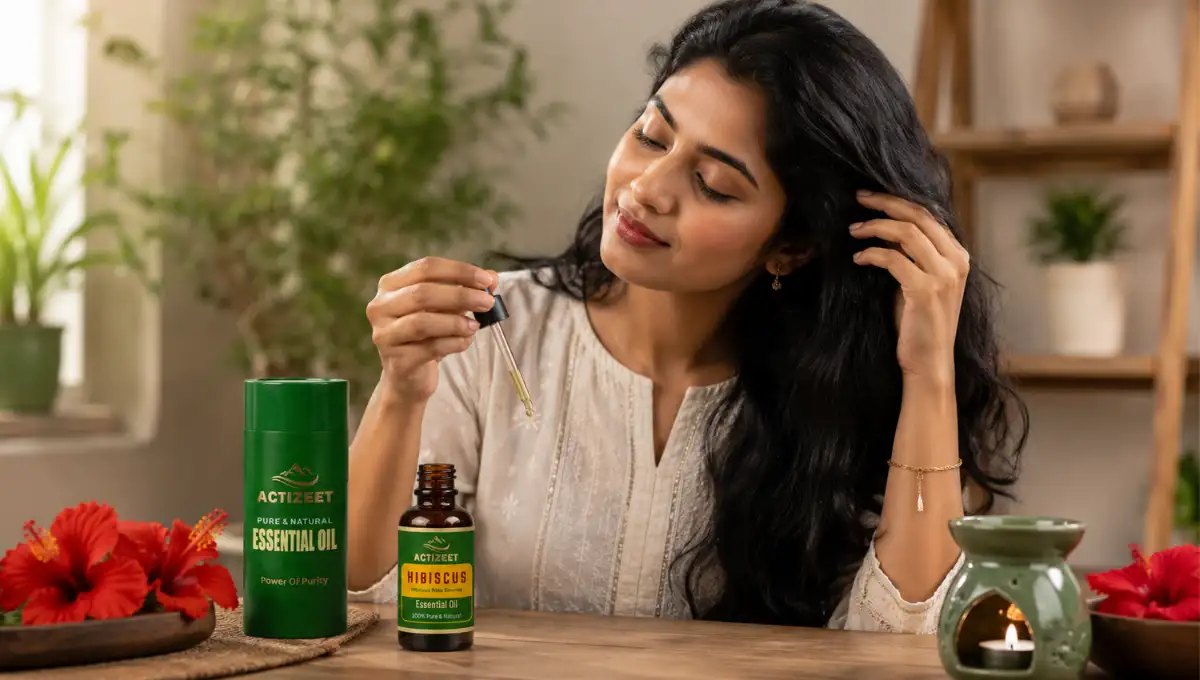
When Indian buyers seek hibiscus oil for the traditional hair care and scalp health benefits that Ayurveda documents for Gudhal, the flower-based preparation (infused in carrier oil or concentrated extract) is the appropriate product. ACTIZEET® Hibiscus Essential Oil specifically captures the flower's bioactive anthocyanin and flavonoid profile for the documented therapeutic hair and skin benefits.
Six Quality Markers for the Best Hibiscus Oil in India in 2026
Botanical Name and Part
Must show Hibiscus rosa-sinensis L. with "flower" as the plant part. Not generic "hibiscus oil" without species and part confirmation. H. sabdariffa (roselle) is a different species used for hibiscus tea; its oil profile differs from H. rosa-sinensis therapeutic properties.
Characteristic Pink-Red Hue
Genuine hibiscus flower preparations in carrier oil show a characteristic pink to red-magenta color from the anthocyanin pigments. A completely colorless or golden carrier oil labeled as hibiscus flower oil either contains no flower extract or the anthocyanins have degraded through age or incorrect processing.
Authentic Floral-Fresh Aroma
Genuine hibiscus flower oil has a delicate, slightly sweet, floral-green aroma. Products with intensely sweet, candy-like, or generically "tropical" aromas are likely synthetic hibiscus fragrance rather than genuine flower oil. The authentic aroma is more subtle than jasmine or rose.
Indian Origin
Hibiscus rosa-sinensis is grown across India in abundance, making Indian-sourced hibiscus oil both botanically authentic and culturally resonant with the Ayurvedic Gudhal tradition. Indian-grown H. rosa-sinensis flowers have the deepest anthocyanin concentrations in the red-flowered varieties that have been specifically cultivated in India for centuries.
Extraction Method Transparency
Whether the hibiscus flower is steam distilled, solvent extracted (absolute), or infused in carrier oil should be specified. Each produces a different compound profile and appropriate application. Cold-infusion in coconut or sesame carrier is the most traditionally Ayurvedic method, most appropriate for hair care applications.
No Artificial Colorants
Some low-quality "hibiscus oil" products achieve the characteristic pink color through artificial dyes rather than genuine anthocyanin content. The color should be natural and slightly variable between batches as seasonal flower anthocyanin content varies. Uniformly intense synthetic-looking pink is a quality concern.
Why Hibiscus Oil Is Growing as India's Most Relevant Hair and Skin Botanical in 2026
For India's Hair Growth and Hair Loss Market
Hair loss and hair thinning are among the most prevalent wellness concerns across Indian demographics in 2026, with post-COVID telogen effluvium, stress-related hair loss, androgenetic alopecia, and nutritional deficiency-driven hair thinning affecting a significant proportion of Indian adults. The Ayurvedic tradition of hibiscus for hair growth is one of the most specifically and most consistently documented in classical texts: the Sushruta Samhita and Charaka Samhita both reference hibiscus preparations for hair disorders. Contemporary pharmacological research has specifically identified 5-alpha-reductase inhibition as a primary mechanism of hibiscus's hair-protective activity. 5-alpha-reductase is the enzyme that converts testosterone to DHT (dihydrotestosterone), and DHT-driven follicle miniaturization is the primary mechanism of androgenetic alopecia, the most common form of hair loss in both men and women. By inhibiting this enzyme, hibiscus compounds directly address the molecular mechanism of the most prevalent hair loss type. Published research has additionally confirmed that hibiscus flower extracts promote hair shaft elongation and prolongs the anagen (active growth) phase of the hair cycle in in-vitro follicle models, establishing a research basis for hibiscus's traditional hair growth reputation that goes beyond simple anecdotal Ayurvedic documentation. For India's enormous hair care market in 2026, hibiscus oil provides the most specifically Ayurveda-validated, the most research-pharmacologically credible, and the most culturally resonant natural hair growth support active available in any botanical oil preparation.
For India's Skin Brightening and Antioxidant Skin Care Market
Hibiscus anthocyanins, the deep red-magenta pigments that give the Gudhal flower its characteristic color, are among the most potent naturally occurring antioxidants documented in the plant kingdom. Anthocyanins specifically in cyanidin-3-sophoroside and cyanidin-3-glucoside form provide documented free radical scavenging that protects skin cells from the UV-driven oxidative damage causing photoaging, hyperpigmentation, and inflammatory skin conditions. Additionally, hibiscus contains citric acid and malic acid (natural AHA acids) that provide mild chemical exfoliation promoting cell turnover and skin brightening. The quercetin flavonoid content provides documented tyrosinase inhibition, directly reducing melanin production that causes hyperpigmentation. And the anti-inflammatory activity reduces the post-inflammatory hyperpigmentation that follows acne on Indian skin. This multi-mechanism approach to skin brightening, combining anthocyanin antioxidant UV protection, AHA exfoliation, quercetin tyrosinase inhibition, and anti-inflammatory hyperpigmentation prevention, makes hibiscus flower oil one of the most comprehensively documented and most specifically India-relevant natural skin brightening botanicals available in the 2026 wellness market. The mucilage compounds additionally provide skin-conditioning and moisture-retaining benefits that make hibiscus oil particularly appropriate for the dry, UV-damaged skin that is common across India's diverse climate zones.
For India's Sacred Ayurvedic Ritual and Devotional Wellness Community
The sacred significance of Gudhal in Indian devotional practice creates a dimension of wellness value for hibiscus oil that goes beyond pharmacological therapeutic properties into the realm of devotional aromatherapy that is uniquely Indian. The deep red Gudhal is the most specifically sacred offering to the goddess Kali across Bengal, Bihar, and across the Shakti traditions that span the Indian subcontinent. It is offered to Lord Ganesha at the beginning of every new venture and ritual. And the Sun god Surya traditionally receives hibiscus flowers in Surya Namaskar puja offerings across India. When hibiscus oil is used in an Indian home in wellness or skin care applications, it carries this sacred association in a way that no imported botanical can replicate. For India's wellness consumers in 2026 who seek products with both pharmacological credibility and genuine Indian spiritual resonance, hibiscus oil provides a uniquely complete wellness experience that honors both dimensions simultaneously.
🍸 ACTIZEET® Hibiscus Essential Oil: authentic Hibiscus rosa-sinensis flower oil with genuine anthocyanin, quercetin, and flavonoid therapeutic profile for India's most sacred and most hair care-documented Ayurvedic botanical in its most concentrated form.
Explore ACTIZEET® →How to Use Hibiscus Oil Effectively in India in 2026
Hair Growth Scalp Treatment
3 to 5 drops in 2 tbsp warm coconut or sesame carrier oil. Scalp massage 30 to 60 minutes before washing. The 5-alpha-reductase inhibiting flavonoids target DHT-driven hair loss directly. Consistent twice-weekly application over 8 to 12 weeks provides the most meaningful hair growth and hair strengthening benefit.
Skin Brightening Night Serum
1 to 2 drops in 1 tsp rosehip or jojoba carrier. Apply nightly. Anthocyanin antioxidant photoprotection, quercetin tyrosinase brightening, AHA mild exfoliation, and anti-inflammatory hyperpigmentation prevention create a genuinely comprehensive natural skin brightening preparation.
Sacred Ritual Diffusion
2 to 3 drops in a water diffuser for puja spaces. Honoring Gudhal's sacred tradition in Indian devotional practice through the most concentrated aromatic form of the flower, creating a genuine connection between daily wellness practice and India's Shakti devotional heritage.
Anti-Inflammatory Facial Massage
1 drop in 1 tsp carrier oil. Gentle upward facial massage. The anti-inflammatory quercetin and anthocyanin activity reduces facial redness, soothes sensitive skin, and addresses the reactive skin conditions driven by India's high UV exposure and urban pollution.
Dry Hair Conditioning Treatment
2 drops in 1 tbsp argan or coconut carrier oil. Apply through dry hair lengths (not scalp) before washing. The mucilage compounds provide deep conditioning, the antioxidant anthocyanins protect hair from UV damage and chemical processing oxidative stress, and the floral aroma provides pleasant aromatherapy.
Natural Antioxidant Face Mist
2 drops in 100 ml rose water or distilled water in a fine mist spray. Shake before each use. The anthocyanin antioxidants provide UV protection, the AHA organic acids provide gentle toning, and the light hibiscus aroma creates a refreshing mid-day skin reviving ritual for India's warm climate.
What to Avoid When Buying Hibiscus Oil in India in 2026
- Hibiscus seed oil sold as or confused with hibiscus flower oil. This is the most common quality confusion in India's hibiscus oil market. Hibiscus seed oil is a genuine, valuable carrier oil with excellent fatty acid profile and skin conditioning properties, but it is a fundamentally different product from hibiscus flower oil. Hibiscus seed oil does not contain the anthocyanins, flavonoids, quercetin, or the 5-alpha-reductase-inhibiting compounds responsible for hibiscus flower oil's documented hair growth and skin brightening therapeutic properties. A golden-colored, odorless carrier oil labeled as "hibiscus oil" is seed oil, not flower oil. Genuine hibiscus flower oil has a characteristic pink to red hue from anthocyanin content.
- Synthetic hibiscus fragrance oil labeled as hibiscus essential oil. Synthetic hibiscus fragrance compounds are widely available in India's online market and often have a more intensely sweet, candy-like, or tropical-fruity aroma that is appealing but contains none of the therapeutic anthocyanins or flavonoids. Look for Hibiscus rosa-sinensis as the botanical name and verify the flower or petal as the plant part. Generic "hibiscus fragrance" without botanical name specification is not therapeutic hibiscus flower oil.
- Products with artificially dyed pink color rather than natural anthocyanin coloring. Some commercial hibiscus oil products achieve their appealing pink color through synthetic dyes (like Red 40 or synthetic carotene-based colorants) rather than genuine anthocyanin content from actual hibiscus flowers. Natural anthocyanin color is slightly variable between batches and fades over time with exposure to light. Uniformly intense, stable synthetic-looking pink at unusually low pricing warrants scrutiny.
- Expecting immediate visible results for hair growth. Hibiscus oil's hair growth mechanism, including 5-alpha-reductase inhibition and anagen phase prolongation, requires consistent application over 8 to 12 weeks before visible results in hair density and reduced shedding become apparent. This is a cumulative biological mechanism rather than an immediate effect. The most common reason Indian buyers report that hibiscus oil "doesn't work" for hair growth is insufficient application frequency (should be at least twice weekly) or insufficient treatment duration (should be at least 2 to 3 months of consistent use).
- Using hibiscus oil without carrier oil dilution directly on scalp. While hibiscus oil is generally considered well-tolerated, applying concentrated flower oil directly to the scalp without carrier oil dilution may cause sensitivity reactions in some individuals, particularly those with known sensitivities to plant pigment compounds. The traditional Ayurvedic preparation always used hibiscus flower materials in a carrier oil base, reflecting centuries of practical observation about appropriate application.
ACTIZEET® — Best Hibiscus Oil in India 2026
ACTIZEET® Hibiscus Essential Oil is produced from authentic Hibiscus rosa-sinensis flowers with clear botanical species and flower source specification, genuine anthocyanin-containing compound profile, characteristic hibiscus coloring, and the authentic floral-fresh therapeutic quality that distinguishes genuine flower oil from seed oil, synthetic fragrance, or dye-colored carrier preparations. India's most trusted source for genuine therapeutic hibiscus oil in 2026.
🍸 Buy ACTIZEET® Hibiscus Essential Oil →Why ACTIZEET® Is the Right Hibiscus Oil Choice for India in 2026
- Verified Hibiscus rosa-sinensis species with flower source clearly confirmed. ACTIZEET® provides the botanical species name and plant part specification that confirms buyers are receiving genuine hibiscus flower oil with the anthocyanin, quercetin, flavonoid, and 5-alpha-reductase-inhibiting compound profile documented in traditional Ayurvedic and contemporary pharmacological research for hair growth and skin brightening applications
- Authentic anthocyanin-based color and delicate floral aroma confirming genuine H. rosa-sinensis flower content. The characteristic hibiscus coloring and delicate floral-fresh aroma of ACTIZEET® Hibiscus Oil confirms genuine flower-based preparation rather than seed oil, synthetic fragrance, or dye-colored carrier alternatives
- India's sacred Gudhal heritage honored with genuine Indian-sourced botanical content. ACTIZEET® respects the extraordinary depth of hibiscus's position in Indian Ayurvedic medicine and Hindu devotional tradition by sourcing from India's own abundant H. rosa-sinensis cultivation, honoring both the therapeutic lineage and the sacred cultural significance of this most Indian of flowering plants
- Appropriate extraction method preserving the flower's anthocyanin and flavonoid therapeutic compounds. ACTIZEET® processes hibiscus flowers using extraction methods appropriate for preserving the anthocyanin and flavonoid content that defines therapeutic quality, rather than processes that would degrade these heat-sensitive compound classes
- India's trusted aromatherapy brand with consistent quality and sourcing transparency. Actizeet.in maintains botanical species verification, plant part specification, and quality documentation across its full range, providing the consistent quality assurance that India's most informed wellness buyers require from every botanical oil purchase in 2026
Frequently Asked Questions
Finding the best hibiscus oil in India in 2026 requires three essential quality confirmations: Hibiscus rosa-sinensis botanical name with flower (not seed) source specified, the characteristic anthocyanin-based pink to red color of genuine flower preparation, and the delicate floral-fresh aroma of authentic H. rosa-sinensis flower rather than synthetic fragrance or generic "hibiscus" scent. ACTIZEET® Hibiscus Essential Oil meets all three standards with the botanical authenticity, color integrity, and therapeutic compound profile that connects India's most sacred garden flower to its most concentrated healing form. The Gudhal that India offers to its goddesses and grows in its courtyards is also one of its most pharmacologically credible hair care and skin brightening botanicals. ACTIZEET® delivers this extraordinary Indian botanical heritage in its most genuine and most therapeutically potent form in 2026.
Latest From Our Blog

15 Neroli Essential Oil Benefits: How Orange Blossom’s Linalool, Limonene, and Nerolidol Deliver PMC-Confirmed Anxiety Relief, Antidepressant Action, and Skin-Renewing Power
Discover 15 neroli essential oil benefits from PMC RCTs confirming...

Best Lemongrass Oil in India 2026: A Complete Buyer’s Guide to Pure, Authentic Cymbopogon Essential Oil
Looking for the best lemongrass oil in India in 2026?...

15 Tea Tree Essential Oil Benefits Backed by a Century of Research and Trusted by Millions
Discover 15 evidence-backed tea tree essential oil benefits for skin,...

Best Bergamot Oil in India 2026: Why FCF Grade Is Non-Negotiable and How ACTIZEET® Gets Every Quality Standard Right
Searching for the best bergamot oil in India? Learn why...