
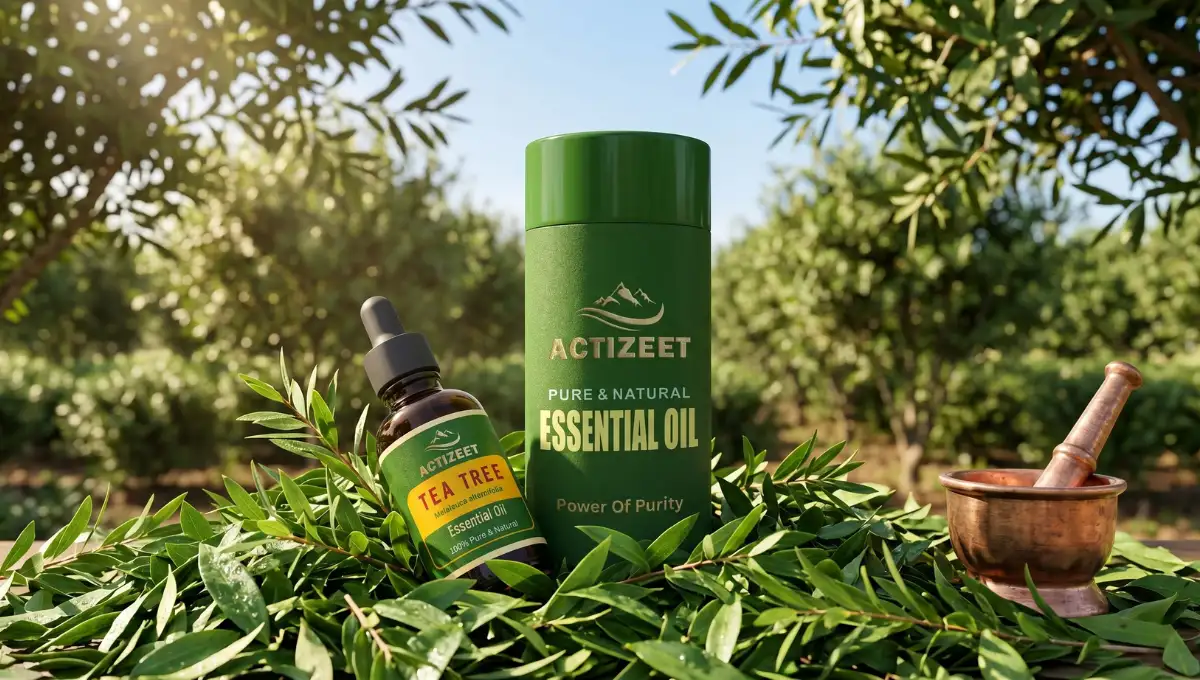
15 Tea Tree Essential Oil Benefits Backed by a Century of Research and Trusted by Millions
Steam-distilled from the leaves of the Australian native plant Melaleuca alternifolia, tea tree essential oil has been used as medicine for almost 100 years in Australia and is now one of the world's most researched and widely used botanical oils. Here is what makes it genuinely worth keeping in your wellness cabinet.
Some essential oils earn their reputation through centuries of anecdotal tradition. Tea tree essential oil has that, and considerably more. This is one of the very few botanical oils with a formal European Medicines Agency (EMA) monograph establishing its traditional herbal medicinal use. The World Health Organization (WHO) has published a monograph on its evidence-based therapeutic indications. And it has been the subject of hundreds of peer-reviewed studies, systematic reviews, and randomized controlled trials covering applications from acne and athlete's foot to MRSA decolonization and wound healing.
The Aboriginal people of Australia used the leaves of Melaleuca alternifolia for treating wounds, burns, and insect bites long before Arthur Penfold first formally described the oil's medicinal value in 1925. In the 1930 Medical Journal of Australia, it was described as having "impressive wound healing and antiseptic qualities." A century later, that assessment holds up remarkably well under scientific scrutiny.
In this guide, we cover 15 specific tea tree essential oil benefits supported by research, explain the mechanisms behind each one, and give you practical guidance on using this remarkable oil safely and effectively. We also address the one thing that matters as much as knowledge: choosing a genuinely pure product from a brand you can trust.
Tea tree essential oil (TTO) is steam-distilled from the leaves and terminal branches of Melaleuca alternifolia, an Australian native tree endemic to New South Wales and Queensland. The oil contains more than 100 chemical components. For quality assessment, the International Organization for Standardization (ISO) has defined minimum and maximum concentrations for 15 key components. The primary active constituent is terpinen-4-ol, which typically comprises 35 to 48% of the oil. Other important compounds include gamma-terpinene, alpha-terpinene, 1,8-cineole, alpha-terpineol, p-cymene, and alpha-pinene. The oil has a distinctive fresh, medicinal, camphoraceous odor that is immediately recognizable in topical and cosmetic products.
Key Active Compounds in Tea Tree Essential Oil
The therapeutic profile of tea tree essential oil is driven by a complex mixture of terpene hydrocarbons and their associated alcohols. ISO standards regulate the composition of commercial tea tree oil to ensure therapeutic consistency.
| Compound | ISO Range | Primary Therapeutic Action |
|---|---|---|
| Terpinen-4-ol | 35–48% | Primary antimicrobial, anti-inflammatory; disrupts bacterial and fungal cell membranes; modulates immune response |
| Gamma-Terpinene | 10–28% | Antioxidant; contributes to overall antimicrobial synergy |
| Alpha-Terpinene | 5–13% | Antioxidant; antimicrobial; anti-inflammatory |
| 1,8-Cineole | 0–15% | Decongestant; antimicrobial; associated with skin sensitization at higher concentrations |
| Alpha-Terpineol | 1.5–8% | Antimicrobial; anti-inflammatory; skin-penetration enhancer |
| p-Cymene | 0.5–12% | Anti-inflammatory; analgesic; antimicrobial |
| Alpha-Pinene | 1–6% | Antimicrobial; bronchodilator; anti-inflammatory |
| Terpinolene | 1.5–5% | Antioxidant; antimicrobial; sedative (minor) |
15 Tea Tree Essential Oil Benefits
Antibacterial activity is the most extensively documented of all tea tree essential oil benefits, and it is where the scientific literature is most robust. Tea tree oil has demonstrated meaningful activity against a remarkably broad range of bacteria, including both gram-positive organisms like Staphylococcus aureus and Streptococcus pyogenes, and gram-negative organisms like Escherichia coli, Klebsiella pneumoniae, and Pseudomonas aeruginosa.
The primary mechanism of antibacterial action is membrane disruption. Terpinen-4-ol, the dominant active compound, integrates into bacterial cell membranes, increasing their permeability and causing leakage of essential cellular components. This mechanism is distinct from those used by conventional antibiotics, which means tea tree oil retains activity against many antibiotic-resistant strains that have developed resistance to conventional drugs.
A landmark review published in Clinical Microbiology Reviews (PMC) comprehensively documented that tea tree oil is employed largely for its antimicrobial properties and is incorporated as the active ingredient in many topical formulations used to treat cutaneous infections. The review confirmed TTO's broad-spectrum antibacterial activity across multiple genera of clinically significant bacteria, including resistant strains. The oil's primary uses historically capitalized on its antiseptic and anti-inflammatory actions, and this review summarized decades of accumulated evidence validating those applications.
For daily use, diluted tea tree oil applied to the skin provides a natural antimicrobial layer that helps prevent minor skin infections, reduces bacterial populations on acne-prone skin, and can assist with wound care for minor cuts and abrasions.
Tea tree oil's antifungal activity is among its most clinically valuable properties. The oil has demonstrated effectiveness against a broad range of fungal pathogens including Candida albicans (responsible for yeast infections and oral thrush), Trichophyton rubrum (the most common cause of athlete's foot and nail fungus), and Malassezia species (the fungal driver behind dandruff and seborrheic dermatitis).
The mechanism of antifungal action mirrors that of antibacterial activity: terpinen-4-ol disrupts fungal cell membranes, and research has specifically confirmed that tea tree oil inhibits germ tube formation by Candida albicans, a key step in its transition from benign colonizer to pathogenic invader. Importantly, tea tree oil has also shown synergistic antifungal activity when combined with conventional antifungal medications, suggesting potential as an adjunct treatment for difficult or drug-resistant fungal infections.
For athlete's foot, toenail fungus, and skin fungal rashes, diluted tea tree oil applied consistently to affected areas is one of the most practically useful natural antifungal preparations available without a prescription.
Acne is one of the most researched and most practically validated applications of tea tree essential oil. Acne vulgaris involves a combination of excess sebum production, follicle blockage, and bacterial colonization by Cutibacterium acnes (formerly Propionibacterium acnes). Tea tree oil addresses the bacterial component directly while also reducing the inflammation that makes acne lesions red, swollen, and painful.
According to the European Medicines Agency (EMA) monograph, tea tree oil has well-established traditional medicinal use for the treatment of small boils, furuncles, and mild acne, a formal regulatory recognition of its acne management application. A frequently cited comparative study found that 5% tea tree oil gel was comparably effective to 5% benzoyl peroxide for acne, with the significant advantage of producing fewer side effects including less dryness, scaling, and irritation.
For acne use, a 5% tea tree oil gel or a dilution of 5 drops per teaspoon of carrier oil applied to the skin once or twice daily provides antimicrobial and anti-inflammatory action at the follicle level. Spot application using a cotton swab delivers higher local concentrations to individual lesions. Consistency over 4 to 8 weeks produces the most reliable results.
🌿 ACTIZEET® Tea Tree Essential Oil: pure, ISO-grade Melaleuca alternifolia oil with verified terpinen-4-ol content for real therapeutic results.
Explore ACTIZEET® →Beyond its antimicrobial activity, tea tree oil has validated anti-inflammatory properties that are directly relevant to a range of skin conditions. Terpinen-4-ol has been shown to suppress the activation and activity of inflammatory immune cells, particularly neutrophils, monocytes, and macrophages. It reduces the release of pro-inflammatory cytokines including TNF-alpha and IL-1beta, the chemical messengers that drive the redness, swelling, and heat of inflamed skin.
This anti-inflammatory action is particularly relevant for conditions like seborrheic dermatitis, eczema, contact dermatitis, and insect bite reactions, where inflammation is a dominant feature of the skin response. A clinical trial using tea tree oil for seborrheic dermatitis of the face found significantly greater improvement compared to placebo, and this is reflected in clinical recommendations for its use in this condition. Research also confirms tea tree oil attenuates experimental contact dermatitis, providing additional evidence for its skin-calming properties.
The original medicinal use of the Australian tea tree, both by Aboriginal Australians who applied crushed leaves directly to wounds and by early 20th-century medical practitioners who used the distilled oil as a surgical antiseptic, was for wound care. This use has the longest documented history of any tea tree oil application and remains one of its most evidence-supported benefits.
The European Medicines Agency specifically recognizes tea tree oil for the treatment of small superficial wounds and insect bites, and the WHO monograph corroborates this indication. Tea tree oil's wound-care benefits come from its combination of broad-spectrum antibacterial activity (preventing infection), anti-inflammatory action (reducing wound-site inflammation), and mild local analgesic effect that reduces discomfort at the wound site.
For everyday wound care, a diluted application of tea tree oil to clean minor cuts, abrasions, or insect bites creates a protective antimicrobial environment that reduces infection risk without the harsh tissue-damaging effects of some conventional antiseptics like undiluted alcohol or strong iodine preparations.
Dandruff affects up to 50% of the global adult population, making it one of the most common scalp conditions worldwide. Its primary cause is overgrowth of Malassezia fungi on the scalp, which triggers an inflammatory response that produces the flaking, itching, and scalp irritation characteristic of the condition. Tea tree oil's antifungal and anti-inflammatory properties make it one of the most effective natural treatments for dandruff.
A well-designed clinical trial published in the Journal of the American Academy of Dermatology tested a 5% tea tree oil shampoo against placebo in 126 participants with mild to moderate dandruff. The tea tree oil group experienced a 41% improvement in dandruff severity, with significant improvements in itching and greasiness compared to the placebo group. This is one of the most cited pieces of clinical evidence for tea tree oil's scalp benefits and is referenced consistently in dermatology literature.
Adding 5 to 10 drops of tea tree oil to your regular shampoo, or using a shampoo formulated with 5% tea tree oil, delivers the antifungal and anti-inflammatory benefit needed to reduce dandruff and improve overall scalp health with regular use.
Methicillin-resistant Staphylococcus aureus (MRSA) is one of the most serious antibiotic-resistant bacterial threats globally. Standard pharmaceutical treatments for MRSA decolonization involve antibiotic preparations that themselves carry risks of further resistance development. Tea tree oil offers a compelling natural alternative with a mechanism of action that makes resistance development considerably less likely.
A systematic review of randomized controlled trials published in Frontiers in Pharmacology (2023) concluded that topical tea tree oil regimens show similar efficacy to standard treatments for decolonizing the body from methicillin-resistant Staphylococcus aureus (MRSA). The review, which analyzed all available RCT evidence for tea tree oil across human health applications, represented the most current and comprehensive clinical evaluation of tea tree oil's therapeutic utility at the time of publication.
Tea tree oil's ability to disrupt bacterial membranes through a physical mechanism rather than targeting specific metabolic pathways means that bacteria are far less able to develop resistance to it than to conventional antibiotics. This is a genuinely significant advantage for long-term management of bacterial colonization, particularly in healthcare or high-exposure settings.
Tea tree oil's antimicrobial activity extends effectively into the oral cavity, where it targets pathogens responsible for plaque, gingivitis, and oral infections. The EMA formally recognizes tea tree oil for the symptomatic treatment of minor inflammation of the oral mucosa, a regulatory acknowledgment of its established oral health application.
A small 2020 randomized, double-blind clinical trial found that tea tree oil mouthwash was slightly more effective than chlorhexidine mouthwash (the pharmaceutical gold standard for gingivitis treatment) in treating gingivitis. While the authors noted the need for further research, the findings are encouraging. Tea tree oil's anti-inflammatory action on gum tissue reduces the swelling and bleeding associated with gingivitis, while its broad antimicrobial activity targets the full range of oral bacteria responsible for plaque formation, bad breath, and periodontal disease.
For oral care use, 1 to 2 drops of tea tree oil can be added to a glass of water and used as a mouth rinse (not swallowed). It can also be applied diluted to the gum line using a cotton swab for targeted gum care. Never swallow tea tree oil or use it in concentrations above 2% in oral preparations.
🌿 Pure ACTIZEET® Tea Tree Essential Oil, distilled to ISO quality standards and ready for your skincare, hair care, and wellness routine.
Shop Now →Tea tree essential oil has demonstrated antiviral properties in laboratory research, making it a relevant botanical tool for reducing viral surface contamination and potentially supporting the skin's first-line defense against viral pathogens. Research has shown activity against influenza virus, West Nile Virus, and herpes simplex virus in in vitro testing. A concentrated form of Melaleuca alternifolia (MAC) showed superior activity against West Nile Virus compared to whole TTO, suggesting that specific components may have particularly potent antiviral action.
Tea tree essential oil has been shown to exert antimicrobial, antifungal, anthelmintic, antiviral, anti-tumor and anti-inflammatory activities, reflecting its broad biological activity profile. For practical antiviral use, incorporating tea tree oil into surface cleaning preparations, hand sanitizer blends, or diffuser mixtures creates an environment less hospitable to viral survival on surfaces and in the air.
Tea tree oil has recognized insect-repellent properties, with research confirming activity against several common household and outdoor pests. Its alpha-pinene and terpinene components contribute to its repellent action, which has been demonstrated against mosquitoes, lice, ticks, and the Demodex mite (a microscopic skin mite associated with certain types of eyelid irritation and blepharitis).
The Cochrane Database of Systematic Reviews has specifically reviewed tea tree oil for Demodex blepharitis treatment, reflecting the clinical relevance of this application. For mosquito repellence and general insect deterrence, adding tea tree oil to a carrier oil and applying to exposed skin areas, or diffusing in outdoor spaces, provides a natural, non-toxic insect barrier. In shampoo formulations, it has been studied as a complement to conventional head lice treatments, with positive results for reducing lice infestation.
Body odor is caused not by sweat itself but by the bacterial metabolism of sweat components, primarily by Staphylococcus and Corynebacterium species on the skin surface. Tea tree oil's potent antibacterial activity targets these odor-producing organisms directly, making it an effective natural deodorant that addresses the cause of odor rather than simply masking it.
Unlike conventional deodorants and antiperspirants that often contain aluminium compounds associated with concerns about long-term skin absorption, tea tree oil provides antimicrobial deodorizing action without blocking sweat glands or introducing potentially problematic synthetic ingredients. For DIY natural deodorant preparations, 10 to 15 drops of tea tree oil in a base of baking soda, arrowroot powder, and coconut oil creates an effective, clean formulation. Alternatively, a few drops diluted in witch hazel used as a simple underarm spray provides a quick, effective natural deodorant preparation.
Onychomycosis (nail fungal infection) is one of the most persistent and difficult-to-treat conditions in dermatology. Conventional pharmaceutical treatments require prolonged use, carry significant side effect profiles, and do not always succeed in producing full nail clearance. Tea tree oil offers a natural, lower-risk alternative that has been evaluated in clinical settings.
The National Center for Complementary and Integrative Health (NCCIH) recognizes that a small amount of evidence suggests topical tea tree oil might be helpful for athlete's foot and toenail fungal conditions. For nail fungus application, direct application of undiluted or minimally diluted (50% in carrier oil) tea tree oil to the affected nail twice daily over several months shows the most consistent results in study settings. The treatment needs to be sustained over the full growth cycle of the nail, which typically takes 6 to 12 months for complete clearance. Patience and consistency are the defining factors in success.
Tea tree oil's 1,8-cineole content gives it decongestant properties similar to eucalyptus oil, making it useful for supporting respiratory health during colds, sinus congestion, or upper respiratory infections. Steam inhalation with tea tree oil can help loosen mucus, open congested airways, and deliver the oil's antimicrobial compounds to the respiratory mucosa where they can target infection-causing pathogens.
The Aboriginal Australian traditional use of tea tree preparations for respiratory ailments has a pharmacological basis in the oil's combination of antimicrobial and anti-inflammatory activity. The decongestant effect of 1,8-cineole is well-established from research on similar compounds, and while tea tree oil has a lower cineole content than eucalyptus oil, it brings the added advantage of broad antimicrobial coverage. For respiratory use, adding 3 to 5 drops to a bowl of hot water for steam inhalation or diffusing in a room during illness provides antimicrobial and decongestant support simultaneously.
Tea tree oil's antimicrobial properties translate directly into household applications where reducing surface contamination and airborne microbial load is a priority. The oil is commonly added to household cleaning products for its ability to kill or inhibit a broad range of bacteria, fungi, and viruses on surfaces, particularly in kitchens, bathrooms, and high-touch areas.
A simple all-purpose cleaning spray can be made by combining 20 drops of tea tree oil with white vinegar and water in a spray bottle. This preparation provides antimicrobial cleaning action without the harsh synthetic chemicals found in many commercial cleaning products. For air purification, diffusing tea tree oil in enclosed spaces reduces airborne microbial concentrations. This is particularly useful during periods of illness within a household to reduce cross-infection, or in damp environments where mold and mildew are concerns, as tea tree oil has demonstrated specific antifungal activity against common indoor mold species.
Tea tree oil's influence on immune function goes beyond simply killing external pathogens. Terpinen-4-ol, the primary active compound, has been shown to modulate immune cell activity in ways that support a more balanced and effective immune response. It suppresses excessive inflammatory activity (reducing harmful over-reactions to pathogens) while maintaining the immune system's ability to respond appropriately to genuine threats.
Tea tree essential oil has been shown to exert antimicrobial, antifungal, anthelmintic, antiviral, anti-tumor and anti-inflammatory activities, reflecting the multi-system immune-relevant nature of its biological action. By reducing the bacterial, fungal, and viral burdens that the immune system must respond to, and simultaneously modulating the inflammatory components of immune responses, tea tree oil creates conditions in which the immune system can operate more efficiently and sustainably. Regular aromatic use through diffusion, or topical application as part of a daily skincare or hair care routine, contributes to this immune-supportive effect over time.
ACTIZEET® Tea Tree Essential Oil is steam-distilled from authenticated Melaleuca alternifolia to ISO quality standards, ensuring the terpinen-4-ol content that drives genuine therapeutic results. Pure, single-ingredient, and free from synthetic adulterants. Real tea tree oil, properly produced, for the results research promises.
🌿 Shop ACTIZEET® Tea Tree Essential Oil →How to Use Tea Tree Essential Oil
Tea tree essential oil is one of the most versatile essential oils for practical everyday use. While it is generally more tolerant of direct skin application than many other oils, dilution is still strongly recommended for routine use to minimize the risk of sensitization over time.
Topical Skin Use
Dilute 3 to 5 drops in one teaspoon of carrier oil (jojoba, coconut, or sweet almond). Apply to acne, wounds, rashes, or fungal skin issues. A 5% concentration is appropriate for most skin conditions.
Aromatherapy Diffusion
Add 5 to 8 drops to a water diffuser. Use to reduce airborne microbes during illness, purify the air in damp spaces, or as a clean, medicinal aromatic for a home or workspace.
Scalp and Hair Care
Add 5 to 10 drops directly to your regular shampoo bottle and shake well before each use. Alternatively, mix 5 drops into one tablespoon of carrier oil for a pre-wash scalp massage. Effective for dandruff and scalp health.
Acne Spot Treatment
Dilute 2 drops in half a teaspoon of jojoba oil. Apply using a clean cotton swab directly to individual acne lesions. Leave overnight. More sensitive skin types benefit from greater dilution.
Steam Inhalation
Add 3 to 5 drops to a bowl of hot water. Drape a towel over your head and inhale for 5 to 10 minutes. Effective for sinus congestion, respiratory infections, and clearing nasal passages.
Household Cleaning Spray
Combine 20 drops tea tree oil with 1 cup white vinegar and 1 cup water in a spray bottle. Shake before use. Apply to kitchen surfaces, bathrooms, and high-touch areas for natural antimicrobial cleaning.
What Tea Tree Essential Oil Blends Well With
Tea tree oil blends well with a wide range of other therapeutic and aromatic oils, enhancing both its scent profile and its biological activity through synergistic compound interaction.
Safety Guidelines
Tea tree oil is generally well-tolerated, but as a concentrated essential oil, it requires appropriate handling. Side effects reported in clinical studies were minor except at concentrations above 25% applied topically.
- Always dilute for routine skin use. A 5% dilution (approximately 5 drops per teaspoon of carrier oil) is appropriate for most topical applications. Sensitive skin types should start at 1 to 2%.
- Patch test before first use. Apply a small amount of diluted oil to the inner wrist and wait 24 hours to check for any allergic contact dermatitis response.
- Never swallow. Tea tree oil is toxic if ingested and can cause serious adverse effects including confusion, loss of coordination, and coma. Always keep out of reach of children.
- Keep away from pets. Tea tree oil is highly toxic to cats and dogs even in small topical amounts. Never apply to pets or use in diffusers in spaces where pets are present without veterinary guidance.
- Avoid eyes and mucous membranes. Direct contact causes irritation. If accidental eye exposure occurs, flush immediately with carrier oil then rinse with clean water.
- Not for use during pregnancy without medical advice. Consult a healthcare provider before use during pregnancy or breastfeeding.
- Use fresh, unoxidized oil. Oxidized tea tree oil (indicated by an orange-yellow color and thicker consistency) causes more skin reactions than fresh oil. Store tightly sealed in a cool, dark place and replace after 12 to 18 months if opened.
Frequently Asked Questions
Final Thoughts: The Essential Oil That Has Genuinely Earned Its Place
The 15 tea tree essential oil benefits covered in this guide are not speculative or based solely on traditional belief. They are backed by a century of use, two formal regulatory monographs from major health agencies, and a substantial body of peer-reviewed clinical and laboratory research that continues to grow. This is a rare level of scientific validation for an essential oil.
From its evidence-supported role in acne treatment, dandruff control, and MRSA decolonization, to its practical household cleaning and air purification applications, tea tree oil delivers a breadth of genuine utility that few other botanical preparations can match. Its mechanism of action, membrane disruption by terpinen-4-ol, is physically robust and significantly less prone to resistance development than conventional antibiotic mechanisms.
The critical factor in accessing these benefits is product quality. Tea tree oil adulteration and oxidation are real issues in the commercial market, and a degraded or substituted product delivers neither the terpinen-4-ol content nor the fresh-oil safety profile that good research has established. Choosing a brand that meets ISO standards and provides authentic, fresh-distilled oil is not a minor consideration. It is the difference between results and disappointment.
ACTIZEET® Tea Tree Essential Oil is steam-distilled from authenticated Melaleuca alternifolia to ISO quality standards, giving you consistent terpinen-4-ol content and the genuine therapeutic profile that a century of research has validated.
Latest From Our Blog

15 Champaka Essential Oil Benefits: How Magnolia champaca Deliver Deep Relaxation, Skin Radiance, and Spiritual Wellness
Discover 15 proven champaka essential oil benefits — from deep...

15 Clove Essential Oil Benefits That Explain Why This Spice Has Been Medicine Since the First Century
Discover 15 powerful clove essential oil benefits backed by science....

Best Cypress Oil in India 2026: What to Buy, What to Skip, and Why Purity Makes All the Difference
Searching for the best cypress oil in India in 2026?...

15 Kasturi Essential Oil Benefits: Why This Ancient Indian Musk Botanical Deserves a Place in Every Modern Wellness Routine
Discover 15 Kasturi essential oil benefits, from antioxidant and antimicrobial...