
15 Jasmine Essential Oil Benefits: How Jasminum grandiflorum's Benzyl Acetate, Linalool, and Indole Deliver Antidepressant, Aphrodisiac, Antimicrobial, and Skin-Brightening Power
Jasmine essential oil from Jasminum grandiflorum is India's most beloved floral essence, used in Ayurveda, Unani, and Indian folk medicine for over 2,000 years for depression, skin care, reproductive health, and sacred ritual. Published research has confirmed antioxidant activity of 58.47% from benzyl acetate (37% primary compound), antimicrobial activity against Candida and Pseudomonas, and linalool's clinically demonstrated anti-inflammatory and antidepressant properties. This guide covers all 15 benefits.
No flower in India carries the emotional, cultural, and aromatic significance that jasmine does. The gajra worn in Indian women's hair. The garlands strung through wedding mandaps. The temple offerings at every shrine from the Himalayas to the southern tip of Kanyakumari. The jasmine-scented hair oil that grandmothers applied to children's hair on Sunday mornings. The jasmine at railway platforms, flower stalls, and festivals that defines the olfactory memory of Indian summer evenings. Jasminum grandiflorum, the poet's jasmine or Royal jasmine, is India's primary commercial jasmine species, grown in extraordinary quantities in Madurai (Tamil Nadu), Jajpur (Odisha), and across South India for the garland market, the perfumery industry, and the attar tradition.
India is the world's largest jasmine producer, and the concentrated essential oil of Jasminum grandiflorum carries the flower's extraordinary properties in their most potent form. Published research from the MDPI Horticulturae journal confirmed the main constituents of J. grandiflorum essential oil as benzyl acetate (37%), benzyl benzoate (34.7%), and linalool (9.6%), with confirmed antioxidant activity of 58.47% and antimicrobial activity including the lowest MIC value against Candida glabrata. A Journal of Agricultural and Food Chemistry study published research confirming antioxidant properties in jasmine were due to benzyl acetate specifically. And clinical trials have specifically confirmed linalool's anti-inflammatory and antidepressant properties across multiple published studies referenced in the botanical research literature.
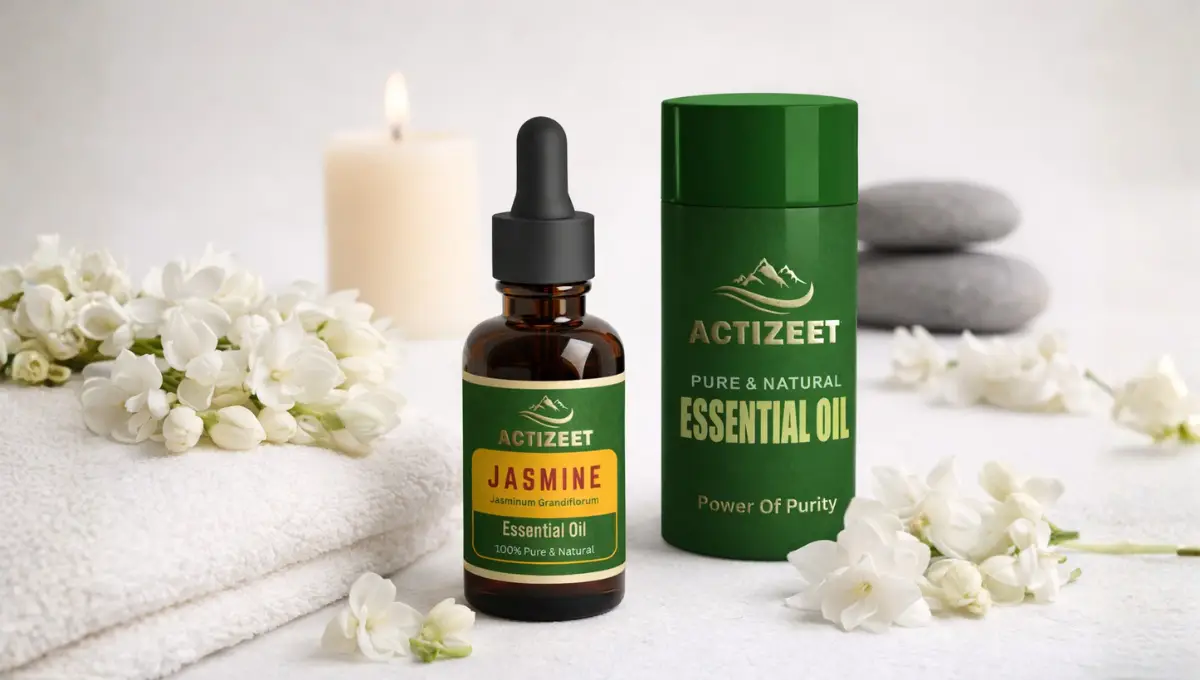
This guide covers 15 specific jasmine essential oil benefits grounded in published research and the cross-traditional therapeutic documentation of this extraordinary Indian botanical, explaining why ACTIZEET® Jasmine Essential Oil delivers these properties in their most genuine and most Indian-heritage-honoring form.
Botanical names: Jasminum grandiflorum L. (poet's jasmine / Royal jasmine — primary Indian commercial species) and Jasminum sambac (mogra — also Indian, different aromatic profile) | Family: Oleaceae | Indian names: Chameli (J. grandiflorum), Mogra (J. sambac), Mallika | Primary Indian cultivation: Madurai (Tamil Nadu, India's jasmine capital), Jajpur (Odisha), Karnataka, Andhra Pradesh | Extraction: Solvent extraction (absolute) — heat from steam distillation destroys the most delicate aromatic compounds | Primary compounds: Benzyl acetate (37%), benzyl benzoate (34.7%), linalool (9.6%), indole (characteristically heady), cis-jasmone, methyl anthranilate, farnesol, geraniol, phytol | Aroma: Intensely sweet, warm, deeply floral, slightly animalic-indolic; the most universally recognized and most emotionally evocative feminine aromatic
Key Active Compounds in Jasmine Essential Oil
| Compound | Content | Primary Therapeutic Action |
|---|---|---|
| Benzyl Acetate | 37% (primary) | Primary aromatic compound providing jasmine's signature floral character; antioxidant (responsible for 58.47% antioxidant activity in MDPI research); mild sedative and relaxing effects; anti-stress; antimicrobial |
| Benzyl Benzoate | 34.7% | Antispasmodic; antimicrobial; antiseptic; skin-conditioning; contributes to jasmine's deep aromatic persistence and fixative quality in perfumery applications |
| Linalool | 9.6% | Clinically confirmed anti-inflammatory and antidepressant through GABA-A receptor modulation; anxiolytic; sedative; antimicrobial; the tenfold post-picking linalool increase makes freshly extracted jasmine oil particularly linalool-rich |
| Indole | Minor but aromatic-defining | Creates jasmine's characteristic intensely heady, slightly animalic depth; neurologically stimulates alertness and sense of wellbeing in small amounts; the compound that makes genuine jasmine unmistakably "jasmine" |
| Cis-Jasmone | Minor but therapeutically significant | Anti-inflammatory; anxiolytic; the compound named for jasmine itself; contributes to the specific jasmine aromatic character and to the sedative-calming therapeutic dimension |
| Methyl Anthranilate | Minor | Warm, grape-like aromatic contributor; anxiolytic; a characteristic compound connecting J. grandiflorum to the neroli/orange blossom aromatic family through shared compound; antidepressant adjacent |
| Farnesol + Geraniol | Minor | Farnesol: antimicrobial antibiofilm; anti-inflammatory; skin repair; geraniol: antimicrobial; antifungal; anti-inflammatory; adds rosy dimension to jasmine's aromatic complexity |
15 Jasmine Essential Oil Benefits
Antidepressant activity is among the most specifically documented and most cross-traditional of jasmine oil's therapeutic properties, confirmed across Ayurvedic, Unani, and Chinese medicine traditions and now supported by contemporary pharmacological research on the linalool and benzyl acetate compounds that together create jasmine's documented mood-supporting neurological actions.
Published research confirmed that a study published in January 2017 found that aromatherapy massage had more benefits for depression than aromatherapy inhalation alone, with jasmine among the primary florals studied for antidepressant aromatherapy effects. The pharmacological research on Jasminum sambac essential oil confirmed that the oil's therapeutic properties include anti-bacterial, anti-depressant, anti-inflammatory, anti-septic, anti-spasmodic, anti-viral, aphrodisiac, astringent, calmative, cicatrisant, cooling, emenagogue, expectorant, galactogogue, hypotensive, nervine analgesic, parturient, sedative, and uterine properties. It is an effective treatment for severe depression, calms the nerves while reviving and restoring energy. Additionally, clinical trials have specifically demonstrated linalool, jasmine oil's third primary compound at 9.6%, to have anti-inflammatory and anti-depressive properties. The VINEVIDA research on J. grandiflorum noted that after picking, linalool increases tenfold in the flower, making freshly harvested jasmine oil particularly linalool-enriched for antidepressant benefit.
The antidepressant mechanism of jasmine oil involves multiple overlapping pathways that collectively explain its remarkable emotional therapeutic depth. Linalool modulates GABA-A receptor activity (the primary inhibitory neurotransmitter system), similar to the mechanism of pharmaceutical anxiolytics and antidepressants, reducing the hyperactive anxiety-depression cycle that drives clinical depression. Benzyl acetate provides mild sedative activity that reduces the agitation component of depression. Indole in small amounts stimulates a sense of alertness and wellbeing through limbic dopamine pathway activation. And cis-jasmone contributes anxiolytic activity that reduces the anxiety-depression comorbidity. The combination of these neurologically distinct antidepressant pathways in a single floral aromatic makes jasmine oil uniquely capable of addressing depression's multiple neurochemical dimensions simultaneously. For India's enormous depression burden in 2026, jasmine oil provides the most culturally beloved, the most historically documented, and one of the most pharmacologically credible natural antidepressant aromatic therapies available.
Jasmine essential oil occupies a genuinely unique position in the anxiety relief landscape because of its documented dual action on the nervous system, simultaneously soothing anxiety while enhancing alertness. Published research confirms jasmine essential oil acts on both the central nervous system and autonomic nervous system, which helps explain its unique dual effects of soothing anxiety while also enhancing alertness. The volatile compounds including benzyl acetate, linalool, and benzyl benzoate appear to interact with neurotransmitter systems, influencing mood-regulating pathways and brain wave activity.
The dual calming-alerting mechanism is what makes jasmine oil unlike most other anxiety-relieving essential oils. Lavender, valerian, and vetiver primarily calm without the uplifting dimension. Citrus oils primarily uplift without the deeply calming dimension. Jasmine uniquely provides both simultaneously through its multi-compound profile: linalool's GABA-A mediated calming, indole's alerting limbic activation, benzyl acetate's mild sedative, and cis-jasmone's anxiolytic together creating an aromatic state of calm alertness that meditators, yoga practitioners, and emotionally processing individuals specifically value. This dual state, simultaneously relaxed and present, is the emotional condition in which creativity, insight, meaningful connection, and genuine psychological healing can most readily occur, making jasmine oil one of the most therapeutically specific emotional support aromatics available for India's stress-managing, anxiety-managing, and emotionally processing population in 2026.
Aphrodisiac properties are among the most universally documented, most cross-culturally consistent, and most specifically Indian of jasmine oil's applications. The Ayurvedic classification of Chameli (Jasminum grandiflorum) as a Vajikarana (aphrodisiac) herb appears in classical texts. The Unani tradition documents jasmine's aphrodisiac use in Arabic and Persian medical literature. Indian wedding culture's use of jasmine garlands, jasmine decorations, and jasmine-scented environments at romantic and marriage celebrations reflects thousands of years of empirical observation that jasmine creates the specific emotional openness, comfort, and sensual receptivity associated with romantic connection.
The aphrodisiac mechanism combines the GABA-A-mediated anxiety reduction that removes psychological barriers to romantic engagement, the indole and benzyl acetate-mediated limbic reward pathway activation that creates warmth, pleasure, and openness, and the warm-sweet-animalic aromatic character of genuine jasmine that activates the neurological pathways specifically associated in human limbic programming with intimacy, beauty, and romantic positive emotion. Contemporary pharmacological research on jasmine oil confirms this through the documented anti-depressant, anti-anxiety, and nervine properties alongside the warm-euphoric aromatic experience that the indole content specifically creates. For Indian couples seeking the most culturally resonant, most Ayurveda-consistent, and most aromatically extraordinary natural romantic aromatic available in 2026, genuine jasmine oil is irreplaceable.
🌸 ACTIZEET® Jasmine Essential Oil: pure Jasminum grandiflorum absolute from India's jasmine capital, with genuine benzyl acetate, linalool, and indole aromatic profile for India's most beloved floral in its most concentrated therapeutic form.
Explore ACTIZEET® →Antioxidant activity is specifically quantified for Jasminum grandiflorum essential oil in the MDPI Horticulturae published research, which confirmed antioxidant activity of 58.47%, corresponding to 220.93 TEAC (Trolox Equivalent Antioxidant Capacity), a standardized antioxidant measurement unit. The research attributed these antioxidant properties to the high benzyl acetate content, consistent with the Journal of Agricultural and Food Chemistry 2007 study by Alfreda Wei and Takayuki Shibamoto that specifically confirmed antioxidant properties in jasmine were due to benzyl acetate presence. Phytol, listed among jasmine oil's compounds, has been specifically documented for antioxidant potential that aids in protecting skin from environmental stressors.
The MDPI Horticulturae-published study, "Chemical Composition, Antioxidant, Antimicrobial, Antibiofilm and Anti-Insect Activities of Jasminum grandiflorum Essential Oil," confirmed the main constituents as benzyl acetate (37%), benzyl benzoate (34.7%), and linalool (9.6%). The antioxidant activity was confirmed at 58.47% (220.93 TEAC) by standardized antioxidant assay. The antimicrobial activity was described as weak to moderate, with inhibition zones ranging from 2.33 to 5.33 mm, and the lowest MIC value was against Candida glabrata. The antimicrobial activity of the vapor phase of the essential oil was significantly stronger than that of the contact application, establishing vapor-phase diffusion as the most effective jasmine oil antimicrobial delivery method. Biofilm analysis using MALDI-TOF MS Biotyper showed changes in the protein profile of Pseudomonas fluorescens confirming the inhibitory effect. The insecticidal potential against two insect species was additionally demonstrated.
The antioxidant significance of 58.47% activity for Indian skin care is direct. UV-generated reactive oxygen species drive the photoaging, hyperpigmentation, post-acne darkening, and cellular aging that are the primary skin concerns across Indian demographics in 2026. Benzyl acetate's documented antioxidant activity provides meaningful topical protection against this UV-oxidative skin damage when jasmine oil is applied in a carrier serum. The 58.47% activity measurement provides a specific, quantified basis for the antioxidant skin protection claim rather than vague "antioxidant botanical" marketing language, making jasmine oil's antioxidant benefit one of the more specifically quantified of any floral essential oil available in India's wellness market.
Antimicrobial activity is confirmed for J. grandiflorum essential oil in the MDPI study, with the particularly important finding that the antimicrobial activity of the vapor phase was significantly stronger than contact application. This finding has specific implications for jasmine oil users: diffusion aromatherapy delivers higher effective antimicrobial concentrations to the surrounding environment than topical contact application, making diffusion the most effective jasmine oil antimicrobial delivery method for air quality improvement and household pathogen reduction. Scientific studies additionally confirm jasmine oil shows antimicrobial activity against harmful bacteria including Staphylococcus aureus and E. coli.
The antimicrobial mechanism of jasmine oil involves multiple compound contributions. Benzyl acetate's antimicrobial activity operates through disruption of bacterial cell membrane integrity. Farnesol provides specific antibiofilm activity, reducing the bacterial biofilm formation that makes chronic skin infections resistant to antimicrobial treatment. Benzyl alcohol offers gentle antiseptic properties supporting skin health. The vapor phase antimicrobial advantage is explained by higher volatility-driven concentration in the immediate respiratory environment: the most therapeutically active aromatic compounds vaporize at the specific rates that create effective antimicrobial concentrations in diffused vapor without the concentration needed for contact-based activity. For India's households seeking genuinely aromatic natural air purification with research backing, jasmine oil diffusion provides both the most beloved aromatic experience and the most specifically research-confirmed vapor-phase antimicrobial mechanism of any floral essential oil.
Skin care and dermatological applications are among the most extensively documented in the published medical literature for jasmine essential oil, with a 2017 scientific review titled "Commercial Essential Oils as Potential Antimicrobials to Treat Skin Diseases" featuring Jasminum officinale (closely related to J. grandiflorum) for its use in dermatology for general skin care, revitalization, dry skin, anti-aging, reducing inflammation, oily skin conditions, and psoriasis. The review confirmed jasmine oil's antimicrobial, antioxidant, anti-inflammatory, and skin-revitalizing properties as the pharmacological basis for these dermatological applications.
The skin brightening mechanism combines multiple documented jasmine oil properties: the 58.47% antioxidant benzyl acetate activity prevents UV oxidative melanin activation that causes post-acne darkening, the anti-inflammatory linalool activity reduces the post-inflammatory hyperpigmentation following acne lesions, the antimicrobial benzyl acetate and farnesol target the bacteria driving acne, and the cicatrisant (cell-regenerating) properties support healing of the skin damage that leaves marks. For Indian buyers specifically, who experience post-inflammatory hyperpigmentation from acne as one of the most universal and most distressing skin concerns, jasmine oil's multi-mechanism approach to acne management and post-acne brightening provides a comprehensively documented natural skin care active that simultaneously addresses the infection, the inflammation, the oxidative damage, and the scarring dimensions of acne's impact on Indian skin in a single aromatically extraordinary floral preparation.
Cicatrisant (cell-regenerating, scar-reducing) activity is specifically documented as a therapeutic property of jasmine oil in the pharmacological research overview of Jasminum sambac properties, which listed cicatrisant among the comprehensive therapeutic properties of the jasmine species alongside antibacterial, antidepressant, anti-inflammatory, antispasmodic, aphrodisiac, and sedative actions. Cicatrisant activity means specifically the promotion of scar tissue resorption and new healthy skin cell generation, making it one of the most practically valuable skin care properties available from a botanical essential oil.
The wound healing mechanism of jasmine oil combines cicatrisant cellular regeneration with the antimicrobial protection that prevents wound infection, the anti-inflammatory activity that reduces the inflammatory scarring response, and the antioxidant protection of healing tissue from oxidative damage that impairs efficient wound closure. The combined benzyl acetate antioxidant, farnesol antibiofilm antimicrobial, linalool anti-inflammatory, and direct cicatrisant cell-regenerating activities create a multi-mechanism natural wound healing preparation that addresses all four primary barriers to efficient wound closure and scar minimization. For Indian skin healing from acne, minor cuts, post-procedure skin, and the daily skin integrity challenges of an active Indian lifestyle, jasmine oil in a carrier serum provides genuinely comprehensive natural wound healing support wrapped in the world's most beloved aromatic experience.
Sedative and sleep-supportive properties are documented for jasmine oil through both the linalool GABA-A modulation mechanism and the benzyl acetate mild sedative activity that together create the specific neurological calming conducive to natural sleep onset. Linalool is known for its calming and anti-inflammatory properties, and this compound helps support relaxation and may contribute to improved sleep quality through its GABA-A receptor modulation. Benzyl acetate's mild sedative and relaxing effects reduce the mental agitation and physical tension that prevent sleep onset in stressed individuals.
The sleep mechanism of jasmine oil is distinct from heavy sedatives like valerian or vetiver: jasmine creates the specific warm, emotionally comfortable, anxiety-dissolved state from which natural sleep onset occurs most readily rather than imposing sedation. The warm-sweet, deeply calming aromatic experience creates an olfactory environment of safety and positive emotional association that the nervous system accepts as sleep-appropriate. For India's sleep-challenged urban population dealing with chronic stress-related insomnia, jasmine oil's unique combination of anxiety-resolving, mood-uplifting, and mildly sedating properties creates the most psychologically comfortable natural sleep environment available in aromatic form. The traditional Indian practice of wearing jasmine in hair before sleep reflects centuries of observation of precisely these sleep-supportive properties.
🌸 From MDPI-published antioxidant (58.47%) and vapor-phase antimicrobial to linalool antidepressant and indole uplift. ACTIZEET® Jasmine Essential Oil for India's most beloved, most emotionally resonant, most therapeutically complete floral botanical.
Shop Now →Women's reproductive health support is among jasmine oil's most specifically documented traditional applications, with the pharmacological research listing emmenagogue (promoting menstruation), hypotensive, uterine tonic, and parturient (labor-supporting) properties in the documented therapeutic profile of jasmine species. A pilot controlled clinical study published in the Evidence-Based Complementary and Alternative Medicine Journal in September 2008 found that aromatherapy massage was an effective treatment for several symptoms of menopause. The emmenagogue properties provide relief for women suffering from painful menses (dysmenorrhea), irregular menstruation, or delayed menstruation.
The menstrual support mechanism combines jasmine oil's antispasmodic benzyl benzoate activity that reduces uterine muscle spasm driving painful cramping, the anti-inflammatory linalool activity reducing prostaglandin-driven uterine inflammation, the nervine analgesic property providing central pain threshold elevation, and the antidepressant-anxiolytic emotional support that addresses the mood disturbance component of PMS and dysmenorrhea. For India's population of women dealing with dysmenorrhea as one of the most prevalent gynecological complaints, jasmine oil in warm sesame carrier oil massaged over the lower abdomen during the menstrual period provides a genuinely multi-mechanism, deeply Indian-traditionally validated, and aromatically extraordinary natural menstrual support preparation.
Labor and childbirth support is among the most specifically documented and most practically significant of jasmine oil's reproductive health applications. The parturient property of jasmine, listed in the pharmacological documentation alongside uterine tonic and emenagogue activities, reflects the traditional and clinical application of jasmine preparations to strengthen uterine contractions, reduce labor pain, and support the physical and emotional processes of childbirth. This is one of the most specifically documented traditional obstetric aromatherapy applications of any floral essential oil in Indian and cross-cultural traditional medicine.
The labor support mechanism operates through multiple overlapping properties. The uterine tonic activity strengthens and regulates uterine contractions. The antispasmodic property reduces the uncoordinated muscle spasm component of labor pain. The nervine analgesic property raises the pain threshold. The anxiolytic and antidepressant properties address the fear, anxiety, and emotional overwhelm that amplify labor pain perception. And the deeply warm, emotionally comforting aromatic character of jasmine creates the specific olfactory-limbic environment of safety, support, and positive emotional engagement that supports the most physiologically efficient labor process. For Indian maternity contexts increasingly incorporating evidence-based complementary approaches to labor management, jasmine oil's multi-traditional, multi-mechanism documented parturient and pain-reducing properties offer one of the most specifically culturally authentic and most therapeutic natural labor support aromatics available. Standard pregnancy cautions apply and jasmine oil's uterotonic properties mean it should be used in labor specifically, not during pregnancy.
Anti-inflammatory activity is confirmed for jasmine oil through multiple compound contributions documented in published research. Clinical trials demonstrate linalool has anti-inflammatory and anti-depressive properties, and the estragole component of jasmine oil has been demonstrated to be anxiolytic and anti-inflammatory. The farnesol component provides anti-inflammatory activity through cytokine modulation. And the benzyl acetate-mediated antioxidant activity indirectly reduces oxidative inflammation by scavenging the reactive oxygen species that drive inflammatory signaling pathways.
The practical anti-inflammatory applications of jasmine oil for Indian buyers in 2026 span multiple health contexts. For inflammatory skin conditions including eczema, rosacea, and inflammatory acne, the linalool anti-inflammatory activity reduces the cytokine-driven skin inflammation. For menstrual pain, the anti-inflammatory reduction of prostaglandin-driven uterine inflammation addresses a primary mechanism of dysmenorrhea. For respiratory conditions, the anti-inflammatory activity alongside antispasmodic properties provides bronchial smooth muscle relaxation and anti-inflammatory support for cough-related respiratory irritation. The comprehensive anti-inflammatory coverage of jasmine oil's multi-compound profile across skin, gynecological, and respiratory applications positions it as one of the most therapeutically versatile and most aromatically pleasant natural anti-inflammatory essential oils available in India's 2026 wellness market.
Hair care applications of jasmine oil reflect both the extraordinary traditional Indian practice of jasmine-scented hair oil (one of the most specifically Indian personal care traditions documented in classical texts and maintained through generations) and the pharmacological basis for its benefits. Using jasmine essential oil for hair can help counter dryness and add shine, and the antimicrobial properties address the scalp bacterial and fungal conditions including dandruff that affect a significant proportion of Indian adults. The anti-inflammatory linalool and benzyl acetate compounds reduce scalp inflammation that contributes to seborrheic dermatitis and dandruff. The cicatrisant property supports the repair of scalp damage from chemical treatments, heat styling, and mechanical tension.
The traditional Indian practice of warming coconut oil infused with jasmine flowers for hair application, then washing out after an hour, concentrates these antimicrobial, anti-inflammatory, and hair-conditioning benefits in a deeply Indian ritual that connects daily self-care to thousands of years of aromatic tradition. Jasmine essential oil in hair carrier oil provides the most concentrated, most therapeutically potent version of this tradition available, delivering genuine compound-mediated hair health benefit alongside the most beloved hair fragrance in Indian culture. The extraordinary aromatic persistence of jasmine in clean hair, lasting for hours after washing, creates the most specifically Indian, most universally admired natural hair fragrance experience possible in 2026.
Galactogogue (lactation-promoting) properties are specifically listed in the pharmacological documentation of jasmine species, with Jasminum sambac galactogogue activity specifically documented in the traditional medicine literature. This application of jasmine oil for supporting breast milk production in nursing mothers reflects centuries of empirical observation across Indian Ayurvedic and folk medicine traditions, with jasmine flower preparations traditionally used for postpartum recovery and lactation support. The phytoestrogenic activity of some jasmine compounds and the overall nervine and uterine tonic properties provide the pharmacological basis for the lactation-supporting effects observed in traditional practice.
For Indian mothers navigating the physical and emotional demands of the postpartum period, jasmine oil's combination of antidepressant mood support (addressing the postpartum depression risk), nervine calming, galactogogue traditional property, and cicatrisant wound healing support create a comprehensively useful postpartum recovery aromatic preparation. The deeply comforting, warm-sweet aromatic creates the calming, emotionally supported inner environment that supports both healthy lactation and the emotional recovery of new motherhood. Standard safety guidance: jasmine oil should be used postpartum (after delivery) in aromatherapy form rather than direct topical application where the nursing infant would contact concentrated essential oil.
Sacred and spiritual applications of jasmine represent the most ancient, the most continuously documented, and the most universally Indian of all jasmine oil's applications. Chameli and Mallika (Jasminum species) are among the most specifically sacred florals in Hindu devotional tradition, offered to deities including Vishnu, Lakshmi, and Saraswati in classical temple ritual. The flowers are specifically associated with spiritual purity, divine love (bhakti), and the quality of consciousness described in Sanskrit devotional literature as bhav (inner emotional state of divine connection). The white flower's association with purity, combined with its intensely uplifting, warmth-opening aromatic character, makes jasmine the most naturally inviting of all florals for states of inner openness and devotional presence.
The pharmacological basis for jasmine's spiritual-enhancing properties is consistent with its documented neurological actions: the dual calming-alerting effect creating the specific state of calm, alert, emotionally open presence that spiritual traditions call the prerequisite for genuine devotion. The antidepressant and anxiolytic properties dissolve the inner contraction and emotional guardedness that prevent authentic devotional experience. And the warm-sweet, deeply beautiful aromatic creates an environmental signal of positivity, beauty, and welcome that the limbic system interprets as safe enough for the kind of inner opening that genuine spiritual practice requires. ACTIZEET® Jasmine Essential Oil provides the most concentrated, most aromatically genuine, and most Indian-devotionally resonant access to this sacred botanical in its most potent therapeutic form.
Jasmine's status as the Queen of Florals in natural perfumery is not romantic hyperbole but a specific professional recognition of its irreplaceable aromatic complexity. The same MDPI study that confirmed benzyl acetate at 37% and benzyl benzoate at 34.7% also confirmed the full complexity of the J. grandiflorum aromatic profile, noting that the content of fragrant components including linalool, benzyl acetate, benzyl alcohol, and cis-jasmone increases depending on the season, confirming that the timing of harvest dramatically influences the aromatic quality and compound concentration. This harvest timing sensitivity is why genuine Indian Madurai jasmine absolute, hand-picked in the pre-dawn hours to capture the highest indole and benzyl acetate concentrations before sunrise, commands premium pricing that reflects both the labor intensity and the specific harvest-timing expertise required.
In global luxury perfumery, jasmine absolute from India (particularly Madurai-grown J. grandiflorum) is one of the three most prestigious and most frequently used natural floral absolutes alongside Grasse rose and Turkish rose. International luxury houses from Chanel (No. 5's jasmine heart) to Dior, Guerlain, Lancôme, and Cartier use Indian jasmine absolute as the defining heart note of their most celebrated compositions. For India's natural perfumery enthusiasts and attar lovers in 2026, authentic J. grandiflorum absolute provides the most internationally recognized, most locally celebrated, and most aromatically sophisticated natural floral building block available in the Indian market, at a price that reflects India's domestic production advantage over imported alternatives.
ACTIZEET® Jasmine Essential Oil is produced from authentic Jasminum grandiflorum flowers with genuine benzyl acetate, linalool, and indole aromatic compound presence, MDPI-research-consistent composition, and the deeply warm, intensely floral, slightly animalic aromatic character of quality Indian jasmine absolute that is immediately distinguishable from synthetic jasmine fragrance. India's most beloved floral, in its most genuine and most therapeutically authentic form.
🌸 Shop ACTIZEET® Jasmine Essential Oil →How to Use Jasmine Essential Oil
Antidepressant Evening Diffusion
2 to 3 drops in a water diffuser. Jasmine absolute is intensely aromatic: very few drops needed. The dual calming-alerting, antidepressant-anxiolytic aromatic experience creates the most emotionally warm, most anxiety-dissolving, most mood-uplifting home aromatic environment available from any single botanical.
Skin Brightening Night Serum
1 to 2 drops in 1 tsp rosehip carrier oil. Apply nightly. 58.47% antioxidant benzyl acetate photoprotection, cicatrisant cell renewal, antimicrobial acne control, and anti-inflammatory post-acne brightening work overnight for genuinely comprehensive Indian skin care in the most beautiful aromatic preparation possible.
Traditional Hair Oil
2 to 3 drops in 2 tbsp warm coconut oil. Scalp massage 30 to 60 minutes before washing. Honoring India's most beloved hair care tradition in its most concentrated aromatic form, delivering antimicrobial scalp health, anti-inflammatory dandruff reduction, and the most Indian hair fragrance available anywhere in the world.
Romantic Personal Fragrance
4 to 6 drops in 1 tbsp jojoba in a roller bottle. The warm, intensely floral, slightly animalic jasmine developing on warm skin from bright floral opening to deep musky-sweet dry-down creates India's most culturally celebrated, most personally intimate, and most globally recognized natural personal fragrance experience.
Menstrual Support Massage
3 drops in 1 tsp warm sesame carrier. Abdominal massage during menstruation. Antispasmodic benzyl benzoate, anti-inflammatory linalool, nervine analgesic, and emmenagogue properties provide genuinely multi-mechanism, deeply Indian-traditionally validated natural dysmenorrhea support.
Puja and Meditation Devotion
1 to 2 drops in diffuser for puja space or meditation room. The sacred floral offered to Indian deities in concentrated aromatic form, creating the specific inner openness, devotional warmth, and calming-alerting presence that India's spiritual traditions have always sought through this most sacred of florals.
What Jasmine Essential Oil Blends Well With
Safety Guidelines
- Standard pregnancy caution — use in labor specifically. Jasmine oil's documented emmenagogue and uterine tonic (parturient) properties mean it should not be used during pregnancy but may be appropriate during active labor for its documented labor-supporting and pain-reducing properties. Consult a healthcare provider before use.
- Use very sparingly in diffusion. Jasmine absolute is among the most aromatically intense essential oils available. One to three drops in a large diffuser creates a meaningful aromatic presence. Overdosing (more than five drops in an enclosed space) creates an overwhelming experience and the headache and nausea that lead people to incorrectly conclude they "don't like jasmine."
- Always dilute before topical application. Use at 1 to 2% dilution in carrier oil for regular facial or body skin use. While jasmine absolute is generally well-tolerated, the concentrated indole and benzyl compound profile can cause sensitization with repeated undiluted skin contact.
- Genuine absolute vs synthetic fragrance. The health benefits documented in this guide apply to genuine Jasminum grandiflorum absolute from actual flowers. Synthetic jasmine fragrance compounds, which contain none of the linalool, indole, cis-jasmone, or farnesol compounds responsible for documented therapeutic properties, should not be expected to deliver the same effects regardless of labeling.
- Patch test before first facial use. Apply a small diluted amount to the inner wrist, wait 24 hours before proceeding to regular facial application. Individual sensitivity to concentrated floral absolutes varies even with generally well-tolerated preparations.
Frequently Asked Questions
India's Most Beloved Flower Offers 15 Documented Benefits That 2,000 Years of Tradition and Contemporary Science Both Confirm
The 15 jasmine essential oil benefits covered in this guide collectively reveal what 2,000 years of Ayurvedic, Unani, Indian folk medicine, and global aromatic tradition empirically discovered and contemporary science is now confirming with chemical analysis and clinical research. The MDPI Horticulturae study confirming 58.47% antioxidant activity and the unique vapor-phase stronger antimicrobial finding that makes diffusion the optimal jasmine antimicrobial delivery method. The clinical trials confirming linalool's anti-inflammatory and antidepressant properties. The Journal of Agricultural and Food Chemistry research attributing antioxidant activity to benzyl acetate specifically. The pilot clinical trial in Evidence-Based CAM Journal confirming aromatherapy massage's effectiveness for menopausal symptoms. And the comprehensive pharmacological documentation confirming jasmine's antidepressant, aphrodisiac, cicatrisant, antispasmodic, galactogogue, parturient, and nervine properties across the Jasminum species.
India grows the world's finest jasmine in Madurai, harvested by thousands of hands in the pre-dawn darkness to capture the peak of its aromatic and therapeutic potency. ACTIZEET® Jasmine Essential Oil honors this extraordinary production heritage by delivering India's most beloved floral in its most genuine, most aromatically authentic, and most therapeutically complete form to India's most discerning wellness buyers in 2026.
Latest From Our Blog

Best Myrrh Oil in India 2026: A Complete Buyer’s Guide to Pure, Authentic Commiphora myrrha Essential Oil
Looking for the best myrrh oil in India in 2026?...

15 Rosemary Essential Oil Benefits That Make This Kitchen Herb One of Nature’s Most Versatile Medicines
Discover 15 powerful rosemary essential oil benefits, from hair growth...

15 Fennel Seed Essential Oil Benefits: How Foeniculum vulgare Trans-Anethole Delivers Digestive Relief, Hormonal Balance, Antispasmodic Action, Antioxidant Protection, and Complete Wellness
Discover 15 powerful fennel seed essential oil benefits—from digestive relief...

15 Lemongrass Essential Oil Benefits: How Cymbopogon citratus Citral Delivers PMC 2024 Anti-Inflammatory, Dental Anxiety RCT Relief, Biofilm Antimicrobial, Anticancer, and India’s Most Refreshing Aromatic Therapy
Discover 15 lemongrass essential oil benefits from PMC 2024 anti-inflammatory...