
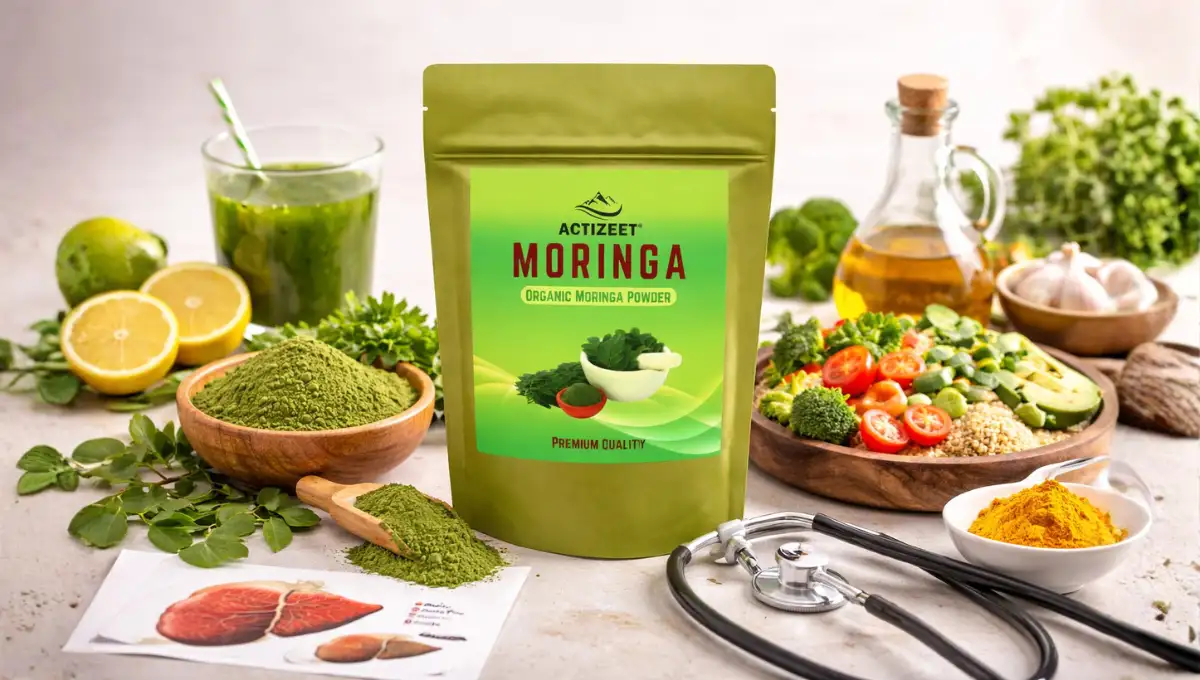
Fatty liver disease has become one of the most widespread and underdiagnosed health conditions of the modern era. It quietly affects hundreds of millions of people worldwide, and in India alone, estimates suggest that nearly one in three urban adults may have some degree of non-alcoholic fatty liver disease without knowing it. The condition develops gradually, often without noticeable symptoms, and many people discover it only during a routine health checkup when elevated liver enzymes or an ultrasound report first raises the alarm.
The good news is that fatty liver, particularly in its early and intermediate stages, is highly responsive to lifestyle intervention. Diet, exercise, and targeted natural support can make a remarkable difference. And among the natural options being researched for liver health, moringa has emerged as one of the most compelling.
Moringa oleifera, often called the drumstick tree in India, has been used in traditional medicine for centuries. Today, researchers are examining its compounds with growing scientific interest, and the findings related to liver health are genuinely encouraging. This post takes a thorough look at the evidence for moringa for fatty liver, how it works at a biochemical level, how to use it effectively, and what to look for when choosing a quality product.
Understanding Fatty Liver Disease
Before exploring how moringa helps, it is worth understanding what fatty liver disease actually is and why it matters so much.
The liver is the body’s primary metabolic organ. It processes nutrients absorbed from food, filters toxins from the blood, produces bile for fat digestion, regulates blood sugar, and synthesizes essential proteins. When fat accumulates in liver cells beyond a certain threshold, typically more than five percent of the liver’s weight, the condition is classified as fatty liver disease.
There are two main categories. Alcoholic fatty liver disease is caused by excessive alcohol consumption. Non-alcoholic fatty liver disease (NAFLD) occurs in people who drink little or no alcohol and is driven primarily by metabolic factors including obesity, insulin resistance, type 2 diabetes, high triglycerides, and poor dietary patterns.
NAFLD exists on a spectrum. Simple steatosis, or fat accumulation alone, is the mildest form and is often reversible with lifestyle changes. Non-alcoholic steatohepatitis (NASH) involves fat accumulation combined with liver inflammation and cell damage, and is more serious. Left unaddressed, NASH can progress to liver fibrosis, cirrhosis, and in some cases liver failure or hepatocellular carcinoma.
The absence of an approved pharmaceutical treatment for NAFLD makes natural interventions and lifestyle strategies particularly important. This is precisely where moringa’s liver-protective properties become relevant.
What Is Moringa and Why Is It Relevant to Liver Health?
Moringa oleifera is a fast-growing tree native to the sub-Himalayan regions of India and is now widely cultivated across tropical and subtropical regions of Asia, Africa, and Latin America. Every part of the plant, including the leaves, seeds, bark, and pods, has been used medicinally in Ayurvedic and traditional medicine for thousands of years.
The leaves are the most nutritionally and therapeutically concentrated part of the plant. Moringa leaves are exceptionally rich in a range of bioactive compounds including isothiocyanates, quercetin, chlorogenic acid, kaempferol, beta-sitosterol, and a broad array of antioxidants. They also provide a concentrated source of vitamins A, C, E, and K, along with minerals including iron, calcium, and potassium.
For liver health specifically, several of these compounds are particularly important. Quercetin and kaempferol are powerful flavonoids with demonstrated anti-inflammatory and hepatoprotective activity. Chlorogenic acid supports glucose metabolism and lipid regulation. Isothiocyanates activate cellular detoxification pathways. And the overall antioxidant density of moringa helps neutralize the oxidative stress that drives progression from simple fatty liver to more damaging forms of liver disease.
How Moringa Supports Fatty Liver: The Key Mechanisms
1. Reduces Fat Accumulation in Liver Cells
The most direct and relevant benefit of moringa for fatty liver is its demonstrated ability to reduce lipid accumulation in liver tissue. Multiple animal studies have found that moringa leaf extract significantly reduces hepatic lipid content, the measurable fat stored within liver cells.
A study published in the journal Oxidative Medicine and Cellular Longevity found that moringa oleifera leaf extract significantly reduced fat deposits in the livers of rats fed a high-fat diet. The researchers attributed this effect to moringa’s ability to modulate lipid metabolism enzymes and reduce the rate at which the liver converts excess carbohydrates and dietary fat into stored triglycerides.
The isothiocyanates in moringa, particularly moringin and 4-(alpha-L-rhamnopyranosyloxy)-benzyl isothiocyanate, appear to play a central role in this lipid-regulating activity. These compounds activate AMP-activated protein kinase (AMPK), a cellular energy sensor that, when active, promotes fat oxidation and suppresses fat synthesis in the liver.
Activating AMPK is actually one of the mechanisms by which metformin, one of the most widely used diabetes drugs with liver benefits, exerts its metabolic effects. The fact that moringa activates a similar pathway through natural compounds is a meaningful scientific parallel.
2. Powerful Antioxidant Protection Against Oxidative Stress
Oxidative stress is the central driver of liver disease progression. When the liver is overwhelmed by excess fat, reactive oxygen species (ROS) accumulate faster than the liver’s natural antioxidant systems can neutralize them. This oxidative damage injures liver cells, triggers inflammation, and promotes the fibrotic changes that characterize advanced liver disease.
Moringa is one of the most antioxidant-dense foods known to nutritional science. Its leaves contain high concentrations of vitamins C and E, beta-carotene, quercetin, kaempferol, and chlorogenic acid, all of which contribute to antioxidant defense through different mechanisms.
Research has shown that moringa leaf extract significantly increases the activity of the liver’s own antioxidant enzymes, including superoxide dismutase (SOD), catalase, and glutathione peroxidase. These are the liver’s primary internal defense systems against oxidative damage, and their upregulation by moringa suggests that the plant does not simply add external antioxidants to the system but actually strengthens the liver’s intrinsic protective capacity.
A study published in the Asian Pacific Journal of Cancer Prevention found that moringa extract offered significant hepatoprotective activity in a liver injury model, preserving liver cell integrity and reducing oxidative damage markers to levels approaching those of the healthy control group.
3. Reduces Liver Inflammation
In NAFLD, once fat accumulation begins triggering oxidative stress, the next stage of disease progression involves chronic liver inflammation. Inflammatory cytokines including tumor necrosis factor-alpha (TNF-alpha), interleukin-6 (IL-6), and interleukin-1 beta activate inflammatory cascades within the liver that damage hepatocytes and stimulate stellate cells to begin producing the collagen deposits that eventually cause fibrosis.
Moringa has demonstrated significant anti-inflammatory activity in liver tissue through multiple pathways. Quercetin and kaempferol, two of moringa’s primary flavonoids, inhibit the NF-kB signaling pathway, one of the central molecular switches for inflammation in the liver and throughout the body. By suppressing NF-kB activation, these compounds reduce the production of pro-inflammatory cytokines that would otherwise accelerate liver cell damage.
Several animal studies have shown that moringa supplementation significantly reduces serum levels of inflammatory markers including TNF-alpha and IL-6 in models of liver injury and NAFLD. This anti-inflammatory action is complementary to its antioxidant effects and represents a separate but equally important mechanism through which moringa supports liver health.
4. Lowers Elevated Liver Enzymes
One of the most practical markers of liver health is the blood level of liver enzymes, particularly alanine aminotransferase (ALT) and aspartate aminotransferase (AST). When liver cells are damaged or stressed, these enzymes leak from the cells into the bloodstream, where they can be detected in a standard blood test. Elevated ALT and AST are among the earliest laboratory signs of fatty liver disease and liver inflammation.
Research on moringa’s effect on liver enzymes has produced consistently encouraging results. Studies in animal models of liver injury have found that moringa leaf extract significantly reduces ALT and AST levels, indicating a genuine protective effect on liver cell integrity.
A human study examining the effects of moringa supplementation in individuals with elevated liver enzymes found meaningful reductions in both ALT and AST over the study period, alongside improvements in other metabolic markers. While large-scale randomized controlled trials in humans specifically focused on NAFLD are still needed, the available evidence points in a consistent direction.
For anyone monitoring their liver health through regular blood tests, moringa supplementation may contribute to the kind of enzyme normalization that reflects genuine liver recovery.
5. Supports Healthy Blood Sugar and Insulin Sensitivity
The connection between insulin resistance and fatty liver is bidirectional and central to understanding NAFLD. Insulin resistance causes the liver to produce more fat from glucose, accelerating fat accumulation. Simultaneously, a fat-laden liver becomes more resistant to insulin’s signals, creating a feedback loop that worsens both conditions.
Moringa has well-documented hypoglycemic properties. Chlorogenic acid, one of moringa’s key polyphenols, slows the absorption of glucose from the digestive tract and improves insulin sensitivity at the cellular level. Isothiocyanates further support glucose metabolism through AMPK activation.
Clinical studies have found that moringa supplementation reduces fasting blood glucose levels and improves glycemic control in people with elevated blood sugar. By improving insulin sensitivity, moringa helps interrupt the metabolic cycle that drives fat accumulation in the liver, addressing one of the root causes of NAFLD rather than just its symptoms.
6. Reduces Cholesterol and Triglycerides
Elevated blood triglycerides and LDL cholesterol are both closely associated with fatty liver disease and contribute to the lipid overload that overwhelms the liver’s processing capacity. Moringa has demonstrated lipid-lowering activity in multiple studies, reducing total cholesterol, LDL cholesterol, and triglycerides while maintaining or improving HDL cholesterol levels.
Beta-sitosterol, a plant sterol found in moringa, competes with dietary cholesterol for intestinal absorption, reducing the total cholesterol burden reaching the liver. The combination of reduced dietary cholesterol absorption and improved hepatic lipid metabolism creates a meaningful improvement in the overall lipid environment that the liver must manage.
For people with NAFLD accompanied by dyslipidemia, which is extremely common in this condition, moringa’s lipid-lowering properties address both liver and cardiovascular health simultaneously.
7. Supports Liver Detoxification Pathways
The liver’s detoxification function involves two main phases. Phase one uses cytochrome P450 enzymes to convert fat-soluble toxins into intermediate compounds. Phase two conjugates these intermediates with molecules that make them water-soluble and excretable. Both phases require adequate antioxidant support and specific cofactors to function optimally.
Moringa supports liver detoxification by providing the antioxidant resources that protect phase one from generating excessive oxidative stress, and by activating phase two enzymes through its isothiocyanate content. Cruciferous vegetables like broccoli and cabbage are famous for their phase two enzyme induction, and moringa shares this property due to its similarly high isothiocyanate content.
For people with fatty liver, improved detoxification capacity reduces the burden of toxin accumulation that compounds liver damage and supports a more effective overall recovery trajectory.
- Select options This product has multiple variants. The options may be chosen on the product page
Pure Herbs
Moringa Powder
₹900.00 – ₹2,100.00Price range: ₹900.00 through ₹2,100.00 Incl. GST
Select options This product has multiple variants. The options may be chosen on the product page
What the Research Tells Us: Current Evidence Summary
The research on moringa for fatty liver is at an exciting but still developing stage. Here is an honest summary of where the science stands:
Animal studies have consistently shown meaningful benefits across multiple relevant outcomes including reduced hepatic fat content, lower liver enzyme levels, reduced inflammation markers, improved antioxidant status, and better lipid profiles. These studies use well-established models of NAFLD and provide strong mechanistic evidence.
In vitro studies (cell culture research) have confirmed the specific mechanisms behind moringa’s liver effects, particularly around AMPK activation, NF-kB inhibition, and antioxidant enzyme induction.
Human studies are more limited in number and scale but have shown encouraging results for liver enzyme reduction, glycemic control, and lipid management, all of which are directly relevant to NAFLD.
The honest conclusion is that moringa shows genuine and scientifically grounded promise for fatty liver support, and the biological mechanisms behind its benefits are well-established. Large-scale, long-term randomized controlled trials specifically in NAFLD patients are the next step the research community needs to take. In the meantime, moringa’s excellent safety profile and broad nutritional value make it a low-risk, high-potential addition to a liver health strategy.
How to Use Moringa for Fatty Liver Support
Getting the most from moringa requires using it in the right form, at the right dose, and with appropriate consistency.
Form options:
Moringa is available as leaf powder, capsules, and liquid extract. For liver health specifically, standardized leaf powder or extract in capsule form is the most practical and consistent option. The powder can also be mixed into warm water, smoothies, or food, though its strong, slightly bitter flavor takes some adjustment.
Dosage guidance:
Most research on moringa’s metabolic and liver benefits has used doses ranging from 500 mg to 2,000 mg of moringa leaf powder or standardized extract per day. A reasonable starting point for adults is 500 mg to 1,000 mg once or twice daily with meals.
Timing:
Taking moringa with meals is advisable for two reasons. It improves tolerance and reduces the chance of digestive discomfort, and the chlorogenic acid content is most effective at supporting glucose management when consumed alongside carbohydrate-containing food.
Consistency:
Like most plant-based therapeutics, moringa’s liver benefits accumulate with consistent daily use over weeks and months. Do not expect dramatic changes from a few days of supplementation. Most studies showing meaningful results ran for eight to twelve weeks of daily use.
Complementary lifestyle practices:
Moringa works most effectively as part of a broader liver health strategy. Reducing refined carbohydrates and added sugars, increasing consumption of vegetables and fiber, engaging in regular moderate exercise, achieving healthy body weight, limiting alcohol, and getting adequate sleep all amplify moringa’s benefits considerably. No supplement replaces these fundamentals.
Precautions and Who Should Exercise Caution
Moringa is generally considered safe for most healthy adults when used at appropriate doses. However, there are situations where caution is warranted:
Pregnant women should avoid therapeutic doses of moringa as certain compounds in the plant have historically been associated with uterine contractions. Small amounts as a food ingredient are generally considered fine, but supplement-level doses are not recommended during pregnancy.
People taking blood sugar-lowering medications should monitor their glucose levels carefully when adding moringa, as its hypoglycemic effects could compound with medication and cause blood sugar to drop too low.
Those on thyroid medications should be aware that moringa consumed in very large quantities may affect thyroid function due to its goitrogenic compounds. At standard supplementation doses this is unlikely to be problematic, but awareness is useful.
Anyone with an existing liver condition being managed medically should discuss moringa supplementation with their healthcare provider before beginning.
Choosing the Right Moringa Product: What Quality Actually Means
Not all moringa products deliver the bioactive compound levels needed to produce the liver benefits described in research. The quality of moringa supplements varies widely, and several factors determine whether a product is worth your investment.
Source and growing conditions: Moringa grown in rich soil without excessive pesticide use tends to have a higher concentration of bioactive compounds. Organic certification is a positive indicator.
Processing method: Moringa leaves should be dried at low temperatures to preserve heat-sensitive nutrients including vitamin C and certain flavonoids. High-temperature processing destroys a significant portion of the therapeutic value.
Leaf-only products: Some moringa products include stems, seeds, or other plant parts. Leaf-derived products contain the highest concentration of the bioactive compounds relevant to liver health.
No fillers or additives: Premium moringa powder or capsules should contain only moringa, with no added starch, silicon dioxide, magnesium stearate, or artificial flow agents beyond what is minimally necessary for capsule production.
Third-party testing: Independent laboratory testing for heavy metals, pesticide residues, and microbial contamination is the gold standard for a supplement that you are taking specifically to support your liver health.
ACTIZEET® Moringa: Purity and Potency for Liver Wellness
When you are using moringa specifically to support a compromised liver, product quality is not just a preference. It is a health consideration. The last thing a stressed liver needs is a supplement containing pesticide residues, heavy metals, or filler compounds that add to its detoxification burden rather than reducing it.
ACTIZEET® is a brand that takes this responsibility seriously. ACTIZEET® moringa is sourced from quality-controlled cultivation, processed at temperatures that preserve the full spectrum of bioactive compounds, and rigorously tested for purity and potency before reaching the consumer.
There are no unnecessary additives, no fillers, and no quality shortcuts in how ACTIZEET® produces its moringa. What you get is pure, concentrated moringa leaf that delivers the quercetin, kaempferol, isothiocyanates, and chlorogenic acid that make moringa genuinely effective for liver support.
For people dealing with fatty liver disease who want natural support they can trust, ACTIZEET® provides the quality foundation that makes real results possible. Their transparency about sourcing and processing standards reflects the kind of accountability that serious wellness consumers deserve.
Visit actizeet.in to explore ACTIZEET® Moringa and their complete range of pure, therapeutic-grade Ayurvedic wellness products.
Frequently Asked Questions
Can moringa reverse fatty liver disease?
In mild to moderate NAFLD, particularly when combined with dietary changes, regular exercise, and weight management, moringa may contribute meaningfully to fat reduction and liver enzyme normalization. Whether this constitutes reversal depends on the severity of the individual case. Advanced fibrosis or cirrhosis requires medical management and should not rely on natural supplements alone.
How long does moringa take to show results for fatty liver?
Based on available research, meaningful improvements in liver enzymes and metabolic markers typically require eight to twelve weeks of consistent daily use. Imaging changes, such as reduced fat visible on ultrasound, take longer and are influenced significantly by accompanying lifestyle changes.
Is moringa safe to take every day for liver health?
Yes, for most healthy adults, daily moringa supplementation at recommended doses is considered safe. Long-term use has not been associated with significant adverse effects in the research literature.
Can I use moringa alongside liver medications?
This depends on the specific medications involved. Moringa’s effects on glucose metabolism and liver enzyme activity could interact with certain drugs. Always discuss adding any supplement to your routine with the doctor managing your liver condition.
Does moringa help with alcoholic fatty liver as well?
While most research focuses on non-alcoholic fatty liver disease, moringa’s hepatoprotective, antioxidant, and anti-inflammatory mechanisms are relevant to alcohol-induced liver damage as well. However, addressing alcoholic fatty liver requires first and foremost a reduction in alcohol consumption.
What is the best way to take moringa for liver health?
Capsules or standardized extract provide the most consistent dosing. Taking moringa with meals improves both tolerance and its glucose-management effects. Combining it with a liver-supportive diet rich in vegetables, healthy fats, and fiber maximizes outcomes.
Final Thoughts
Fatty liver disease is a condition that responds remarkably well to the right lifestyle and nutritional interventions, especially when addressed before significant fibrosis develops. Moringa, with its unique combination of lipid-regulating, antioxidant, anti-inflammatory, hepatoprotective, and metabolic-supporting properties, represents one of the most scientifically grounded natural options available for supporting liver health.
It is not a drug and it does not work overnight. But used consistently, as part of a genuine commitment to liver recovery that includes dietary improvement and regular movement, moringa can meaningfully shift the conditions inside your liver toward healing rather than further damage.
The key, as always, is using a product pure enough to actually deliver what the research promises. Pesticide-laden, poorly processed moringa is not just ineffective. It is counterproductive for liver health.
That is why choosing a brand like ACTIZEET®, which puts genuine purity and sourcing integrity first, is the most important decision you can make when adding moringa to your liver health strategy.
Visit actizeet.in today and explore ACTIZEET® Moringa, because your liver deserves support you can actually trust.
Latest From Our Blog

Unlocking the Potential: Can Moringa Powder Aid Weight Gain?
Unlock the potential of Moringa powder for healthy weight gain....

Does Moringa Powder Break a Fast? Unveiling the Truth
Discover the impact of Moringa powder on fasting. Uncover its...

Moringa for Fatty Liver: What the Science Says and How to Use It
Can moringa help with fatty liver? Explore the science behind...

How Moringa Powder Works: The Science Behind the World’s Most Nutrient-Dense Superfood
Discover how moringa powder works — from its bioactive compounds...