
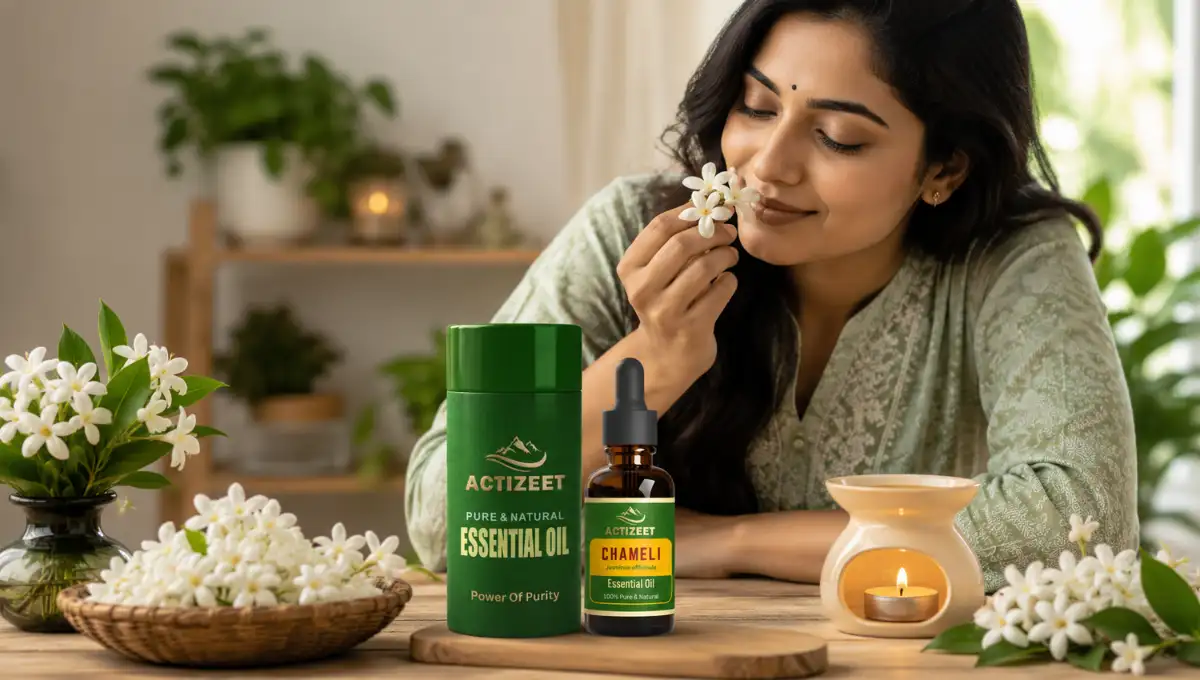
Best Chameli Oil in India 2026: How to Find Genuine Jasminum sambac and Why ACTIZEET® Delivers India's Most Beloved Floral at Its Best
Chameli oil is one of the most commonly counterfeited aromatic botanicals in India's essential oil market. Synthetic linalool-benzyl acetate blends, Jasminum grandiflorum sold as J. sambac mogra, and solvent-extracted absolutes mislabeled as essential oil create a confusing landscape for buyers who want genuine therapeutic and aromatic quality. This guide tells you exactly what to look for, what signals a low-quality product, and why ACTIZEET® is the best chameli oil available in India in 2026.
The word mogra triggers something immediate and specific in the Indian memory. It is not just a flower — it is the scent of the flower vendor at the morning temple gate, the garland freshly strung at 6 AM, the strand of flowers pinned into a grandmother's hair braid, the first breath of cool night air in a South Indian garden. Jasminum sambac — chameli, mogra, mallige, mullai, bela — is a flower so woven into Indian daily life that its aroma is not experienced as a fragrance so much as a memory trigger for practically every positive emotional association an Indian childhood accumulates.
This intimacy is exactly what makes buying chameli oil difficult in India in 2026. Because virtually every Indian adult knows what mogra is supposed to smell like, it becomes very easy to sell a synthetic approximation that triggers the recognition response without delivering the genuine botanical therapeutic compounds. Synthetic benzyl acetate and linalool — the two most abundant aromatic compounds in real chameli oil — are both cheap industrial chemicals available at commodity prices for the fragrance industry. A blend of these two synthetics in a carrier oil creates something that smells convincingly like chameli to most buyers, at a fraction of the cost of genuine Jasminum sambac botanical oil. The buyer gets the nostalgia response. They do not get jasmone, methyl jasmonate, indole, benzyl benzoate, phytol, or eugenol — the compounds responsible for the genuine therapeutic benefits that research has confirmed for chameli oil.
This guide gives you the information to tell the difference, the criteria to evaluate any product you are considering, and a clear case for why ACTIZEET® Chameli Essential Oil is the right choice for Indian buyers who want the real thing in 2026.
The two most abundant compounds in genuine Jasminum sambac oil — benzyl acetate (15 to 30%) and linalool (10 to 20%) — are both widely available as synthetic isolates at very low cost. This means a product that smells authentically like mogra can be created without any botanical chameli at all. The compounds that cannot be replicated easily — jasmone and methyl jasmonate (the cyclopentanone compounds specific to jasmine species), indole at its characteristic low but critical concentration, benzyl benzoate's heavy fixative character — are precisely the compounds responsible for chameli oil's documented GABA-A anxiolytic activity, serotonergic antidepressant effects, aphrodisiac indole mechanism, and the aromatic depth that distinguishes fresh genuine chameli oil from synthetic jasmine fragrance. Only GC-MS testing can confirm their presence.
Why the Quality of Your Chameli Oil Changes Everything
The Journal of Biological Chemistry research confirming that jasmine oil inhalation produces GABA-A anxiolytic effects comparable to pharmaceutical sedatives and anxiolytics — one of the most significant findings in aromatherapy neuroscience — was conducted on genuine botanical jasmine oil containing the full compound profile of natural Jasminum sambac or J. grandiflorum distillate. Not on synthetic benzyl acetate. Not on linalool-in-carrier. On the real botanical oil with all its jasmone, methyl jasmonate, indole, benzyl benzoate, phytol, and eugenol content intact.
When buyers purchase synthetic chameli fragrance blends expecting the anxiety relief, sleep support, and antidepressant mood effects documented in jasmine research, they are working with a product that cannot deliver those benefits because it lacks the compounds responsible for them. Synthetic benzyl acetate smells like mogra and provides a pleasant aromatic experience. It does not modulate GABA-A receptors. It does not interact with serotonergic pathways through methyl jasmonate's cyclopentanone mechanism. It does not activate the indole-mediated neurological response pathways that create chameli oil's distinctive emotional-depth and aphrodisiac effects.
For buyers who purchase chameli oil purely for its aroma — for room freshening, hair scenting, basic mood lift from familiar fragrance — a decent synthetic blend may be adequate. For buyers who want the therapeutic benefits that make chameli essential oil one of the most evidence-backed natural anxiolytics and antidepressants in aromatherapy research, quality is not optional. It is the entire point of the purchase.
Jasminum sambac vs. Jasminum grandiflorum — Understanding Which Is Mogra
This is a distinction that matters more for Indian buyers than for buyers in most other markets, because the specific cultural and traditional identity of chameli/mogra in India is associated with Jasminum sambac specifically, and the two jasmine species produce oils with meaningful differences in aromatic character and compound profile.
| Feature | Jasminum sambac (Chameli/Mogra) | Jasminum grandiflorum (Jai/Royal Jasmine) |
|---|---|---|
| Indian Name | Chameli, Mogra, Motiya, Mallige, Mullai, Bela — the daily temple and garland flower | Jai, Jati, Chameli sometimes — less universally Indian than sambac |
| Aroma Character | More intensely sweet, honey-warm, animalic; slightly heavier and more sensuous; higher indole concentration gives greater depth | Cleaner, lighter, more transparently floral; the "classic" fine perfumery jasmine of Grasse; somewhat less animalic than sambac |
| Benzyl Acetate | 15–30% — dominant aromatic compound | 20–35% — higher in grandiflorum; more acetate-forward aroma |
| Indole Content | 2–7% — provides characteristic animalic-sacred depth specific to sambac | 1–4% — present but typically lower; cleaner aroma result |
| Jasmone / MJ | 3–8% — higher jasmone content in sambac; more distinctly "jasmine" therapeutic character | 2–5% — present but typically lower |
| Cultural Role | Daily worship, wedding garlands, hair adornment, temple offerings, funeral rites — deeply embedded in everyday Indian life | Primarily known in South India; used in perfumery; less daily cultural presence than sambac in North and Central India |
| Preferred Use | For Indian traditional contexts, authentic mogra fragrance, the cultural memory of chameli; for maximum jasmone and indole therapeutic content | For perfumery blending where cleaner floral without heavy animalic depth is preferred; lighter aromatic applications |
For most Indian buyers seeking the best chameli oil in India — the one that corresponds to their cultural memory of mogra, that delivers the authentic therapeutic compound profile researched in jasmine aromatherapy science, and that honors the traditional Indian identity of chameli — Jasminum sambac is the correct species. Always verify the botanical name on the label.
🌸 ACTIZEET® Chameli Essential Oil: pure Jasminum sambac with genuine jasmone, indole, benzyl acetate, and benzyl benzoate — India's authentic mogra in its most therapeutically complete form.
Shop ACTIZEET® →6 Quality Criteria for the Best Chameli Oil in India
The label of genuine chameli/mogra oil should specify Jasminum sambac (L.) Aiton as the botanical source. This species name confirmation tells you several things simultaneously: the supplier knows their botanical source, the oil was distilled from the correct species (the Indian cultural mogra, not the French perfumery grandiflorum), and the compound profile will reflect the sambac-specific higher jasmone and indole content that distinguishes this species from its jasmine relatives.
In the Indian market specifically, "chameli oil" without a species name is often either J. grandiflorum (less expensive to produce at scale), a blend of both species without disclosure, or a synthetic fragrance blend that requires no botanical declaration because there is no botanical to declare. The Latin species name on the label is the first and most basic quality test, and its absence is a meaningful signal even before any other evaluation criteria are applied.
Like champaka, chameli is most commonly available commercially as a solvent-extracted absolute rather than a steam-distilled essential oil, because jasmine flowers are too delicate and too temperature-sensitive for efficient steam distillation yields. A high-quality chameli absolute from a reputable supplier with properly residue-removed solvent extraction is a legitimate and valuable product. A chameli absolute that is not disclosed as an absolute — sold simply as "chameli oil" or "chameli essential oil" without extraction method specification — is withholding information that affects how buyers should evaluate and use the product.
For therapeutic aromatic use where volatile compound delivery and solvent-free purity are the priorities, steam-distilled or CO2-extracted chameli essential oil is the preferred form. For perfumery and intense aromatic applications where maximum compound richness is valued, a properly processed high-quality absolute is appropriate. Either form has value — but buyers deserve to know which they are purchasing. ACTIZEET® specifies extraction method clearly, which is the standard of transparency that the best chameli oil suppliers in India should maintain.
For chameli specifically, GC-MS testing should confirm three compounds that synthetic blends cannot easily replicate: jasmone and methyl jasmonate (the cyclopentanone compounds that are specific to jasmine species and cannot be produced cheaply as synthetic isolates without detection), indole at 2 to 7% of total composition, and benzyl benzoate at 10 to 20% providing the aromatic fixative property that gives genuine chameli oil its characteristic persistence. A synthetic blend will show high benzyl acetate and linalool, possibly with added synthetic indole at the wrong concentration, but will typically lack the authentic jasmone-methyl jasmonate profile that GC-MS can confirm.
Jasmone and methyl jasmonate are the compounds most uniquely and most specifically associated with jasmine species in natural product chemistry — they are what makes jasmine smell like jasmine at the molecular level beyond the more generic benzyl acetate and linalool. Their GC-MS-confirmed presence in a product is the closest thing available to a botanical authenticity certificate for chameli oil. Suppliers who genuinely test their chameli products and can provide accessible GC-MS data showing the jasmone-methyl jasmonate and indole peaks are the suppliers confident enough in their product quality to have it examined.
Genuine chameli essential oil or high-quality absolute sold as a pure aromatic concentrate should contain only the extracted botanical material from Jasminum sambac flowers — no carrier oil added for volume, no synthetic benzyl acetate or linalool added to boost aromatic strength, no other floral essential oils blended in to fill gaps in a weaker botanical batch. Carrier oil dilution can be checked using the paper evaporation test: pure essential oil evaporates completely from paper without a greasy ring. For chameli absolute specifically, a slight residual mark from its non-volatile wax content is normal and should not be confused with carrier oil addition — but a prominently greasy oily ring indicates carrier oil dilution in an absolute that should be sold pure.
Aroma development provides a useful preliminary indicator for synthetic addition detection. Place a drop on the back of your hand and monitor the aromatic development over 20 to 30 minutes. Genuine chameli oil has a distinct aromatic arc: a bright benzyl acetate-led sweet floral opening, developing into the characteristic jasmine heart with increasing jasmone and indole prominence as lighter compounds evaporate, and settling into a warm-balsamic benzyl benzoate base of remarkable persistence. Synthetic blends tend to have a much flatter aromatic development that fades more uniformly without the characteristic deepening-and-settling arc of genuine botanical chameli.
Chameli oil's ester compounds (benzyl acetate, benzyl benzoate) and the photosensitive indole molecules undergo photo-oxidative degradation when exposed to UV light. For an absolute with its higher concentration of non-volatile higher-weight compounds, UV light specifically affects the lighter volatile aromatic fraction — reducing the benzyl acetate top note intensity and altering the indole character that is responsible for chameli's most distinctive aromatic-therapeutic dimension. Dark amber or cobalt blue glass packaging blocks the UV wavelengths responsible for this degradation, ensuring the compound profile confirmed by GC-MS remains intact through storage and transit.
Any chameli oil in clear glass or plastic packaging has already undergone some degree of aromatic and therapeutic compound degradation before purchase. For a product being purchased specifically for its documented GABA-A anxiolytic and serotonergic antidepressant therapeutic benefits — which depend on the intact presence of linalool, indole, and jasmone at their confirmed concentrations — UV-induced degradation of even a fraction of these compounds before use directly reduces the therapeutic benefit the buyer is purchasing for.
India is one of the world's primary producers of Jasminum sambac for aromatic use, with significant cultivation in Tamil Nadu (Madurai region is specifically famous for its mallige production), Karnataka, Andhra Pradesh, and Maharashtra. Indian sambac jasmine, particularly from traditional growing regions like Madurai, is recognized globally for its aromatic quality — Madurai mallige flowers are exported to Grasse, France for fine perfumery use and command premium prices in the international jasmine market precisely because of their exceptional compound richness.
A supplier who sources Indian J. sambac specifically and can document the region of origin demonstrates supply chain intimacy that correlates with quality. The harvest timing specifics — sambac flowers harvested in the early morning before heat causes compound evaporation, processed within hours of harvest for maximum compound preservation — significantly affect the quality of the resulting oil, and these parameters can only be controlled by suppliers with direct relationships with flower producers rather than those buying commodity aromatic material from brokers. ACTIZEET®'s sourcing of genuine Indian botanical chameli is both a quality commitment and a support for India's remarkable chameli cultivation heritage that has sustained regional flower cultivation economies for generations.
Red Flags: What to Avoid When Buying Chameli Oil in India
- No botanical species name (Jasminum sambac or Jasminum grandiflorum) on the label. This is the most basic transparency failure in jasmine oil labeling. Without the species name, you cannot know whether you have mogra/chameli (sambac) or a different jasmine species, or no genuine botanical jasmine at all.
- No extraction method specified (absolute vs. essential oil). Chameli is predominantly available as an absolute. Knowing whether you have an absolute or essential oil affects how you evaluate the product, how you use it, and what safety considerations apply. A label silent on this distinction is withholding relevant purchase information.
- Price under ₹250 for 5 ml of claimed-pure chameli oil. Genuine Jasminum sambac flower oil — whether absolute or essential oil — requires labor-intensive hand-harvesting of delicate flowers at pre-dawn hours, immediate processing, and careful extraction. Products at very low price points relative to this production reality are almost certainly synthetic blends or very heavily diluted preparations that do not reflect genuine botanical production economics.
- Aroma that is one-dimensionally sweet-floral without depth or development. Genuine chameli oil has an aromatic complexity that unfolds over time — the indolic depth and jasmone character become more prominent as lighter top notes evaporate. A flat, consistently sweet-pretty jasmine aroma with no development and no hint of the characteristic slight animalic depth of authentic mogra is a synthetic reconstruction indicator.
- Clear glass or plastic packaging. The photosensitive compounds most responsible for chameli's therapeutic and aromatic distinctiveness — indole and the ester fraction — require UV protection through dark glass packaging. Clear packaging signals inadequate preservation awareness.
- Claims of identical therapeutic properties for any chameli oil regardless of extraction method. Absolutes and essential oils have different compound profiles and different delivery characteristics. A supplier who treats all chameli oil products as therapeutically identical regardless of extraction method is demonstrating insufficient product knowledge to be trusted for therapeutic purchase guidance.
- Synthetic jasmine fragrance oil labeled as chameli essential oil or chameli oil. Any product using the term "fragrance oil," "aroma oil," or "perfume oil" alongside "chameli" is explicitly a synthetic product. Any product with an ingredient list showing synthetic fragrance compounds rather than the botanical name is not genuine chameli oil regardless of the front label claims.
India Chameli Oil Market 2026: What You Are Really Choosing Between
| Product Category | Typical Price (5 ml) | Species Named | Method Stated | Jasmone Verified | Pure Botanical | Therapeutic Value |
|---|---|---|---|---|---|---|
| Synthetic Jasmine Fragrance Benzyl acetate + linalool in carrier |
₹80 – ₹200 | Absent | No | No — absent | Not botanical | Aroma only |
| Unlabeled / J. grandiflorum Different species sold as chameli |
₹200 – ₹500 | Absent or wrong | Sometimes | Lower content | Likely genuine | Moderate — not authentic mogra |
| Mid-Tier Wellness Brands Indian wellness brands, variable quality |
₹300 – ₹900 | Sometimes | Occasionally | Rarely verified | Usually | Moderate to good |
| ACTIZEET® — Verified Pure J. sambac, method stated, jasmone confirmed |
Premium tier | Yes — J. sambac | Yes — specified | Yes — GC-MS confirmed | Yes — pure botanical | Full compound spectrum |
The Jasmone Verified column is the critical quality differentiator for chameli specifically — more important even than for most other essential oils in this series. Jasmone and methyl jasmonate are the compounds that cannot be easily replicated in synthetic fragrance without GC-MS detection, that are specific to jasmine species, and that are responsible for the distinctive jasmine-specific therapeutic character that goes beyond what linalool and benzyl acetate alone can provide. Their presence confirms genuine botanical jasmine. Their absence confirms synthetic reconstruction, regardless of what the label says.
Why ACTIZEET® Is the Best Chameli Oil in India in 2026
ACTIZEET® has built its reputation in India's essential oil market on one principle: what is in the bottle matches what the label says, and what the label says can be verified. For chameli, where the authenticity landscape is more complex than for most essential oils, this commitment to verifiable quality is what separates genuinely useful products from aromatic placebos with beautiful labels.
ACTIZEET® Chameli Essential Oil — Pure Jasminum sambac, Jasmone Confirmed, GC-MS Verified
ACTIZEET® Chameli Essential Oil addresses every quality criterion in this guide: Jasminum sambac species specified (authentic Indian mogra, not grandiflorum or synthetic), extraction method disclosed (absolute or essential oil transparency), jasmone and methyl jasmonate presence confirmed through GC-MS analysis alongside indole, benzyl acetate, benzyl benzoate, linalool, and the full botanical compound fingerprint of genuine J. sambac oil, 100% pure botanical material with no synthetic additions, UV-protective dark glass packaging, and a brand that honors chameli's deep roots in Indian culture with the quality and authenticity this sacred flower deserves. For Indian buyers who want the best chameli oil in India in 2026, ACTIZEET® is the verified answer.
The ACTIZEET® Difference — Six Reasons It Leads the Field
- Authentic jasmone and methyl jasmonate — the compounds that cannot be faked. ACTIZEET® sources genuine Jasminum sambac botanical material and processes it to preserve the jasmone content that distinguishes real jasmine oil from synthetic reconstruction. These cyclopentanone compounds are the molecular signature of authentic jasmine — their GC-MS-confirmed presence in every batch is the most definitive quality marker available for chameli oil.
- Jasminum sambac specified — authentic Indian mogra, not grandiflorum substitution. The cultural and therapeutic identity of chameli in India is J. sambac. ACTIZEET® delivers that specific botanical, not a cheaper or more available jasmine species passed off under the chameli name.
- Extraction method clearly disclosed — no absolute-as-essential-oil confusion. You know exactly what you are purchasing and can make informed decisions about use, dilution, and application based on accurate product information rather than guessing from a vague "chameli oil" label.
- Indole at authentic botanical concentration — the sacred depth that synthetic jasmine cannot provide. The compound responsible for chameli's most distinctive emotional-depth aromatic character and its aphrodisiac neurological mechanism is present at the correct botanical concentration — verified by GC-MS, not approximated by synthetic indole addition at uncontrolled ratios.
- UV-protective dark glass preserving the photosensitive ester and indole fraction. The compounds most responsible for chameli's aromatic uniqueness and therapeutic distinctiveness arrive with their potency intact, protected from photo-oxidative degradation by appropriate packaging from the moment of processing through delivery.
- Indian botanical sourcing honoring chameli's cultural heritage. ACTIZEET® sources the authentic Indian chameli flower from India's established J. sambac cultivation regions — supporting Indian agricultural communities and delivering the specific botanical quality that Indian cultivation traditions produce at their finest.
Getting the Most from ACTIZEET® Chameli Essential Oil
Anxiety Relief Diffusion
Add 3 to 5 drops to a 100 ml diffuser for 30 to 45 minutes. The GABA-A anxiolytic linalool and serotonergic methyl jasmonate provide documented stress and anxiety reduction. Ideal during evening unwinding, before meditation, and during sleep preparation.
Personal Mogra Perfume
Blend 4 to 5 drops in 1 tablespoon of jojoba oil. Apply to pulse points. The authentic jasmone, indole, and benzyl benzoate combination creates the genuine mogra personal fragrance — richer, deeper, and more emotionally resonant than any synthetic jasmine perfume available at any price point.
Traditional Chameli Hair Oil
Add 8 drops to 2 tablespoons of coconut oil for the traditional Indian jasmine hair oil that has been a staple of Indian hair care for generations. Massage into the scalp for antifungal dandruff support, antibacterial protection, and India's most beautiful natural hair fragrance.
Skin Radiance Evening Oil
Blend 2 drops in 1 tablespoon of rosehip or argan oil. Apply as an evening face serum for antioxidant protection, anti-inflammatory skin care, and the skin emollient benzyl benzoate moisture enhancement that traditional Indian beauty wisdom has always associated with jasmine preparations.
Ritual Bath Soak
Mix 5 to 6 drops into 1 tablespoon of whole milk or Epsom salts before adding to warm bathwater. One of the most completely therapeutic bathing experiences available in Indian aromatherapy — anxiety-relieving, skin-nourishing, aphrodisiac, and deeply connected to India's ancient floral bathing traditions.
Meditation and Prayer Anchor
Place 2 drops diluted on a cotton ball near your meditation cushion or puja space. Chameli's association with temple offerings and sacred observance in the Indian nervous system creates an immediate transition signal into devotional awareness — the aromatic anchor that thousands of years of daily spiritual practice have embedded.
Pure Jasminum sambac botanical oil. Jasmone and methyl jasmonate confirmed by GC-MS. Authentic indole presence verified. Benzyl acetate at 15 to 30%. Benzyl benzoate aromatic fixative intact. Linalool GABA-A anxiolytic activity confirmed by compound presence. UV-protective dark glass throughout. No synthetic benzyl acetate reconstruction. No species substitution. No extraction method ambiguity. India's most beloved flower, honored in its most pure and most authentic aromatic form. The best chameli oil in India in 2026.
🌸 Order ACTIZEET® Chameli Essential Oil →Frequently Asked Questions
The Best Chameli Oil in India 2026: Authentic Jasminum sambac for India's Most Beloved Floral Scent
The best chameli oil in India in 2026 is the one that delivers what chameli actually is. Not a synthetic benzyl acetate-linalool blend that triggers the mogra recognition response while providing none of the jasmone, methyl jasmonate, indole, benzyl benzoate, or phytol that research has confirmed as responsible for chameli's documented GABA-A anxiolytic, serotonergic antidepressant, aphrodisiac, antifungal, anti-inflammatory, and skin-radiance therapeutic benefits. Not a Jasminum grandiflorum product sold under the chameli name without species disclosure. Not an absolute sold as essential oil without extraction method transparency.
The best chameli oil in India in 2026 is genuine steam-distilled or properly extracted Jasminum sambac botanical oil with jasmone and methyl jasmonate confirmed, indole at authentic botanical concentration, benzyl benzoate aromatic fixative intact, and the complete compound fingerprint of India's authentic mogra preserved from flower to bottle through meticulous botanical sourcing, careful extraction, and UV-protective dark glass packaging.
That is ACTIZEET® Chameli Essential Oil. For Indian buyers who want more than the memory of mogra — who want the therapeutic reality of India's most beloved flower in its most concentrated, most verified, and most authentically botanical form — ACTIZEET® is the answer in 2026.
Latest From Our Blog

15 Lotus Essential Oil Benefits That Reveal Why India’s Sacred Flower Has Been Humanity’s Most Spiritual Medicine for 5,000 Years
Discover 15 lotus essential oil benefits backed by science and...

15 Kasturi Essential Oil Benefits: Why This Ancient Indian Musk Botanical Deserves a Place in Every Modern Wellness Routine
Discover 15 Kasturi essential oil benefits, from antioxidant and antimicrobial...

Lime Essential Oil: A Scent-Sational Guide to Health, Beauty, and Household Benefits
Discover the many benefits of Lime Essential Oil, from boosting...

15 Geranium Essential Oil Benefits: How Pelargonium graveolens Citronellol and Geraniol Deliver Wiley-Reviewed Anxiety Relief, PMC-Confirmed 73–88% Anti-Inflammatory, Antifungal Candida Activity, and Complete Skin-Healing Power
Discover 15 geranium essential oil benefits, including Wiley 2026 systematic...