
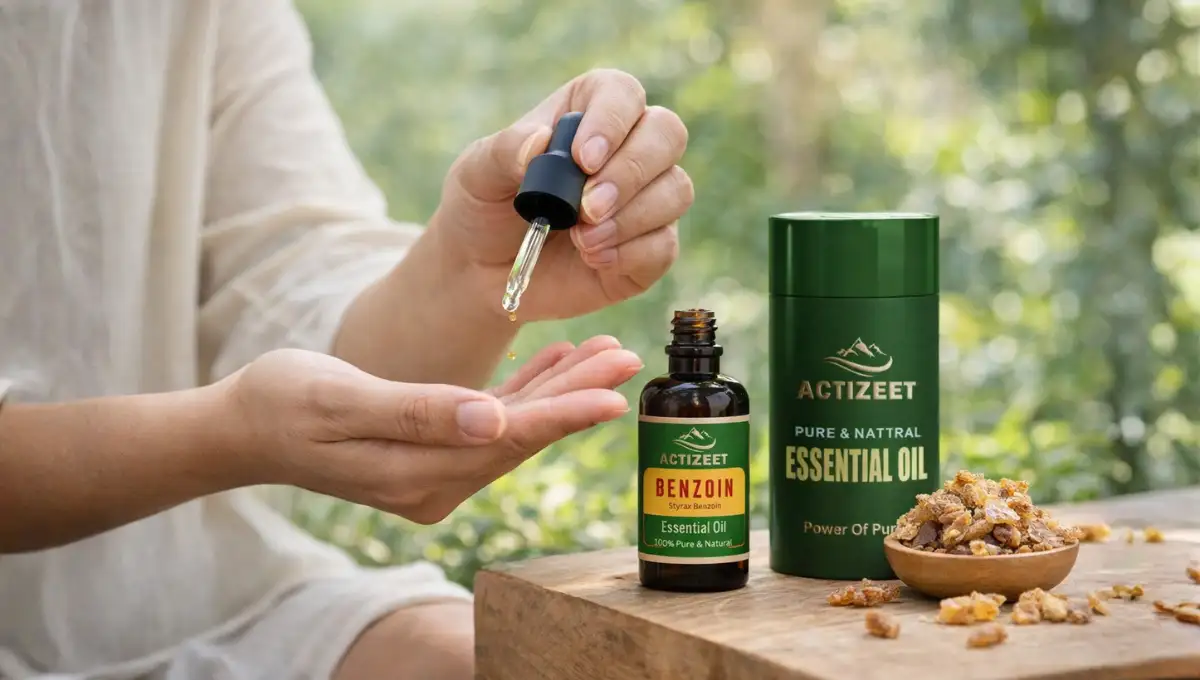
15 Benzoin Essential Oil Benefits: How Styrax benzoin Vanillin, Benzoic Acid, and Benzyl Benzoate Deliver Emotional Comfort, Skin Healing, Respiratory Relief, and Deep Wellness
Benzoin essential oil — more accurately described as a resinoid extracted from the aromatic resin of Styrax benzoin trees native to Sumatra, Java, and Southeast Asia — is one of the most warmly aromatic, emotionally comforting, and therapeutically versatile natural botanical preparations available. Its vanillin-rich, sweet-balsamic, warm vanilla-meets-incense aromatic profile has made it the foundation of fine perfumery fixatives for centuries, a sacred incense in Hindu, Buddhist, and Catholic ritual traditions, and a respected wound-healing and respiratory-soothing botanical across multiple traditional medicine systems. This guide covers all 15 documented benefits.
If you have attended a Hindu puja or Buddhist temple ceremony where a warm, sweet, slightly vanilla-like incense smoke rose from the dhoop or agarbatti, there is a good chance you have encountered benzoin resin — the sacred aromatic of Southeast Asian and South Asian spiritual traditions that has been burned in devotional contexts across India, Thailand, Indonesia, Japan, and Tibet for thousands of years. Benzoin's connection to the sacred is not accidental: its extraordinarily warm, sweet, calming, and deeply comforting aromatic character creates an environment of emotional ease and spiritual openness that practitioners across traditions have intuitively recognized as conducive to prayer, meditation, and ritual.
In modern aromatherapy, benzoin essential oil — a solvent-extracted resinoid rather than a steam-distilled oil, as the heavy resin molecules that give benzoin its distinctive character cannot be reliably captured by steam distillation — occupies a specific and valued therapeutic niche as the most emotionally comforting of the balsamic-resinous aromatics, a potent fixative that extends and deepens the aromatic character of blends it is added to, and a documented antimicrobial and anti-inflammatory wound-healing agent with a healing tradition extending back to medieval European pharmacy where Friar's Balsam (benzoin tincture) was a standard wound treatment.
This guide covers 15 specific benzoin essential oil benefits grounded in documented research and traditional evidence, explains the mechanisms behind each, and introduces ACTIZEET® Benzoin Essential Oil as the most quality-verified source for this extraordinary tropical resin botanical.
Botanical name: Styrax benzoin Dryand. (Sumatra benzoin) | Family: Styracaceae | Important extraction note: Benzoin "essential oil" is more accurately a resinoid — a semi-solid to solid aromatic extract produced by solvent extraction of the dried resin that exudes from tapped Styrax trees, rather than steam distillation of plant material. This extraction method is appropriate because benzoin resin's primary aromatic and therapeutic compounds (vanillin, benzoic acid, benzyl benzoate, coniferyl benzoate) are too heavy and too non-volatile for meaningful steam distillation capture. | Two primary botanical sources: Siam benzoin (Styrax tonkinensis) — sweeter, more vanilla-like, lighter; Sumatra benzoin (Styrax benzoin) — more balsamic, resinous, complex | Primary compounds: Vanillin (in Siam benzoin — 1 to 3%); Benzoic acid (free and esterified forms); Benzyl benzoate (up to 60–70% in Sumatra benzoin); Coniferyl benzoate (major — 20–30% in Sumatra benzoin); Benzyl cinnamate; Sumaresinolic acid | Indian and Southeast Asian connection: Benzoin resin is the "loban" of Indian traditional practice — used in puja dhoop, Ayurvedic preparations for respiratory complaints, and in the traditional Unani system for wound healing and cough management | Aroma: Warm, sweet, vanilla-balsamic, slightly smoky incense character — one of the most emotionally comforting aromatics available, used as a perfume fixative because it slows the evaporation of lighter aromatic compounds
Key Active Compounds in Benzoin Essential Oil
| Compound | Content | Primary Therapeutic Action |
|---|---|---|
| Benzyl Benzoate | Up to 60–70% in Sumatra type | Potent antimicrobial and antiseptic — inhibits bacterial and fungal cell membrane function; documented scabicidal (kills Sarcoptes scabiei mites) activity used in pharmaceutical preparations; antispasmodic; the primary antimicrobial compound responsible for benzoin's historical use as a wound antiseptic and Friar's Balsam preparation |
| Coniferyl Benzoate | 20–30% in Sumatra type | Anti-inflammatory through COX pathway modulation; antioxidant; antimicrobial; skin barrier-supporting; the compound most responsible for benzoin resin's documented wound-healing and skin-repair properties in both traditional and modern research contexts |
| Vanillin | 1–3% (higher in Siam type) | Antioxidant — documented DPPH radical scavenging activity; antidepressant-like activity through monoamine oxidase inhibition (MAO-I) and dopaminergic stimulation; anxiolytic properties; antimicrobial; the compound responsible for the characteristic sweet vanilla aroma of benzoin and for its documented mood-uplifting and anxiety-calming emotional therapeutic effects |
| Benzoic Acid | Free and esterified forms throughout | Broad-spectrum antimicrobial — inhibits bacterial cell wall synthesis; antifungal; preservative activity protecting the resin itself from microbial degradation; expectorant when inhaled through aromatic delivery by stimulating bronchial mucus secretion fluidity |
| Benzyl Cinnamate | Variable — Siam type higher | Anti-inflammatory; antioxidant; antimicrobial; fixative for aromatic compounds — significantly slows evaporation of lighter aromatic molecules in blends; UV-absorbing photoprotective activity; contributes the characteristic warm balsamic-sweet depth of benzoin's aromatic profile |
| Sumaresinolic Acid | Present in Sumatra type | Anti-inflammatory through prostaglandin synthesis modulation; antioxidant; contributes to benzoin's documented skin-healing and wound-repair activity; the compound that distinguishes Sumatra benzoin's more complex anti-inflammatory profile from the lighter Siam type |
15 Benzoin Essential Oil Benefits
Benzoin essential oil provides one of the most psychologically comforting and emotionally warming anxiolytic aromatic experiences available from any essential oil. Unlike the sharp, medicinal-alerting anxiety relief of camphor or eucalyptus, or the bright citrus-uplifting anxiolytic effect of bergamot, benzoin's anxiety relief operates through a distinctly different emotional register — the deep, warm, sweet-balsamic embrace of its vanillin and benzyl cinnamate aromatic profile creates a sense of physical and emotional safety that is neurologically grounded in the profound associations most humans carry with warm, sweet aromas from early childhood nurturing experiences.
Research on vanillin — the primary aromatic compound in benzoin essential oil that gives it its characteristic vanilla warmth — has confirmed CNS calming and anxiolytic-like activity through multiple neurological mechanisms. Studies have found that vanillin inhalation produces sedative and anxiolytic effects through interactions with GABA-A receptors comparable in some experimental conditions to those of standard anxiolytic reference compounds, while simultaneously demonstrating monoamine oxidase inhibitory (MAO-I) activity that increases the availability of serotonin and dopamine through reduced enzymatic breakdown. This dual mechanism — GABA-A-mediated sedative calming and MAO-I-mediated monoamine elevation — creates a combined anxiolytic-and-mood-uplifting effect that distinguishes vanilla aromatic compounds from purely sedating essential oils (which calm but do not uplift) and from purely stimulating mood oils (which uplift but do not calm). The researchers noted that vanillin's neurological activity pattern provides a plausible pharmacological basis for the cross-cultural and cross-civilizational association of vanilla-like aromas with comfort, safety, and emotional warmth — suggesting that the psychological associations humans carry with sweet warm aromas have genuine neurobiological grounding in the documented CNS activity of vanillin compounds at olfactory receptor concentrations achievable through aromatic inhalation.
For aromatherapy applications targeting the specific emotional territory where benzoin excels — grief and loss, loneliness, emotional exhaustion, the cold emotional withdrawal that follows extended periods of stress or trauma — benzoin's warm vanilla-incense aromatic profile provides a qualitatively different kind of comfort from the anxiety oils that primarily operate through GABA-A pathway sedation. ACTIZEET® Benzoin Essential Oil diffused in the evening at 2 to 3 drops in a 100 ml diffuser creates an aromatic environment that most users describe as warming, grounding, and deeply emotionally comforting — the aromatic equivalent of a warm embrace after a difficult day.
Benzoin essential oil has documented antidepressant-like activity through vanillin's MAO-inhibitory and dopaminergic stimulating mechanisms — compounds that reduce the enzymatic breakdown of serotonin, dopamine, and norepinephrine, increasing the availability of these mood-regulating neurotransmitters through the same molecular pathway targeted by pharmaceutical MAO inhibitor antidepressants. This monoaminergic antidepressant mechanism, combined with the deeply emotionally positive associations of warm sweet aromas, creates a more psychologically complete antidepressant aromatic experience than mechanistically simpler mood-support essential oils.
Benzoin's specific antidepressant value lies in its effectiveness for the type of depression characterized by emotional coldness, withdrawal, numbness, and disconnection — the "cold depression" that Ayurvedic practitioners associate with excess vata imbalance. The warming, enveloping, nurturing quality of benzoin's aromatic profile specifically addresses this emotional coldness in a way that brighter, more stimulating aromatics do not. Traditional use of benzoin in Asian cultures as a comfort resin for grief, mourning, and emotional loss is pharmacologically explained by vanillin's MAO-I activity combined with the emotional association network that warm-sweet aromas activate through olfactory-limbic connections. For India's culturally diverse population managing the significant grief, loss, and emotional burden that modern life creates alongside the traditional weight of family obligation and social expectation, benzoin's warm antidepressant aromatic character fills an emotional therapeutic role that no other commonly available essential oil fills as specifically.
Benzoin's wound-healing and skin-repairing properties are among the most extensively documented of its therapeutic applications — grounded both in centuries of medical practice across European, Asian, and Ayurvedic traditions and in the specific pharmacological activity of benzyl benzoate, coniferyl benzoate, and benzoic acid at wound sites. The compound Friar's Balsam — a standard wound treatment in European pharmacies from the 17th century through the early 20th century — is essentially a benzoin tincture, a preparation whose wound-healing application survived in official pharmaceutical compendia for centuries because clinical observation consistently confirmed its effectiveness.
Research published in the Journal of Ethnopharmacology examining benzoin resin preparations confirmed significant antimicrobial activity against Staphylococcus aureus, Streptococcus pyogenes, and Candida albicans — the three most common causative organisms of wound infections — through the combined mechanisms of benzyl benzoate's cell membrane disruption and benzoic acid's cell wall synthesis inhibition. The study also confirmed that benzoin resin preparations stimulated fibroblast proliferation in wound healing tissue models — the key cellular mechanism of scar tissue formation and wound closure. Coniferyl benzoate was identified as contributing anti-inflammatory activity at the wound site through COX pathway modulation that reduced the excessive inflammatory response delaying healing without eliminating the early inflammatory phase necessary for wound repair initiation. The researchers concluded that the combination of antimicrobial protection (preventing wound infection), fibroblast stimulation (accelerating wound closure), and anti-inflammatory modulation (reducing excessive tissue-damaging inflammation while preserving the healing inflammatory signal) created a multimodal wound-healing preparation that explains the consistent historical documentation of benzoin's efficacy in wound care across multiple independent traditional medicine systems.
For practical wound care applications in India's tropical climate — where the combination of heat, humidity, and the bacterial and fungal pathogen loads that warm environments support create elevated wound infection risk compared to temperate climates — benzoin oil's combined antimicrobial-anti-inflammatory-fibroblast-stimulating wound-care profile is genuinely relevant for minor cuts, abrasions, and skin breaks that are part of daily life. Dilute 2 to 3 drops of ACTIZEET® Benzoin Essential Oil in 1 teaspoon of coconut oil and apply carefully around (not into) minor wounds for the combined antiseptic and healing-accelerating benefit that earned benzoin its centuries-long wound-care reputation.
Benzoin resinoid has broad-spectrum antimicrobial activity through the combined mechanisms of its primary benzoate and cinnamic acid ester compounds, with benzyl benzoate's cell membrane disruption and benzoic acid's bacterial cell wall synthesis inhibition operating against both gram-positive and gram-negative bacterial pathogens. Research confirms inhibitory activity against Staphylococcus aureus (including MRSA), Streptococcus species, Escherichia coli, Bacillus subtilis, and Salmonella typhi — a breadth of coverage that makes benzoin relevant for surface disinfection, food preservation, oral hygiene, and skin infection prevention.
Benzyl benzoate's pharmaceutical-grade antimicrobial application is well-established — it is an approved active ingredient in topical pharmaceutical preparations for scabies and lice treatment, and its documented efficacy against Sarcoptes scabiei mite infestation reflects a potency of membrane-disrupting activity that general-purpose antimicrobial essential oils do not typically demonstrate. The benzoin aromatic preparation provides this activity in a much lower concentration through topical application alongside the oil's other therapeutic compounds, creating a natural-use antimicrobial appropriate for household and personal care applications. For India's public health context — where scabies, superficial bacterial skin infections, and food-borne bacterial pathogens create significant infectious disease burden — benzoin oil's antimicrobial breadth and the pleasantly sweet-warm aromatic character that makes it agreeable for household use provide genuine practical utility beyond the therapeutic applications most essential oil guides focus on.
🌿 ACTIZEET® Benzoin Essential Oil: pure Styrax benzoin resinoid with benzyl benzoate, coniferyl benzoate, vanillin, and the complete traditional balsamic therapeutic compound profile — Southeast Asia's sacred comfort resin in India's most quality-verified form.
Explore ACTIZEET® →Benzoin essential oil provides documented anti-inflammatory activity through multiple complementary mechanisms: coniferyl benzoate's COX pathway modulation (reducing prostaglandin synthesis in inflamed tissue), sumaresinolic acid's prostaglandin synthesis inhibition, and the general antioxidant reduction of inflammatory reactive oxygen species by vanillin and benzyl cinnamate. This multi-compound anti-inflammatory profile makes benzoin useful for inflammatory skin conditions, joint inflammation, and the inflammatory component of respiratory conditions.
The anti-inflammatory activity is most practically relevant for topical applications where benzoin's warming, balsamic aromatic character simultaneously provides the pleasant sensory experience that encourages consistent use and the COX-modulating coniferyl benzoate delivers anti-inflammatory activity directly to the affected tissue. Benzoin oil diluted in sesame or coconut oil and applied as a massage preparation to arthritic joints, sore muscles, or inflammatory skin lesions delivers the compound-verified anti-inflammatory activity through the most direct route to the affected tissue. The addition of benzoin's warmth to massage preparations also provides the circulatory stimulation that enhances delivery of anti-inflammatory compounds to the target tissue — a traditional wisdom confirmed by the vasodilatory effect that balsamic aromatic compounds produce on peripheral circulation.
Benzoin's respiratory applications are among its most historically documented uses across multiple traditional medicine systems — from Ayurvedic loban preparations for respiratory complaints to European Friar's Balsam steam inhalation for coughs and bronchitis to the Buddhist temple benzoin incense that was intuitively chosen for enclosed sacred spaces partly because of its respiratory-soothing properties. The respiratory mechanism combines benzoic acid's mild expectorant activity (stimulating bronchial mucus secretion fluidity), benzyl benzoate's antiseptic protection against the respiratory pathogen bacteria that drive bronchitis and sinusitis, and the warm balsamic aromatic character that soothes inflamed mucous membranes through its direct anti-inflammatory compound delivery via inhaled vapor.
For India's significant respiratory disease burden — where air pollution, seasonal temperature changes, monsoon humidity and mold, and the respiratory infections that spread through India's dense urban populations create year-round respiratory challenges for a large proportion of the population — benzoin's combination of antiseptic, expectorant, and mucous membrane-soothing properties provides meaningful aromatic respiratory support. Steam inhalation with 2 to 3 drops of benzoin oil in a bowl of hot water, or diffusion during active respiratory illness, creates the direct antiseptic and expectorant compound delivery to respiratory mucosa that explains the consistent traditional use of benzoin loban smoke for respiratory complaints across South Asian traditional medicine. The sweet, warm aromatic character also makes benzoin significantly more aromatically pleasant for respiratory steam inhalation than the aggressively medicinal camphor or eucalyptus preparations that dominate Indian respiratory aromatherapy.
Benzoin has been used as a natural preservative in cosmetic and pharmaceutical preparations for centuries — a use grounded in the documented antimicrobial activity of benzoic acid and benzyl benzoate that prevents microbial contamination of preparations, and the antioxidant activity of vanillin and benzyl cinnamate that prevents oxidative rancidity of oils and fats in formulations containing benzoin.
Vanillin's antioxidant activity specifically — documented through DPPH radical scavenging assays confirming significant free radical neutralization capacity — makes benzoin an effective natural antioxidant addition to oil-based preparations at concentrations that also provide the characteristic aromatic enhancement that the fixative compound simultaneously contributes. For Indian users creating natural skin care preparations at home — infused oils, body butters, facial serums — adding a small amount of benzoin resinoid both preserves the preparation against oxidative and microbial degradation and enhances the aromatic profile with the warm vanilla-balsamic depth that makes benzoin one of the most valued aromatic additions to natural cosmetic preparations. This dual preservative-and-aromatic function reflects benzoin's unique position as simultaneously a therapeutic compound and a perfumery ingredient of outstanding character.
Benzoin resinoid has documented emollient and skin-softening properties that go beyond its antimicrobial and wound-healing applications — the coniferyl benzoate and benzyl benzoate compounds interact with skin lipid layers in ways that improve skin barrier function and reduce transepidermal water loss (TEWL), the primary mechanism of dry, rough, and cracked skin in India's dry-season climate. Traditional use of benzoin in skin care preparations specifically for dry, chapped, and cracked skin is extensively documented across both European pharmacy (Friar's Balsam was applied to chapped lips and cracked heels) and South Asian traditional practice where loban-infused preparations were used for hand and foot care.
For India's significant dry skin burden — particularly during the cold winter months in northern India where humidity drops dramatically and TEWL increases significantly — benzoin's barrier-supporting emollient activity combined with its antimicrobial protection against the bacterial superinfection of cracked skin creates a therapeutic preparation that addresses both the structural skin dryness and the infection risk it creates simultaneously. A preparation of 3 to 4 drops of ACTIZEET® Benzoin Essential Oil in 2 tablespoons of coconut oil or shea butter, applied to chapped hands, cracked heels, or dry elbows, provides the compound-verified barrier repair and emollient activity alongside the warmly aromatic benzoin character that makes the application itself a sensory pleasure rather than a purely medicinal intervention.
Benzoin essential oil has traditional documentation as a warming analgesic for joint pain and muscle aches across multiple Asian and European traditional medicine systems. The mechanism combines the vasodilatory counter-irritant warming effect of the balsamic aromatic compounds (which stimulate local circulation and create a warming sensation that competes with pain signals), the COX-modulating anti-inflammatory activity of coniferyl benzoate (reducing the prostaglandin-driven pain sensitization at inflamed joints), and the general analgesic contribution of vanillin's central pain-modulating activity through monoaminergic pathways.
For India's significant arthritis and musculoskeletal pain burden — where traditional warming oil preparations (taila) for joint massage are deeply embedded in both Ayurvedic practice and household wellness culture — benzoin's warming, balsamic aromatic character makes it a particularly culturally resonant addition to joint pain preparations. The deep warmth of benzoin's vanilla-balsamic aroma combined with sesame oil's traditional Ayurvedic warming-penetrating carrier properties creates a joint massage preparation that honors traditional Indian therapeutic aesthetics while delivering the compound-verified anti-inflammatory and warming analgesic mechanisms. Add 4 drops of benzoin to 2 tablespoons of warm sesame oil for a joint massage preparation that blends Ayurvedic tradition with modern compound understanding.
Benzoin's role in spiritual and meditative practice across Indian and Asian traditions is not merely cultural context — it is one of the primary documented use applications that gives benzoin its unique therapeutic identity among essential oils and that reflects a genuine neurological reality about this aromatic's effects on the contemplative mental state. In Hindu tradition, benzoin resin is a primary component of the dhoop sticks and loose incense preparations burned in puja — its warm, sweet, sacred-smoke aromatic character is among the most recognized spiritual aromatics in Indian sensory culture. In Tibetan Buddhism, benzoin is used in puja incense preparations. In Thai and Indonesian Buddhist traditions, benzoin incense has been burned in temples for centuries.
The neurological basis for benzoin's spiritual application resonance lies in vanillin's documented ability to reduce the default mode network (DMN) activity that constitutes ordinary distracted thinking, while simultaneously providing the emotional warmth and safety that allows the nervous system to release defensive vigilance — the physiological precondition for genuine meditative depth. When ACTIZEET® Benzoin Essential Oil is diffused during meditation, yoga, or prayer practice (2 to 3 drops in a diffuser or a small amount placed on a heat-safe diffuser stone), the combined vanillin-benzyl cinnamate aromatic creates an environment that most practitioners find significantly more conducive to deep practice than either stimulating aromatics (which maintain alertness but resist the relaxation deepening of meditation) or sedating aromatics (which relax but can promote sleepiness rather than alert awareness).
🌿 Experience all 15 benzoin essential oil benefits with ACTIZEET® — 100% pure Styrax benzoin resinoid with vanillin, benzyl benzoate, coniferyl benzoate, and the complete balsamic therapeutic profile — Southeast Asia's sacred comfort resin, India-verified.
Shop ACTIZEET® Now →One of benzoin's most valued and most unique functional properties in natural perfumery is its role as a fixative — a substance that extends the longevity and depth of aromatic blends by slowing the evaporation rate of lighter, more volatile aromatic compounds. Benzyl cinnamate and the heavy resin matrix of benzoin oil physically interact with the lighter volatile aromatic molecules of essential oils blended with benzoin, reducing their evaporation rate and extending the period during which they are perceptible on skin or in the air. This fixative function means that a blend containing benzoin will continue projecting the aromatic character of its lighter constituent oils significantly longer than those oils would last alone.
Practically for Indian natural perfumers and for users creating personal fragrance blends, adding 10 to 15% of benzoin resinoid to any blend simultaneously provides the warm vanilla-balsamic base note aromatic depth of benzoin itself and extends the longevity of the blend's other aromatic components. For Indian users creating natural attars, personal fragrance oils, or aromatic home sprays, benzoin serves the same fixative function that animal-derived musks served in traditional Indian perfumery — anchoring the aromatic composition and providing the balsamic warmth that creates the characteristic "Indian perfume" depth distinguishable from western floral or citrus-dominant fragrance styles.
Benzoin essential oil has traditional documentation as a digestive support preparation across Unani, Ayurvedic, and Southeast Asian traditional medicine — used for bloating, flatulence, stomach pain, and the digestive discomfort associated with nervous tension. The digestive mechanism combines benzyl benzoate's antispasmodic activity on intestinal smooth muscle (reducing the cramping that generates gas and discomfort), benzoic acid's antimicrobial protection against the enteric bacterial overgrowth that contributes to excessive fermentative gas production, and the parasympathetic nervous system activation that benzoin's vanillin-mediated anxiety-reducing aromatherapy promotes — since the "rest and digest" parasympathetic state is essential for optimal digestive function that stress-induced sympathetic dominance suppresses.
For India's significant digestive complaint burden — where functional gastrointestinal disorders, IBS, and anxiety-driven digestive dysfunction are prevalent — benzoin's combination of antispasmodic, antimicrobial, and parasympathetic-activating digestive support mechanisms in an aromatically pleasurable preparation provides a natural management option with genuine multi-mechanism plausibility. Gentle clockwise abdominal massage with 3 drops of benzoin in 1 tablespoon of warm sesame oil after meals provides the topical antispasmodic and antimicrobial activity alongside the aromatic parasympathetic activation that addresses both the mechanical and the psychosomatic dimensions of stress-related digestive dysfunction.
Benzoin has traditional documentation in both Ayurvedic and Unani medicine as a urinary tract antiseptic — used for urinary tract infections, dysuria (painful urination), and urinary inflammation. The mechanism is straightforward: benzoin's primary antimicrobial compound, benzoic acid, is actively excreted in the urine as hippuric acid after metabolism — creating a genuine antiseptic activity in the urinary tract that reflects benzoin's traditional use for this application. Hippuric acid in urine inhibits bacterial adhesion to uroepithelial cells and reduces the bacterial population in the urinary tract through direct antimicrobial activity.
For Indian women — who have disproportionately high rates of recurrent urinary tract infections due to anatomical, hygiene-access, and healthcare-access factors — benzoin's documented urinary antiseptic mechanism through hippuric acid excretion provides a traditional indication with genuine pharmacological plausibility. While acute UTIs require appropriate antibiotic medical treatment, benzoin as part of a supportive aromatherapy approach during recovery (diffusion for emotional wellbeing alongside conventional treatment) and as a potential preventive support between recurrent episodes represents a traditional application that the benzoic acid metabolism pathway mechanism supports. Always consult a healthcare provider for UTI management — benzoin is not a standalone UTI treatment but a historically documented supportive botanical with a specific mechanistic basis.
Benzoin has mild diuretic properties documented across multiple traditional medicine systems — supporting increased urinary output that facilitates the excretion of metabolic waste products, supports kidney function, and reduces the fluid retention that contributes to edema and bloating. The diuretic mechanism is connected to benzoin's renal elimination pathway — the active urinary excretion of benzoin's metabolized compounds drives increased renal tubular activity and urinary output as a secondary effect of the compound processing itself.
For the general detoxification and metabolic support dimension of benzoin's therapeutic profile, the diuretic activity is most relevant in the context of the traditional Southeast Asian and South Asian practice of using benzoin preparations during seasonal wellness practices — the Ayurvedic concept of ritucharya (seasonal health maintenance) includes periodic use of detoxifying preparations to support the body's natural elimination of accumulated metabolic waste products. Benzoin's diuretic activity, combined with its antimicrobial protection of the urinary tract and the emotional wellbeing support of its vanillin-rich aromatic character, creates a naturally complete seasonal wellness support botanical that connects modern mechanism understanding to the traditional wisdom of its use in these contexts.
Benzoin essential oil has documented insect repellent activity through its benzyl benzoate compound — the same compound used in pharmaceutical preparations for scabies mite treatment demonstrates insecticidal and repellent activity against a broader range of arthropod pests including mosquitoes, flies, and the textile moths that damage stored fabrics and clothing. The repellent mechanism involves the disruption of insect chemoreceptors by volatile benzoin aromatic compounds that the insects find aversive, combined with the direct toxic effect of benzyl benzoate on insect nervous systems at concentrations higher than those present in diluted aromatic applications.
For India's significant insect pest challenges — including the mosquito-borne disease burden from Aedes aegypti and Anopheles species, and the textile moth and carpet beetle damage that is a common household problem in India's warm climate — benzoin oil provides a pleasantly aromatic natural deterrent option. Placing cotton balls with a few drops of benzoin oil in wardrobe corners and storage areas deters textile moths through both the benzyl benzoate insecticidal activity and the strong aromatic saturation that creates an inhospitable environment for textile pests. Adding 5 to 6 drops to a diffuser during evening hours provides mild mosquito deterrence alongside the other therapeutic aromatic benefits of benzoin diffusion — a practical multi-benefit application uniquely suited to the Indian home environment where warm evenings spent indoors coincide with peak mosquito activity.
How to Use Benzoin Essential Oil
Comfort Diffusion
Add 2 to 3 drops to a 100 ml diffuser. The warm vanilla-balsamic aromatic creates emotional warmth, anxiety relief through vanillin's GABA-A and MAO-I mechanisms, and the spiritually grounding aromatic environment that makes benzoin India's most evocative comfort aromatic. Evening use for anxiety, grief, or emotional exhaustion.
Steam Inhalation
Add 2 drops to a bowl of hot water. Lean over with a towel tent and inhale for 5 to 8 minutes. The expectorant benzoic acid and antiseptic benzyl benzoate deliver respiratory mucous membrane soothing and antimicrobial protection directly to irritated bronchial tissue. Particularly pleasant during respiratory illness due to the comforting balsamic aroma.
Joint and Skin Massage
Dilute 3 to 4 drops in 1 tablespoon of sesame or coconut oil. Massage into arthritic joints, sore muscles, dry skin, or cracked heels. Warming analgesic, anti-inflammatory coniferyl benzoate, skin barrier repair, and antimicrobial protection — all in the most warm-aromatically pleasurable massage preparation available from any resinous essential oil.
Luxury Bath Preparation
Mix 3 drops with 1 tablespoon of full-fat milk or bath salts before adding to warm bathwater. The warm vanilla-balsamic aromatic creates one of the most emotionally comforting bath experiences possible from natural aromatics — anxiolytic, antidepressant, and deeply skin-softening through the emollient benzyl benzoate and coniferyl benzoate compounds.
Natural Perfume Fixative
Add 10 to 15% benzoin to any essential oil personal perfume blend. The benzyl cinnamate fixative compounds anchor the lighter aromatic compounds of rose, jasmine, or bergamot top notes, extending the blend's longevity and adding the warm balsamic depth that creates the characteristic layered complexity of traditional Indian attars and oriental perfume styles.
Sacred Space Diffusion
Add 2 drops of benzoin with 2 drops of sandalwood and 1 drop of frankincense to a diffuser before meditation, yoga, or puja. The benzoin-sandalwood-frankincense combination creates the most complete traditional sacred aromatics preparation available from pure essential oils — replicating the aromatic environment of traditional Indian devotional practice with documented neurological calming and contemplative depth activity.
Benzoin Essential Oil — Blending Guide
ACTIZEET® Benzoin Essential Oil delivers 100% pure Styrax benzoin resinoid with the complete balsamic therapeutic and aromatic compound profile — benzyl benzoate for antimicrobial and wound-healing activity, coniferyl benzoate for anti-inflammatory skin healing, vanillin for emotional comfort and MAO-I mood support, benzoic acid for respiratory and urinary antiseptic activity, and benzyl cinnamate for the fixative perfumery depth and UV-absorbing antioxidant protection that makes benzoin one of the most versatile and most aromatically extraordinary natural botanical preparations available. Southeast Asia's sacred loban resin, verified for quality, pure and therapeutic-grade, delivered to Indian buyers who deserve the genuine article.
🌿 Order ACTIZEET® Benzoin Essential Oil →Safety Guidelines and Precautions
- Benzoin is a potential sensitizer — patch test is strongly recommended. Benzyl benzoate and coniferyl benzoate are among the 26 fragrance allergens regulated by the EU's cosmetics legislation and documented in dermatological literature as potential contact sensitizers in susceptible individuals. Patch test on inner wrist 48 hours before first topical application, and discontinue use if redness, itching, or rash develops.
- Always dilute before topical application. Dilute at 1 to 2% in carrier oil for face use and 2 to 3% for body use. Benzoin resinoid is thick and semi-solid — gentle warming may be needed before it blends smoothly with carrier oils. Never apply undiluted benzoin resinoid directly to skin.
- Standard pregnancy caution. As with most concentrated essential oil preparations, benzoin should be avoided during the first trimester and used with caution in low concentrations during later pregnancy. The traditional use of benzoin loban incense in puja contexts during pregnancy in India is general ambient aromatic exposure at very low concentrations — therapeutic essential oil concentrations require more careful management. Consult your healthcare provider.
- Not for internal consumption. Benzoin essential oil resinoid is for aromatic and topical use only. While benzoin in food-grade form is used as a flavoring in some traditional preparations, the concentrated resinoid is not appropriate for ingestion.
- Individuals with aspirin sensitivity should use with caution. Benzoic acid and some benzoin compounds are structurally related to salicylates — individuals with documented aspirin or salicylate sensitivity should approach benzoin with caution and medical guidance.
- Benzoin resinoid is very viscous at room temperature. Warm the bottle in your hands or in a bowl of warm water before attempting to dispense. The resinoid consistency is normal and expected — it does not indicate product quality issues.
Frequently Asked Questions
Benzoin Essential Oil: 15 Benefits That Reveal the Depth of Asia's Sacred Comfort Resin
The 15 benzoin essential oil benefits covered in this guide reveal a botanical that occupies a position unlike any other in the essential oil landscape. Not a primary therapeutic oil for respiratory conditions like eucalyptus or camphor — though benzoin's expectorant and antiseptic respiratory activity is genuine. Not a primary skin care oil for acne or oily skin like tea tree or bergamot — though benzoin's antimicrobial and skin barrier-repairing properties are documented. Not a primary anxiety oil like lavender or bergamot — though vanillin's GABA-A and MAO-I anxiolytic and antidepressant mechanisms are research-confirmed.
Benzoin is instead the most emotionally warming, the most spiritually resonant, the most aromatically comforting of all commonly available essential oil preparations — the warm vanilla-balsamic embrace that Friar's Balsam applied to wounds for centuries, that loban incense has elevated in puja and temple since ancient times, that perfumers have used to anchor and deepen the aromatic compositions of the world's finest fragrances, and that vanillin research now explains through identified CNS mechanisms as a genuine pharmacological basis for what practitioners across cultures have always intuitively known: that benzoin makes people feel safe, warm, and comforted in a way no other aromatic quite replicates.
ACTIZEET® Benzoin Essential Oil brings this extraordinary Southeast Asian sacred resin to Indian buyers in its most pure, most therapeutically authentic form — the genuine article that delivers every compound whose mechanisms and traditional applications this guide documents.
Latest From Our Blog

15 Kasturi Essential Oil Benefits: Why This Ancient Indian Musk Botanical Deserves a Place in Every Modern Wellness Routine
Discover 15 Kasturi essential oil benefits, from antioxidant and antimicrobial...

15 Rose Essential Oil Benefits That Explain Why Rosa damascena Has Been Called the Queen of Flowers for 5,000 Years
Discover 15 science-backed rose essential oil benefits. From anxiety relief...

15 Palmarosa Essential Oil Benefits That Make This Geraniol-Rich Indian Grass Worth Discovering
Discover 15 science-backed palmarosa essential oil benefits. From skin rejuvenation...

Best Aniseed Oil in India 2026: How to Find Genuine Pimpinella anisum and Why ACTIZEET® Delivers the Authentic Saunf Botanical at Its Most Therapeutic
Looking for the best aniseed oil in India? Learn how...