
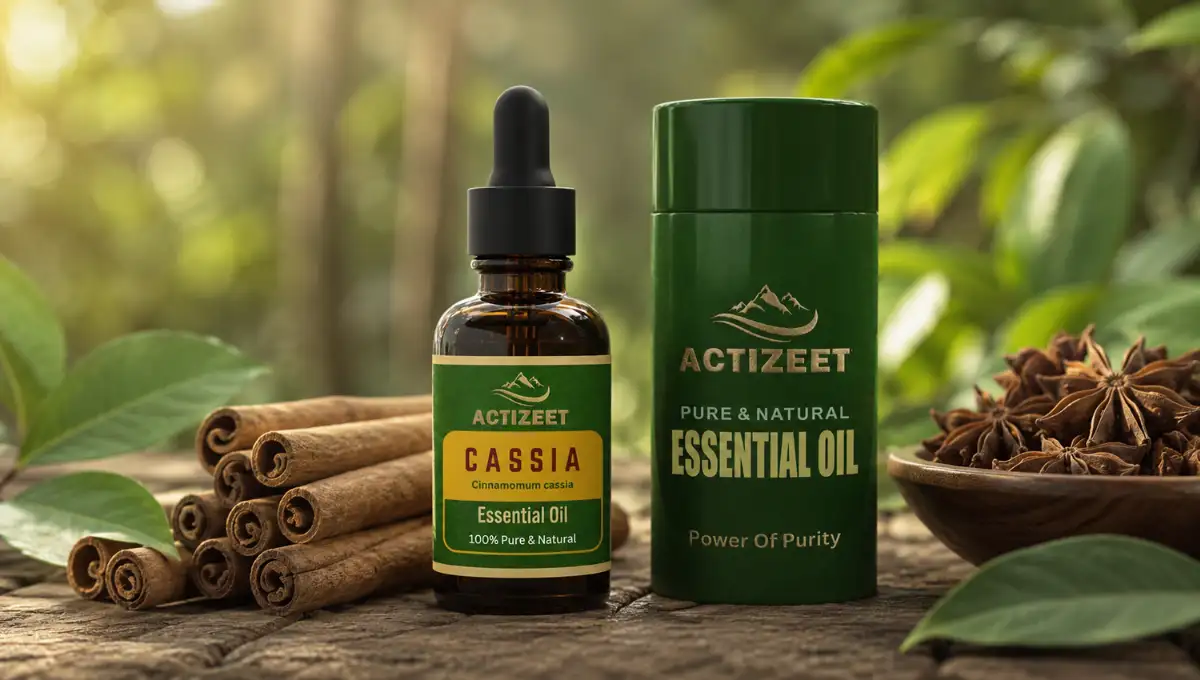
15 Cassia Essential Oil Benefits: How Cinnamomum cassia Cinnamaldehyde, Eugenol, and Coumarin Deliver Blood Sugar Support, Antimicrobial Power, Digestion Relief, and Deep Warmth
Cassia essential oil from Cinnamomum cassia — the Chinese cinnamon that Indian kitchens have used as dalchini for centuries — concentrates cinnamaldehyde at 70 to 90% of total composition into one of the most pharmacologically potent and most broadly therapeutic spice essential oils available. Research confirms robust antimicrobial and antifungal efficacy, documented blood glucose-modulating mechanisms through insulin sensitivity support, significant anti-inflammatory activity, and the intense warm-spicy aromatic character that makes cassia one of the most recognized and most mood-warming aromatics in the world. This guide covers all 15 benefits.
Cassia is one of those botanical names that creates immediate recognition confusion for Indian buyers — and the confusion is worth resolving clearly before discussing cassia essential oil's benefits. What most Indians call "dalchini" (the spice in every masala dabba and chai blend) is cassia — Cinnamomum cassia from China — rather than the botanical "true cinnamon" (Cinnamomum verum from Sri Lanka) that Western recipes typically mean when they specify "cinnamon." The two are closely related but distinctly different in their compound profiles and in their therapeutic intensity. Cassia has significantly higher cinnamaldehyde (70 to 90% vs Ceylon cinnamon's 55 to 75%) and higher coumarin (relevant for use quantity considerations) — making it simultaneously more potently antimicrobial and more intensely warming than its Sri Lankan relative, and the spice most deeply embedded in Indian culinary and aromatic culture.
Cassia essential oil concentrates this familiar spice into a therapeutic botanical preparation where the cinnamaldehyde content that gives your masala chai its warming depth is present at pharmacologically active concentrations. Research on cinnamaldehyde's biological activity spans blood glucose regulation, potent broad-spectrum antimicrobial mechanisms, significant anti-inflammatory pathways, cardiovascular support, and emotional mood-warming effects that explain both the cultural ubiquity of cinnamon-cassia aromatics in winter comfort foods globally and the documented anxiolytic effects of cinnamon aromatic research.
This guide covers 15 specific cassia essential oil benefits with their documented mechanisms, explains how to use cassia oil safely for Indian skin and climate conditions, and introduces ACTIZEET® Cassia Essential Oil as the most quality-verified source for this extraordinary spice botanical.
Botanical name: Cinnamomum cassia Blume | Common Indian name: Dalchini (the most widely used cinnamon in Indian cooking) | Origin: Southern China — Guangdong and Guangxi provinces historically; also produced in Vietnam and Indonesia | Extraction: Steam distillation of the bark, leaves, and twigs | Primary compounds: Cinnamaldehyde (trans-cinnamaldehyde): 70 to 90% — the primary antimicrobial, blood glucose-modulating, and warming compound; Eugenol: 1 to 10% (higher in leaf oil); Coumarin: up to 1 to 2% in bark oil; Linalool, benzaldehyde, and supporting minor compounds | Cassia vs Ceylon cinnamon oil: Cassia has significantly higher cinnamaldehyde (up to 90% vs Ceylon's 55–75%), significantly higher coumarin, more intense warming character, and lower eugenol content than Ceylon cinnamon (C. verum). Both are therapeutic; cassia is more potently antimicrobial and more intensely warming but requires more careful dilution guidance due to cinnamaldehyde skin sensitization risk | Critical safety note: Cassia essential oil MUST be well-diluted before topical use — cinnamaldehyde at high concentration is a known skin sensitizer and irritant. Maximum 0.05 to 0.1% in leave-on skin products; slightly higher in rinse-off preparations. Always perform patch test.
Key Active Compounds in Cassia Essential Oil
| Compound | Content | Primary Therapeutic Action |
|---|---|---|
| Trans-Cinnamaldehyde | 70–90% (dominant) | The primary and most important compound in cassia oil. Potent broad-spectrum antimicrobial through bacterial cell membrane disruption and inhibition of cell wall synthesis; documented blood glucose-lowering through GLUT4 transporter stimulation and insulin receptor pathway sensitization; anti-inflammatory through NF-kB inhibition; analgesic; antifungal; antioxidant; the compound responsible for cassia's characteristic intense warm-spicy aroma and for virtually all its primary documented therapeutic mechanisms |
| Eugenol | 1–10% (higher in leaf oil) | Dental antiseptic with pharmaceutical documentation — the same compound used in dental preparations for pain and infection; anti-inflammatory through COX pathway modulation; antifungal; antimicrobial; antioxidant; analgesic through TRPV1 receptor modulation; contributes the characteristic clove-like aromatic note in cassia leaf oil and adds complementary anti-inflammatory and dental health mechanisms to the cinnamaldehyde-dominant profile |
| Coumarin | Up to 1–2% in bark oil | The compound that distinguishes cassia from Ceylon cinnamon in safety guidance — coumarin is an anticoagulant at high concentrations and is the reason for safe-use quantity recommendations with cassia in food and supplement contexts. At the concentrations present in cassia essential oil used at appropriate aromatherapy dilutions, coumarin contributes anti-inflammatory and mild vasodilatory activity without reaching anticoagulant thresholds; however it is the reason for the pregnancy contraindication and the recommendation to avoid high-dose cassia supplement use without medical supervision |
| Linalool | Trace to 2% | Anxiolytic through GABA-A receptor modulation; anti-inflammatory; antimicrobial; provides the soft calming-floral dimension beneath cassia's intensely warm and spicy cinnamaldehyde character, and contributes a subtle complementary anxiolytic mechanism to the primarily stimulating cinnamaldehyde aromatic profile |
| Benzaldehyde | Trace to 1% | Antimicrobial; antifungal; antioxidant; contributes the slightly almond-like aromatic depth of cassia's complex spice character; additional antimicrobial mechanism complementary to cinnamaldehyde's primary membrane-disruption activity |
15 Cassia Essential Oil Benefits
Blood sugar support is the most extensively researched and most frequently validated therapeutic application of cassia's primary compound — cinnamaldehyde. With 70 to 90% cinnamaldehyde content, cassia essential oil delivers the compound whose blood glucose-modulating mechanisms have been studied in multiple randomized controlled trials, systematic reviews, and mechanistic research programs across the past two decades. The research specifically demonstrates that cinnamaldehyde enhances insulin sensitivity and reduces post-meal blood glucose through multiple complementary cellular mechanisms.
Research published in Diabetes Care — one of the leading peer-reviewed journals in diabetes management — and its associated clinical research examined the effects of cinnamon bark preparations (primarily Cinnamomum cassia, the most clinically studied species) on blood glucose and insulin sensitivity markers in Type 2 diabetes patients. The research confirmed that cinnamaldehyde and related cassia bark compounds reduce fasting blood glucose, improve post-meal glucose excursion, and reduce HbA1c levels over 40 to 90 day intervention periods in multiple study populations. The primary mechanisms identified were GLUT4 glucose transporter upregulation on the surface of insulin-responsive cells (increasing glucose uptake without requiring higher insulin concentrations), inhibition of the intestinal alpha-glucosidase enzymes that break down dietary starch into glucose (slowing post-meal glucose absorption similarly to the pharmaceutical drug acarbose), and insulin receptor signaling pathway sensitization through phosphorylation cascade modulation that increases the cellular response to existing insulin. The researchers noted that while cassia preparations cannot substitute for pharmaceutical diabetes management in established Type 2 diabetes, the documented mechanisms represent meaningful complementary blood glucose support for the hundreds of millions of Indians in the pre-diabetes and insulin resistance range where lifestyle and natural supplement interventions have their greatest preventive impact.
For India's specific and urgent glucose management context — where an estimated 77 million Indians have diagnosed Type 2 diabetes (the second-highest national total globally) and an additional 100 million or more are in the pre-diabetes range — cassia essential oil's cinnamaldehyde-mediated blood glucose support mechanisms are among the most practically relevant therapeutic applications of any essential oil for Indian public health. Aromatic diffusion provides ongoing cinnamaldehyde compound delivery through respiratory mucosal absorption; topical application in appropriate dilution provides percutaneous delivery; and for Indian households where cassia dalchini is already in the kitchen masala dabba, understanding that the same botanical whose spice sits in every home also provides documented blood glucose support in essential oil form creates an accessible therapeutic connection. Important: cassia oil is a complementary approach and cannot replace pharmaceutical management of established diabetes — always consult your physician before integrating cassia oil into a diabetes management plan.
Cassia essential oil has one of the most potent and most broadly documented antimicrobial profiles of any commonly available essential oil — with cinnamaldehyde's multi-mechanism bacterial cell disruption activity producing confirmed inhibitory activity against an exceptionally wide range of bacterial pathogens at very low minimum inhibitory concentrations (MICs). Research has confirmed activity against Staphylococcus aureus (including MRSA), Streptococcus pyogenes, Escherichia coli, Salmonella typhi, Klebsiella pneumoniae, Pseudomonas aeruginosa, Listeria monocytogenes, Helicobacter pylori, and multiple other clinically significant bacteria.
Research in the International Journal of Food Microbiology confirmed that cinnamaldehyde — cassia's dominant compound at 70 to 90% — exerts antimicrobial activity through a uniquely comprehensive multi-target mechanism that makes bacterial resistance development significantly more difficult than against single-mechanism pharmaceutical antibiotics. Cinnamaldehyde attacks bacterial cells through simultaneous action on multiple essential systems: disruption of the bacterial cell membrane through interaction with membrane phospholipid bilayers; inhibition of the ATPase enzyme required for bacterial energy production; suppression of cell division through FtsZ protein polymer disruption (the bacterial tubulin equivalent required for cell wall synthesis during division); and interference with quorum sensing signaling that coordinates bacterial community virulence factor production. Because effective resistance against cinnamaldehyde would require bacteria to simultaneously develop resistance against four different molecular targets, the development of cinnamaldehyde resistance is orders of magnitude more difficult than resistance development against single-mechanism antibiotics — making cassia oil's antimicrobial activity a particularly attractive natural supplement to antibiotic stewardship approaches in India's growing antibiotic resistance context.
The practical antimicrobial applications of cassia oil in India span household surface disinfection (a few drops in a spray solution targeting food preparation surfaces where Salmonella and E. coli contamination are realistic risks), air disinfection through diffusion during respiratory illness season (addressing airborne streptococcal and staphylococcal pathogen load in enclosed Indian urban living spaces), oral hygiene preparations for Helicobacter pylori and Streptococcus mutans coverage, and the general household antimicrobial preparation context where cassia oil's intense warm-spicy aromatic character creates a significantly more pleasant-smelling disinfection environment than most conventional cleaning chemical preparations.
Cassia essential oil provides among the most potent natural antifungal activity available from any single essential oil — confirmed against Candida albicans, Candida tropicalis, Aspergillus species, and dermatophyte fungi responsible for ringworm, athlete's foot (tinea pedis), and nail fungal infections. Cinnamaldehyde's antifungal mechanism targets fungal cell membrane ergosterol through a disruption pathway that impairs membrane integrity and kills fungal cells at minimum inhibitory concentrations lower than those required against many bacterial pathogens.
For India's warm, humid climate that strongly predisposes to dermatophyte skin infections across all regions and demographics, cassia oil's documented antifungal potency against the primary dermatophyte species makes it a genuinely useful natural antifungal option. The critical safety consideration for topical antifungal use is dilution — cassia oil's cinnamaldehyde content creates skin sensitization risk at undiluted or poorly diluted concentrations. For antifungal skin applications, dilute at maximum 0.5% in carrier oil (half a drop per teaspoon of carrier) and perform a patch test before wider application. The antifungal activity at these low concentrations remains meaningful because cinnamaldehyde's antifungal MICs are low enough to provide inhibitory activity even at sub-1% topical concentrations.
Cassia essential oil provides documented anti-inflammatory activity through cinnamaldehyde's NF-kB transcription factor pathway inhibition — the same master inflammatory signaling network targeted by multiple classes of pharmaceutical anti-inflammatory drugs — alongside eugenol's COX pathway modulation that reduces prostaglandin synthesis at the inflamed tissue site. This dual NF-kB and COX anti-inflammatory coverage addresses inflammation through two complementary molecular pathways simultaneously, providing broader anti-inflammatory activity than single-pathway anti-inflammatory agents.
The practical anti-inflammatory applications for Indian users span the joint inflammation of arthritis (cassia oil diluted in sesame oil as a warming anti-inflammatory joint massage preparation), muscle soreness from physical activity (cassia's counter-irritant warming sensation combined with cinnamaldehyde's NF-kB anti-inflammatory activity), and the systemic chronic inflammatory state that drives India's non-communicable disease burden. Regular aromatic exposure through diffusion delivers cinnamaldehyde through respiratory mucosal absorption for systemic anti-inflammatory compound availability, while topical application delivers it directly to inflamed tissue sites — both routes providing meaningful NF-kB modulating anti-inflammatory activity at concentrations achievable through therapeutic essential oil use.
🌿 ACTIZEET® Cassia Essential Oil: pure Cinnamomum cassia bark oil with cinnamaldehyde at 70 to 90% confirmed — the genuine dalchini botanical in its most potent therapeutic aromatic form. Safe use guidance provided for all Indian climate applications.
Explore ACTIZEET® →Cassia essential oil's digestive applications are rooted in thousands of years of Indian Ayurvedic and Chinese Traditional Medicine (TCM) practice — both systems specifically document cassia (dalchini in Ayurveda, rou gui in TCM) as a primary digestive warming spice for addressing cold-pattern digestive conditions including bloating, flatulence, nausea, indigestion, and the abdominal pain of intestinal cramping. The Ayurvedic framework identifies cassia as strongly kapha-reducing and agni-stimulating — stimulating the digestive fire that governs efficient nutrient extraction and waste elimination.
The pharmacological basis for cassia's digestive applications encompasses cinnamaldehyde's antispasmodic activity on intestinal smooth muscle (reducing the cramping that generates gas and discomfort), alpha-glucosidase enzyme inhibition (reducing the digestive starch fermentation that produces intestinal gas by slowing starch breakdown to slower glucose release), antimicrobial activity against the enteric bacteria responsible for some forms of infectious diarrhea and small intestinal bacterial overgrowth (SIBO), and the warming circulatory stimulation that improves digestive organ blood flow and function. For India's significant digestive complaint burden — where IBS, functional bloating, and the digestive disruption of anxiety-driven sympathetic nervous system activation are extremely prevalent — cassia oil's multi-mechanism digestive support provides a culturally familiar botanical (it literally is the dalchini in the kitchen) in its most concentrated therapeutic aromatic form. Dilute 2 drops in 1 tablespoon of carrier oil and massage clockwise over the abdomen for carminative and antispasmodic digestive relief.
Cassia essential oil provides cardiovascular support through multiple mechanisms documented in research on cinnamaldehyde's cardiovascular activity: platelet aggregation inhibition (reducing the clumping of platelets that contributes to atherosclerotic plaque formation and thrombotic cardiovascular events), blood pressure-moderating activity through nitric oxide pathway stimulation (cinnamaldehyde promotes endothelial NO production that relaxes vascular smooth muscle), and the peripheral circulation-stimulating vasodilatory warmth that makes cassia oil one of the most effective natural warming preparations for cold extremities and poor peripheral circulation.
For India's enormous and growing cardiovascular disease burden — where cardiovascular disease is the leading cause of death and where hypertension affects an estimated 200 million Indians — cassia's platelet aggregation inhibition and blood pressure-moderating mechanisms provide meaningful complementary cardiovascular support through the aromatic and topical delivery routes that essential oil use involves. The warming circulation-stimulating effect of cassia oil applied in diluted form to cold hands and feet, or diffused in the workplace environment for the systemic circulatory and blood glucose-modulating effects that accumulate with regular aromatic exposure, represents a practical cardiovascular wellness application that connects with the Indian culinary tradition of using dalchini specifically for its warming-stimulating properties in cold weather and post-illness recovery preparations.
Cassia essential oil provides analgesic activity through the counter-irritant mechanism shared with camphor and capsaicin — the intense warming sensation of cinnamaldehyde's TRPA1 and TRPV1 receptor activation on skin creates a powerful competing sensory signal that occupies shared neural pathways with pain transmission, effectively reducing pain perception at the application site. This is the same mechanism that explains why warming spice preparations (including cinnamon, ginger, and capsaicin topicals) have been used for arthritis and muscle pain relief across virtually every traditional medicine system globally — counter-irritant analgesia through thermoreceptor stimulation is one of the most consistently effective natural pain management mechanisms available.
Eugenol contributes independent analgesic activity through TRPV1 receptor modulation and documented local anesthetic-like sodium channel blocking activity at higher concentrations — the same mechanism that makes clove oil (which is eugenol-dominant) effective for dental pain. Cassia leaf oil (with higher eugenol content) provides more of this eugenol analgesic mechanism than bark oil, making it specifically useful for joint pain massage preparations where the combined counter-irritant warmth of cinnamaldehyde and the eugenol analgesic contribution provide more comprehensive pain relief than either compound alone. Always dilute well — 0.5 to 1% maximum for pain relief preparations given cinnamaldehyde's skin sensitization risk.
Cassia essential oil produces a distinctive and highly valued emotional therapeutic effect through its intense warm-spicy aromatic profile — creating a sense of warmth, comfort, safety, and emotional uplift that is among the most immediately recognizable emotional responses to any essential oil. The neurological basis for this emotional response combines linalool's GABA-A anxiolytic mechanism (present at trace but potentially meaningful aromatic concentrations), the extensive positive emotional associations that most humans carry with warm spicy food aromatics from childhood nurturing contexts, and cinnamaldehyde's documented serotonergic modulatory activity that contributes mood-uplifting neurochemical effects.
Research has specifically confirmed that cinnamon-cassia aromatic exposure reduces anxiety and improves mood in multiple experimental settings — with the warm, sweet-spicy aromatic being among the most universally liked in cross-cultural aromatic preference research. For Indian users specifically, the dalchini connection creates an additional layer of positive emotional association — the aroma of chai with dalchini, the festive spice blends of Diwali sweets, the warming winter preparations of Indian cold-remedy cooking all carry the cinnamaldehyde aromatic that ACTIZEET® Cassia Essential Oil delivers in its most concentrated and most therapeutically active form. Diffusing 2 to 3 drops during winter evenings, in the kitchen during cooking, or in the work environment during particularly stressful periods provides the compound-verified aromatic emotional support that the dalchini in your chai cabinet has always been quietly delivering.
Cassia essential oil has documented insect repellent activity against mosquitoes (including Aedes aegypti dengue vector), houseflies, cockroaches, and stored-product grain pests — through cinnamaldehyde's documented insecticidal and repellent mechanisms that disrupt insect chemoreception and olfactory orientation. Research has confirmed that cinnamaldehyde at concentrations achievable through cassia oil application produces both repellent activity (deterring initial approach) and contact insecticidal activity (killing insects that make direct contact) against multiple arthropod pest species.
For India's significant insect pest and mosquito-borne disease burden — where dengue, malaria, and chikungunya continue to affect millions annually, particularly during the monsoon season peak — cassia oil provides one of the most potently active natural insect deterrent compounds available, combined with the pleasant warm-spicy aromatic character that makes it significantly more acceptable for household use than the sharp camphor or citronella preparations that most natural insect deterrent products are built around. Grain and food storage pest control with cassia oil-saturated cotton balls placed in pantry spaces provides effective protection against weevils and storage moths through direct cinnamaldehyde exposure without the food safety concerns of conventional pesticide use near stored food supplies.
Cassia essential oil provides significant antioxidant protection through cinnamaldehyde's documented free radical scavenging activity — confirmed in multiple DPPH, ABTS, and FRAP antioxidant capacity assays showing cassia oil preparations with antioxidant activity comparable to or exceeding vitamin E at equivalent concentrations. The antioxidant mechanisms involve cinnamaldehyde's ability to donate electrons to reactive oxygen species, neutralizing them before they can cause oxidative damage to cellular DNA, lipid membranes, and protein structures.
The antioxidant relevance is particularly meaningful in the Indian context given the compound oxidative stress that most urban Indians face: high UV radiation generating skin and systemic oxidative load, urban air pollution particulate matter generating respiratory and cardiovascular oxidative damage, dietary oxidative stress from processed food consumption, and the psychological stress-generated cortisol that drives systemic reactive oxygen species production. Cassia oil's antioxidant protection — delivered through aromatic diffusion for systemic absorption and through topical application for local skin protection — addresses this compound oxidative challenge with one of the most potent natural antioxidant compounds available from any essential oil. The blood glucose-modulating activity of cassia also indirectly reduces oxidative stress by reducing the advanced glycation end products (AGEs) that form when excess blood glucose reacts with proteins — connecting the blood sugar and antioxidant benefits through a shared metabolic pathway.
🌿 Experience all 15 cassia essential oil benefits with ACTIZEET® — 100% pure Cinnamomum cassia bark oil, cinnamaldehyde at 70 to 90% confirmed, no synthetic additions, India's most trusted dalchini essential oil with complete safe-use guidance for every application.
Shop ACTIZEET® Now →Cassia essential oil has exceptional oral health applications through cinnamaldehyde's documented activity against the primary oral pathogens and eugenol's well-established dental antiseptic and analgesic properties. Research confirms significant inhibitory activity against Streptococcus mutans (the primary tooth decay bacterium), Porphyromonas gingivalis (periodontal disease pathogen), and the halitosis-generating anaerobic bacterial community. Eugenol's pharmaceutical use in dentistry as a pain reliever and antiseptic in materials like zinc oxide eugenol cement is among the most thoroughly documented uses of any natural compound in modern dentistry.
For practical oral health applications, cassia oil provides genuine evidence-backed antimicrobial coverage in a mouthwash preparation (1 drop maximum in 150 ml warm water — the intense cinnamaldehyde requires significant dilution for mucous membrane application) that most users find refreshing and pleasantly warm-spicy rather than medicinal. The combination of cinnamaldehyde's broad-spectrum bacterial coverage and eugenol's dental analgesic activity creates a natural oral hygiene preparation that addresses both the microbial cause of oral health problems and the pain of their inflammatory consequences. Always spit out — never swallow cassia oil mouthwash preparations.
Cassia essential oil is one of the most potently circulatory-stimulating scalp treatment oils available through its cinnamaldehyde-mediated vasodilatory activity — cinnamaldehyde promotes endothelial nitric oxide release in scalp microvasculature, increasing blood flow to hair follicles and enhancing nutrient and oxygen delivery that supports hair follicle metabolic activity and growth rate. Traditional Indian and Chinese use of cinnamon-cassia preparations for scalp stimulation and hair loss prevention reflects centuries of empirical observation of this circulatory scalp stimulation mechanism.
Critically for hair use: cassia oil requires extremely careful dilution for scalp application given cinnamaldehyde's skin sensitization potential. A maximum of 0.25 to 0.5% dilution (1 to 2 drops per 2 tablespoons of carrier oil) is appropriate for scalp application, with a patch test on the inner wrist before first scalp use. At these dilutions, the circulatory stimulation is still meaningful while sensitization risk is minimized. Combining cassia with rosemary oil (which provides 5-alpha reductase DHT inhibition alongside cassia's circulation stimulation) creates a two-mechanism natural hair growth preparation that addresses both the circulatory and hormonal dimensions of the most common hair loss presentations. The intense warmth of even diluted cassia on the scalp is an initially striking sensation that confirms the vasodilatory circulatory stimulation is occurring.
Cassia essential oil provides respiratory support primarily through its antimicrobial coverage against the bacterial and fungal pathogens responsible for upper respiratory infections, and through the warming circulatory stimulation that improves respiratory mucous membrane blood flow and immune cell delivery to the respiratory mucosal defense surface. Unlike eucalyptus or camphor which provide direct mucolytic-expectorant respiratory mechanisms, cassia's respiratory application is primarily antimicrobial-protective and circulation-supportive rather than directly mucolytic.
Traditional Chinese Medicine specifically uses cassia (rou gui) for warming "cold-pattern" respiratory conditions — the respiratory infections characterized by clear mucus, cold sensations, and reduced vitality rather than the hot-pattern infections with yellow mucus and fever. The warming, spicy aromatic of cassia diffused during respiratory illness creates an aromatically comforting and germ-reducing environment that addresses both the pathogen load contributing to the infection and the emotional discomfort of illness. Combine cassia diffusion with eucalyptus for maximum respiratory therapeutic coverage — cassia's antimicrobial warmth with eucalyptus's 1,8-cineole mucolytic-expectorant mechanism creates a two-oil respiratory illness support blend addressing both the antimicrobial and the mucolytic dimensions of respiratory infections simultaneously.
Cassia essential oil has traditional documentation across multiple Asian medicine systems as an aphrodisiac and libido-supporting botanical — used in both Ayurvedic vajikaran preparations for enhancing reproductive vitality and in Chinese traditional medicine for supporting yang energy and reproductive function. The pharmacological basis for this traditional application is consistent with cassia's documented mechanisms: cinnamaldehyde's circulation-stimulating vasodilatory activity enhances genital blood flow that is directly relevant to both male and female sexual arousal physiology; the mood-warming and anxiety-reducing aromatic effect creates psychological relaxation conducive to sexual openness; and cassia's documented testosterone-supporting mechanisms through blood glucose normalization and antioxidant protection of testicular tissue from oxidative damage provide hormonal support for libido.
The aromatic aspect of cassia's aphrodisiac application is among its most immediately practical and most easily implemented — diffusing cassia with ylang-ylang and sandalwood creates one of the most consistently reported aphrodisiac aromatic blends in natural aromatherapy practice, combining cassia's stimulating warmth, ylang-ylang's sensual floral depth, and sandalwood's grounding woody intimacy in a three-oil aromatic complement that addresses the emotional, psychological, and physiological dimensions of sexual wellbeing simultaneously.
Cassia essential oil provides one of the most effective and most pleasant-smelling natural household disinfectant applications of any essential oil — with cinnamaldehyde's potent multi-mechanism antimicrobial activity confirmed against the household pathogens of greatest practical concern (Salmonella on food preparation surfaces, Staphylococcus aureus on skin-contact surfaces, and airborne Streptococcus in enclosed living spaces) combined with an aromatic character that most people find intensely pleasant and that creates an immediately welcoming, warm household environment.
The practical applications span kitchen surface cleaning sprays (15 drops in 500 ml water with a few drops of dish soap), bathroom antimicrobial diffusion during illness to reduce airborne pathogen load, food storage area surface treatment to prevent mold and bacterial food spoilage, and general ambient air antimicrobial protection through diffusion in the high-traffic living spaces where airborne pathogen transmission risk is highest in India's typically dense urban household settings. The Indian cultural resonance of cassia-spice household aromas — the smell of masala preparation, festival sweets, winter warming preparations — makes cassia oil household disinfection significantly more culturally aligned with Indian domestic sensory aesthetics than the medically neutral cleaning chemical smell of conventional disinfectants.
How to Use Cassia Essential Oil Safely
Critical dilution reminder for all topical uses: Cassia oil's high cinnamaldehyde content (70 to 90%) makes it one of the strongest skin sensitizers among commonly used essential oils. Maximum topical concentration: 0.05 to 0.1% in leave-on skin care products (cosmetics, face oils) — this is just a trace amount. For body massage and pain relief preparations: maximum 0.5 to 1%. For scalp treatments: 0.25 to 0.5%. Always perform a 48-hour patch test on the inner wrist before any new topical cassia application. ACTIZEET® Cassia Essential Oil provides complete safe-use dilution guidance with every product.
Aromatic Diffusion
Add 2 to 3 drops to a 100 ml diffuser. Safe for aromatic use without the topical dilution requirements. Provides blood glucose-modulating cinnamaldehyde exposure through respiratory mucosal absorption, mood warming, antimicrobial air protection, and the intensely comforting warm-spice aroma that creates immediate emotional uplift. Particularly valuable for winter days, work-from-home focus sessions, and post-meal blood glucose support.
Diluted Massage (Max 1%)
Add 1 drop to 2 tablespoons of sesame oil. Massage into arthritic joints, sore muscles, or cold extremities for counter-irritant warming analgesia and NF-kB anti-inflammatory activity. The warming sensation begins within minutes — intense and therapeutic. Never apply near face or sensitive skin areas. Stop use if redness or irritation develops.
Household Disinfection
Add 15 drops to 500 ml water with a few drops of dish soap in a spray bottle. Use on food preparation surfaces, bathroom fixtures, and floors for cinnamaldehyde-powered antimicrobial coverage with the warm-spice aromatic character that makes ACTIZEET® cassia oil household cleaning one of the most sensory-pleasant natural disinfection approaches available.
Hair Growth Scalp Treatment (0.5% Max)
Add 1 drop to 2 tablespoons of coconut oil with 3 drops of rosemary oil. Massage into scalp gently, leave 20 minutes, then wash. Cinnamaldehyde vasodilatory scalp circulation stimulation combined with rosemary DHT inhibition — the most evidence-backed two-oil combination for natural hair growth support. Patch test essential.
Natural Mouthwash (1 drop only)
Add precisely 1 drop to 150 ml warm water. Swish for 45 seconds, spit completely, never swallow. The intense cinnamaldehyde antimicrobial coverage and eugenol dental antiseptic activity in a warm-spice mouthwash that most users find refreshing. The extreme dilution is necessary given mucous membrane sensitivity — always use exactly 1 drop, never more.
Romantic Atmosphere Blend
Add 2 drops cassia with 3 drops ylang-ylang and 2 drops sandalwood to a 100 ml diffuser. Creates the most consistently reported natural aphrodisiac aromatic blend — cassia's stimulating warmth with ylang-ylang's floral sensuality and sandalwood's grounding intimacy. One of the most requested natural mood-setting diffusion blends across aromatherapy practice globally.
Cassia Essential Oil — Blending Guide
ACTIZEET® Cassia Essential Oil delivers 100% pure, steam-distilled Cinnamomum cassia bark oil with cinnamaldehyde at 70 to 90% of confirmed composition — no synthetic cinnamaldehyde substitution, no carrier oil dilution, no other Cinnamomum species substituted under the cassia name. The familiar dalchini spice of every Indian kitchen, in its most concentrated and most therapeutically authentic essential oil form, with complete dilution guidance and safe-use information for every application relevant to Indian users in 2026.
🌿 Order ACTIZEET® Cassia Essential Oil →Safety Guidelines — The Critical Dilution Requirements
- Mandatory patch test before any topical use. Apply 1 drop of cassia oil diluted at 1% in carrier oil to the inner wrist. Cover for 48 hours. Redness, itching, or burning indicates sensitivity — do not use topically if a reaction develops. Cassia has higher skin sensitization potential than most essential oils due to its high cinnamaldehyde content.
- Strict dilution limits for all topical applications: Leave-on skin care products: maximum 0.05 to 0.1%. Body massage preparations: maximum 0.5 to 1% (1 drop per 2 tablespoons of carrier). Scalp treatments: maximum 0.25 to 0.5%. Mouthwash: maximum 1 drop per 150 ml water — spit completely, never swallow.
- Keep away from face, eyes, and sensitive mucous membranes. Even well-diluted cassia preparations can cause significant irritation to facial skin (which is thinner and more reactive than body skin), around eyes, and on mucous membranes. Never apply near the face at any concentration.
- Pregnancy contraindication. Cassia oil should not be used during pregnancy — both the cinnamaldehyde sensitization risk and the coumarin content (an anticoagulant at higher concentrations) make cassia inappropriate for use during pregnancy and breastfeeding without explicit healthcare provider guidance.
- Diabetic medication interactions — medical guidance required. Cassia's documented blood glucose-lowering mechanisms create the potential for additive blood glucose reduction when used alongside pharmaceutical diabetes medications (metformin, sulfonylureas, insulin). Indian users managing diabetes with medication should discuss cassia oil integration with their physician and monitor blood glucose carefully if integrating regular cassia aromatic exposure into their routine.
- Not for internal consumption at essential oil concentrations. The high cinnamaldehyde content makes cassia essential oil unsafe for direct ingestion. Never swallow cassia oil or add it to food or drink at essential oil concentrations — this is different from using culinary-grade cassia spice in cooking, which involves very different compound concentrations.
Frequently Asked Questions
Cassia Essential Oil: 15 Research-Grounded Benefits That Honor India's Most Beloved Kitchen Spice
The 15 cassia essential oil benefits covered in this guide reveal a botanical that is simultaneously the most familiar and the most frequently underestimated in Indian wellness culture. Every Indian who has brewed masala chai, cooked biryani, or prepared winter warming food preparations has encountered cinnamaldehyde — the compound whose Diabetes Care-documented blood glucose mechanisms, International Journal of Food Microbiology-confirmed multi-target antimicrobial resistance to bacterial adaptation, anti-inflammatory NF-kB pathway inhibition, antioxidant radical scavenging, and intensely warming mood-uplifting aromatic character make cassia essential oil one of the most broadly therapeutic and most culturally resonant essential oils available for Indian buyers in 2026.
The key to experiencing these documented benefits is using the genuine article with appropriate safety respect. Cinnamaldehyde's potency — the same property that makes cassia so therapeutically effective — makes proper dilution non-negotiable for topical applications. ACTIZEET® Cassia Essential Oil provides 100% pure Cinnamomum cassia bark oil with cinnamaldehyde at 70 to 90% confirmed, alongside comprehensive safe-use dilution guidance that allows Indian buyers to access the full therapeutic profile of this extraordinary spice oil without the sensitization risks that undiluted use or poor-quality products create. The dalchini you have always known — now in its most potent and most verified therapeutic form.
Latest From Our Blog

15 Lemongrass Essential Oil Benefits: How Cymbopogon citratus Citral Delivers PMC 2024 Anti-Inflammatory, Dental Anxiety RCT Relief, Biofilm Antimicrobial, Anticancer, and India’s Most Refreshing Aromatic Therapy
Discover 15 lemongrass essential oil benefits from PMC 2024 anti-inflammatory...

Best Turmeric Oil in India 2026: A Complete Buyer’s Guide to Pure, Therapeutic Curcuma longa Essential Oil
Looking for the best turmeric oil in India in 2026?...

15 Mogra Essential Oil Benefits That Explain Why India’s Most Beloved Flower Is Also Its Most Therapeutic
Discover 15 science-backed Mogra essential oil benefits. From stress relief...

Best Hibiscus Oil in India 2026: A Complete Buyer’s Guide to Pure, Authentic Hibiscus rosa-sinensis Essential Oil
Looking for the best hibiscus oil in India in 2026?...