
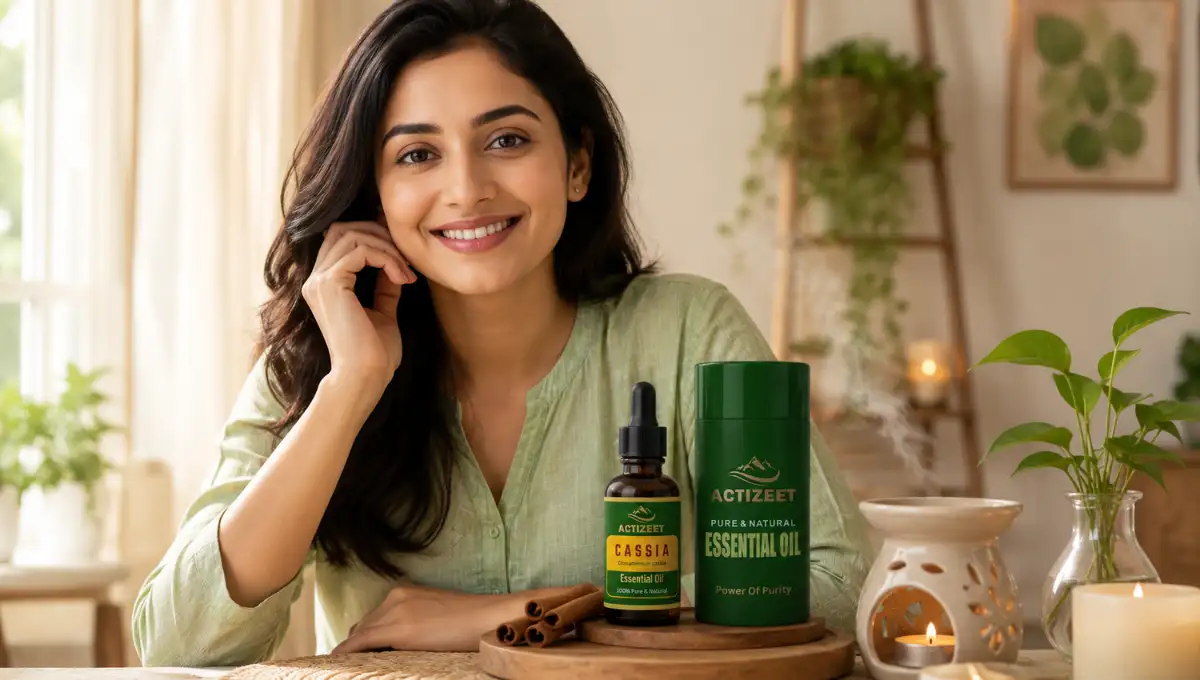
Best Cassia Oil in India 2026: How to Find Genuine Cinnamomum cassia and Why ACTIZEET® Delivers the Dalchini Botanical at Its Most Therapeutic
Cassia oil is India's most culturally familiar yet most often misrepresented essential oil — the dalchini in every masala dabba transformed into a concentrated therapeutic preparation where cinnamaldehyde at 70 to 90% drives documented blood glucose support, potent antimicrobial activity, and deep warming wellness. But India's 2026 market is full of products mislabeled between cassia and cinnamon species, adulterated with synthetic cinnamaldehyde, or diluted so heavily that therapeutic cinnamaldehyde concentrations are negligible. This guide tells you how to choose correctly — and why ACTIZEET® gets it right every time.
The dalchini in your kitchen masala dabba is almost certainly cassia — Cinnamomum cassia — the Chinese cinnamon that has dominated Indian cooking for centuries and that provides the bold, warming, intensely spiced cinnamon character that Indian cuisine depends on. What most Indian buyers do not know is that when they search for "cassia essential oil" or "cinnamon essential oil" online in 2026, they are entering one of the most confusing and most frequently misrepresented segments of India's essential oil market.
The confusion operates at multiple levels simultaneously. Some products labeled "cassia oil" actually contain Ceylon cinnamon (Cinnamomum verum) bark or leaf oil — a related but chemically distinct botanical with a different therapeutic profile. Some contain a blend of synthetic trans-cinnamaldehyde (the dominant compound of cassia bark oil) in a carrier, smelling authentically of cassia but containing none of the genuine botanical compound matrix. Some correctly identify Cinnamomum cassia but from bark versus leaf distillation — two extractions from the same tree with meaningfully different compound profiles. And some honest, good-quality cassia oils are sold without the dilution guidance or safety information that cassia's high cinnamaldehyde content specifically requires for safe Indian skin use in the warm climate where the sensitization risk is greatest.
This guide cuts through every layer of that confusion, establishes the quality criteria that the best cassia oil in India must meet in 2026, and makes the case for ACTIZEET® Cassia Essential Oil as the most transparently quality-verified, most safely documented, and most therapeutically genuine cassia oil available to Indian buyers this year.
Challenge 1 — Species mislabeling (cassia vs Ceylon cinnamon vs leaf oil): Three different Cinnamomum products are routinely confused or interchanged. Cassia bark oil (C. cassia): cinnamaldehyde 70 to 90%, high coumarin, intensely warming — the correct product this guide covers. Ceylon cinnamon bark (C. verum): cinnamaldehyde 55 to 75%, very low coumarin, somewhat less intense — a legitimate but different product. Cassia/cinnamon leaf oil: eugenol-dominant (60 to 80%), very different compound profile and therapeutic applications from bark oil. GC-MS confirming cinnamaldehyde at 70 to 90% is the primary species and plant-part verification. Challenge 2 — Synthetic cinnamaldehyde substitution: Industrial synthetic trans-cinnamaldehyde (produced petrochemically) smells identical to genuine botanical cassia and is dramatically cheaper. GC-MS showing the correct botanical minor compound matrix (including trace linalool, benzaldehyde, and the natural resin fraction) alongside cinnamaldehyde confirms botanical authenticity. Synthetic cinnamaldehyde will show the single compound with an abnormally clean chromatogram without the supporting minor compound matrix of genuine botanical distillation. Challenge 3 — Missing safety guidance for Indian users: Cinnamaldehyde is a potent skin sensitizer. Many cassia oil products in India's market carry no dilution guidance or inadequate guidance — particularly concerning for India's warm, humid climate where enhanced skin penetration increases sensitization risk. The best cassia oil in India provides complete, India-specific dilution guidance for all application types.
Species Identity — Why Cinnamaldehyde Percentage Is the Primary Quality Marker
For cassia essential oil, the primary quality marker is simpler and more definitive than for most essential oils in this guide series: cinnamaldehyde content at 70 to 90% of total composition, confirmed by GC-MS analysis, establishes both species authenticity (genuine Cinnamomum cassia bark oil produces this high-cinnamaldehyde profile) and therapeutic quality (this cinnamaldehyde concentration is required for the blood glucose-modulating, antimicrobial, anti-inflammatory, and analgesic mechanisms that make cassia oil therapeutically valuable).
This straightforwardness is both cassia's quality advantage and its market problem. Because cinnamaldehyde is the single dominant compound, it is easy to verify analytically — but it is also easy to substitute with synthetic cinnamaldehyde, which produces identical GC-MS peaks without the genuine botanical compound matrix. The resolution to this synthetic substitution detection challenge lies in looking beyond the dominant cinnamaldehyde peak at the minor compound profile — genuine C. cassia bark oil contains trace quantities of linalool, benzaldehyde, cinnamaldehyde dimers, coumarin, and other botanical minor compounds that form a distinctive natural compound fingerprint absent from synthetic cinnamaldehyde preparations.
The Three Cinnamomum Products in India's Market — Side by Side
| Feature | Cassia Bark Oil (C. cassia) — Correct | Ceylon Cinnamon Bark (C. verum) | Cassia / Cinnamon Leaf Oil |
|---|---|---|---|
| Cinnamaldehyde | 70–90% (dominant) | 55–75% (dominant but lower) | 5–20% (low) |
| Eugenol | 1–10% | 1–10% | 60–85% (dominant — very different oil) |
| Coumarin | Up to 1–2% (highest) | Trace (250x less than cassia) | Low |
| Warming intensity | Most intense — highest cinnamaldehyde | Warm but less intense than cassia | Warm-spicy with clove-like character |
| Blood glucose support | Most documented — highest cinnamaldehyde for GLUT4/alpha-glucosidase | Well-documented but slightly lower cinnamaldehyde | Weak — low cinnamaldehyde, different mechanisms |
| Antimicrobial potency | Highest — cinnamaldehyde-dominant multi-target mechanism | High — similar mechanism, slightly lower concentration | Different mechanism — eugenol antimicrobial activity |
| Skin sensitization risk | Highest — requires strictest dilution | High — requires careful dilution | High — eugenol is also a sensitizer but different profile |
| Indian kitchen connection | Dalchini — the cinnamon of Indian cooking | Less common in Indian kitchens | Not typically used in Indian culinary tradition |
| GC-MS distinguishable? | Yes — 70–90% cinnamaldehyde with coumarin confirms C. cassia bark | Yes — lower cinnamaldehyde and absence of meaningful coumarin distinguishes from cassia | Yes — eugenol dominance immediately distinguishes from bark oils |
Cassia Bark vs Cassia Leaf Oil — The Same Tree, Different Therapeutic Profiles
One quality confusion specific to cassia (and cinnamon) that buyers rarely understand is the bark-versus-leaf distinction within the same botanical species. Both bark oil and leaf oil are steam-distilled from Cinnamomum cassia — but from different plant parts that produce dramatically different compound profiles and therefore different therapeutic applications.
Cassia bark oil — the product this guide covers and what ACTIZEET® sells — is steam-distilled from the outer bark of the cassia tree. It produces the cinnamaldehyde-dominant profile at 70 to 90% that defines cassia oil's primary therapeutic identity. Cassia leaf oil is steam-distilled from the leaves and small twigs of the same tree, producing an oil that is dominated by eugenol at 60 to 80% — more similar to clove oil than to cassia bark oil in both compound profile and aromatic character. Cassia leaf oil has its own legitimate therapeutic applications (particularly dental and oral health applications where eugenol's documented analgesic and antiseptic activity is most relevant) but is a fundamentally different product from cassia bark oil in both therapeutic profile and appropriate use context.
For buyers seeking the blood glucose-supporting, potently antimicrobial, and intensely warming therapeutic profile associated with "cassia oil" in the research literature and in Indian traditional medicine — they want cassia bark oil. ACTIZEET® clearly specifies bark oil in their product documentation, ensuring buyers receive the correct plant-part extraction whose cinnamaldehyde content corresponds to what the therapeutic research documents.
🌿 ACTIZEET® Cassia Essential Oil: genuine Cinnamomum cassia bark oil with cinnamaldehyde at 70 to 90% confirmed by GC-MS — not leaf oil, not Ceylon cinnamon, not synthetic cinnamaldehyde. The real dalchini botanical in its most therapeutically potent bark oil form, with complete India-specific dilution guidance.
Shop ACTIZEET® →6 Quality Criteria for the Best Cassia Oil in India
The label must clearly state Cinnamomum cassia Blume as the botanical source. "Cinnamon oil" or "cinnamon essential oil" without a Latin species name is insufficient — the unspecified product could be any of three different Cinnamomum species with meaningfully different compound profiles and different safety considerations. The specific species name confirms both the botanical identity and the expected compound profile, allowing buyers to verify that the cinnamaldehyde-dominant therapeutic profile of genuine cassia bark oil is what they will receive.
Additionally, the label should specify bark as the plant part extracted — distinguishing from leaf oil of the same species. "Steam distilled from the bark of Cinnamomum cassia" is the complete extraction specification that confirms both species identity and the correct plant-part distillation producing the cinnamaldehyde-dominant therapeutic profile. ACTIZEET® provides this full botanical transparency because they understand that the best cassia oil in India requires buyer certainty about what they are purchasing.
GC-MS analysis should confirm trans-cinnamaldehyde as the dominant compound at 70 to 90% of total composition. Below 70% suggests either a different Cinnamomum species, a leaf oil rather than bark oil, or significant adulteration. A GC-MS showing cinnamaldehyde above 92 to 93% is unusual for genuine botanical cassia bark oil and may indicate synthetic cinnamaldehyde addition to boost the apparent quality of a weaker botanical batch — genuine cassia bark oil naturally contains 2 to 5% supporting minor compounds alongside the dominant cinnamaldehyde that keep the authentic cinnamaldehyde percentage below the absolute maximum of pure synthetic.
The minor compound profile is equally important for authenticity confirmation: genuine C. cassia bark oil contains trace benzaldehyde, linalool, coumarin at detectable levels (0.5 to 2%), and the natural resin fraction that creates the complex aromatic depth of genuine cassia bark oil. A GC-MS showing only cinnamaldehyde as a single massive peak without these natural minor compound markers suggests synthetic cinnamaldehyde preparation rather than genuine botanical distillation. ACTIZEET®'s GC-MS documentation shows the complete compound chromatogram including the minor compound botanical fingerprint that confirms authentic C. cassia bark oil extraction.
Genuine Cinnamomum cassia is native to and primarily cultivated in southern China — particularly the Guangdong and Guangxi provinces that have been producing cassia for export for thousands of years, and where the cultivation expertise, tree age profiles, and seasonal harvesting practices that produce optimal cassia bark oil are most refined. Vietnamese and Indonesian production also produces genuine C. cassia, though with slightly different compound ratio profiles.
Suppliers who specify their cassia oil's country of origin — and particularly those who can confirm southern Chinese or Vietnamese sourcing — demonstrate supply chain knowledge that correlates with genuine botanical source accountability. Generic "cinnamon oil" from unspecified Asian sources is less verifiable for both species identity and plant-part specification. ACTIZEET® knows their cassia source region because they have direct sourcing relationships with verified C. cassia bark oil distillers rather than purchasing through generic commodity spice oil channels where species and plant-part accuracy is difficult to maintain.
Genuine cassia bark essential oil sold as a pure essential oil contains only the steam-distilled volatile fraction from Cinnamomum cassia bark — no synthetic trans-cinnamaldehyde added to boost apparent potency, no carrier oil added for volume, and no leaf oil blended to reduce the production cost while maintaining the expected aromatic character. Purity verification comes from the combination of GC-MS minor compound profile (confirming botanical authenticity) and the paper evaporation test (confirming no carrier oil dilution — pure cassia oil evaporates completely from paper within 30 to 45 minutes without leaving a permanent oily stain).
The purity distinction matters especially for cassia because the therapeutic mechanisms that have attracted the most research interest — blood glucose modulation, multi-target antimicrobial resistance to bacterial adaptation, NF-kB anti-inflammatory activity — are dose-dependent. A cassia oil diluted to 30% genuine botanical content in carrier oil will provide only 30% of the cinnamaldehyde concentration of pure cassia oil at any given dilution ratio, potentially falling below therapeutically meaningful compound concentrations when used at the appropriate sensitization-safe dilution levels that cassia requires.
The best cassia oil in India in 2026 is not just the most therapeutically pure — it is also the most honestly and completely documented for safe use in India's specific climate and skin context. Cassia oil's high cinnamaldehyde content makes it one of the strongest potential skin sensitizers among commonly used essential oils, and India's warm, humid climate increases transdermal penetration rates compared to temperate climates — meaning that the sensitization risk from inadequately diluted cassia oil is higher for Indian users than for the European and North American aromatherapy markets where most dilution guidelines were originally developed.
Appropriate India-specific dilution guidance for cassia oil should specify: maximum 0.05 to 0.1% for any leave-on skin products; maximum 0.5 to 1% for body massage and topical pain relief; maximum 0.25 to 0.5% for scalp applications; 1 drop maximum per 150 ml water for mouthwash preparations; and mandatory patch test before any topical application. Suppliers who provide these specific, India-appropriate dilution limits demonstrate understanding of both their product's sensitization profile and their Indian buyers' specific safety needs. ACTIZEET® provides complete, India-specific dilution guidance because they take buyer safety as seriously as they take product purity.
Cassia essential oil's cinnamaldehyde dominant compound, while relatively stable compared to lighter essential oil terpenes, undergoes gradual oxidative polymerization when exposed to UV light and air over time — forming cinnamaldehyde dimers and oxidized derivatives that reduce the therapeutic potency and alter the aromatic character of the oil. UV-protective amber glass packaging, combined with a tight-sealing lid that minimizes air contact, preserves the GC-MS-confirmed compound profile through the full period of buyer use.
For a product where cinnamaldehyde content is both the primary therapeutic marker and the primary safety consideration (sensitization potential increases with oxidized cinnamaldehyde derivatives), UV protection is not optional packaging aesthetics — it is an active safety measure as well as a therapeutic quality preservation requirement. The best cassia oil in India comes in amber glass with secure sealing that maintains the cinnamaldehyde profile from the verified batch analysis through the last drop of buyer use.
Red Flags: What to Avoid When Buying Cassia Oil in India
- No botanical species name — only "cinnamon oil" or "cassia oil" without Cinnamomum cassia specified. Without the Latin name, you cannot confirm cassia versus Ceylon cinnamon versus leaf oil. The three products have meaningfully different compound profiles, different safety considerations, and different therapeutic applications. Generic labeling is insufficient for a product category with this level of meaningful botanical distinction.
- No plant-part specification — could be bark or leaf oil. "Cassia essential oil" without "bark" or "leaf" specified leaves open the possibility that you are purchasing eugenol-dominant cassia leaf oil when you intend cinnamaldehyde-dominant cassia bark oil. These are different products with different therapeutic profiles. The specification matters.
- GC-MS showing cinnamaldehyde above 92 to 93% without supporting minor compound matrix. Pure botanical cassia bark oil naturally settles at 70 to 90% cinnamaldehyde with supporting minor compounds. Cinnamaldehyde above 92% with very clean chromatography and absence of coumarin and natural minor compound markers suggests synthetic cinnamaldehyde addition or a pure synthetic preparation — not genuine botanical distillation.
- No dilution guidance or generic non-India-specific safety information. Cassia oil without clear maximum dilution percentages for topical applications is a supplier who either does not know their product's sensitization profile or does not consider their buyers' safety a priority. This is particularly concerning in the Indian market where warm climate increases sensitization risk and where many buyers may be unfamiliar with essential oil safety standards.
- Large volumes at prices that do not reflect genuine cassia bark oil production economics. Genuine cassia bark oil is a moderately priced essential oil — more expensive than basic lavender or eucalyptus but not as expensive as rose or jasmine. Products offering large volumes at prices that imply economics below what genuine bark oil distillation supports are more likely to contain synthetic cinnamaldehyde preparations or heavily diluted genuine oil.
- Clear glass packaging. UV-driven cinnamaldehyde oxidation creates both reduced therapeutic activity and increased sensitization potential from oxidized derivatives. Any cassia oil in clear glass has been exposed to UV throughout its shelf life from production to buyer use — not an appropriate packaging standard for a product whose primary compound is both the therapeutic agent and the potential sensitizer.
India Cassia Oil Market 2026: What You Are Choosing Between
| Market Category | Species Named | Cinnamaldehyde 70–90% Verified | Minor Compound Profile Confirmed | India Safety Guidance | Full Therapeutic Value |
|---|---|---|---|---|---|
| Generic "Cinnamon Oil" Species unknown — bark or leaf unclear |
Not specified | Unknown | No | Absent | Unknown — unpredictable |
| Synthetic Cinnamaldehyde Blend Synthetic trans-cinnamaldehyde in carrier |
No botanical | Very high — 95%+ synthetic | Absent — no minor compounds | Sometimes — basic | Fragrance only — no botanical matrix |
| Mid-Tier C. cassia Products Genuine cassia, limited verification |
Often — C. cassia | Likely — unconfirmed range | Probably — no data accessible | Basic — not India-specific | Good — unverified |
| ACTIZEET® Cassia Bark Oil C. cassia bark, full GC-MS verified |
Yes — C. cassia bark | Yes — 70–90% confirmed | Yes — botanical fingerprint | Yes — India-specific complete | Full — verified therapeutic grade |
Why ACTIZEET® Is the Best Cassia Oil in India in 2026
ACTIZEET® Cassia Essential Oil — Cinnamomum cassia Bark, Cinnamaldehyde 70–90% with Botanical Minor Compound Fingerprint Confirmed, India-Safe Dilution Guidance Complete
ACTIZEET® Cassia Essential Oil addresses every quality challenge in India's 2026 cassia oil market. Cinnamomum cassia bark oil — species and plant part both specified, eliminating the leaf oil and Ceylon cinnamon confusion. GC-MS confirming cinnamaldehyde at 70 to 90% with the natural minor compound matrix that confirms genuine botanical distillation rather than synthetic substitution. Southern Chinese or verified alternative origin confirming authentic Cinnamomum cassia geographic heritage. 100% pure bark oil without synthetic addition or carrier dilution. Complete India-specific dilution guidance covering every application type at appropriate sensitization-safe concentrations. UV-protective amber glass. The dalchini botanical that Indian cooking and Ayurvedic tradition have relied on for centuries — in its most verified, most therapeutically potent, and most safely documented essential oil form.
- Cinnamomum cassia bark oil — both species and plant part confirmed. No ambiguity between cassia bark (the correct therapeutic product) and cassia leaf (the eugenol-dominant alternative), and no confusion with Ceylon cinnamon species. The labeling transparency that makes confident purchasing possible.
- Cinnamaldehyde at 70 to 90% with botanical minor compound fingerprint — not synthetic substitution. The GC-MS documentation that simultaneously confirms therapeutic compound concentration and botanical authenticity through the natural minor compound matrix that synthetic preparations cannot replicate.
- Complete India-specific dilution and safety guidance — unique in India's cassia oil market. Maximum concentration specifications for every topical application type at dilutions appropriate for India's warm climate, with mandatory patch test guidance and the pregnancy and diabetes medication interaction warnings that cassia oil specifically requires.
- Dalchini heritage authenticity — the botanical Indian buyers already know. ACTIZEET® communicates the dalchini connection that makes cassia oil immediately culturally resonant for Indian buyers — confirming that this is the same Cinnamomum cassia whose bark is in their kitchen masala dabba, now in its most concentrated therapeutic aromatic form.
- UV-protective amber glass preserving cinnamaldehyde integrity and minimizing oxidation-driven sensitization risk. Protecting both the therapeutic potency and the safety profile of the cinnamaldehyde compound through the full period of buyer use.
Safe Use for Indian Climate and Skin — The ACTIZEET® Dilution Guide
Diffusion (Safest Route)
2 to 3 drops in a 100 ml diffuser. No dilution required for aromatic diffusion — the safest delivery route for cassia's blood glucose-modulating, antimicrobial, and mood-warming cinnamaldehyde benefits. Diffuse during morning tea ritual, post-meal for glucose support, or evening for warming emotional comfort without any sensitization risk.
Body Massage (Max 0.5–1%)
Maximum 1 to 2 drops in 2 tablespoons of sesame oil. Patch test essential. Massage into arthritic joints, sore muscles, or cold extremities. The warmth begins immediately — intense and genuinely therapeutic. Keep well away from face. If any tingling or redness develops beyond normal warming, dilute further or discontinue topical use.
Scalp Treatment (Max 0.5%)
Maximum 1 drop in 2 tablespoons of coconut oil combined with 3 drops of rosemary. Patch test on inner wrist 48 hours before first scalp application. The vasodilatory circulation-stimulating warmth on the scalp confirms the follicle blood flow enhancement that supports the hair growth benefit.
Household Disinfection
15 drops in 500 ml water with dish soap in a spray bottle. Safe for kitchen surfaces, bathroom fixtures, and floors — no skin contact required during application with gloves. Cinnamaldehyde's multi-target antimicrobial coverage against Salmonella, E. coli, and Staphylococcus species in the most aromatically pleasant warm-spice household disinfectant available.
Mouthwash (1 Drop ONLY)
Exactly 1 drop in 150 ml warm water. Swish 45 seconds, spit completely, never swallow. The intense cinnamaldehyde requires significant dilution for mucous membrane safety. The warm-spice mouthwash provides genuine antimicrobial coverage against Streptococcus mutans and periodontal bacteria in a preparation most users find refreshingly pleasant.
Romantic Atmosphere
2 drops cassia with 3 drops ylang-ylang and 2 drops sandalwood in a 100 ml diffuser. The most consistently reported natural aphrodisiac aromatic blend — cassia's warm stimulating character with ylang-ylang's sensual florals and sandalwood's grounding intimacy. Purely aromatic — no topical application required for this benefit.
Pure Cinnamomum cassia bark oil. Cinnamaldehyde at 70 to 90% confirmed. Natural minor compound botanical fingerprint verified. Not leaf oil. Not Ceylon cinnamon. Not synthetic cinnamaldehyde. Complete India-specific dilution and safety guidance for every application. The dalchini you have always known — in its most potent, most genuine, and most responsibly documented essential oil form. India's best cassia oil in 2026 because it is the most honest one.
🌿 Order ACTIZEET® Cassia Essential Oil →Frequently Asked Questions
The Best Cassia Oil in India 2026: Verified Species, Confirmed Cinnamaldehyde, India-Safe Documentation
The best cassia oil in India in 2026 answers four questions that most products in this category leave unanswered. Is it genuinely Cinnamomum cassia bark oil — not leaf oil, not Ceylon cinnamon, not a generic unspecified "cinnamon" product? Does GC-MS confirm cinnamaldehyde at 70 to 90% with the natural minor compound botanical fingerprint that distinguishes genuine botanical distillation from synthetic substitution? Is it 100% pure without carrier oil dilution or synthetic cinnamaldehyde addition? And does it come with complete, India-specific dilution guidance that addresses cassia's high sensitization potential in the warm climate context where Indian buyers will use it?
ACTIZEET® Cassia Essential Oil answers all four questions with full documentation and transparency. It is the dalchini that Indian cooking has always known, the spice whose cinnamaldehyde drives documented blood glucose mechanisms and multi-target antimicrobial resistance, and the warming aromatic that has been creating emotional comfort in Indian households through every masala chai and winter spice blend — now in its most potent, most verified, and most responsibly documented essential oil form. That is what makes it the best cassia oil in India in 2026.
Latest From Our Blog

15 Patchouli Essential Oil Benefits: How This Ancient Indonesian Earth Oil Delivers PMC-Confirmed Anti-Inflammatory, Antimicrobial, Gut-Supportive, and Deeply Grounding Therapy
Discover 15 patchouli essential oil benefits, from PMC-confirmed anti-inflammatory and...

15 Jasmine Essential Oil Benefits: How Jasminum grandiflorum’s Benzyl Acetate, Linalool, and Indole Deliver Antidepressant, Aphrodisiac, Antimicrobial, and Skin-Brightening Power
Discover 15 jasmine essential oil benefits including benzyl acetate antioxidant...

Best Lemon Oil in India 2026: How to Choose Genuine Citrus limon Safely and Why ACTIZEET® Is India’s Most Trusted Option
Looking for the best lemon oil in India? Learn how...

Best Marigold Oil in India 2026: A Complete Buyer’s Guide to Pure, Authentic Tagetes erecta Essential Oil
Looking for the best marigold oil in India in 2026?...