
How to Identify Real Shilajit: 7 Tests That Reveal the Truth About Any Product Before You Buy
India's Shilajit market is flooded with fakes, dilutions, and synthetic lookalikes. Knowing how to identify real Shilajit is one of the most important skills a health-conscious buyer can have before spending money on this premium supplement. These 7 tests are practical, fast, and they don't lie.
Shilajit is one of the most counterfeited health supplements in India. The moment a natural product develops a strong reputation for genuine health benefits, it attracts two types of sellers: those who source the real thing and sell it honestly, and those who exploit the reputation by selling inferior, adulterated, or outright fake products at similar prices. With Shilajit, the second category now significantly outnumbers the first in the Indian supplement marketplace.
The adulteration problem is serious for two reasons. First, fake Shilajit provides none of the documented therapeutic benefits: no fulvic acid to enhance cellular nutrient transport, no dibenzo-alpha-pyrones to support mitochondrial energy production, no ionic minerals in bioavailable form, none of the compounds that have been clinically studied for testosterone support, physical performance, cognitive protection, and anti-inflammatory benefit. Buyers pay premium prices for expensive inert matter.
Second, some fake Shilajit preparations actually contain harmful substances. Raw or inadequately purified Shilajit can contain heavy metals (lead, arsenic, mercury, cadmium), fungal toxins, and polymeric quinones that are genuinely dangerous. Some fake products add caramel, tar, or other dark colorants to carrier substances to create the appearance of authentic resin. These are not safe products.
The good news is that genuine, purified Shilajit has distinct physical and chemical properties that make it possible to test at home before committing to a product. This guide covers 7 specific tests that genuinely separate authentic Himalayan Shilajit from fakes, and explains how to interpret each result clearly.
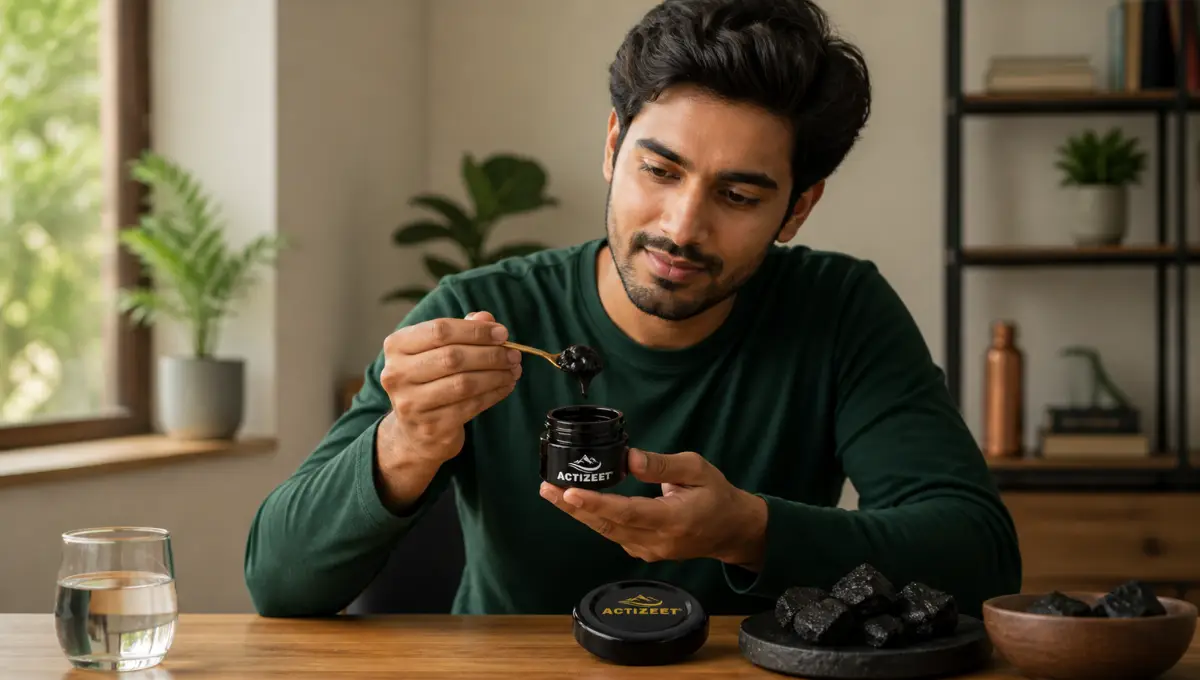
Genuine purified Shilajit is a blackish-brown, sticky, tar-like resin formed over centuries through the geological compression of plant matter and microbial activity in high-altitude mountain formations. It is collected by hand from Himalayan rock fissures above 10,000 feet, then purified through Ayurvedic or pharmaceutical processes to remove heavy metals, fungal toxins, and dangerous free-radical compounds. The purified product should be slightly pliable at room temperature, soften quickly with body warmth, dissolve completely in warm water producing an amber-golden liquid, and have a characteristic earthy, slightly sulfurous, bitumin-like aroma that is both distinctive and impossible to mistake once you have encountered it.
Test 1: The Temperature Test
Take a small pea-sized amount of the Shilajit between your fingers. Apply gentle pressure and hold it against the warmth of your palm or rub it between your thumb and forefinger. Observe what happens over 10 to 30 seconds.
Softens quickly and becomes pliable, almost sticky and tar-like, within 10 to 20 seconds. It will spread and stretch between your fingers. At room temperature (20 to 25°C) it should already be slightly soft and moldable. As it warms, it becomes increasingly fluid and flows slowly like thick molasses.
Remains hard and brittle without meaningful softening from body heat. Fake products made from wax, resin adulterants, or compressed powder may not respond to gentle body-temperature warmth the way genuine organic resin does. Synthetic or wax-based fakes maintain rigid structure under finger pressure.
Why this works: Genuine Shilajit resin has a very low melting point (around 37°C or body temperature) because its humic substance and fulvic acid matrix is naturally thermoplastic at physiological temperatures. This is a fundamental physical property of authentic resin that synthetic substitutes and compressed powders cannot replicate.
Test 2: The Water Dissolution Test
Take a small pea-sized amount of Shilajit and drop it into a glass of warm (not boiling) water. Stir gently and observe the dissolution process and the color produced over 2 to 5 minutes.
Dissolves completely into the water without leaving insoluble particles or oily residue floating on the surface. The water turns a characteristic amber to dark golden-brown color, ranging from light tea color for small amounts to dark amber for larger doses. The solution is translucent rather than opaque when held to light. No clumps or undissolved matter remain.
May dissolve partially but leaves visible undissolved particles, oily slicks on the water surface, or sediment at the bottom of the glass. Fake products colored with caramel or tar may produce very dark, opaque, murky water rather than the clear amber of genuine fulvic acid dissolution. Some fakes do not dissolve at all.
Why this works: The amber-golden color is specifically produced by fulvic acid, the primary bioactive compound in genuine Shilajit. Fulvic acid is water-soluble at all pH levels and produces its characteristic amber color upon dissolution. Substances lacking genuine fulvic acid content cannot produce this specific, translucent golden-brown dissolution color.
Test 3: The Texture and Consistency Test
Examine the texture of the Shilajit at room temperature. Press it, poke it, and observe its physical consistency, color, and surface character. This can be done immediately upon opening a new product.
At room temperature (20 to 25°C), genuine resin should be somewhat soft, slightly sticky, pliable but not liquid. It has a glossy, tar-like surface. The color is a very deep blackish-brown, occasionally with dark reddish-brown tones. It does not crumble or shatter when pressed. When you press firmly with a finger, it leaves an impression.
Compressed powder fakes may feel grainy or chalky between fingers. Wax-based fakes may feel waxy with a smooth, non-sticky surface. Products colored with additives may have a matte rather than glossy surface. Any product that crumbles easily at room temperature, feels completely rigid, or has a grainy texture is not authentic purified resin.
Test 4: The Aroma Test
Open the product and take a careful sniff of the resin. This is one of the most reliable and fastest authenticity tests available because the distinctive aroma of genuine Shilajit is produced by a complex mix of organic compounds that synthetic alternatives cannot closely replicate.
Genuine purified Shilajit has a deeply earthy, somewhat bituminous, slightly sulfurous aroma that is distinctive and unmistakable. It may have notes of aged wood, damp earth, mineral tar, and a subtle background warmth. The smell is not pleasant in a conventional sense but it is specific and consistent. Once encountered, it is impossible to mistake for anything else.
Products with added caramel have a sweet, burnt-sugar smell entirely unlike genuine resin. Tar or pitch adulterants may smell more like petroleum or road tar than earthy resin. Products with little or no Shilajit content often smell very faint or have a generic "soil" smell without the specific earthy-mineral depth of authentic material. Strongly scented products are almost always fakes.
Important note: Some people find the aroma of genuine Shilajit initially off-putting. If a Shilajit product smells pleasant, mild, or sweet at first encounter, this is a signal to investigate further, not a sign of quality.
🏔 ACTIZEET® Himalayan Shilajit Resin passes all 7 tests and comes with full sourcing transparency and laboratory quality verification.
Explore ACTIZEET® →Test 5: The Alcohol Test
Add a small piece of Shilajit to a container of rubbing alcohol (isopropyl alcohol, which is readily available in Indian pharmacies). Stir gently and observe the reaction and appearance of the resulting solution.
Genuine Shilajit does not dissolve well in alcohol. It may partially dissolve and produce a pale amber tint, but significant undissolved residue remains. This is because the primary active compounds in genuine Shilajit, particularly fulvic acid and ionic minerals, are water-soluble rather than alcohol-soluble. The separation of soluble and insoluble fractions in alcohol is characteristic of authentic organic resin.
Products adulterated with wax, resin additives, or certain synthetic compounds may dissolve very readily in alcohol, producing a uniform colored solution without significant undissolved matter. Complete dissolution in alcohol is a warning sign for adulteration with alcohol-soluble compounds not found in genuine purified Shilajit.
Test 6: The Fire Test
Take a tiny piece of Shilajit and carefully bring it close to a flame (a lighter or candle). Observe what happens to the resin. Exercise appropriate caution during this test and do not heat more than a small amount.
Genuine Shilajit bubbles and swells when heated, releasing a small amount of vapor with its characteristic earthy-mineral aroma. It does not burst into flame easily. The bubbling behavior is caused by the volatile organic compounds and water content of the resin expanding under heat. When heated, it forms bubbles and then a small amount of ash, which is typically fine and slightly grayish.
Products containing wax or synthetic resins may melt cleanly and then ignite easily, burning like a candle rather than bubbling. Compressed powder products may simply scorch without producing the characteristic bubbling and vapor. Products containing caramel or sugar compounds may produce a burnt-sweet smell and char rather than producing the mineral-earthy vapor of authentic resin.
Test 7: The Cold Test
Place a small amount of Shilajit in the refrigerator or freezer for 15 to 30 minutes, then remove it and attempt to break or crumble it. This tests the thermoplastic properties that are fundamental to genuine resin composition.
After chilling, genuine Shilajit becomes significantly harder and more brittle. A cold sample will shatter or snap when enough force is applied, similar to very cold toffee or hard resin. This contrasts clearly with its softness and pliability at body temperature, demonstrating the authentic thermoplastic behavior of genuine humic substance resin. The brittleness at cold and pliability at warm is a temperature-dependent behavior unique to authentic organic resin.
Some fake products maintain similar consistency regardless of temperature because they are made of materials that do not have the same thermoplastic properties as authentic Shilajit resin. Wax-based fakes may become harder but in a different texture. Compressed powder products show no meaningful change in texture between cold and room temperature conditions.
The key combination: The temperature test and cold test together are extremely diagnostic. If a substance is soft and pliable at body temperature and brittle when cold, it is behaving like authentic Shilajit resin. If it maintains the same consistency in both conditions, it is very unlikely to be genuine.
Real vs Fake Shilajit: Complete Comparison Table
| Test / Property | Genuine Shilajit | Fake / Adulterated |
|---|---|---|
| Texture at room temp | Soft, pliable, slightly sticky, glossy surface | Hard, brittle, grainy, or waxy |
| Response to body heat | Softens and flows within 10 to 20 seconds | Remains hard or rigid |
| Response to cold | Becomes brittle and snaps under pressure | Little or no meaningful change |
| Water dissolution | Dissolves completely, amber-golden color, translucent | Partial dissolution, murky, oily residue, or sediment |
| Aroma | Earthy, bituminous, mineral, slightly sulfurous | Sweet, caramel, petroleum, mild, or generic |
| Alcohol behavior | Partial dissolution with insoluble residue | Fully dissolves with no significant residue |
| Fire behavior | Bubbles, vapors, does not ignite easily | Burns cleanly, melts, or scorches without bubbling |
| Color in water | Clear amber-golden to dark amber, translucent | Opaque black, murky, or very pale with no golden tint |
| Soluble particles | None remaining after complete dissolution | Visible undissolved particles or oily floating material |
Red Flags to Check Before You Even Open the Package
You can identify many fake Shilajit products before performing any physical tests by examining the packaging, labeling, and selling environment carefully.
- No altitude or origin information. Genuine high-quality Shilajit always comes with clear information about collection altitude and geographical origin. Vague claims of "Himalayan origin" without specific region information or altitude data are marketing language, not quality verification.
- No purification information. Raw Shilajit is dangerous and must be purified before consumption. Any product that does not clearly state its purification process should not be consumed regardless of other quality indicators.
- No heavy metal testing documentation. Given that Shilajit comes from geological formations that can contain lead, arsenic, mercury, and cadmium, independent third-party heavy metal testing is not optional for a responsible Shilajit producer. Products without this testing documentation carry genuine safety risk.
- Suspiciously low prices. Genuine purified Himalayan Shilajit from high-altitude formations is expensive to collect, purify, and test. Products priced dramatically below market rate for authentic Shilajit are not authentic Shilajit.
- Powder form marketed as more convenient. Powdered Shilajit loses much of the resin matrix that gives the authentic product its thermoplastic properties and its compound synergy. While some powders are legitimate, the resin form is the most authentic and most bioavailable format. Be especially rigorous about testing powder products.
- Very dry, crystalline, or hard at room temperature out of the packaging. Without performing any tests: authentic Shilajit resin at room temperature should already show signs of the pliable, slightly soft character that distinguishes it from fake products. If it looks like a hard rock at room temperature, begin the cold and heat tests immediately.
ACTIZEET® Himalayan Shilajit Resin passes all 7 tests in this guide, every time. Collected from verified formations above 16,000 feet. Purified to pharmaceutical safety standards. Third-party tested for fulvic acid content, DBP presence, and heavy metal safety. The product that does not need to hide from testing.
🏔 Shop ACTIZEET® Himalayan Shilajit Resin →Why ACTIZEET® Himalayan Shilajit Passes Every Test
When you understand what genuine Shilajit is and how to test for it, the quality requirements become very clear. ACTIZEET® meets every one of them.
- High-altitude verified collection above 16,000 feet. The geological formations at this altitude produce Shilajit with the highest fulvic acid and dibenzo-alpha-pyrone concentrations documented in published research comparisons. Collection altitude is specified clearly for ACTIZEET® customers
- Pharmaceutical-grade purification process. Traditional Ayurvedic Shodhana combined with modern safety processing removes the heavy metals, fungal toxins, and polymeric quinones that make raw Shilajit unsafe. The purification process is documented and transparent
- Third-party heavy metal certification every batch. Lead, arsenic, mercury, and cadmium are independently tested in every production batch to confirm compliance with international supplement safety standards. Certificates are available for verification
- Authentic resin form that passes all physical tests. ACTIZEET® Shilajit is delivered in the authentic resin format: soft and pliable at room temperature, dissolving to a clear amber in warm water, with the distinctive earthy-mineral aroma that confirms genuine composition
- Verified fulvic acid content. The fulvic acid percentage, the primary quality marker for Shilajit therapeutic potency, is tested and verified in every ACTIZEET® batch because it is the most important single indicator of whether a Shilajit product will actually deliver the benefits attributed to it
- Transparent brand with accessible customer information. ACTIZEET® provides clear product information, responds to customer questions, and stands behind its quality claims with documentation rather than marketing language alone
Frequently Asked Questions
Protect Your Health and Your Money: Test Before You Trust
India's Shilajit market will continue to have a fake product problem as long as genuine Shilajit commands the premium prices its authentic therapeutic value justifies. The only lasting protection for buyers is knowledge: understanding what genuine Himalayan Shilajit actually is, what it looks, smells, feels, and behaves like, and being willing to test any new product before consuming it regularly.
The 7 tests in this guide are practical, fast, and reliable. They do not require a laboratory. They do not require special equipment. They require only the willingness to observe and compare what you see against what genuine purified Shilajit resin is known to do. A product that passes the water dissolution test, the temperature tests, and the aroma test is passing the most important authenticity checkpoints that matter for your confidence in daily supplementation.
At ACTIZEET®, we build every batch of Himalayan Shilajit Resin to pass these tests because that is simply what authentic purified Shilajit does. High-altitude Himalayan collection. Pharmaceutical-grade purification. Third-party heavy metal testing. Verified fulvic acid content. And the genuine earthy-mineral aroma, amber water dissolution, and body-warmth pliability that tell you immediately you are holding the real thing.
Latest From Our Blog

Shilajit for Male: Restore the Strength Nature Gave You
Explore the powerful benefits of Shilajit for male health. Improve...

Best Shilajit for Testosterone: What the Clinical Research Actually Says and What to Look for Before You Buy
Looking for the best Shilajit for testosterone? Discover the clinical...

Amino Acids in Shilajit: Which Ones Are Present, What They Do, and Why the Fulvic Acid Context Makes All the Difference
Discover the amino acids in shilajit and why they matter...

Shilajit Benefits for Men: Testosterone, Energy & True Vitality
Discover the science-backed shilajit benefits for men including testosterone support,...