
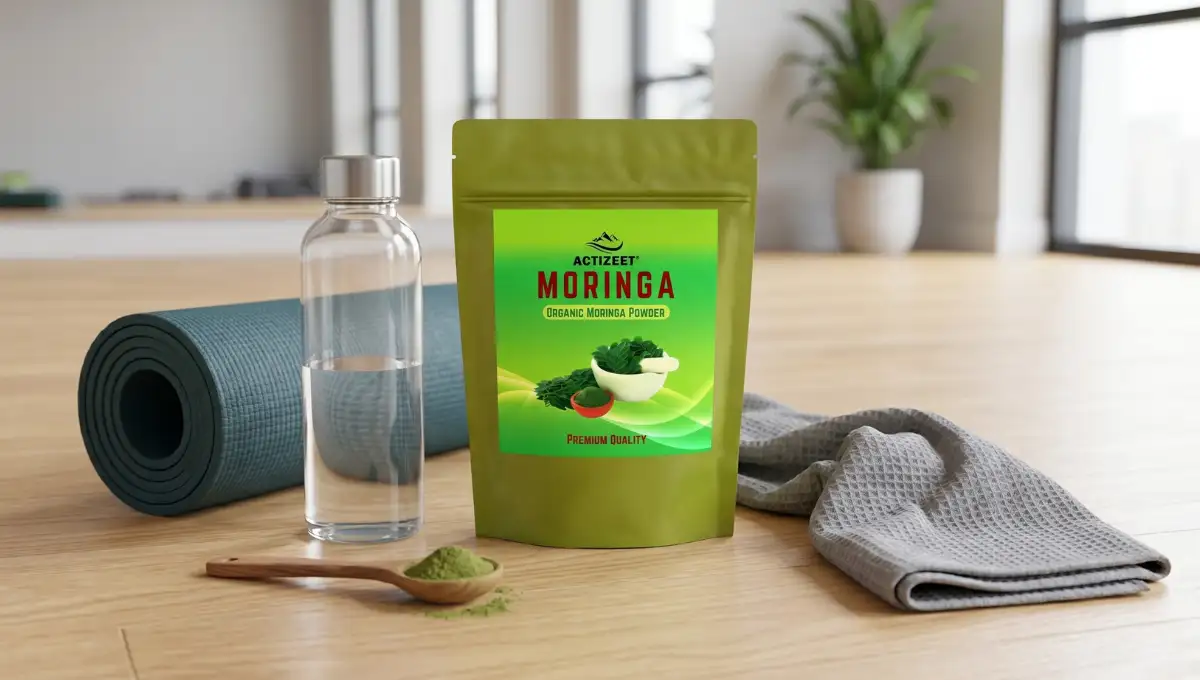
Walk into any gym today and you will find shelves lined with synthetic pre-workouts, protein concentrates, and recovery blends packed with ingredients most people cannot pronounce. What you will rarely find is a conversation about moringa powder for gym performance, even though the science behind it is increasingly hard to ignore.
Moringa oleifera leaf powder is not a new supplement. It has been used in India and across tropical Asia for thousands of years as a food and medicine. What is new is the growing body of clinical research confirming that moringa delivers real, measurable benefits for athletic performance, muscle recovery, endurance, and energy, without the artificial additives, stimulant crashes, or digestive discomfort common to commercial gym supplements.
Whether you train for strength, endurance, fat loss, or general fitness, this guide covers everything you need to know about moringa powder for gym use: what it contains, how it works in an active body, when to take it, how it compares to popular supplements, and why quality matters enormously.
Why Gym-Goers Are Turning to Moringa Powder
The shift toward moringa powder for gym use is driven by a simple frustration: most commercial sports supplements do one thing reasonably well but do nothing for the dozens of other nutritional needs an active body has. A pre-workout boosts energy for 90 minutes and then drops you. A protein shake delivers amino acids but no vitamins, no minerals, no antioxidants.
Moringa is different because it works at multiple levels simultaneously. It is a dense source of complete protein, iron, calcium, vitamins C and E, B-complex vitamins, and a broad spectrum of antioxidant phytocompounds. For someone who trains regularly, this means moringa can function as a pre-workout energy supporter, a post-workout recovery accelerator, and a daily nutritional foundation, all in one.
For Indian gym-goers in particular, moringa has cultural familiarity and deep Ayurvedic roots. The drumstick plant (sahjan) has always been valued for strength and vitality. Today, modern research is simply putting numbers to what traditional practitioners already knew.
Moringa's Nutritional Profile for Athletes
Before discussing specific gym benefits, it is worth understanding what moringa leaf powder actually contains per 100 grams, because these numbers are genuinely exceptional:
| Nutrient | Amount per 100g Moringa Powder | Athlete Relevance |
|---|---|---|
| Protein | 22–28g (complete, all 9 EAAs) | Muscle repair and growth |
| Iron | 28–32mg | Oxygen transport, stamina |
| Calcium | ~1,700mg | Bone density, muscle contraction |
| Vitamin C | ~220mg | Collagen synthesis, immune defense |
| Potassium | ~1,300mg | Electrolyte balance, cramp prevention |
| Magnesium | ~147mg | Energy conversion, sleep quality |
| Antioxidants (polyphenols, flavonoids) | 46+ identified compounds | Muscle oxidative stress protection |
This is not a list of isolated nutrients added to a formula. Every compound in moringa leaf powder exists naturally in the plant, making them more bioavailable and better absorbed than their synthetic equivalents in most sports supplements.
Moringa Powder for Muscle Recovery and Repair
Muscle recovery is where moringa powder delivers some of its most valuable gym benefits. Every training session creates microscopic tears in muscle fibers. Recovery is the process of repairing those fibers larger and stronger than before. This process depends on an adequate supply of amino acids, antioxidants to neutralize exercise-induced free radicals, and anti-inflammatory compounds to resolve post-workout inflammation without completely suppressing the adaptive response.
Research published in the journal Antioxidants found that moringa oleifera leaf extract demonstrated strong antioxidant potential in muscle cells (C2C12 myotubes) exposed to oxidative stress, allowing the cells to better cope with an oxidative insult. The researchers concluded that moringa could represent a genuinely useful nutritional strategy for preserving muscle health after intense physical effort.
A separate study published in Phytomedicine (2024) involving 44 young male adults found that those supplementing with moringa leaf extract for 30 days showed enhanced performance in push-up and treadmill endurance tests compared to the placebo group, alongside improved post-exercise energy metabolism and antioxidant function. These are not animal studies or theoretical claims. This is clinical evidence in real human subjects.
How Moringa Boosts Endurance and Reduces Fatigue
Endurance athletes and anyone who does longer training sessions (cardio, HIIT, circuit training) will find moringa particularly beneficial for fighting fatigue. The anti-fatigue mechanisms of moringa are well-studied and work through several distinct pathways.
Reducing Blood Lactate Accumulation
During intense exercise, lactate builds up in the muscles faster than it can be cleared, contributing to that familiar burning sensation and early fatigue. Research on moringa extract in exercise contexts has found that supplementation can reduce serum lactate levels and blood urea nitrogen (BUN), both markers of exercise-induced fatigue and muscle breakdown. Lower BUN levels indicate reduced protein catabolism during training, meaning the body is preserving muscle tissue more efficiently.
AMPK Pathway Activation
A 2023 study published in the Journal of the Science of Food and Agriculture found that moringa leaf ethanol extract reduced fatigue through the AMPK-linked metabolic route, enabling better control of energy metabolism and enhancing antioxidant enzyme activity. AMPK (AMP-activated protein kinase) is often called the body's master energy switch, regulating how cells generate and use fuel. Activating AMPK improves fat oxidation for energy and reduces the early depletion of muscle glycogen, which directly extends endurance.
Improved Oxygen Efficiency
Separate research on endurance performance found that moringa leaf powder infusion over 7 days improved 20km cycling time-trial performance in active participants, reducing the energy required and helping them maintain higher effort for longer. This suggests moringa supports oxygen utilization efficiency during sustained aerobic effort, a quality that translates directly to better performance in distance runs, cycling, rowing, and sustained gym circuits.
Moringa as a Plant-Based Protein Source for Gym Training
Protein is the central macronutrient for muscle building, and one of the most compelling arguments for moringa powder in a gym nutrition plan is its amino acid profile. Moringa leaf powder contains all nine essential amino acids (EAAs), making it one of the very few plant foods that qualifies as a complete protein.
Key amino acids relevant to muscle growth and repair include:
- Leucine: The primary trigger for muscle protein synthesis. Moringa contains leucine in meaningful quantities, which signals muscle cells to begin the repair and growth process after training.
- Isoleucine and Valine: The other two branched-chain amino acids (BCAAs), both present in moringa, supporting energy metabolism during exercise and reducing muscle breakdown.
- Lysine: Critical for collagen production, which supports tendons, ligaments, and joint health, all of which are stressed during regular gym training.
- Methionine: Supports liver function and detoxification, important for athletes who metabolize large amounts of protein daily.
While moringa is not a replacement for a primary protein source like eggs, lentils, paneer, or whey if you use it, it serves as an excellent supplemental protein that also delivers vitamins, minerals, and antioxidants alongside its amino acids. No conventional protein supplement does that.
Anti-Inflammatory Action: The Key to Faster Gym Recovery
Post-workout soreness (DOMS, delayed onset muscle soreness) is one of the most common barriers to consistent training. It discourages people from returning to the gym the next day and can accumulate into chronic fatigue if recovery is inadequate. Moringa's anti-inflammatory compounds directly address this problem.
The relevant bioactive compounds here are quercetin, kaempferol, and isothiocyanates. According to research published in PubMed Central, these compounds exert anti-inflammatory effects through inhibition of pro-inflammatory enzymes cyclooxygenase and lipoxygenase (the same targets as common anti-inflammatory medications), regulation of cytokine production via the NF-kB pathway, and antioxidant activity that reduces oxidative stress in inflamed tissue.
For gym-goers, this translates to less soreness in the 24 to 48 hours after a hard session, reduced joint inflammation during high-volume training phases, and a shorter recovery window between workouts. Consistent moringa use over several weeks can meaningfully reduce C-reactive protein (CRP), a standard blood marker of systemic inflammation. Lower baseline inflammation means the body starts each training session in a better physiological state.
This is particularly valuable for athletes training 5 to 6 days per week or those performing high-impact exercise like heavy lifting, sprinting, or contact sports.
Iron, Oxygen Delivery, and Workout Stamina
Iron deficiency is one of the most common, and most underdiagnosed, causes of poor gym performance. When iron levels are low, hemoglobin production drops, and less oxygen reaches the working muscles. The result is early fatigue, breathlessness during moderate exercise, slow recovery, and a persistent feeling of heavy legs or arms during training.
Moringa leaf powder is exceptionally rich in non-heme iron, providing approximately 28 to 32mg per 100 grams. When combined with vitamin C (which moringa also contains in high amounts), non-heme iron absorption improves significantly, since vitamin C converts iron into its more bioavailable ferrous form.
For Indian gym-goers, especially vegetarians and those who follow plant-based diets, iron deficiency is a genuine performance limiting factor. Moringa is one of the most practical and accessible ways to address iron status through food, rather than isolated iron supplements that often cause digestive discomfort.
Better iron status means better oxygen delivery, improved VO2 max (the maximum oxygen your body can utilize during exercise), greater endurance capacity, and noticeably more energy during training sessions.
Natural Energy for the Gym Without the Crash
Most gym-goers are familiar with the pre-workout cycle: take a stimulant-heavy formula, train hard for 90 minutes, and then experience a noticeable energy drop, sleep disruption, and sometimes anxiety or heart palpitations. This is not how training is supposed to feel.
Moringa powder provides sustained, clean energy through nutritional mechanisms rather than nervous system stimulation:
- B-vitamin complex: Vitamins B1, B2, B3, and B6 are cofactors in the metabolic pathways that convert carbohydrates, fats, and proteins into usable cellular energy (ATP). When these vitamins are adequately supplied, energy production is more efficient and sustained throughout training.
- Iron for aerobic energy: As discussed, adequate iron means adequate oxygen delivery to mitochondria, the cellular structures that produce energy. More oxygen to mitochondria equals more energy produced aerobically, which is cleaner and more sustainable than anaerobic glycolysis.
- Magnesium: Essential for over 300 enzymatic reactions, including ATP synthesis. Low magnesium is directly associated with reduced exercise capacity and greater muscle fatigue during training.
- Cortisol regulation: Animal studies have shown that moringa extract can reduce cortisol levels. Chronically elevated cortisol from overtraining and inadequate nutrition impairs energy production, increases muscle breakdown, and disrupts sleep. Moringa's mild adaptogenic properties help keep cortisol in a healthier range.
The result of all this is not a sudden jolt of energy followed by a crash. It is a steadier, more reliable energy baseline that shows up over days and weeks of consistent supplementation.
Moringa Powder for Fat Loss and Body Composition
Moringa supports body composition improvement through several interconnected mechanisms, none of which involve thermogenic stimulation or appetite suppression through caffeine-like compounds.
First, moringa helps stabilize blood sugar levels by slowing carbohydrate absorption and improving insulin sensitivity. Stable blood sugar means fewer cravings, less likelihood of fat storage after meals, and more consistent energy for training. This is particularly valuable during a cutting phase when caloric restriction can cause energy spikes and crashes that undermine training consistency.
Second, by activating AMPK pathways as mentioned in the endurance section, moringa encourages the body to prefer fat as a fuel source during moderate-intensity exercise. AMPK activation is associated with improved fat oxidation, which is exactly what body composition-focused gym-goers want to see.
Third, the high fiber content of moringa powder promotes satiety and supports digestive regularity, which matters for anyone on a structured nutrition plan. Digestive health directly affects how well nutrients are absorbed, including the protein and micronutrients needed for muscle retention during a cut.
Moringa will not produce dramatic fat loss on its own. But as part of a structured training and nutrition plan, it supports the metabolic environment that makes fat loss more efficient and sustainable.
Moringa vs. Whey Protein and Synthetic Supplements
This is not an argument that moringa should replace whey protein or all other supplements. It is an honest comparison of what each offers.
| Feature | Moringa Powder | Whey Protein | Typical Pre-Workout |
|---|---|---|---|
| Protein per serving | ~6–8g (2 tsp serving) | ~24–28g | Minimal or none |
| Vitamins and minerals | Comprehensive (natural) | Minimal (some added) | Synthetic B-vitamins only |
| Antioxidants | 46+ natural compounds | None | None |
| Anti-inflammatory | Yes (quercetin, isothiocyanates) | No | No |
| Lactose-free | Yes | No (unless isolate) | Usually yes |
| Stimulant crash risk | None | None | Common |
| Cost (approx.) | Low (₹300–800/kg) | High (₹2,000–5,000/kg) | High per serving |
The smart approach for most gym-goers is to use moringa as a daily nutritional base alongside a quality protein source. Moringa fills the gaps that protein powders and pre-workouts leave wide open: micronutrient support, antioxidant protection, anti-inflammatory action, and sustained energy without stimulants.
How to Use Moringa Powder for Gym Results
Moringa powder for gym use is most effective when taken consistently at the right times and in adequate doses. Here is a practical framework:
Recommended Dosage
For active individuals, 3 to 5 grams (roughly 1 to 2 teaspoons) per day is an effective starting dose. Serious athletes or those using moringa specifically for performance and recovery can increase to 5 to 10 grams daily. Start at the lower end and increase gradually over 1 to 2 weeks to allow your digestive system to adjust.
Pre-Workout (30–45 Minutes Before Training)
Mix 1 teaspoon of moringa powder into a glass of water with lemon juice, or blend it into a pre-workout smoothie with a banana and a handful of oats. The iron and B-vitamins support oxygen transport and cellular energy; the antioxidants prime your cells to manage exercise-induced oxidative stress from the start.
Post-Workout (Within 30–60 Minutes After Training)
This is arguably the most important time to use moringa powder for gym recovery. Combine 1 to 2 teaspoons with your protein shake, Greek yogurt, or a post-workout smoothie. The amino acids support muscle protein synthesis, while the antioxidants and anti-inflammatory compounds begin resolving exercise-induced damage. Post-workout is when your muscles are most receptive to nutrients, so this window matters.
Morning (Daily Nutritional Foundation)
For overall athletic nutrition, moringa powder added to warm water, green tea, or morning oats every day builds a consistent nutritional foundation that compounds over time. Daily use is how you see sustained improvements in energy, recovery speed, and performance benchmarks.
Practical Recipes for Gym-Goers
- Green Muscle Smoothie: 1 banana, 1 cup almond milk, 1 tbsp peanut butter, 1 tsp moringa powder, your protein scoop. Blend and drink post-workout.
- Pre-Workout Green Boost: 1 tsp moringa powder, juice of half a lemon, a pinch of black pepper, 300ml warm water. Stir and drink 30 minutes before training.
- Recovery Dal Booster: Stir 1 tsp moringa powder into your dal or sabzi after cooking (off heat) for a hidden nutrition upgrade with zero taste change.
Who Should Exercise Caution
Moringa is safe for most adults. People on blood pressure medication, blood thinners, or diabetes medication should consult a healthcare provider before starting moringa, as it can amplify the effects of these medications. Pregnant women should avoid high doses of moringa root or bark (the powder from leaves is generally considered safe in food amounts).
Why ACTIZEET® Moringa Powder Is the Athlete's Choice
Quality is everything when it comes to moringa powder for gym use. The difference between a well-processed moringa powder and a poorly made one is not just taste. It is the difference between preserving or destroying the heat-sensitive antioxidants, flavonoids, and vitamin C that make moringa effective for performance and recovery.
ACTIZEET® Moringa Powder is manufactured to meet the demands of serious health-conscious consumers and athletes:
- 100% pure moringa leaf powder with zero fillers, zero additives, and zero artificial preservatives
- Low-temperature drying process that preserves the complete phytonutrient and antioxidant profile of fresh leaves
- Fine-milled texture for smooth blending into shakes, smoothies, and water without grittiness
- Lab-tested for heavy metals, pesticide residues, and microbial safety before every batch is released
- Vegan, non-GMO, and free from gluten, lactose, and synthetic colors
- Sourced from clean-cultivation farms to ensure consistent leaf quality and nutrient density
ACTIZEET® is trusted by thousands of health-focused Indians who want the benefits of moringa without compromise. If you are serious about your training and your health, start with a moringa powder that takes quality just as seriously.
Shop ACTIZEET® Moringa Powder →
Free shipping available. 100% pure. No compromises.
Frequently Asked Questions: Moringa Powder for Gym
Can I take moringa powder before a workout?
Yes. Taking moringa powder 30 to 45 minutes before training supports iron-based oxygen delivery, provides B-vitamins for cellular energy metabolism, and loads your system with antioxidants before exercise-induced oxidative stress begins. It is not a stimulant pre-workout but a nutritional one, which is a meaningfully different and more sustainable approach.
Does moringa help with muscle gain?
Moringa supports the conditions necessary for muscle gain: it provides complete protein with all essential amino acids, reduces post-workout inflammation that impairs recovery, protects muscle cells from oxidative damage, and helps maintain hormone balance including cortisol regulation. It is not a mass gainer by itself but is a strong nutritional support for a muscle-building program when combined with adequate total protein intake and progressive training.
Is moringa powder good for gym recovery?
Yes, and this is arguably its strongest gym application. Clinical research has directly shown that moringa supplementation improves post-exercise antioxidant function and energy metabolism in human subjects. Its anti-inflammatory compounds reduce DOMS, and its complete amino acid profile supports muscle fiber repair. Post-workout is one of the best times to take moringa.
How long does moringa take to show results for gym performance?
Most people notice improved energy levels and reduced soreness within 1 to 2 weeks of consistent daily use. Measurable changes in endurance markers, strength performance, and body composition typically show up after 4 to 8 weeks of consistent supplementation. Research studies showing performance improvements used supplementation periods of 30 days or more, so patience and consistency matter.
Can moringa powder replace a multivitamin for gym-goers?
Moringa provides a broad spectrum of naturally occurring vitamins and minerals that covers much of what a standard multivitamin offers, often in more bioavailable forms. It is not a direct clinical replacement but is arguably a more holistic and better-absorbed alternative for most active individuals. Many gym-goers who switch to daily moringa powder find they no longer feel the need for separate multivitamin supplementation.
Is moringa safe to take every day?
Yes. Daily moringa leaf powder consumption at recommended doses (3 to 10 grams for active individuals) is considered safe and is actually the optimal approach for athletes, since the benefits are cumulative and depend on consistent nutritional support over time. There are no known adverse effects of regular leaf powder use in healthy adults.
Final Thoughts: Moringa Powder Deserves a Place in Your Gym Nutrition Stack
Moringa powder for gym use is not a trend. It is a practical, science-backed nutritional strategy that addresses real performance gaps that most commercial supplements ignore: micronutrient density, natural anti-inflammatory support, iron-based stamina, antioxidant protection for muscle cells, and sustained energy without stimulants.
The research from human clinical studies published in peer-reviewed journals shows real improvements in exercise performance, endurance, and recovery with moringa supplementation. Combined with its exceptional safety record and the fact that it supports gut health, bone density, hormonal balance, and immune function as added benefits, moringa may be the most practical and cost-effective single addition you can make to your gym nutrition plan.
Use it consistently, choose a quality product, and give it 4 to 6 weeks to show what it can do.
Ready to Train Smarter?
Give your body the real nutrition it needs to perform, recover, and grow. Try ACTIZEET® Moringa Powder — pure, potent, and made for people who take health seriously.
Get ACTIZEET® Moringa Powder →References & Sources
- Dong W, et al. — Moringa oleifera leaf extracts improve exercise performance in young male adults: A pilot study. Phytomedicine, 2024. pubmed.ncbi.nlm.nih.gov
- Ceci R, et al. — Moringa oleifera Leaf Extract Protects C2C12 Myotubes against H2O2-Induced Oxidative Stress. Antioxidants (Basel), 2022. pubmed.ncbi.nlm.nih.gov
- Bian X, et al. — Anti-fatigue properties of the ethanol extract of Moringa oleifera leaves in mice. Journal of the Science of Food and Agriculture, 2023. pubmed.ncbi.nlm.nih.gov
- PMC — Bioactive Compounds in Moringa oleifera: Anti-Inflammatory Properties. pmc.ncbi.nlm.nih.gov
Latest From Our Blog

Moringa Powder: Expiration Date & Shelf Life Explained
Discover the expiration of moringa powder and its impact on...

Moringa for Weight Loss: Nature’s Secret to a Fitter You
Discover how Moringa for weight loss can boost your metabolism,...

Moringa Powder Can Increase Testosterone: A Natural Boost for Men’s Health
Discover how moringa powder can increase testosterone naturally. Learn benefits,...

Unveiling the Palate Pleasures: How Moringa Powder Tastes
Discover the intricate taste of moringa powder, from earthy undertones...