
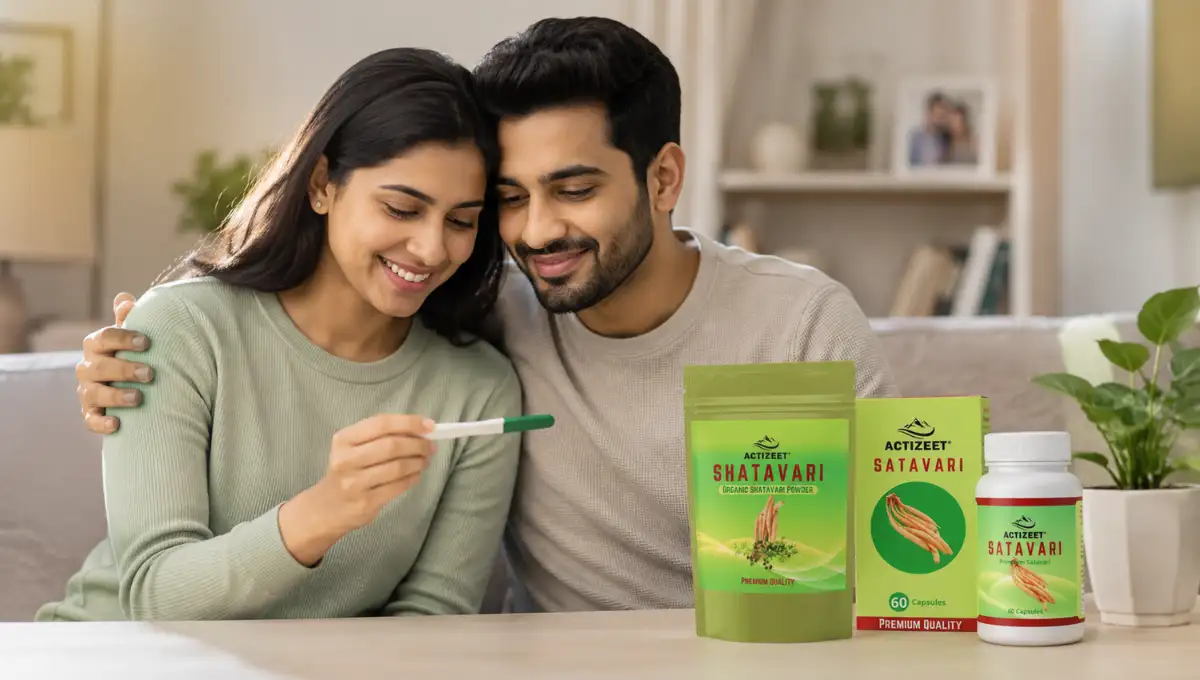
Shatavari for Fertility: How the Queen of Herbs Supports Hormonal Balance, Ovarian Health, and Reproductive Vitality Across Every Stage of a Woman's Life
Asparagus racemosus has been Ayurveda's most revered women's reproductive tonic for over 2,000 years. Today, Springer Nature, PubMed, and PMC-published research is confirming the mechanisms behind the ancient clinical wisdom, establishing Shatavari as one of the most pharmacologically credible natural fertility support herbs available.
The name Shatavari comes from Sanskrit and translates as "she who possesses a hundred husbands" or, more precisely, "one who has a hundred roots" reflecting both the plant's tuberous root structure and its traditional reputation for restoring the reproductive vitality that supports a flourishing family life. This ancient naming captures something important: in Ayurvedic clinical tradition, Shatavari was not prescribed occasionally for minor complaints. It was considered the foundational women's health tonic, prescribed across the entire arc of a woman's reproductive life from puberty through pregnancy to menopause, and specifically central to Ayurvedic approaches to female infertility and reproductive difficulty.
Modern research is increasingly validating this ancient clinical priority. A Springer Nature-published systematic review in Current Nutrition Reports specifically evaluated the effects of Shatavari on reproductive health and confirmed that recent investigations suggest Shatavari has the potential to enhance fertility rates and improve breast milk quality, with the active compounds identified as the saponins (particularly Shatavarins) and flavonoids responsible for these effects. A PubMed-published study proposed that Shatavari may improve female reproductive health complications including hormonal imbalance, PCOS, follicular growth and development, oocyte quality, and infertility, possibly by reducing oxidative stress and increasing antioxidant levels. And a double-blind, randomized, placebo-controlled trial published in the International Journal of Women's Health confirmed that Shatavari root extract is a safe, effective, and well-tolerated treatment for improving women's sexual health and wellbeing.
This guide explains exactly how Shatavari works for fertility, what the research confirms, who it is most likely to benefit, and how ACTIZEET® Shatavari products deliver this therapeutic tradition in the most authentic and accessible form available in India today.
This guide covers Shatavari as a complementary Ayurvedic support for fertility and reproductive wellness, not as a standalone fertility treatment. Infertility is a medical condition with multiple potential causes that require professional evaluation and treatment. Always consult a gynecologist or reproductive specialist for infertility concerns. Shatavari works best as a complementary nutritional support alongside appropriate medical evaluation and care.
What Is Shatavari and Why Ayurveda Calls It the Queen of Herbs
Shatavari (Asparagus racemosus Willd.) is a climbing shrub native to India, Sri Lanka, and the Himalayas, growing in rocky soils across the subcontinent from sea level to 1,300 meters altitude. The medicinal part is the tuberous root system: long, fleshy, white roots that cluster in large bundles around the plant's base. These roots contain the steroidal saponins, flavonoids, alkaloids, and other bioactive compounds that give Shatavari its therapeutic properties.
In Ayurveda, Shatavari occupies a unique position as the pre-eminent women's health tonic. It is classified as a Rasayana (rejuvenating tonic) and specifically as a Stanya (galactagogue), Garbhaposhak (nourishing to the fetus), Shukrala (nourishing to reproductive tissues), and Vajikarana (reproductive tonic) herb. These classifications reflect a comprehensive recognition of Shatavari's ability to support women's health across every reproductive life stage, a recognition earned through millennia of empirical clinical observation in Ayurvedic practice.
Shatavari is referred to as the "Queen of Herbs" in Ayurveda because it is traditionally classified as a Rasayana known to promote reproductive health and overall wellbeing in women. The royal title reflects the ancient clinical consensus across Ayurvedic traditions that no other herb matched Shatavari's comprehensive, sustained support for the female reproductive system specifically. This 2,000-year-old clinical prioritization is now being validated by contemporary research on its specific bioactive compounds and mechanisms.
Active Compounds in Shatavari Responsible for Fertility Benefits
| Compound | Class | Primary Fertility-Related Action |
|---|---|---|
| Shatavarins (I–X) | Steroidal Saponins | Progesterone-enhancing properties; estrogen-mimicking activity; modulate endocrine function; primary active fraction for reproductive health |
| Diosgenin | Steroidal Saponin | Precursor for steroid hormone synthesis; FSH and LH modulation; ovarian follicular development support |
| Quercetin and Rutin | Flavonoids | Antioxidant ovarian protection; anti-inflammatory; antidepressant (via ROS scavenging); estrogen receptor modulation |
| Racemoside A, B, C | Saponins | Antioxidant protection of oocytes; immunomodulatory; adaptogenic stress protection |
| Asparagamine A | Polycyclic Alkaloid | Anti-tumor; cytoprotective; neuroprotective; anti-stress adaptogenic activity |
| Racemofuran / Racemosol | Furan / Terpenoid | Antioxidant; anti-inflammatory; cytoprotective activity relevant to reproductive tissue health |
| Kaempferol | Flavonoid | Antioxidant; anti-inflammatory; phytoestrogenic; protects ovarian granulosa cells from oxidative damage |
| Beta-Sitosterol | Phytosterol | Phytoestrogenic activity; cholesterol-balancing (relevant to PCOS hormonal profile); anti-inflammatory |
The steroidal saponins, particularly the Shatavarins, are the dominant fertility-relevant compound class in Shatavari root. Steroidal saponins share structural similarity with human steroid hormones including estrogen and progesterone. This structural relationship is why Shatavari can modulate hormonal signaling in the hypothalamic-pituitary-ovarian (HPO) axis: the Shatavarins interact with estrogen receptors and support the hormonal regulatory mechanisms that govern the menstrual cycle, follicular development, ovulation, and corpus luteum function. A 2020 study specifically confirmed Shatavari's targeting of estrogen receptor alpha through in-vitro and in-silico mechanistic study, establishing the molecular basis for the phytoestrogenic activity that ancient Ayurveda observed clinically without knowing the mechanism.
Hormonal Balance: How Shatavari Supports the Hormones Fertility Requires
Healthy fertility depends on precise hormonal orchestration across the monthly menstrual cycle. Follicle-stimulating hormone (FSH) stimulates follicular development in the ovary. Estrogen rises as the dominant follicle grows. The luteinizing hormone (LH) surge triggers ovulation. Progesterone rises from the corpus luteum after ovulation to prepare the endometrium for implantation. And if fertilization does not occur, progesterone falls and the cycle resets. Any disruption in this hormonal sequence can impair fertility through multiple mechanisms: anovulation (failure to ovulate), poor follicular development, thin endometrial lining, inadequate corpus luteum function, or menstrual irregularity that makes timing conception difficult.
A systematic review published in Springer Nature's Current Nutrition Reports, "Shatavari (Asparagus racemosus): A Promising Ally for Fertility," systematically evaluated the effects of Shatavari on reproductive health, focusing on active constituents, hormonal effects, and impact on both female and male fertility. The review confirmed that recent investigations suggest Shatavari has the potential to enhance fertility rates and improve breast milk quality and quantity, making it important for postpartum care. The review identified saponins and flavonoids as the primary active compounds responsible for fertility enhancement, noting that the primary bioactive constituents include steroidal saponins (Shatavarins), which have demonstrated progesterone-enhancing and estrogen-mimicking properties in preclinical studies. Phytoestrogens in Shatavari are believed to modulate estrogenic activity by binding to estrogen receptors, contributing to the herb's comprehensive hormonal support activity.
The specific hormonal contributions of Shatavari are most relevant for women with estrogen deficiency or dysregulation (such as women with amenorrhea, anovulation, or thin endometrial lining), women with luteal phase defect (insufficient progesterone after ovulation), and women with the hormonal imbalance patterns associated with PCOS, thyroid dysfunction, or stress-driven HPO axis suppression. For these specific hormonal presentations, Shatavari's phytoestrogenic and progesterone-enhancing Shatavarin compounds provide targeted hormonal support that addresses the specific endocrine deficits most associated with impaired fertility.
Shatavari for PCOS: Addressing India's Most Common Fertility Challenge
PCOS (polycystic ovary syndrome) is the most common endocrine disorder in women of reproductive age, affecting an estimated 15 to 20% of Indian women. It is characterized by irregular or absent ovulation, elevated androgens (male hormones), insulin resistance, and the characteristic polycystic ovarian appearance on ultrasound. PCOS is the leading cause of female infertility in India and globally, and it represents the reproductive health condition where Shatavari's multi-mechanism profile is most comprehensively relevant.
The PubMed-published review proposed that Shatavari may improve female reproductive health complications including hormonal imbalance, polycystic ovarian syndrome, follicular growth and development, oocyte quality, and infertility. The PCOS-specific relevance of Shatavari works through several intersecting mechanisms. The phytoestrogenic Shatavarins help normalize the estrogen-androgen balance that is disrupted in PCOS. The anti-inflammatory flavonoids (quercetin, rutin, kaempferol) reduce the chronic low-grade ovarian inflammation that drives PCOS progression. The antioxidant compounds reduce the oxidative stress that is significantly elevated in PCOS and that directly damages ovarian follicles and impairs oocyte quality. And the adaptogenic properties reduce cortisol-driven HPO axis suppression that worsens the anovulation characteristic of stress-related PCOS presentations.
🌿 ACTIZEET® Shatavari: choose your preferred format for daily reproductive wellness support. Capsules for convenience, organic powder for traditional Ayurvedic preparation.
Ovarian Antioxidant Protection: How Shatavari Fights the Oxidative Stress That Harms Fertility
A significant review published in PubMed, "Impact of stress on female reproductive health disorders: Possible beneficial effects of Shatavari (Asparagus racemosus)," established the specific oxidative stress mechanism through which psychological stress damages female fertility and proposed that Shatavari addresses this mechanism directly. The review confirmed that the majority of bioactive ingredients of Shatavari exhibit strong antioxidant properties, specifically identifying racemoside A, B, C, sarasapogenin, shatavarins, asparanin A, diosgenin, asparagamine A, racemofuran, racemosol, kaempferol, quercetin, rutin, and hyperoside as demonstrating strong antioxidant potential by preventing oxidative stress damage. The study confirmed that Shatavari improves reactive oxygen species (ROS) scavenging ability by elevating enzymatic antioxidants including catalase, superoxide dismutase, and glutathione peroxidase activities, and that Shatavari root extract significantly reduced ROS levels and lipid peroxidation in human serum in vitro. The authors proposed that Shatavari may improve female reproductive health complications including hormonal imbalance, PCOS, follicular growth and development, oocyte quality, and infertility, possibly by reducing oxidative stress level and increasing antioxidant levels in the body.
The ovarian antioxidant mechanism is one of the most direct and most important pathways through which Shatavari supports fertility. The ovary is a metabolically active organ that generates significant oxidative stress during follicular development and ovulation. Psychological stress dramatically amplifies this oxidative burden through cortisol-induced generation of reactive oxygen species, creating a situation where stressed women have measurably worse ovarian function, poorer oocyte quality, and reduced fertilization rates. Shatavari's comprehensive multi-compound antioxidant profile addresses this mechanism at the enzyme level (elevating catalase, SOD, and glutathione peroxidase) as well as through direct ROS scavenging by its flavonoid and saponin compounds.
Follicular Development, Ovulation, and Oocyte Quality
For conception to occur, a healthy follicle must develop to maturity, ovulation must proceed correctly, the released oocyte must be of sufficient quality for successful fertilization, and the resulting embryo must successfully implant in a well-prepared endometrium. Shatavari's documented mechanisms support multiple steps in this process simultaneously.
Follicular Development Support
Diosgenin, one of Shatavari's primary saponins, supports FSH and LH signaling relevant to follicular recruitment and maturation. The phytoestrogenic Shatavarins support the rising estrogen environment that promotes dominant follicle selection and growth to ovulatory size.
Ovulatory Function
For women with stress-driven anovulation, the adaptogenic and cortisol-lowering properties remove the HPO axis suppression that prevents the LH surge from occurring. For PCOS-related anovulation, the anti-androgenic and hormonal-normalizing effects support the return of regular ovulatory cycles.
Oocyte Health and Quality
The comprehensive antioxidant protection, specifically elevating catalase, SOD, and glutathione peroxidase, reduces the oxidative damage that impairs oocyte DNA integrity, mitochondrial function, and fertilization competence. Better antioxidant status correlates directly with better oocyte quality and fertilization rates.
Corpus Luteum and Progesterone
The progesterone-enhancing properties of Shatavarins support corpus luteum function after ovulation, helping maintain the luteal phase progesterone levels needed for endometrial preparation and early embryonic support. Luteal phase defect is an underdiagnosed cause of recurrent early pregnancy loss.
Stress, Cortisol, and the HPA-HPG Axis: How Shatavari Breaks the Stress-Infertility Cycle
Chronic psychological stress is one of the most significant and most commonly overlooked contributors to female fertility challenges. The relationship between stress and fertility runs through the hypothalamic-pituitary-adrenal (HPA) axis and its interaction with the hypothalamic-pituitary-gonadal (HPG) axis that controls reproductive hormone secretion.
When cortisol is chronically elevated from sustained stress, it suppresses GnRH secretion from the hypothalamus, which reduces FSH and LH output from the pituitary, which in turn reduces estrogen and progesterone production from the ovaries and disrupts the normal ovulatory cycle. Simultaneously, elevated cortisol generates the reactive oxygen species that the PubMed review confirmed directly damage ovarian follicles and oocyte quality. The result is a double-pathway mechanism by which stress impairs fertility: through HPG axis suppression and through direct oxidative ovarian damage.
Shatavari addresses both pathways simultaneously through its adaptogenic and antioxidant mechanisms. The saponin adaptogenic activity modulates the HPA-HPG axis interaction, reducing excessive cortisol secretion and supporting the GnRH-FSH-LH signaling chain that drives normal ovulatory function. The comprehensive antioxidant profile simultaneously neutralizes the ROS that stress generates in ovarian tissue. For the very large number of women whose fertility challenges are at least partially driven by chronic stress (a situation particularly common in India's urban professional population), this dual-mechanism stress-infertility-cycle interruption is Shatavari's most practically important fertility contribution.
Shatavari for Male Fertility: What the Emerging Evidence Shows
While Shatavari is primarily associated with female fertility in both Ayurvedic tradition and contemporary research, the Springer Nature systematic review noted that preliminary findings also indicate positive outcomes for male fertility, though more clinical trials are needed. The male fertility evidence is less developed than the female fertility evidence, but the mechanisms are pharmacologically coherent.
Shatavari's antioxidant compounds reduce testicular oxidative stress that damages sperm DNA integrity, motility, and morphology. The adaptogenic cortisol-lowering effects address the testosterone-suppressing impact of stress on male reproductive function. And the general Rasayana and Vajikarana properties documented in Ayurvedic tradition reflect empirical observation of reproductive vitality enhancement in men as well as women. For couples experiencing infertility where both partners are seeking natural supportive approaches, Shatavari can be used complementarily by both, though the evidence base is significantly stronger for female reproductive applications.
The Research Evidence: An Honest Assessment of What Is Confirmed
Scientific integrity requires being clear about the quality and completeness of the current evidence base for Shatavari's fertility benefits.
- Confirmed preclinically: Shatavari's phytoestrogenic (estrogen receptor alpha binding), progesterone-enhancing, antioxidant (catalase, SOD, GPx elevation), and anti-inflammatory mechanisms are well-established in in-vitro and animal research
- Confirmed in human serum: Shatavari root extract significantly reduced ROS levels and lipid peroxidation in human serum in-vitro, establishing human biological relevance of its antioxidant activity
- Confirmed in clinical trial (women's health): A double-blind, randomized, placebo-controlled trial published in the International Journal of Women's Health confirmed Shatavari root extract is safe, effective, and well-tolerated for improving women's sexual health and wellbeing, with significant improvements in sexual dysfunction scores, mood, and overall happiness in the treatment group versus placebo
- Confirmed in perimenopause trial: PMC-published double-blind RCT with 80 women confirmed Shatavari root extract produces measurable improvements in perimenopausal symptoms including mood disturbances relevant to the hormonal balance dimension of fertility support
- What needs more research: Large-scale, dedicated randomized controlled trials specifically measuring fertility outcomes (conception rates, live birth rates, IELT in PCOS) are needed to establish clinical fertility efficacy at the pharmaceutical trial evidence level. The current systematic review explicitly notes that further comprehensive clinical studies are necessary to confirm effects and establish safety profiles
This honest assessment reflects the position of Shatavari as a botanical with strong mechanistic and preclinical evidence, growing clinical evidence, and the unbroken thread of 2,000 years of empirically grounded Ayurvedic clinical practice, but without yet the large-scale reproductive outcome clinical trials that would satisfy regulatory standards for a fertility medication claim. For complementary use alongside medical evaluation and treatment, the existing evidence is meaningful and persuasive. It is not yet sufficient to use Shatavari as a primary standalone medical treatment for diagnosed infertility in place of appropriate clinical care.
How to Use Shatavari for Fertility Support
- Dose: 500 mg to 2 grams of root powder or standardized extract daily. Traditional Ayurvedic dosing ranges from 1 to 2 teaspoons (approximately 3 to 6 grams) of root powder in warm milk daily. Clinical trials have used standardized extracts equivalent to this range. For capsule supplementation, 500 mg to 1,000 mg twice daily is the standard therapeutic dose range.
- Classical preparation: warm milk with ghee and honey. The Ayurvedic preparation of Shatavari in warm whole milk enhances absorption of the fat-soluble steroidal saponins and phytoestrogens. Adding a small amount of ghee further enhances lipid-soluble compound absorption. This preparation, taken at bedtime, provides the best classical Ayurvedic delivery for reproductive health applications.
- Consistent use for minimum 90 days before evaluating fertility impact. The hormonal cycle normalization, follicular development support, and ovarian antioxidant protection that Shatavari provides are cumulative processes. Meaningful hormonal and reproductive tissue changes require at least 3 months of consistent daily supplementation, aligned with the approximately 90-day development cycle of ovarian follicles from primordial to mature stage.
- Cycle timing: start from Day 1 of menstrual cycle for first use. For women tracking their menstrual cycle as part of fertility awareness, beginning Shatavari supplementation at the start of a new cycle allows for systematic observation of any cycle changes (regularity, length, flow quality) over the following 3 months of consistent use.
- Combine with Ashwagandha for enhanced stress-fertility benefit. Where stress is a significant suspected contributor to fertility challenges, adding Ashwagandha's cortisol-lowering adaptogenic effects alongside Shatavari creates a more comprehensive HPA-HPG axis support than either herb provides alone. The Shatavari root extract clinical trial specifically noted it shows an additive effect in combination with Ashwagandha for women's health outcomes.
ACTIZEET® offers authenticated Asparagus racemosus root in two convenient formats. Both deliver the steroidal saponin and flavonoid profile that makes Shatavari so valuable for women's reproductive health, fertility support, and overall female wellness. Choose the format that fits your daily practice.
Why ACTIZEET® Shatavari for Fertility Support
- Authenticated Asparagus racemosus root, the specific part with the documented Shatavarin profile. The steroidal saponins (Shatavarins I through X) responsible for the phytoestrogenic, progesterone-enhancing, and fertility-relevant activity are concentrated specifically in the root. ACTIZEET® uses authenticated Asparagus racemosus root from verified species sourcing
- Two formats for different lifestyles and preferences. ACTIZEET® Shatavari Capsules provide precision daily dosing and the convenience needed to maintain the 90-day consistent supplementation that fertility support requires. ACTIZEET® Organic Shatavari Powder provides the traditional warm-milk preparation that classical Ayurveda recommends for maximum fat-soluble saponin absorption
- Organic sourcing for reproductive health applications. For women specifically using Shatavari during preconception preparation, organic certification is particularly meaningful as it assures freedom from pesticide residues during the period when reproductive tissue quality is being actively invested in
- Trusted Indian Ayurvedic wellness brand with product accountability. Actizeet.in is an established Indian Ayurvedic supplement brand with clear quality standards, accessible customer service, and a track record across its herbal product range that builds consistent quality confidence
Frequently Asked Questions
Shatavari for Fertility: Ancient Wisdom With a Growing Modern Evidence Base
The story of Shatavari for fertility is one of the most compelling examples of traditional medicine receiving progressive scientific validation in contemporary research. The 2,000-year Ayurvedic clinical tradition that named Shatavari the Queen of Herbs and prescribed it as the foundational women's reproductive tonic was not based on cultural belief alone. It was based on consistent empirical clinical observation of genuine effects that modern pharmacology is now characterizing at the molecular level.
The Springer Nature systematic review confirming fertility enhancement potential through saponins and flavonoids. The PubMed review establishing the specific oxidative stress mechanism through which Shatavari protects ovarian tissue. The clinical trial confirming significant improvements in women's sexual health, mood, and wellbeing in a double-blind, placebo-controlled design. The PMC perimenopause trial confirming meaningful hormonal and mood improvements. These are published, peer-reviewed findings that build a credible, mechanistically grounded case for Shatavari as a meaningful complementary support for women's reproductive health and fertility.
For Indian women navigating the deeply personal, often emotionally charged journey toward conception, Shatavari provides something that purely pharmaceutical fertility approaches cannot: a whole-body, whole-woman approach to reproductive wellness that addresses hormonal balance, ovarian health, stress resilience, emotional wellbeing, and the deep Ayurvedic tradition of treating the woman, not just the fertility parameter. ACTIZEET® Shatavari, in capsule or organic powder form, delivers this ancient, science-aligned wisdom in the most authentic and accessible form available.
Latest From Our Blog

Shatavari for Fertility: How the Queen of Herbs Supports Hormonal Balance, Ovarian Health, and Reproductive Vitality Across Every Stage of a Woman’s Life
Discover how Shatavari for fertility works through steroidal saponins, hormonal...

Shatavari Benefits: What Is Shatavari, And Its Uses?
Shatavari is a plant that comes from the family of...

Best Shatavari in India: The Ayurvedic Herb Every Woman Needs
Looking for the Best Shatavari in India? Discover its benefits...

Shatavari For Menstrual Problems: A Natural Ayurvedic Remedy for Women
Discover the power of Shatavari for menstrual problems. Learn how...