
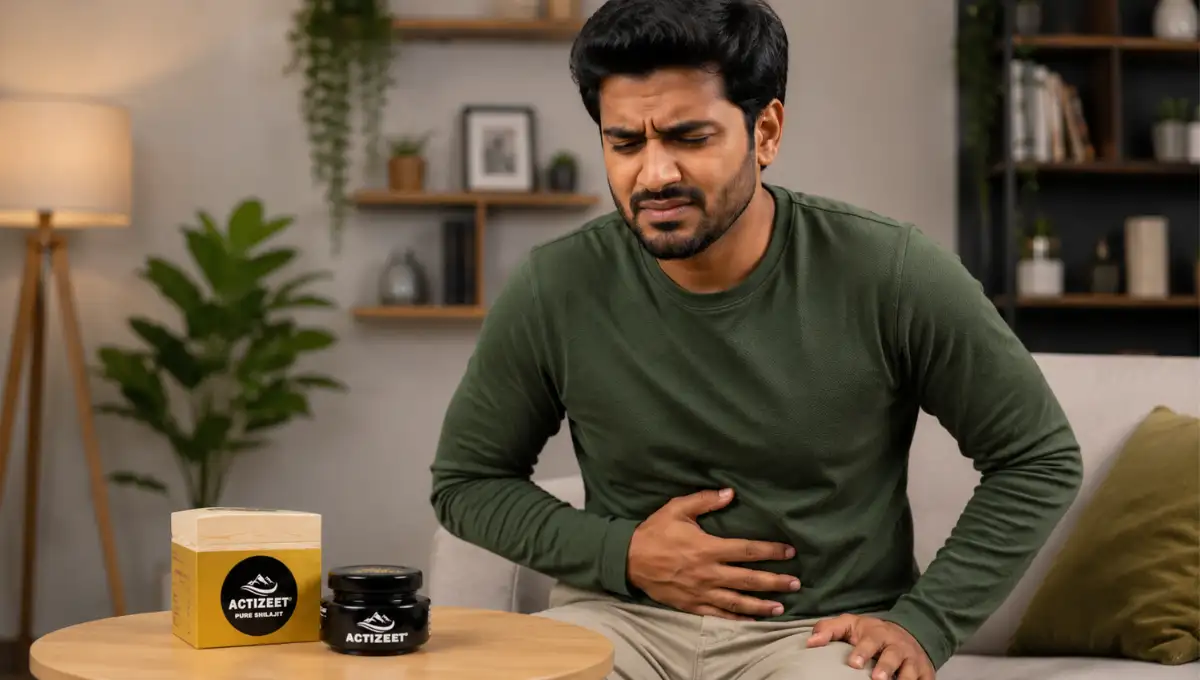
Shilajit and Piles: What Ayurvedic Tradition and Modern Biology Both Say About This Ancient Mountain Remedy for Haemorrhoids
Piles (haemorrhoids, or bawaseer in Hindi) affect an estimated 75% of Indian adults at some point in their lives — making it one of the most prevalent and most privately suffered gastrointestinal conditions in India. Shilajit's relevance to piles spans multiple documented biological mechanisms: the anti-inflammatory activity that reduces haemorrhoidal tissue inflammation, the gut microbiome and stool consistency improvements that address the constipation driving most piles, the venous tone support that addresses the vascular weakness underlying haemorrhoid formation, and the wound-healing activity that supports anorectal tissue repair. This guide covers the honest, mechanism-based picture.
Shilajit Can Support Piles Management — But Is Not a Cure. Here Is What It Genuinely Does.
Shilajit addresses several of the biological causes and aggravating factors of haemorrhoids through documented mechanisms — it is not a direct haemorrhoidal cure that shrinks or eliminates existing piles on its own, but it is a genuinely mechanism-aligned support for the conditions that cause and worsen piles. The anti-inflammatory fulvic acid and DBP compounds reduce the anorectal tissue inflammation that drives haemorrhoidal pain and swelling. The prebiotic gut microbiome support and digestive enzyme activity improvement reduces the constipation and straining that are the primary causes of haemorrhoid formation and recurrence. The fulvic acid antioxidant activity supports anorectal mucosal tissue repair. And the adaptogenic cortisol reduction addresses the stress-driven bowel habit dysregulation that significantly worsens most Indian adults' piles presentations. Shilajit is a complementary support for piles within a comprehensive lifestyle, dietary, and where necessary medical treatment approach — not a replacement for the dietary fiber, hydration, and appropriate medical care that piles management fundamentally requires.
Understanding Piles — India's Most Prevalent and Most Privately Suffered Condition
Piles (haemorrhoids) are enlarged, inflamed vascular cushions in the anorectal canal — structures that are normal in every adult but become symptomatic when they swell, prolapse, bleed, or create the discomfort and itching that makes this condition so disruptive to daily life. Internal haemorrhoids occur above the dentate line within the anal canal and typically present with painless rectal bleeding (bright red blood on toilet paper or in the bowl) and a sensation of incomplete evacuation or anal fullness. External haemorrhoids occur below the dentate line and typically present with pain, itching, and palpable tender lumps around the anal opening.
India has a particularly high piles prevalence for several interacting reasons. The predominantly low-fiber Indian diet — centered on refined white rice, refined wheat preparations (maida roti, white bread, biscuits), and processed foods with inadequate vegetable and legume fiber — creates the chronically hard, small-caliber stools that require excessive straining effort for evacuation. This straining pressure is the primary mechanical driver of haemorrhoidal vascular cushion engorgement and eventual haemorrhoid formation. Combined with the sedentary desk work lifestyle that India's rapidly urbanizing workforce predominantly lives, chronic professional stress that dysregulates bowel habits through the gut-brain axis, inadequate hydration from India's hard-working but often dehydrated adult population, and the cultural practice of prolonged squatting or sitting on the toilet with mobile phones — India's piles prevalence reflects a convergence of dietary, lifestyle, and stress factors that genuinely benefit from the multi-mechanism support that shilajit provides.
Internal haemorrhoids (Grade I–II): The most common presentation in India — enlarged internal vascular cushions causing painless bleeding and discomfort without prolapse (Grade I) or with reducible prolapse (Grade II). Shilajit's anti-inflammatory, constipation-reducing, and venous tone mechanisms are most directly relevant for these. Most appropriate for shilajit-supported conservative management alongside dietary and lifestyle modification. Internal haemorrhoids (Grade III–IV): Prolapsing haemorrhoids requiring manual replacement (Grade III) or irreducible (Grade IV). These grades typically require medical or surgical intervention — rubber band ligation, sclerotherapy, or haemorrhoidectomy. Shilajit supports recovery and recurrence prevention after medical treatment but is not appropriate as primary management for Grade III–IV haemorrhoids. Medical evaluation is necessary. External haemorrhoids and thrombosed haemorrhoids: Painful external haemorrhoids and acutely thrombosed haemorrhoids with blood clot formation cause significant acute pain and require medical management. Shilajit's anti-inflammatory support can complement medical care but does not replace it for acute presentations. Bleeding haemorrhoids: All rectal bleeding must be medically evaluated — shilajit does not address the source of haemorrhoidal bleeding and rectal bleeding can in some cases be from colorectal conditions that require urgent evaluation. Never self-treat rectal bleeding with supplements alone without first ruling out colorectal disease with a physician.
Shilajit and Piles in Ayurvedic Medicine — The Traditional Context
In Ayurvedic medicine, piles are classified as arsha — one of the eight Mahagadas (great diseases) that classical Ayurvedic texts document extensively. Charaka Samhita and Sushruta Samhita both describe arsha management through a combination of pathya (dietary and lifestyle modification), aushadhi (herbal preparations), and in severe cases shastra karma (surgical intervention). Shilajit appears in Ayurvedic arsha treatment contexts as a rasayana support — used to strengthen the body's overall digestive capacity (agni), reduce the inflammation and vascular engorgement of haemorrhoidal tissue, and correct the underlying constipation (vibandha) and vata imbalance that Ayurveda identifies as the primary pathological driver of most piles presentations.
The Ayurvedic connection between shilajit and piles is not a modern marketing invention — it reflects the documented traditional use of shilajit for digestive strengthening, anti-inflammatory tissue support, and the correction of the vata-type bowel habits (dry, hard, irregular stools with straining) that Ayurveda identifies as the root cause of most haemorrhoidal disease. The fact that modern biology confirms fulvic acid's prebiotic gut effects, anti-inflammatory NF-kB activity, and antioxidant mucosal protection validates the classical Ayurvedic clinical observation with mechanistic scientific explanation.
Mechanism 1: Anti-Inflammatory Activity — Reducing Haemorrhoidal Tissue Swelling
The inflammation of haemorrhoidal tissue — the swelling, warmth, and pain that make piles symptomatic — is driven by the same NF-kB-mediated inflammatory cytokine cascade that produces inflammation in arthritic joints and inflammatory skin conditions. Haemorrhoidal vascular cushion engorgement initiates a local inflammatory response through mechanical pressure-induced release of substance P and inflammatory prostaglandins from mechanoreceptors in the stretched vascular cushion wall. This inflammatory response produces the edema (tissue fluid accumulation), the inflammatory cell infiltration, and the prostaglandin-mediated pain sensitivity that together produce the classic piles symptoms.
Shilajit's fulvic acid inhibits the NF-kB transcription factor pathway — the master regulator of pro-inflammatory cytokine gene expression — through the same mechanism that makes it relevant for arthritic inflammation, skin inflammation, and other chronic inflammatory conditions. The DBP compounds additionally provide COX-pathway prostaglandin synthesis inhibition that reduces the prostaglandin-mediated pain and inflammatory signaling. Applied systemically through daily shilajit supplementation (dissolved in warm water and consumed orally), these anti-inflammatory mechanisms reduce the inflammatory background of haemorrhoidal tissue, decreasing the swelling and pain that make symptomatic piles so disruptive — though they do not mechanically reduce the size of established haemorrhoidal vascular cushions the way surgical procedures do.
For the significant proportion of Indian adults with chronic low-grade haemorrhoidal inflammation from repeatedly aggravated piles — where the condition is intermittently symptomatic rather than requiring surgical intervention but creates persistent discomfort, occasional bleeding, and recurrent flares — shilajit's systemic anti-inflammatory activity provides ongoing inflammation suppression that reduces both the frequency and the severity of symptomatic flares, within the context of appropriate dietary and lifestyle management.
Mechanism 2: Constipation Relief and Gut Health — Addressing the Root Cause
Constipation and the straining it forces are the single most important cause of haemorrhoid formation and the single most important driver of haemorrhoid recurrence after treatment. Every episode of significant straining at stool forces blood into the haemorrhoidal vascular cushions under high pressure, progressively enlarging and weakening the vascular cushion supporting ligaments that would otherwise prevent haemorrhoid prolapse. Any intervention that reliably reduces constipation and straining is therefore directly addressing the root cause of most piles presentations — not simply treating symptoms.
Shilajit improves gut function and stool consistency through several complementary mechanisms. Fulvic acid has documented prebiotic activity — supporting the growth of beneficial Lactobacillus and Bifidobacterium species that produce the short-chain fatty acids (butyrate, propionate, acetate) that nourish colonic epithelial cells and regulate colonic motility. Better motility means more regular, more complete stool passage with less accumulation of the hard, dry residue that forms the basis of constipated stools. The fulvic acid mineral delivery simultaneously provides the magnesium that acts as a mild osmotic laxative (magnesium draws water into the colonic lumen to soften stool) and that supports the smooth muscle function of intestinal walls for effective peristaltic motility.
Shilajit's digestive enzyme stimulation — specifically through the metabolic activation of digestive secretory activity — improves the completeness of food digestion that reduces the fermentable substrate reaching the colon. Incompletely digested food in the colon produces the excess gas, bloating, and altered stool consistency that worsen bowel habits and increase the likelihood of straining during difficult evacuations. For the large proportion of Indian adults with the combination of low-fiber diet-driven constipation and the functional digestive symptoms (bloating, irregular habits, unsatisfying evacuation) that worsen their piles, shilajit's multi-mechanism gut support provides meaningful complementary improvement alongside the dietary fiber and hydration increases that remain the foundation of effective constipation management.
🏔 ACTIZEET® Himalayan Shilajit Resin: genuine high-altitude resin with fulvic acid at 60%+ for the anti-inflammatory, prebiotic gut, and venous tone mechanisms most relevant for piles support — the ancient Ayurvedic arsha remedy in India's most quality-verified modern form.
Get ACTIZEET® →Mechanism 3: Venous Tone and Vascular Support
Haemorrhoids form and enlarge when the supporting vascular cushion architecture weakens — specifically when the fibromuscular tissue (Treitz's muscle and Parks's ligaments) that anchors the haemorrhoidal vascular cushions to the internal sphincter becomes attenuated and allows the cushions to prolapse distally under straining pressure. The venous component of this pathology involves the haemorrhoidal plexus venous tone — the capacity of venous vessel walls to resist the engorgement and distension that straining pressure creates. Poor venous tone allows progressive haemorrhoidal vascular cushion enlargement that eventually becomes the permanently dilated haemorrhoidal tissue of established piles.
Shilajit supports venous vascular health through the antioxidant protection of vascular endothelium — fulvic acid's Nrf2-mediated antioxidant enzyme induction protects venous endothelial cells from the oxidative damage that progressively weakens venous wall integrity and reduces the elastic resilience that healthy venous tone requires. The collagen synthesis support from shilajit's proline amino acid content and fulvic acid fibroblast stimulation additionally supports the maintenance of the fibrous connective tissue components of haemorrhoidal vascular cushion architecture. Together these mechanisms do not reverse established haemorrhoidal tissue damage, but they support the ongoing health of the vascular and connective tissue components that prevent progressive worsening of established haemorrhoids and reduce the recurrence risk after treatment.
Mechanism 4: Wound Healing and Anorectal Mucosal Tissue Repair
Symptomatic haemorrhoids frequently produce mucosal irritation, superficial ulceration, and bleeding from the fragile mucosal epithelium overlying the engorged haemorrhoidal vascular cushions. The repair of this mucosal damage requires intact collagen synthesis capacity, adequate antioxidant protection of the healing mucosal cells from the oxidative stress of inflammatory environments, and sufficient micronutrient supply for the enzymatic processes of tissue repair — specifically zinc (cofactor for wound healing enzymes including collagen crosslinking enzymes), copper (ceruloplasmin and lysyl oxidase for collagen maturation), and vitamin C-equivalent antioxidant capacity.
Shilajit's ionic zinc delivery through the fulvic acid mineral complex provides the most bioavailable natural zinc for the wound healing enzymes of anorectal mucosal repair. The fulvic acid antioxidant protection of healing mucosal cells supports the survival and replication of the mucosal epithelial cells regenerating across denuded haemorrhoidal surfaces. And shilajit's amino acid content — including the proline and glycine that are primary collagen structural components — provides the substrate for the collagen synthesis that heals the fibromuscular disruption underlying haemorrhoidal tissue weakening. These wound-healing mechanisms are systemic through oral shilajit supplementation, supporting the anorectal mucosal repair capacity from within rather than through topical application.
Mechanism 5: Stress, Cortisol, and Bowel Habit Dysregulation
The gut-brain axis — the bidirectional neural and hormonal communication between the enteric nervous system of the gastrointestinal tract and the central nervous system — means that psychological stress directly affects bowel function through both cortisol-mediated colonic motility changes and the sympathetic nervous system suppression of the parasympathetic function required for normal defecation. Acute stress accelerates colonic transit (producing loose stools and urgency in some people, particularly those with IBS), while chronic stress dysregulates the migrating motor complex that normally ensures regular complete bowel evacuation — creating the irregular, unsatisfying, incomplete defecation that increases haemorrhoidal straining in many chronically stressed Indian adults.
Shilajit's adaptogenic HPA axis cortisol normalization directly addresses this stress-bowel habit connection. By reducing the chronic cortisol elevation that dysregulates enteric nervous system function, shilajit supports more regular, more complete bowel habits in the stressed adults most likely to experience cortisol-mediated bowel dysregulation. For the large proportion of Indian piles patients whose symptoms are clearly worse during high-stress professional periods — the pattern many Indian adults recognize of piles flaring during examination seasons, demanding project deadlines, or family conflict periods — shilajit's cortisol management addresses the most directly relevant physiological driver of their symptom pattern.
Practical Protocol for Piles Support with Shilajit
Timing — Morning Fasted
Dissolve 300 to 500 mg of ACTIZEET® resin in warm water and take 30 to 45 minutes before breakfast. Morning fasted use maximizes ionic mineral absorption (particularly magnesium for stool softening and motility support) and provides the gut microbiome prebiotic activity at the most metabolically receptive window before food intake competes for intestinal mucosal attention.
Dietary Foundation
Shilajit alone cannot manage piles without the dietary foundation of: 25 to 35 grams daily dietary fiber from vegetables, legumes, whole grains, and fruits; 2.5 to 3 liters daily water intake; reduced refined flour, white rice, and processed food intake. Shilajit supports this foundation by improving gut microbiome efficiency for fiber fermentation and improving bowel motility — it does not replace the fiber and hydration without which no supplement produces meaningful piles improvement.
Consistency — 8 to 12 Weeks
The anti-inflammatory, gut microbiome, and venous tone mechanisms that support piles management all require 6 to 10 weeks of consistent daily shilajit use to establish meaningful improvement. Track symptom frequency, bleeding episodes (if present — see medical warning below), and stool consistency weekly. Most users notice gut and bowel habit improvements within 3 to 4 weeks; haemorrhoidal inflammation reduction typically becomes noticeable around weeks 5 to 8.
Warm Water Preparation
For piles specifically, dissolve in warm water rather than milk — the water preparation maximizes magnesium and ionic mineral absorption for the stool-softening osmotic mechanism, and avoids the constipating effect that full-fat milk can have in lactose-intolerant individuals (a majority of Indian adults). Add a squeeze of lemon to enhance iron absorption if anaemia from bleeding piles is a concern alongside the haemorrhoidal condition itself.
Lifestyle Support
Shilajit's cortisol-management benefit for bowel habits is amplified by complementary stress management practices — even 10 to 15 minutes of daily meditation, yoga, or walking significantly reduces the HPA axis chronic activation that drives stress-mediated bowel dysregulation. Specifically for piles: avoid prolonged sitting on the toilet; use a squatting position if possible (a simple footstool creates a more anatomically appropriate defecation posture that reduces straining); avoid vigorous wiping that aggravates irritated haemorrhoidal mucosa.
Medical Evaluation First
Always consult a physician before relying on any supplement for piles management. All rectal bleeding requires medical evaluation to exclude colorectal disease. Grade III and IV haemorrhoids requiring prolapse management need medical assessment for appropriate intervention. Shilajit supports conservative piles management alongside medical care — it does not replace medical evaluation for new or worsening symptoms. Do not delay medical consultation because you are trying a supplement approach.
Why ACTIZEET® Is the Right Shilajit for Digestive and Piles Support
- Fulvic acid at 60%+ confirmed — the prebiotic gut microbiome-supporting, NF-kB anti-inflammatory, and Nrf2 antioxidant mucosal repair mechanisms all depend on the high fulvic acid concentration that genuine high-altitude Himalayan resin provides.
- 84+ ionic minerals including magnesium for stool-softening osmotic and motility support, zinc for anorectal wound healing enzymatic activity, and the complete mineral complex that gut epithelial cellular function requires.
- Cold-processed resin preserving DBP compounds for the COX prostaglandin and NF-kB anti-inflammatory activity most relevant to haemorrhoidal tissue inflammation reduction.
- Prebiotic activity from fulvic acid supporting the beneficial gut microbiome composition changes that improve colonic motility and stool consistency — the most direct natural approach to the constipation root cause of most Indian piles.
- Heavy metal tested for safe daily use through the months of consistent supplementation that meaningful gut health and haemorrhoidal support requires.
ACTIZEET® Himalayan Shilajit Resin addresses the piles problem from the biological root upward — reducing the haemorrhoidal inflammation through NF-kB fulvic acid activity, improving the gut microbiome and bowel motility through prebiotic mechanisms, providing ionic magnesium and mineral support for softer, easier stools, supporting anorectal mucosal repair through zinc and antioxidant wound healing mechanisms, and managing the chronic cortisol stress that dysregulates Indian adults' bowel habits and aggravates their piles. The Ayurvedic arsha remedy that classical texts prescribed for good reason — now in the most quality-verified and most honestly documented modern form available to India's haemorrhoid-suffering population.
🏔 Order ACTIZEET® Himalayan Shilajit Resin →When to See a Doctor — Signs That Shilajit Is Not Sufficient
- Any rectal bleeding must be medically evaluated before attributing it to piles — colorectal cancer, inflammatory bowel disease, and other serious conditions can present identically to haemorrhoidal bleeding and require urgent specialist evaluation.
- Prolapsed haemorrhoids that cannot be manually reduced (Grade IV) require specialist proctological assessment for surgical management.
- Acute thrombosed external haemorrhoids with severe pain require urgent medical care — the pain is often resolvable with prompt surgical excision that provides immediate relief unavailable through supplementary approaches.
- Anaemia from chronic haemorrhoidal bleeding requires medical management alongside supplementary iron support — the blood loss must be stopped through medical treatment of the haemorrhoids rather than simply replaced.
- Piles symptoms worsening or not improving with appropriate conservative management (fiber, hydration, lifestyle) after 4 to 6 weeks warrant physician review for assessment of the need for medical or surgical intervention.
Frequently Asked Questions
Shilajit and Piles: Genuine Mechanism-Based Support for One of India's Most Common Private Health Challenges
The relationship between shilajit and piles is genuinely supported by the biological mechanisms this guide has documented — not as a magic cure that eliminates haemorrhoids, but as a comprehensively mechanism-aligned supplement that addresses the anti-inflammatory tissue component, the constipation root cause through gut microbiome and motility support, the venous vascular integrity underlying haemorrhoid formation, the anorectal mucosal tissue repair capacity, and the stress-driven bowel dysregulation that makes piles so reliably worse during India's most demanding professional and personal periods. The Ayurvedic classification of shilajit as an arsha management preparation reflects millennia of clinical observation that modern biology is now explaining through specific molecular mechanisms.
Piles affects 75% of Indian adults. Most of them manage it privately, with varying degrees of discomfort and varying success. ACTIZEET® Himalayan Shilajit Resin provides the most quality-verified and most mechanism-documented natural support for the biological drivers of haemorrhoid formation and symptom aggravation — within the essential context of appropriate medical evaluation, adequate dietary fiber, and the hydration and lifestyle management that remain the non-negotiable foundation of any effective piles treatment approach.
Latest From Our Blog

How Shilajit Works: The Complete Story of How This Ancient Himalayan Resin Transforms Your Energy and Wellness
Learn How Shilajit Works inside your body, how it boosts...

Authentic Shilajit: The Definitive Guide to Identifying, Sourcing, and Trusting Real Himalayan Mineral Resin in a Market Full of Fakes
Discover what makes authentic Shilajit genuine, how to identify real...

Scientific Studies On Shilajit: Explore the Health Benefits of Nature’s Miracle Resin
Discover how ancient Ayurvedic Shilajit is backed by modern science....

How to Identify Real Shilajit: 7 Tests That Reveal the Truth About Any Product Before You Buy
Learn exactly how to identify real Shilajit from fakes using...