
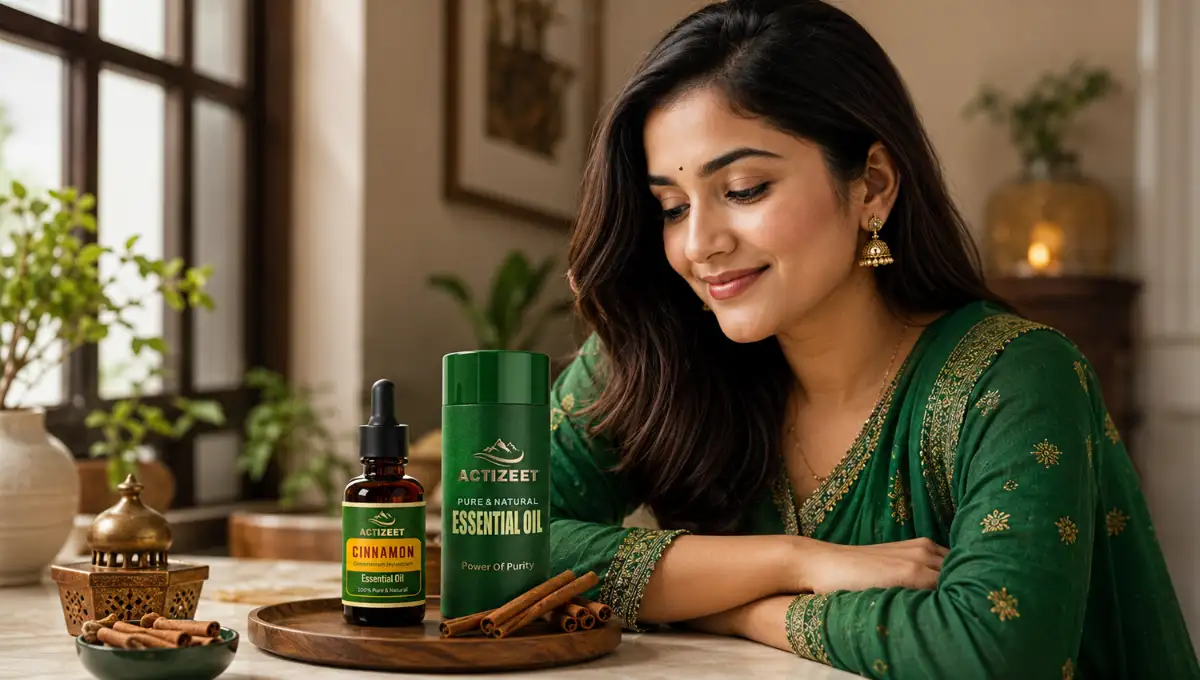
Best Cinnamon Oil in India 2026: How to Choose Genuine Cinnamomum verum and Why ACTIZEET® Is the Benchmark
India's cinnamon oil market hides three distinct problems that catch buyers off guard: cassia being sold as true Ceylon cinnamon, leaf oil being labelled as more valuable bark oil, and synthetic cinnamaldehyde fragrance blends masquerading as pure essential oil. This guide cuts through all three, explains exactly what the best cinnamon oil in India looks like in 2026, and makes the case for why ACTIZEET® consistently delivers when other options fall short.
Cinnamon is not just any spice in India. It is part of the fabric of daily life — in the masala chai that starts every morning, in the biryani and kormas that anchor every celebration, in the Ayurvedic kadha preparations that every household returns to during seasonal illness. The familiarity is so deep that it creates a genuine problem when it comes to buying cinnamon essential oil: because everyone knows what cinnamon is supposed to smell like, it becomes very easy to sell an inferior product under the cinnamon name without buyers being able to detect the substitution.
The Indian cinnamon oil market in 2026 has three specific quality problems that informed buyers need to navigate. First, the cassia substitution problem — Cinnamomum cassia (Chinese cinnamon) is systematically cheaper to produce than genuine Cinnamomum verum (Ceylon cinnamon), and many products on Indian marketplaces sell cassia oil under the generic label "cinnamon oil" without disclosing the species. The two have overlapping but different compound profiles, different therapeutic characteristics, and different safety considerations. Second, the bark versus leaf confusion — bark oil (cinnamaldehyde-dominant, 55 to 90%) is significantly more potent therapeutically but more expensive and more skin-sensitizing than leaf oil (eugenol-dominant, 70 to 90%). Many products mislabel leaf oil as bark oil or simply say "cinnamon oil" without specifying the plant part used. Third, synthetic cinnamaldehyde fragrance blending — synthetic cinnamaldehyde is widely available as an industrial chemical and is easily used to create a product that smells convincingly like cinnamon essential oil without being botanical distillate at all.
This guide tells you how to spot all three problems, what to look for instead, and why ACTIZEET® Cinnamon Essential Oil is the answer Indian buyers have been looking for in 2026.
Problem 1 — Species substitution: C. cassia sold as C. verum. Cassia is cheaper, has higher coumarin content in the whole spice, and a sharper, less nuanced aroma than true Ceylon cinnamon. The solution: require the Latin species name on the label. Problem 2 — Plant part mislabeling: Leaf oil (eugenol-dominant) sold as or confused with bark oil (cinnamaldehyde-dominant). Bark oil is 3 to 4 times more potent for most therapeutic applications and 3 to 4 times more skin-sensitizing. The solution: require the plant part specified on the label. Problem 3 — Synthetic cinnamaldehyde blending: Industrial cinnamaldehyde fragrance mixed with carrier oil. Smells like cinnamon, contains no genuine therapeutic botanical terpene profile. The solution: GC-MS testing confirming the minor compound profile that only genuine distillation produces.
Understanding What You Are Actually Buying When You Search for Cinnamon Oil
Before evaluating any specific product, Indian buyers need a clear picture of the landscape they are navigating. Unlike most essential oils where the primary quality question is "is this pure or diluted?", cinnamon oil has a layered authenticity challenge that begins even before purity.
Ceylon Cinnamon vs. Cassia — Why the Distinction Matters
True cinnamon — Cinnamomum verum — is often called Ceylon cinnamon because Sri Lanka (formerly Ceylon) is its primary production region. The essential oil from C. verum bark has a complex, rounded, warm-sweet aromatic profile and a therapeutic compound matrix that includes cinnamaldehyde at 55 to 90% alongside cinnamyl acetate, eugenol, beta-caryophyllene, and a supporting terpene fraction that gives genuine Ceylon bark oil its full therapeutic depth.
Cassia — Cinnamomum cassia or C. aromaticum — is the species dominant in Chinese and Vietnamese production, with a higher cinnamaldehyde content (often 75 to 90% or more) but less of the supporting compound diversity that genuine C. verum provides. Cassia oil is sharper, more purely spice-aldehyde in aroma, and cheaper to produce. It is also perfectly legitimate as an essential oil — but it is not Cinnamomum verum, and selling cassia as "cinnamon oil" without species disclosure deprives buyers of the information they need to make an informed choice.
Bark Oil vs. Leaf Oil — The Potency and Safety Divide
| Feature | Bark Oil (C. verum) | Leaf Oil (C. verum) |
|---|---|---|
| Primary Compound | Cinnamaldehyde (55–90%) | Eugenol (70–90%) |
| Therapeutic Potency | Higher — most research-documented benefits are cinnamaldehyde-driven | Moderate — eugenol has its own documented analgesic, antimicrobial, and antioxidant properties |
| Skin Sensitization Risk | Very high — requires extreme dilution (max 0.5% for body, 0.1% for face) | Moderate — acceptable at 1 to 2% dilution for most skin types |
| Aroma | Warm, deeply spicy, sweet, complex — the quintessential cinnamon aroma | Spicy-clove character with cinnamon undertone — similar but distinctly different |
| Price | Significantly higher — bark yield is lower and bark sourcing is more controlled | Lower — leaves are abundant and yield is higher per distillation |
| Best For | Diffusion, blood sugar aromatherapy, antimicrobial use, cognitive support | Topical skin applications where lower sensitization risk is needed |
🌿 ACTIZEET® Cinnamon Essential Oil: genuine Cinnamomum verum bark oil — species specified, plant part confirmed, cinnamaldehyde at 55 to 90%, GC-MS verified, amber glass packaged.
Shop ACTIZEET® →6 Quality Criteria for the Best Cinnamon Oil in India
The first and most foundational quality criterion for cinnamon essential oil is the clear specification of the botanical species on the label. For the genuine therapeutic cinnamon oil that most Indian buyers are seeking, the label must state Cinnamomum verum J.Presl (or equivalently, C. zeylanicum — the older accepted name for the same species). This declaration confirms you are purchasing true Ceylon cinnamon, not cassia, not a species blend, and not a product whose botanical origin the supplier prefers not to disclose.
Absence of the Latin species name on a cinnamon oil label is not merely an oversight in 2026. Any professional essential oil supplier knows their botanical source and should specify it. When this information is missing, the most likely explanation is that the supplier is using cassia (cheaper, more available) and relies on consumer unfamiliarity with the species distinction to sell it without scrutiny. For a product whose primary therapeutic benefits — blood sugar support, antimicrobial activity against specific pathogens, neuroprotective activity — are compound-specific and species-relevant, botanical identity transparency is non-negotiable.
This criterion is unique to cinnamon among the most common essential oils because bark oil and leaf oil from the same Cinnamomum verum plant are genuinely different products with different primary compounds, different therapeutic profiles, and significantly different safety requirements. A label that says only "cinnamon essential oil" without specifying bark or leaf is withholding information that directly affects how the oil should be used.
The practical reason this matters for Indian buyers: if you are seeking cinnamon oil primarily for its aromatic blood sugar support, antimicrobial diffusion properties, or cognitive-enhancing cinnamaldehyde benefits, you want bark oil. If you are seeking cinnamon oil for topical skin applications where lower skin sensitization risk is important, leaf oil is the safer choice at standard dilution. Without the plant part specification on the label, you cannot make an appropriate use and safety decision, and the supplier has failed a basic responsibility of product transparency.
Genuine cinnamon essential oil — both bark and leaf types — is produced through steam distillation of the appropriate plant material. Steam distillation preserves the full botanical compound profile and produces the cinnamaldehyde, eugenol, cinnamyl acetate, beta-caryophyllene, and supporting minor compounds in their natural botanical ratios. This complete terpene and phenylpropanoid profile is what GC-MS analysis can confirm as a genuine botanical fingerprint rather than a synthetic compound blend.
Cinnamon oil produced through solvent extraction introduces chemical residues and alters the compound profile in ways that compromise both safety and therapeutic integrity. CO2 extraction is technically acceptable and tends to preserve a more complete compound profile, but is significantly less common for cinnamon specifically. Steam distillation should be specified on the label of any product being purchased for therapeutic essential oil use.
For cinnamon oil specifically, GC-MS testing serves three simultaneous verification functions that make it more important here than for many other essential oils. First, it confirms the cinnamaldehyde percentage — genuine C. verum bark oil should show 55 to 90% trans-cinnamaldehyde; cassia will typically show 80 to 95%; synthetic cinnamaldehyde blends will show unnaturally high and isolated cinnamaldehyde peaks. Second, it confirms the presence of the minor botanical compounds — cinnamyl acetate at 3 to 8%, eugenol trace to 5%, beta-caryophyllene at 3 to 6% — that distinguish genuine botanical distillate from synthetic cinnamaldehyde. Third, the relative ratios of these compounds provide a species fingerprint that can distinguish C. verum from C. cassia even when the label is absent or misleading.
A supplier who genuinely tests their cinnamon oil will have batch-specific GC-MS chromatograms available on request. A supplier who uses "GC-MS tested" as label copy without accessible data cannot verify any of these three critical cinnamon-specific parameters. Given the three-layer quality problem unique to cinnamon oil, GC-MS data accessibility is the single most important quality assurance differentiator for this oil specifically.
Genuine cinnamon essential oil sold as a pure essential oil should contain one ingredient only: steam-distilled cinnamon bark or leaf essential oil from the specified species. No carrier oil added for volume. No synthetic cinnamaldehyde added to amplify a weak distillation. No fragrance-grade cinnamaldehyde substituted for genuine botanical oil.
The paper evaporation test catches carrier oil dilution — a drop on white paper should evaporate without leaving a greasy permanent ring. However, it cannot catch synthetic cinnamaldehyde addition because synthetic cinnamaldehyde is itself a highly volatile compound that evaporates quickly from paper like genuine essential oil compounds. This is why GC-MS testing is the definitive verification method for cinnamon oil — the minor compound profile, absent in synthetic preparations, is the only reliable marker of genuine botanical distillate that home testing cannot assess.
Cinnamaldehyde is a reactive aldehyde that undergoes photo-oxidation when exposed to UV light, gradually converting into less therapeutically active oxidation products and potentially forming skin-sensitizing cinnamaldehyde polymers that increase the dermal irritation risk of the oil over time. This photo-oxidative instability makes UV-protective amber glass packaging especially important for cinnamon oil — arguably more so than for most other essential oils, given that the primary active compound is an aldehyde rather than a more UV-stable terpene.
Cinnamon oil in clear glass or transparent plastic packaging has already begun the cinnamaldehyde degradation process before the buyer even opens the bottle. For a product being purchased specifically for its cinnamaldehyde-mediated benefits — blood sugar support aromatherapy, antimicrobial diffusion, cognitive neuroprotective use — starting with degraded cinnamaldehyde concentration directly reduces the very benefit you purchased the oil to access. ACTIZEET®'s amber glass packaging is a baseline quality standard, not a premium feature.
Red Flags: What to Avoid When Buying Cinnamon Oil in India
Given cinnamon oil's three-layer quality problem, the red flag list here is more specific and more consequential than for most other essential oils.
- No Latin botanical species name on the label. Any product that says only "cinnamon oil" or "cinnamon essential oil" without Cinnamomum verum or Cinnamomum cassia specified is a product that cannot confirm its botanical origin. In the cinnamon market, where cassia substitution for verum is systematic and common, this omission is almost always meaningful rather than accidental.
- No plant part specified (bark vs. leaf). Without this information, you cannot make an appropriate use and safety decision. Bark oil and leaf oil are different products with different therapeutic applications and different dilution requirements. A label that omits this is withholding information that directly affects safe use.
- Price under ₹200 for 10 ml of claimed-pure cinnamon bark essential oil. Genuine Cinnamomum verum bark oil is one of the more expensive essential oils to produce due to controlled bark sourcing and lower distillation yield. Products priced significantly below market rate for genuine botanical bark oil are almost certainly cassia, leaf oil mislabeled as bark oil, synthetic cinnamaldehyde, or some combination of all three.
- Aroma that smells identical to commercial cinnamon flavoring or candy. Genuine pure cinnamon bark essential oil has a deeply complex, warm, resinous-spicy aromatic character with multiple layers that unfold as you experience it. If it smells exactly like store-bought cinnamon extract or artificially flavored cinnamon candy — very sharp, very one-dimensional, overly sweet-synthetic — it is almost certainly synthetic cinnamaldehyde rather than botanical distillate.
- Clear glass or plastic packaging. For an aldehyde-dominant essential oil, this is an immediate quality flag. Cinnamaldehyde photo-oxidation in clear packaging reduces both therapeutic efficacy and adds skin sensitization risk from oxidized aldehyde products.
- Claims of edibility or food-grade status without regulatory certification. True food-grade cinnamon oil requires specific regulatory compliance. Any product making food-grade claims without documentation is making an unverifiable claim that should prompt caution about the supplier's general accuracy in product representation.
- No safety warnings, dilution guidelines, or contraindication information. Cinnamon bark oil is one of the most skin-sensitizing essential oils available — the Research Institute for Fragrance Materials (RIFM) rates it among the highest sensitization-risk botanicals. Any supplier who sells cinnamon bark oil without prominent dilution and safety warnings either does not know what they are selling or has decided that sales matter more than buyer safety. Both conclusions are reasons to choose a different supplier.
India Cinnamon Oil Market 2026: What You Are Really Choosing Between
When you look at the full range of products marketed as cinnamon oil to Indian buyers in 2026, four distinct product categories exist within what appears to be a single product type.
| Product Category | Typical Price (10 ml) | Species Named | Plant Part Stated | GC-MS Backed | Pure Undiluted | Therapeutic Value |
|---|---|---|---|---|---|---|
| Synthetic Fragrance / Budget Industrial cinnamaldehyde in carrier |
₹70 – ₹160 | Absent | N/A | No | Not pure EO | Aroma only |
| Cassia Oil / Mislabeled C. cassia sold as "cinnamon oil" |
₹140 – ₹350 | Species absent | Rarely | Rarely | Often pure | Moderate |
| Mid-Tier Wellness Brands Indian wellness brands, variable quality |
₹250 – ₹650 | Sometimes | Sometimes | Occasionally | Usually | Moderate to good |
| ACTIZEET® — Verified Pure C. verum bark, GC-MS confirmed, amber glass |
Premium tier | Yes — C. verum | Yes — bark | Yes | Yes — undiluted | Full cinnamaldehyde |
The four-category comparison table makes the choice landscape explicit in a way that single product evaluations typically obscure. The vast majority of "cinnamon oil" sold on Indian marketplaces at low price points falls into either the synthetic fragrance or cassia category. Mid-tier brands — established Indian wellness companies — often produce genuine steam-distilled cinnamon oil of decent quality, but the species and plant-part transparency that would allow buyers to confirm exactly what they are purchasing is often absent, making quality verification impossible without GC-MS data. ACTIZEET® provides all four of the critical transparency markers — species, plant part, GC-MS verification, and purity — that should be standard for any therapeutic essential oil purchase but are rare in India's cinnamon oil market specifically.
Why ACTIZEET® Is the Best Cinnamon Oil in India in 2026
ACTIZEET® has built a consistent reputation in India's essential oil market by delivering products that meet every quality criterion buyers should be applying — verified by testing, packaged appropriately, and sold with the full botanical transparency that therapeutic use requires. For cinnamon specifically, where the three-layer quality problem is more acute than for almost any other essential oil, this commitment to verifiable quality matters more than with most products.
ACTIZEET® Cinnamon Essential Oil — Pure Cinnamomum verum Bark, Steam Distilled, GC-MS Verified
ACTIZEET® Cinnamon Essential Oil addresses all three layers of the Indian cinnamon oil quality problem simultaneously: genuine Cinnamomum verum species specified (not cassia substitution), bark oil plant part confirmed (not leaf oil mislabeling), and GC-MS composition testing verifying the cinnamaldehyde percentage and minor botanical compound profile (not synthetic cinnamaldehyde blending). Packaged in UV-protective amber glass, sold 100% pure and undiluted, and backed by a brand that provides safety guidance appropriate for a genuinely potent cinnamaldehyde-dominant essential oil. For Indian buyers who want the best cinnamon oil in India in 2026 — the real thing, completely verified — ACTIZEET® is the definitive answer.
The Six Reasons ACTIZEET® Sets the Standard
- Cinnamomum verum specified — no species ambiguity. You know you are buying genuine Ceylon cinnamon oil, not cassia, not a species blend, not a product whose botanical origin the supplier prefers to leave vague. This single transparency act alone eliminates the most common quality failure in India's cinnamon oil market.
- Bark oil plant part confirmed — no bark vs. leaf confusion. You know the cinnamaldehyde-dominant, more therapeutically potent, and more carefully dilution-required bark oil is what you are purchasing. This allows you to make informed dilution and application decisions from the moment the bottle arrives.
- GC-MS verification confirming cinnamaldehyde at 55 to 90% and full botanical minor compound profile. The cinnamyl acetate, eugenol, and beta-caryophyllene peaks that distinguish genuine botanical distillate from synthetic cinnamaldehyde are analytically confirmed. This is the verification that no home test and no label claim can substitute for.
- Amber glass UV protection preserving cinnamaldehyde integrity. The reactive aldehyde that drives every cinnamaldehyde-mediated benefit — blood sugar aromatherapy, antimicrobial diffusion, cognitive support, mood lifting — arrives with its potency intact, not partially degraded by UV exposure during storage and transit.
- 100% pure and undiluted with no synthetic additions. You control the concentration for every application — higher dilution for topical use, standard quantity for diffusion — because you start from a verified pure base where the actual cinnamaldehyde content matches what GC-MS confirmed.
- Honest safety communication included. ACTIZEET® provides the dilution requirements, contraindications, and safety guidelines that cinnamon bark oil genuinely requires. A brand that sells one of the most skin-sensitizing essential oils available without prominent safety information is a brand that has not thought seriously about the people using their product. ACTIZEET® has.
Using ACTIZEET® Cinnamon Essential Oil Safely and Effectively
Safety first, always: Cinnamon bark oil is among the highest skin-sensitization essential oils available. It must always be significantly diluted before any topical skin application. Never apply undiluted to any surface of the body. The use cards below include the appropriate dilution standards for each application.
Aromatic Diffusion
Use only 2 to 3 drops in 100 ml of water — significantly less than most essential oils. Run for 20 to 30 minutes for blood sugar wellness support, mood lifting, cognitive clarity, seasonal immunity, and natural room disinfection. Blends beautifully with orange, clove, and ginger.
Topical Blend (Heavily Diluted)
Maximum 0.5% for body use: 1 drop per 2 teaspoons of carrier oil. Apply to soles of feet, lower back, or wrists for warming circulation and immunity support. Never apply near the face. Patch test 24 hours before first use. Stop use immediately if any redness or irritation develops.
Oral Health Oil Pulling
Add 1 drop to 1 teaspoon of coconut oil for oil pulling. Swish for 10 minutes then spit — never swallow. The antimicrobial activity against Streptococcus mutans and halitosis bacteria provides natural oral hygiene support without alcohol-based mouthwash ingredients.
Antimicrobial Home Cleaner
Combine 10 drops cinnamon with 10 drops clove and 10 drops eucalyptus in 500 ml water with 2 tablespoons white vinegar. Spray on kitchen surfaces, bathrooms, and cutting boards. The combined phenylpropanoid and terpene antimicrobial activity covers a broad pathogen spectrum.
Personal Inhaler
Add 8 to 10 drops to a personal inhaler cotton wick. Use for on-demand mood support, post-meal blood sugar awareness aromatherapy, cognitive clarity during work, or respiratory warmth during seasonal colds. Fewer drops needed than for most oils due to potency.
Mosquito Larvicidal Use
Add 5 to 8 drops to standing water containers (not drinking water) during monsoon season. Cinnamaldehyde's confirmed larvicidal activity against Aedes aegypti creates a natural breeding deterrent in water collection areas where mosquito breeding cannot be completely eliminated.
Genuine Cinnamomum verum bark oil. Steam distilled. GC-MS verified cinnamaldehyde at 55 to 90%. Full botanical minor compound profile confirmed. UV-protective amber glass. 100% pure and undiluted. No cassia substitution. No synthetic cinnamaldehyde blending. No plant-part mislabeling. The best cinnamon oil in India in 2026 — by every standard that genuinely matters.
🌿 Order ACTIZEET® Cinnamon Essential Oil →Frequently Asked Questions
The Best Cinnamon Oil in India 2026: Three Quality Problems, One Solution
The best cinnamon oil in India in 2026 is the one that solves all three layers of the Indian cinnamon oil quality problem simultaneously. Species transparency that confirms Cinnamomum verum, not cassia. Plant part clarity that specifies bark, not leaf oil being passed off as the more potent product. And GC-MS verification that confirms the genuine botanical compound profile — cinnamaldehyde at 55 to 90% alongside the cinnamyl acetate, eugenol, and beta-caryophyllene that distinguish real distillate from synthetic cinnamaldehyde fragrance blending.
ACTIZEET® Cinnamon Essential Oil delivers all three. It is genuine Cinnamomum verum bark oil, steam distilled, analytically verified, UV-protected in amber glass, and sold with the safety guidance appropriate for one of the most potent and most skin-sensitizing essential oils available. In a market where the species, the plant part, and the botanical authenticity of the product you are buying are routinely ambiguous or misleading, that combination of transparency and verified quality is not just a reason to prefer ACTIZEET®. It is the entire difference between an essential oil that actually delivers its documented benefits and one that merely smells like it should.
Latest From Our Blog

Best Basil Oil in India 2026: A Complete Buyer’s Guide to Pure, Authentic Ocimum basilicum Essential Oil
Looking for the best basil oil in India in 2026?...

Best Fennel Seed Oil in India 2026: What to Buy, What to Avoid, and Why Purity Is Everything
Looking for the best fennel seed oil in India in...

15 Bergamot Essential Oil Benefits: How Citrus bergamia Linalool, Limonene, and Linalyl Acetate Deliver Anxiety Relief, Skin Clarity, Antimicrobial Power, and Complete Wellness
Discover 15 proven bergamot essential oil benefits — from anxiety...

15 Champaka Essential Oil Benefits: How Magnolia champaca Deliver Deep Relaxation, Skin Radiance, and Spiritual Wellness
Discover 15 proven champaka essential oil benefits — from deep...