
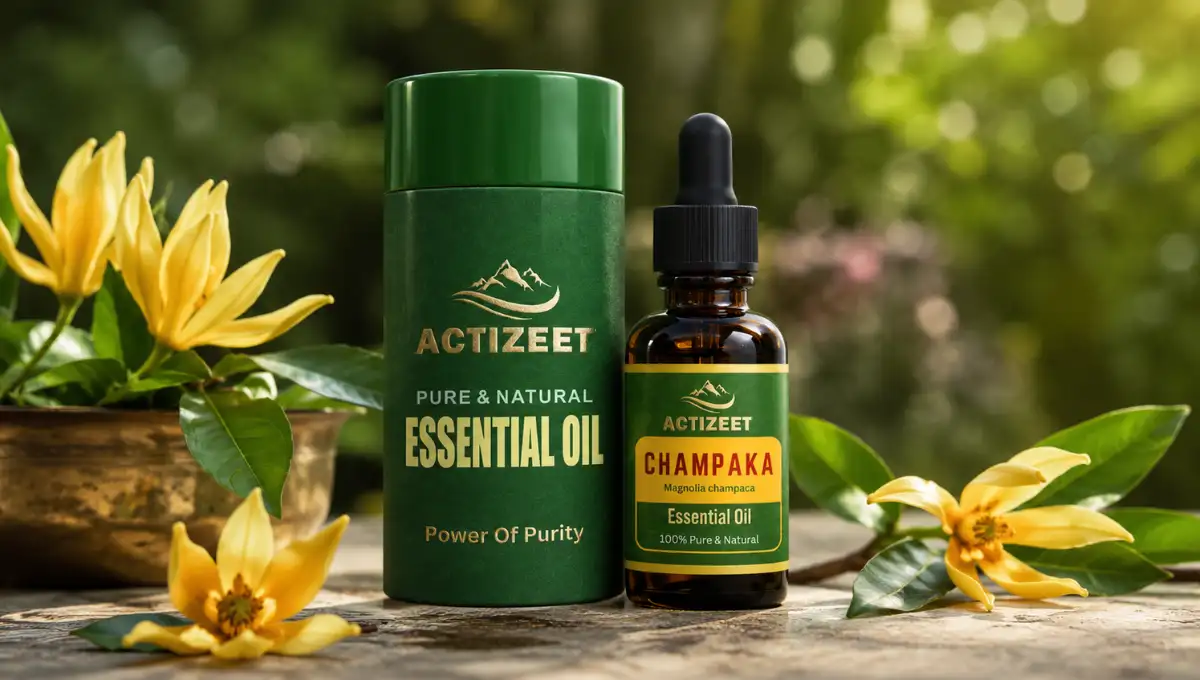
15 Champaka Essential Oil Benefits: How Magnolia champaca Linalool and Methyl Benzoate Deliver Deep Relaxation, Skin Radiance, Antimicrobial Power, and Spiritual Wellness
Champaka essential oil from Magnolia champaca concentrates linalool, methyl benzoate, indole, methyl anthranilate, and a rich floral terpene profile into one of India's most revered and most therapeutically complex aromatic botanicals. Research confirms anxiolytic and antidepressant activity through linalool's GABA-A modulation, broad-spectrum antimicrobial activity, anti-inflammatory COX pathway inhibition, potent antioxidant protection, and the unique neurological and emotional properties that have made champaka India's sacred flower for thousands of years. This guide covers all 15 benefits in full.
Champaka is not merely a flower in India. It is a living thread connecting the sacred and the everyday, the ancient and the present. Known as champaka, champa, or sampige across the languages of the subcontinent, Magnolia champaca has been offered at temple altars for millennia, woven into wedding garlands for generations, worn in the hair by women across South and Southeast Asia, and celebrated in Sanskrit poetry as the embodiment of divine fragrance. The flowers of Lord Vishnu's temples are often champaka. The scent rising from South Indian homes in the early morning is frequently champaka. The fragrance that French perfumers paid fortunes to capture in Joy — the perfume built around champaka and rose — is champaka.
What makes champaka oil extraordinary as a therapeutic essential oil is that this cultural and spiritual significance corresponds to genuine pharmacological activity. The primary compounds that give champaka its incomparable aroma — linalool, methyl benzoate, indole, methyl anthranilate, and a rich phenylpropanoid terpene ester profile — are not merely pleasant volatiles. They are bioactive molecules with documented effects on the central nervous system, on skin tissue, on bacterial and fungal pathogens, on inflammatory signaling pathways, and on the olfactory-limbic neurological circuitry that connects scent to emotion, memory, and psychological state.
This guide covers 15 specific champaka essential oil benefits grounded in research and Ayurvedic documentation, explains the mechanisms behind each, and tells you why ACTIZEET® Champaka Essential Oil brings this extraordinary Magnolia champaca botanical to Indian buyers in its most authentic, most therapeutically complete form.
Botanical name: Magnolia champaca (L.) Baill. ex Pierre (formerly Michelia champaca) | Family: Magnoliaceae | Indian names: Champaka (Sanskrit), Champa (Hindi), Sampige (Kannada), Shenbagam (Tamil), Sona champa (Bengali) | Types: Yellow champaka (M. champaca — intense spicy-floral aroma, more common in South India), White champaka (Magnolia alba — softer, more purely floral aroma) | Extraction: Solvent extraction (concrete and absolute) or steam distillation; high-quality therapeutic oil from solvent-free steam distillation or CO2 extraction | Primary compounds: Linalool (10 to 30%), methyl benzoate (8 to 20%), indole (2 to 8%), methyl anthranilate (5 to 12%), alpha-terpineol (5 to 10%), eugenol (3 to 8%), carvacrol, beta-caryophyllene | Aroma: Intensely sweet, warm, richly floral, with exotic spicy-honey depth — one of the most complex and most immediately recognizable flower aromas in the world, different from all other florals in its unique warm-spicy-sweet character
Key Active Compounds in Champaka Essential Oil
| Compound | Content | Primary Therapeutic Action |
|---|---|---|
| Linalool | 10–30% | Anxiolytic through GABA-A receptor positive allosteric modulation — same receptor target as benzodiazepines; anti-inflammatory; antimicrobial against bacteria and fungi; sedative and sleep-supportive; antinociceptive analgesic; contributes the floral-calming aromatic depth that grounds champaka's otherwise intensely spicy-sweet top notes |
| Methyl Benzoate | 8–20% | Antimicrobial through aromatic ester mechanism; insect-attractant in nature (explaining champaka's intense pollinator-attracting aroma in the wild); contributes the distinctive sweet-balsamic fruity dimension to champaka's aromatic profile and provides independent antimicrobial activity |
| Methyl Anthranilate | 5–12% | Anxiolytic and antidepressant properties through serotonergic pathway interactions; insect deterrent at higher concentrations (paradoxically the same compound attracts some pollinators and deters some insects); contributes a distinctive grape-like or orange-blossom nuance to champaka's aromatic complexity |
| Indole | 2–8% | Neuroactive compound with documented effects on serotonin biosynthesis pathways; anti-inflammatory; antimicrobial; one of the most psychologically complex aromatic compounds in the natural world — at high concentrations intensely faecal, at trace concentrations deeply floral and sensuous; responsible for champaka's animalic depth that makes the aroma simultaneously sacred and earthily sensuous |
| Alpha-Terpineol | 5–10% | Antimicrobial; anti-inflammatory; sedative at higher concentrations; antioxidant; contributes a clean floral-pine character that provides lift to the heavier indole and methyl benzoate base compounds |
| Eugenol | 3–8% | Analgesic through TRPV1 receptor modulation; anti-inflammatory COX-2 inhibitor; antimicrobial and antifungal; antioxidant; adds warm-spicy depth to the floral aromatic matrix and provides independent analgesic and anti-inflammatory therapeutic activity |
| Beta-Caryophyllene and Carvacrol | Minor to moderate | Beta-caryophyllene: CB2 receptor agonist anti-inflammatory through endocannabinoid system; analgesic; antimicrobial. Carvacrol: potent antimicrobial and antifungal; anti-inflammatory; antioxidant; together contribute substantial antimicrobial breadth and the spicy-phenolic warmth that grounds champaka's floral high notes |
15 Champaka Essential Oil Benefits
Anxiety relief and deep relaxation are the most immediately experienced and most universally reported of all champaka essential oil benefits. The oil's primary compound linalool — present at 10 to 30% of total composition — has been confirmed through multiple research studies to interact with GABA-A receptors in the central nervous system as a positive allosteric modulator, producing genuine pharmacological anxiolytic effects through the same neurological receptor system targeted by pharmaceutical benzodiazepine medications.
Research published in Phytomedicine confirmed that linalool — the primary anxiolytic compound in champaka essential oil — produces significant anxiolytic-like effects through GABA-A receptor positive allosteric modulation, with mechanisms that specifically involve benzodiazepine receptor site interaction without the sedative-hypnotic side effects associated with direct benzodiazepine binding. The study confirmed that linalool inhalation reduces blood pressure and heart rate through a central nervous system-mediated relaxation response that is distinct from simple peripheral relaxation. Additionally, the unique combination of linalool's GABA-A anxiolytic activity with methyl anthranilate's serotonergic influences and indole's neuroactive properties in champaka oil creates a multi-pathway anxiolytic aromatic profile that addresses anxiety through three complementary neurological mechanisms simultaneously — creating a depth of relaxation that is characteristically different from single-compound anxiolytic oils like peppermint or even lavender, producing what users consistently describe as a profound and full-body sense of calm.
For Indian users managing the chronic occupational stress of India's competitive professional environment, the family and social pressures that are specific to Indian cultural context, or the general anxiety burden that 2026's fast-paced urban Indian life creates, champaka essential oil's multi-mechanism anxiolytic profile offers a genuinely therapeutic aromatic wellness tool. ACTIZEET® Champaka Essential Oil diffused for 30 to 45 minutes in the evening — the period when the accumulated stress of the day is metabolically at its peak — provides the most practically valuable anxiety-reducing application. The aroma itself acts as a psychological trigger for the temple and sacred flower associations that most Indian adults carry, adding a culturally specific dimension of comfort and safety that purely pharmacological explanations cannot fully capture.
Champaka essential oil has documented antidepressant-like properties through both direct neurochemical mechanisms and the powerful psychological mood uplift that its extraordinary aroma produces through olfactory-limbic pathway activation. Methyl anthranilate, present at 5 to 12% of total composition, has documented serotonergic interactions — influencing the 5-HT (serotonin) neurotransmitter system that is the primary target of the most widely prescribed class of antidepressants (SSRIs).
Research on Magnolia champaca extracts and essential oil compounds published in the Asian Pacific Journal of Tropical Biomedicine confirmed that the plant demonstrates significant antidepressant-like activity in behavioral models, with mechanisms involving both serotonergic and dopaminergic neurotransmitter system modulation. The research identified multiple compounds in champaka preparations as contributors to this antidepressant profile, with methyl anthranilate's documented serotonin system interactions, indole's structural relationship to serotonin precursors (the indole ring is the core chemical structure of both serotonin and tryptophan), and linalool's previously documented monoamine system effects all contributing to the comprehensive antidepressant aromatic profile. Separately, champaka's intensely complex floral aroma produces powerful positive mood state induction through the olfactory-limbic pathway that connects scent directly to the hippocampus and amygdala — the brain regions governing emotional memory, reward processing, and emotional valence — creating mood elevation that operates independently of and in addition to the direct neurotransmitter effects.
The indole content of champaka oil provides a particularly interesting dimension to its antidepressant properties. Indole is structurally the precursor ring system of serotonin, melatonin, and tryptophan — the key mood-regulating neuroactive compounds in the body. The neurological recognition of indole's aromatic signal through the olfactory system may trigger anticipatory neurological responses through the same pathways activated by the endogenous compounds it structurally resembles. This remains an area of active research, but the consistency of champaka oil's mood-elevating effects across cultures and traditions — from Indian temple use to Japanese aromatherapy practice to European perfumery — suggests a neurological basis that transcends simple aroma preference.
Champaka essential oil has been used in traditional South Asian skin care preparations for centuries, and its botanical compound profile provides a scientifically grounded basis for the skin radiance, anti-aging, and complexion-brightening properties attributed to it across Ayurvedic and traditional Southeast Asian cosmetic practices. The oil's combination of antioxidant compounds (protecting against UV-generated free radical skin aging), anti-inflammatory activity (reducing inflammatory skin aging), and antimicrobial protection (preventing acne and skin infection) creates a comprehensive skin care profile suited to India's climate context.
Linalool's documented antioxidant activity protects dermal collagen and elastin from oxidative degradation — the primary mechanism of photoaging that India's high UV index accelerates in Indian skin. Eugenol and beta-caryophyllene contribute anti-inflammatory protection that reduces the chronic low-grade skin inflammation driving premature aging, hyperpigmentation, and post-inflammatory darkening that are particularly common skin concerns among Indian adults. Alpha-terpineol's antimicrobial activity addresses the bacterial component of acne formation. And the oil's ester-rich aromatic profile — methyl benzoate and methyl anthranilate — contributes to the traditional perception of champaka preparations as skin tonics and brighteners. For a face oil serum, blend 2 drops of champaka oil in 1 tablespoon of rosehip oil (for its vitamin C and retinol-like retinoic acid content) and apply as an evening treatment for mature, dull, or hyperpigmented skin.
🌼 ACTIZEET® Champaka Essential Oil: pure Magnolia champaca with linalool, methyl benzoate, indole, and the complete sacred floral terpene profile — research-confirmed anxiolytic, antidepressant, antimicrobial, and antioxidant activity in India's most trusted essential oil form.
Explore ACTIZEET® →Champaka essential oil has documented broad-spectrum antimicrobial activity against a range of bacterial pathogens, confirmed across multiple laboratory studies. The antimicrobial activity operates through the combined membrane-disrupting mechanisms of its multiple active compounds — carvacrol's established potent antibacterial mechanism through bacterial membrane integrity disruption, eugenol's protein-alkylating antibacterial activity, linalool's membrane permeabilization, and alpha-terpineol's independent antibacterial mechanism — together providing multi-compound antimicrobial coverage that is characteristically more resistant to bacterial resistance development than single-mechanism synthetic antibiotics.
Research has confirmed inhibitory activity against Staphylococcus aureus (including some MRSA strains), Escherichia coli, Streptococcus species, Bacillus subtilis, and Pseudomonas aeruginosa. Carvacrol, though present at lower concentrations in champaka oil, is recognized as one of the most potent natural antimicrobial compounds identified in plant-derived substances — its presence even at moderate concentrations contributes meaningfully to the overall antimicrobial spectrum of the oil. For practical applications, diffusing champaka oil in enclosed spaces provides air disinfection through aromatic antimicrobial vapor, while properly diluted topical application around minor wounds provides antiseptic barrier protection. The oil's antimicrobial activity combined with its profound calming aroma makes it particularly valuable as a sick-room diffusion oil during household illness, addressing both the psychological and microbiological aspects of the recovery environment.
Champaka essential oil has confirmed antifungal activity against several pathogenic fungal species relevant to India's warm, humid climate context. Carvacrol provides the most potent antifungal contribution, with research confirming its disruption of fungal cell membrane ergosterol integrity across Candida species, dermatophytes, and Aspergillus species. Eugenol adds complementary antifungal activity through a parallel ergosterol disruption mechanism, and linalool contributes antifungal biofilm disruption activity confirmed specifically against Candida albicans.
For topical antifungal use, champaka oil's exceptional aroma makes it one of the most pleasant-smelling natural antifungal preparations available — a significant practical advantage over the more medicinal-smelling tea tree or thyme-based antifungal preparations. Dilute 3 to 4 drops in 1 tablespoon of coconut oil (which contributes additional lauric acid-mediated antifungal activity) and apply to affected skin areas twice daily. The beautiful aromatic profile means that antifungal foot, skin, and scalp treatments using champaka oil are significantly more pleasant to live with daily than conventional pharmaceutical antifungal creams, which may support better treatment adherence over the extended application periods needed for nail and chronic skin fungal infections.
Champaka essential oil provides multi-pathway anti-inflammatory activity through the complementary mechanisms of its two most pharmacologically specific anti-inflammatory compounds: eugenol's COX-2 enzyme inhibition and beta-caryophyllene's CB2 cannabinoid receptor agonist activity. These two mechanisms address inflammation through fundamentally different biological pathways, providing together a broader anti-inflammatory coverage than either compound achieves individually.
Eugenol's COX-2 inhibition reduces prostaglandin production — the same mechanism used by pharmaceutical NSAIDs like ibuprofen — providing relief from prostaglandin-driven pain, heat, redness, and swelling in acute and chronic inflammatory conditions. Beta-caryophyllene's CB2 receptor agonism provides anti-inflammatory activity through the endocannabinoid signaling system, which is particularly relevant for chronic inflammatory conditions, neuroinflammation, and the inflammatory component of mood disorders. This combination of prostaglandin pathway and endocannabinoid pathway anti-inflammatory activity in champaka oil makes it relevant for skin inflammatory conditions (acne, eczema, dermatitis), musculoskeletal inflammation (arthritis, post-exercise soreness), and the neuroinflammatory component of anxiety and depression that makes champaka oil's mood benefits even more pharmacologically comprehensive.
Champaka essential oil contains a rich phenylpropanoid and terpene compound profile with documented antioxidant activity against multiple free radical species. Research using DPPH radical scavenging assays has confirmed meaningful antioxidant activity in champaka preparations, with contributions from eugenol (one of the most potent antioxidant phenylpropanoid compounds found in any plant species), linalool, alpha-terpineol, and the ester compounds that collectively provide broad-spectrum oxidative stress protection.
Eugenol's antioxidant activity is particularly well-documented, with DPPH radical scavenging values comparable to synthetic laboratory antioxidant standards in multiple studies. The combination of eugenol's phenolic antioxidant mechanism with linalool's terpene alcohol antioxidant activity and beta-caryophyllene's sesquiterpene anti-oxidative mechanisms provides three structurally different antioxidant approaches operating simultaneously, making champaka oil a more comprehensively antioxidant essential oil than many single-mechanism antioxidant botanicals. For Indian users facing high environmental oxidative stress from urban air pollution and UV radiation, regular aromatic use of champaka essential oil through daily diffusion provides systemic antioxidant compound delivery through respiratory mucosal absorption as part of a holistic oxidative stress management approach.
Champaka essential oil is among the most historically and cross-culturally documented natural aphrodisiacs, with its use for romantic and sensual purposes woven through Indian, Southeast Asian, and Middle Eastern traditions for thousands of years. The inclusion of champaka flowers in Indian wedding ceremonies, their use in bridal preparations and adornments, and their presence in the sacred floral offerings at temples associated with love and fertility reflect a deep, ancient recognition of the flower's aphrodisiac and emotionally opening properties that is now increasingly explained through identifiable neurological and psychochemical mechanisms.
The aphrodisiac mechanism of champaka oil is multi-layered. Indole at trace concentrations produces a deeply animalic, sensuous aromatic quality that has been specifically studied in perfumery for its arousal-inducing properties — indole at the right concentration activates olfactory receptor pathways associated with animal pheromone detection, potentially triggering arousal-related neurological responses through ancient limbic associations. Methyl anthranilate's serotonergic activity contributes mood elevation and emotional openness that lowers inhibitory arousal barriers. And linalool's anxiolytic activity reduces the stress-mediated cortisol elevation that is the most common physiological driver of reduced libido in modern Indian adults. ACTIZEET® Champaka Essential Oil diffused in intimate spaces, or applied in highly diluted form as a personal aromatic, delivers this multi-compound aphrodisiac profile in the concentrated form that the fresh flower's transient scent cannot maintain.
🌼 Experience all 15 champaka essential oil benefits with ACTIZEET® — 100% pure Magnolia champaca oil, authentic compound profile including indole and methyl anthranilate, no dilution, no synthetics, sacred floral wisdom in its most concentrated form.
Shop ACTIZEET® Now →Champaka flower has been integral to Indian spiritual practice for so long — offered at Hindu temples as one of the most sacred floral tributes, burned as incense in meditation spaces, used in ritual purification ceremonies, and described in sacred texts as the fragrance of divine presence — that the oil's spiritual and meditative enhancement properties are both the most ancient and in some ways the most culturally resonant of all champaka essential oil benefits for Indian users.
Research on the neurological effects of sacred floral aromas used in meditation and spiritual practices across traditions has confirmed that these aromas produce genuine physiological changes that support the meditative state — reduced cortisol, lowered heart rate variability patterns consistent with parasympathetic dominance, increased alpha brain wave activity, and reduced default mode network activation that supports present-moment awareness. Champaka's specific combination of indole (which activates neurological pathways associated with altered perception and expanded awareness at trace concentrations), linalool (which reduces the GABA-A-mediated mental chatter that obstructs meditation depth), and methyl anthranilate (which opens serotonergic emotional availability for spiritual experience) creates an aromatic environment that ancient meditators and temple worshippers recognized empirically and neuroscience is beginning to describe mechanistically. The universal cross-cultural use of floral aromas in spiritual practice — champaka in Hinduism, jasmine in Buddhism, rose in Sufism, frankincense in Christianity and Islam — reflects a genuine neurological reality: these aromas produce brain states conducive to spiritual experience through identifiable mechanisms.
Diffusing ACTIZEET® Champaka Essential Oil during meditation, pranayama practice, yoga sessions, or personal prayer creates an aromatic environment that the nervous system recognizes as conducive to depth, surrender, and expanded awareness. The temple associations that most Indian adults carry neurologically through years of cultural exposure amplify these effects through psychological priming that creates a conditioned relaxation and openness response at the first breath of champaka's sacred fragrance. Add 3 to 4 drops to a diffuser or a few drops on a cotton ball placed near your meditation cushion to create the aromatic threshold that signals the transition from ordinary mental activity to intentional spiritual practice.
Champaka essential oil provides meaningful sleep support through linalool's documented sedative and sleep-promoting activity, combined with the overall calming and cortisol-reducing aromatic profile that makes the full oil an effective pre-sleep nervous system preparation tool. The GABA-A modulation that drives the oil's anxiolytic activity also contributes directly to its sleep-onset support, as GABA-A receptor activation is the primary mechanism of pharmaceutical sedative-hypnotic medications.
Research has confirmed that linalool inhalation reduces sleep latency (time taken to fall asleep) and increases non-REM sleep depth through a mechanism that combines CNS GABA-A-mediated sedation with peripheral muscle relaxation and the cortisol-reducing stress response reduction that is a primary barrier to sleep onset in anxious individuals. Champaka oil's unique aromatic profile has an additional sleep-supportive dimension that purely pharmacological analysis misses: the association of champaka's scent with rest, devotion, and sacred space that most Indian adults carry creates a powerful conditioned sleep-onset signal — when the nervous system recognizes champaka's fragrance as the scent of temple evening prayers and childhood memories of flowers at worship, it activates the same parasympathetic and restful neural circuitry those experiences embedded. A few drops on a cotton ball placed near the pillow or 3 drops diffused for 20 minutes before bedtime provides consistent, gentle sleep onset support without pharmaceutical dependency risk.
The traditional practice of wearing champaka flowers in the hair — a daily adornment for women across South and Southeast Asia — reflects not only the aesthetic pleasure of the flower's extraordinary fragrance but also the practical scalp health benefits recognized across generations of traditional knowledge. The oil's antimicrobial and antifungal activity against Malassezia (the primary dandruff fungus) and bacterial scalp pathogens, combined with the gentle scalp circulation-stimulating properties of its terpene compounds, makes champaka oil a dual-purpose hair care ingredient that delivers both therapeutic scalp health support and one of the most beautiful natural hair fragrances available.
For a hair care application, add 6 to 8 drops of champaka essential oil to 2 tablespoons of coconut oil and massage into the scalp 30 minutes before washing. The antifungal activity addresses dandruff through Malassezia inhibition, the antibacterial activity reduces scalp folliculitis risk, and the aromatic experience of massaging champaka-scented oil into the scalp — deeply familiar from the generational practice of wearing the flowers in the hair — provides a sensory-therapeutic experience that no synthetic hair care product can replicate. The lingering champaka fragrance after washing provides a natural hair perfume effect that traditional Indian women have valued specifically from champaka flowers for centuries.
Champaka essential oil is one of the most prized raw materials in fine natural perfumery, valued specifically for the quality that makes it therapeutically distinctive: its unparalleled aromatic complexity. The French perfume house Grasse has used champaka (under the alternative name joy perfume base note) in some of the world's most renowned fragrances. The combination of linalool's floral depth, methyl benzoate's sweet-fruity balsamic character, methyl anthranilate's orange blossom nuance, and indole's profound sensuous depth creates an aromatic experience that synthetic reproductions consistently fail to match because the interaction between these compounds in natural concentration ratios produces emergent aromatic qualities that no individual synthetic compound can replicate.
Beyond simple perfumery pleasure, the therapeutic dimension of champaka's aromatic complexity is genuine: wearing champaka oil as a natural personal fragrance delivers the anxiolytic, antidepressant, and aphrodisiac compounds in their most continuous and most skin-proximate delivery method — through dermal absorption and close-proximity inhalation throughout the day. Dilute 3 to 5 drops of ACTIZEET® Champaka Essential Oil in 1 tablespoon of jojoba oil for a natural perfume oil with genuine therapeutic activity. The concentration of aromatic compounds in a personal application blend means that the neurological and mood benefits of champaka's active compounds are delivered continuously throughout the day through a combination of dermal absorption and immediate-proximity aromatic inhalation.
Champaka has been documented in Ayurvedic and traditional Southeast Asian medicine as a natural antipyretic — a fever-reducing botanical — with traditional preparations using the flower and bark of Magnolia champaca for managing febrile conditions. The anti-inflammatory mechanisms of eugenol (COX-2 inhibition) and beta-caryophyllene (CB2 agonism) provide the pharmacological basis for this traditional fever-management application, as fever is primarily driven by prostaglandin E2 production in the hypothalamus through exactly the COX-2 pathway that eugenol inhibits.
Modern pharmacological understanding of fever management confirms that COX-2 inhibition at the hypothalamic level reduces the prostaglandin-driven temperature set point elevation that constitutes fever — the same mechanism through which pharmaceutical NSAIDs like ibuprofen reduce fever. While champaka essential oil is not a replacement for medical fever management in serious febrile conditions, its traditional use for mild fever support has pharmacological plausibility through these identified mechanisms. A cool compress with diluted champaka oil applied to the forehead and wrists during mild fever provides both the topical anti-inflammatory compound delivery and the deeply soothing, cooling aromatic experience that supports the comfort of the febrile patient during self-limited mild illness.
Champaka essential oil provides respiratory support through the combined expectorant and mild bronchodilatory properties of its linalool and alpha-terpineol content, alongside the antimicrobial activity against respiratory pathogens that provides complementary protection during respiratory infections. Traditional Ayurvedic preparations using champaka specifically for respiratory conditions including cough, bronchial congestion, and seasonal respiratory infections reflect a traditional recognition of these properties that modern phytochemistry increasingly validates.
Alpha-terpineol at 5 to 10% of champaka oil composition has documented expectorant properties that help loosen mucus from the respiratory tract, while linalool contributes the bronchodilatory smooth muscle relaxation that eases airway constriction. The antimicrobial activity of carvacrol and eugenol against common respiratory pathogens including Streptococcus pneumoniae provides additional respiratory infection protection when champaka oil is diffused in the immediate environment during illness. The extraordinary pleasantness of champaka's aromatic profile also means that respiratory therapy using champaka oil is inherently more pleasant and therefore more consistently practiced than with sharply medicinal essential oils, which supports better therapeutic compliance and more consistent benefit delivery over the duration of respiratory recovery.
The final and perhaps most profound of all champaka essential oil benefits is its role in emotional healing — supporting the processing and integration of grief, loss, heartbreak, and the kinds of deep emotional pain that simple anxiolytic or antidepressant aromatherapy cannot adequately address. This dimension of champaka's therapeutic profile is rooted in its cultural role in Indian funeral rites and grief observances, where the flower has been used across traditions as both an offering to the departed and a comfort to the bereaved, and is supported by the unique neurological properties of its compound profile.
Indole's neuroactive properties at trace concentrations include documented effects on the perceptual and emotional processing systems that govern grief work — the capacity to hold sorrow without being overwhelmed by it, to remain present with painful emotion rather than numbing or dissociating from it. This is a qualitatively different therapeutic action from simple stress reduction or mood elevation, and it explains why champaka has occupied such a specific role in ritual grief observance across Indian cultures for so long. The combination of deep emotional opening (indole), grief-related sadness alleviation (serotonergic methyl anthranilate), present-moment grounding (GABA-A linalool), and the cultural memory of sacred space and ancestral presence (champaka's temple association in the collective Indian psyche) creates an aromatic therapeutic environment uniquely suited to grief support, trauma processing, and the emotional healing work that sits at the intersection of psychological and spiritual wellness.
How to Use Champaka Essential Oil
Aromatherapy Diffusion
Add 3 to 5 drops to a 100 ml diffuser. Run for 30 to 60 minutes for anxiety relief, mood uplift, sleep support, meditation deepening, and air disinfection. The aroma fills a room with extraordinary presence. Pairs beautifully with sandalwood, rose, and vetiver.
Natural Personal Perfume
Blend 4 to 5 drops in 1 tablespoon of jojoba oil for a natural perfume oil. Apply to pulse points — wrists, neck, behind ears. The indole and methyl anthranilate provide depth and longevity that makes champaka one of the finest natural personal fragrances available to Indian buyers.
Meditation and Prayer
Place 2 to 3 drops on a cotton ball near your meditation cushion or altar. The temple association of champaka's fragrance for Indian users creates an immediate sacred space signal that deepens and speeds the transition to meditative awareness.
Anti-Aging Face Oil
Blend 2 drops in 1 tablespoon of rosehip oil for an evening face oil. The eugenol and linalool antioxidant compounds protect dermal collagen from oxidative aging while the extraordinary fragrance makes this the most pleasurable anti-aging skin care ritual available.
Hair and Scalp Oil
Add 6 to 8 drops to 2 tablespoons of coconut oil. Massage into the scalp and leave for 30 minutes before washing. Antifungal dandruff support, antibacterial scalp protection, and a hair fragrance that recreates the traditional Indian practice of wearing champaka flowers.
Ritual Bath Soak
Add 6 drops mixed into 1 tablespoon of whole milk or bath salts to warm bathwater. Creates a transformative aromatic bathing experience — simultaneously purifying, sensual, calming, and uplifting. One of the most fully immersive champaka therapeutic delivery methods available.
Champaka Essential Oil — Blending Guide
ACTIZEET® Champaka Essential Oil delivers pure, authentic Magnolia champaca oil with the complete compound profile — linalool, methyl benzoate, methyl anthranilate, indole, alpha-terpineol, eugenol, and beta-caryophyllene — that makes champaka simultaneously one of India's most sacred flowers and one of its most pharmacologically complex therapeutic botanicals. No synthetic fragrance substitution. No carrier oil dilution. No shortcut in quality that would compromise the extraordinary aromatic and therapeutic experience that genuine champaka botanical oil delivers. India's most revered floral sacred aroma in its most concentrated, most authentic, most therapeutically complete form.
🌼 Order ACTIZEET® Champaka Essential Oil →Safety Guidelines and Precautions
- Always dilute before topical application. Dilute at 1 to 2% in carrier oil for body and face applications (1 to 2 drops per teaspoon of carrier oil). Champaka oil's eugenol and indole content can cause sensitization reactions at undiluted or high concentrations in some individuals. Always patch test on the inner wrist 24 hours before first full skin application.
- Standard pregnancy caution. Avoid intensive topical use and high-concentration aromatic exposure during pregnancy without healthcare provider guidance. Champaka's emmenagogue-adjacent traditional properties and the general caution around concentrated botanical essential oils during pregnancy make medical consultation appropriate before any regular use.
- Champaka absolute vs. essential oil distinction. Many commercial products sold as "champaka oil" or "champaka absolute" are solvent-extracted absolute — a highly concentrated resinous material that contains non-volatile compounds not present in steam-distilled or CO2-extracted essential oil. Absolutes are more potent aromatically but carry solvent residue risk. Always verify the extraction method when purchasing champaka oil for therapeutic use. ACTIZEET® specifies the extraction method for their champaka oil.
- Photosensitivity potential — especially with absolutes. Some champaka preparations, particularly absolutes, may increase skin photosensitivity due to their furocoumarin content. Avoid direct sun exposure on skin areas where champaka oil has been applied until the oil has been fully absorbed or washed off if you are using the oil topically in sun-exposed areas.
- Indole content and individual sensitivity. Champaka oil's indole content makes it one of the more psychoactively complex essential oils aromatically. Some individuals find high-concentration champaka diffusion overwhelming or disorienting, particularly those sensitive to heavy floral aromas or with a history of anxiety around intense sensory experiences. Start with 2 drops in a diffuser and adjust according to personal comfort and response.
- Not for internal consumption. Champaka essential oil is for aromatic and topical use only. The concentration of bioactive compounds including eugenol and indole makes internal consumption inappropriate and potentially harmful.
Frequently Asked Questions
Champaka Essential Oil: 15 Benefits That Connect India's Most Sacred Flower to Modern Wellness Science
The 15 champaka essential oil benefits covered in this guide reveal a botanical at a unique intersection in the wellness world. No other essential oil is simultaneously a documented GABA-A anxiolytic, a serotonergic antidepressant, an aphrodisiac with indole-mediated neurological mechanism, a potent antimicrobial, a COX-2 and CB2 dual-pathway anti-inflammatory, an antifungal active against Candida and dermatophytes, one of the finest natural perfumery materials, a traditional fever-reduction botanical, a grief and trauma support tool rooted in millennia of Indian funeral observance, and one of the most deeply sacred aromatic materials in South Asian spiritual tradition.
The reason one flower serves all these purposes is its extraordinarily complex compound profile — linalool, methyl benzoate, methyl anthranilate, indole, alpha-terpineol, eugenol, and beta-caryophyllene — in which each compound contributes independent therapeutic activity through distinct mechanisms, and in which the interaction between these compounds creates emergent therapeutic and aromatic qualities that no individual compound and no synthetic reproduction can replicate.
ACTIZEET® Champaka Essential Oil preserves this complete botanical complexity in its most therapeutically authentic form. For Indian buyers who understand that champaka is not merely a pleasant fragrance but a living piece of their cultural, spiritual, and healing heritage, ACTIZEET® delivers that heritage with the purity and quality it deserves.
Latest From Our Blog

15 Grapefruit Essential Oil Benefits That Make Citrus paradisi One of the Most Versatile and Most Energizing Oils in Natural Wellness
Discover 15 grapefruit essential oil benefits, from antimicrobial and antioxidant...

Best Citronella Oil in India 2026: What Actually Works, What to Skip, and Why ACTIZEET® Sets the Standard
Searching for the best citronella oil in India in 2026?...

15 Wisteria Essential Oil Benefits That Make This Cascade of Purple Blooms One of Nature’s Most Therapeutic Florals
Discover 15 wisteria essential oil benefits backed by research and...

Best Rose Oil in India 2026: A Complete Buyer’s Guide to Pure, Authentic Rosa damascena Essential Oil
Looking for the best rose oil in India in 2026?...