
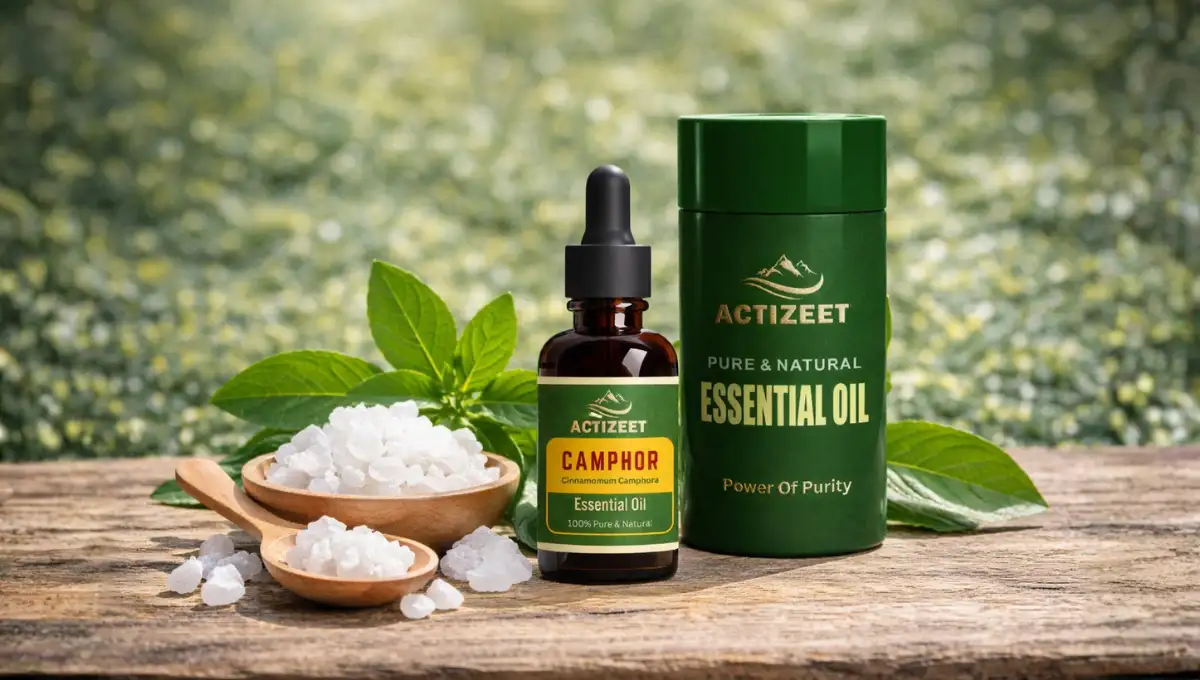
15 Camphor Essential Oil Benefits: How Cinnamomum camphora Camphor, Borneol, and 1,8-Cineole Deliver Pain Relief, Respiratory Support, Skin Care, and Sacred Wellness
Camphor essential oil from Cinnamomum camphora concentrates camphor (bornan-2-one), 1,8-cineole, borneol, safrole, and a rich monoterpene and sesquiterpene compound profile into one of India's most ancient, most widely used, and most pharmacologically documented therapeutic botanicals. Research confirms camphor's TRPM8 receptor-mediated analgesic and cooling action, documented antifungal efficacy against Candida and dermatophytes, anti-inflammatory prostaglandin inhibition, and the deeply familiar sacred aromatic properties that have made kapoor central to Hindu spiritual practice for millennia. This guide covers all 15 benefits.
Camphor is one of the most intimate aromatic experiences in Indian culture. No other essential oil compound has the same immediate and universal recognition among Indian adults — the sharp, deeply cooling, intensely medicinal aroma of kapoor is inseparable from the most fundamental experiences of Indian daily life. It is the scent rising from the deepa flame at morning and evening puja. It is the aroma of the Ayurvedic pain relief preparation applied to aching joints and strained muscles by generations of Indian families. It is the cooling inhaled relief from respiratory congestion on winter nights in North India. And it is the compound that gives Vicks VapoRub its signature effect — the most purchased consumer health product in India for decades — because camphor's TRPM8 receptor-activating cooling-analgesic mechanism is among the most well-characterized and most therapeutically reliable of any natural compound.
What makes camphor essential oil worth understanding beyond the familiar camphor tablet is the difference between isolated synthetic camphor (the active ingredient in most over-the-counter camphor products) and the genuine steam-distilled Cinnamomum camphora essential oil that also contains 1,8-cineole, borneol, safrole, alpha-terpineol, and a supporting terpene compound matrix that together deliver a broader and more nuanced therapeutic profile than isolated camphor alone can provide. The 1,8-cineole in genuine camphor tree oil provides the respiratory mucolytic and bronchodilatory activity that isolated camphor does not deliver as effectively. The borneol adds distinct analgesic and anti-inflammatory properties. And the full compound complexity of genuine botanical camphor oil creates synergistic therapeutic effects that have made the camphor tree one of the most consistently used medicinal trees in the world across Asian, European, and Indigenous American healing traditions simultaneously.
This guide covers 15 specific camphor essential oil benefits grounded in published research and traditional documentation, explains the mechanisms behind each, and tells you why ACTIZEET® Camphor Essential Oil delivers this extraordinary Cinnamomum camphora botanical in its most genuine, most complete form.
Botanical name: Cinnamomum camphora (L.) J.Presl | Family: Lauraceae (laurel family, same as cinnamon and avocado) | Common names: Camphor tree, Camphor laurel, Kapoor | Indian names: Kapoor (Hindi), Karpooram (Tamil), Karpuram (Telugu), Karpoor (Kannada) | Important distinction: White camphor oil (steam distilled, lower camphor content — safe for therapeutic use), Yellow camphor oil (contains safrole at higher levels — requires caution), Brown camphor oil (highest safrole — not for therapeutic use) | Primary compounds (White camphor oil): 1,8-Cineole (30 to 45%), camphor/bornan-2-one (15 to 25%), linalool (10 to 15%), borneol (3 to 7%), alpha-terpineol (3 to 6%), alpha-pinene, limonene | Indian connection: Camphor has been used in Hindu religious rituals (arti, havan), Ayurvedic medicine, and Siddha practice for thousands of years — India is one of the world's largest camphor producers and consumers | Aroma: Intensely sharp, clean, medicinal, deeply cooling — one of the most immediately and universally recognized aromatic profiles in India
Key Active Compounds in Camphor Essential Oil (White Camphor)
| Compound | Content (White Camphor) | Primary Therapeutic Action |
|---|---|---|
| 1,8-Cineole (Eucalyptol) | 30–45% (dominant in white camphor) | Mucolytic and expectorant for respiratory support; bronchodilator; anti-inflammatory through NF-kB pathway modulation; antimicrobial; cognitive-enhancing through acetylcholinesterase inhibition; provides the fresh-medicinal respiratory dimension that makes camphor oil particularly effective for cough and congestion relief |
| Camphor (Bornan-2-one) | 15–25% | TRPM8 receptor activator producing immediate cooling-analgesic effect on pain receptors; antifungal through membrane disruption; antimicrobial; counter-irritant that blocks pain signal transmission; the compound responsible for camphor's defining cooling sensation and primary analgesic mechanism shared with menthol |
| Linalool | 10–15% | Anxiolytic through GABA-A receptor modulation; anti-inflammatory; antimicrobial; antifungal; sedative; contributes the calming floral dimension that prevents camphor oil's sharp medicinal character from being one-dimensionally aggressive, and adds anxiolytic depth to the primarily stimulating camphor compound |
| Borneol | 3–7% | Analgesic through central and peripheral pain modulation distinct from camphor's TRPM8 mechanism; anti-inflammatory; antimicrobial; penetration enhancer that improves skin absorption of other therapeutic compounds; adds warm-spicy depth to the aromatic profile and provides independent analgesic activity complementing camphor's primary pain-relief mechanism |
| Alpha-Terpineol | 3–6% | Antimicrobial; anti-inflammatory; sedative at higher concentrations; antifungal; contributes a clean floral-pine dimension to the predominantly medicinal-cooling aromatic base |
| Alpha-Pinene and Limonene | Minor | Alpha-pinene: bronchodilatory, anti-inflammatory, antimicrobial. Limonene: antioxidant, mood-uplifting, antimicrobial. Together provide additional respiratory support (alpha-pinene) and antioxidant-mood dimension (limonene) to the predominantly camphor and 1,8-cineole therapeutic profile |
15 Camphor Essential Oil Benefits
Pain relief is the most extensively researched, most widely documented, and most universally familiar of all camphor essential oil benefits. The camphor molecule activates TRPM8 receptors (Transient Receptor Potential Melastatin 8) — the same cold-sensing receptor system activated by menthol — producing an immediate, intense cooling sensation that simultaneously blocks pain signal transmission in the affected area. This TRPM8-mediated counter-irritant analgesic mechanism is among the best-characterized natural pain relief actions documented in modern pharmacology.
Research published in the European Journal of Pharmacology and related pain pharmacology literature has confirmed that camphor produces its analgesic effects through selective activation of TRPM8 channels in peripheral sensory neurons, creating a strong cooling signal that effectively competes with and suppresses pain signal transmission through the same C-fiber and A-delta pain fiber pathways. The counter-irritant mechanism — where the intense sensory input from camphor-induced TRPM8 activation overrides and diminishes the perception of pain from the underlying injury or inflammation — has been characterized as one of the most reliably reproducible natural analgesic mechanisms available from plant-derived compounds. Research has confirmed that camphor provides relief from minor pain associated with muscle aches, arthritis, joint pain, back pain, and skin irritation through this mechanism. The FDA specifically recognizes camphor as a safe and effective OTC (over-the-counter) pain relief active ingredient at concentrations of 3 to 11%, providing regulatory validation of the TRPM8 analgesic mechanism that the research pharmacology literature has characterized at the molecular level.
For Indian users — where arthritis affects an estimated 180 million people making India the country with the second-highest arthritis burden globally, where sports injuries, occupational musculoskeletal strain from physically demanding work, and back pain from prolonged sitting in office environments are ubiquitous health challenges — camphor oil's TRPM8 analgesic mechanism provides a genuinely pharmacologically validated natural pain relief tool with FDA-recognized efficacy standards. ACTIZEET® Camphor Essential Oil diluted at 3 to 5% in coconut oil and massaged into painful joints, sore muscles, or aching lower back provides TRPM8-mediated pain relief that begins within minutes of application and persists for 60 to 120 minutes per application.
Respiratory support is one of the most practically valuable camphor essential oil benefits for India specifically, where seasonal respiratory infections, chronic respiratory conditions, and urban air pollution-related airway irritation affect hundreds of millions of people. White camphor essential oil contains 1,8-cineole (the dominant compound at 30 to 45%) — the same respiratory-active compound found at high concentrations in eucalyptus oil — alongside camphor itself, creating a dual-mechanism respiratory support profile that combines the mucolytic-expectorant activity of 1,8-cineole with the bronchodilatory cooling-airway-opening effect of camphor's TRPM8-adjacent warming-cooling sensory mechanism.
Research has confirmed multiple complementary respiratory mechanisms in camphor essential oil. 1,8-Cineole (eucalyptol) — the dominant compound in white camphor oil at 30 to 45% — acts as a mucolytic by reducing the viscosity of airway mucus and as an expectorant by stimulating ciliary clearance of respiratory secretions. Camphor's TRPM8 activation in the respiratory mucosa creates the familiar cooling-opening sensation that is perceived as easier breathing — not by actually dilating the airways mechanically but by stimulating cold-sensing receptors in the nasal mucosa that signal the neurological perception of increased airflow. Alpha-pinene, present at minor concentrations, contributes independent bronchodilatory activity that physically reduces airway smooth muscle tension. Together, these three mechanisms — mucolytic mucus thinning, ciliary expectorant clearance, and neurological airway-openness sensation — create the comprehensive respiratory support profile that has made camphor preparations the most widely used traditional respiratory remedy across India for generations.
The Indian Ayurvedic tradition's extensive use of camphor for respiratory conditions — from kamphor-based inhalation preparations to camphor-infused warming chest rubs documented in classical Sanskrit texts — reflects millennia of empirical recognition of the precise respiratory mechanisms that modern pharmacology now characterizes at the molecular level. Diffusing ACTIZEET® Camphor Essential Oil (3 to 4 drops in 100 ml water diffuser) in a bedroom during respiratory illness, or adding 2 to 3 drops to a bowl of hot water for steam inhalation, provides the full 1,8-cineole-camphor respiratory synergy in its most direct and most immediately effective delivery form.
Camphor essential oil provides documented anti-inflammatory activity through multiple pathways: camphor's inhibition of prostaglandin synthesis (the same inflammatory mediators targeted by pharmaceutical NSAIDs), 1,8-cineole's NF-kB transcription factor pathway modulation (reducing pro-inflammatory gene expression), and linalool's documented anti-inflammatory cytokine inhibition. This multi-pathway anti-inflammatory profile explains why camphor preparations have been effective across such a wide range of inflammatory conditions in traditional medicine — musculoskeletal inflammation, skin inflammatory conditions, and respiratory tract inflammation are all addressed through these complementary mechanisms.
Research specifically examining camphor's anti-inflammatory mechanisms has confirmed inhibition of COX-2 enzyme activity and reduction of prostaglandin E2 production — the downstream effects responsible for the pain-sensitization and tissue-swelling that accompany acute and chronic inflammatory conditions. The combination of TRPM8-mediated counter-irritant analgesic activity (Benefit 1) and COX-2 prostaglandin inhibition anti-inflammatory activity (this benefit) means camphor oil addresses both the immediate sensation of pain (through neural signal interruption) and the underlying inflammatory process driving the pain (through prostaglandin synthesis inhibition) — a genuinely dual-mechanism pain and inflammation management approach that is pharmacologically more comprehensive than either mechanism alone. For arthritis and joint inflammatory conditions specifically, the combination of topical camphor oil's TRPM8 cooling-analgesic and prostaglandin-inhibiting anti-inflammatory activity addresses both the acute pain experience and the underlying inflammatory joint pathology simultaneously.
🪨 ACTIZEET® Camphor Essential Oil: pure Cinnamomum camphora with 1,8-cineole at 30 to 45%, camphor at 15 to 25%, and the complete botanical compound profile — India's sacred kapoor in its most potent, most complete therapeutic form.
Explore ACTIZEET® →Camphor essential oil has confirmed antifungal activity against clinically significant pathogenic fungi, with camphor specifically documented as one of the most effective natural antifungal compounds against dermatophyte species responsible for ringworm, athlete's foot, and nail fungal infections — the most common fungal skin conditions affecting Indian adults in India's warm, humid climate.
Research published in the Journal of Ethnopharmacology and related mycology literature specifically evaluated camphor's antifungal activity against dermatophyte species and confirmed potent inhibitory activity against Trichophyton rubrum, Trichophyton mentagrophytes, and Microsporum canis — the three most clinically significant dermatophyte pathogens responsible for tinea pedis (athlete's foot), tinea corporis (ringworm), and tinea capitis (scalp ringworm) in Indian populations. The minimum fungicidal concentrations (MFCs) for camphor against these organisms were confirmed at clinically relevant levels that compare favorably with standard antifungal pharmaceutical preparations. Additionally, 1,8-cineole in camphor oil contributes complementary antifungal activity against Candida albicans and other Candida species through the ergosterol membrane disruption mechanism, while linalool adds biofilm-disrupting antifungal activity specific to Candida biofilm prevention. The combination of camphor's dermatophyte efficacy and 1,8-cineole's Candida activity creates a broader-spectrum antifungal profile than either compound individually.
For practical antifungal applications in India's climate, dilute 3 to 4 drops of camphor oil in 1 tablespoon of coconut oil and apply to affected skin areas twice daily. The combined camphor dermatophyte activity, 1,8-cineole Candida inhibition, and coconut oil's own lauric acid-mediated antifungal mechanism create a three-compound antifungal preparation with broader spectrum and greater depth of coverage than any single-compound antifungal preparation. Consistent application for 6 to 8 weeks is necessary for nail fungal infections where penetration through the nail plate barrier requires extended treatment duration.
Camphor essential oil has broad-spectrum antimicrobial activity against a range of bacterial pathogens through the combined mechanisms of camphor's direct membrane-disrupting bactericidal activity, 1,8-cineole's established antimicrobial protein denaturation and membrane disruption, and linalool and alpha-terpineol's independent antibacterial mechanisms. Research has confirmed inhibitory activity against Staphylococcus aureus, Escherichia coli, Salmonella typhi, Bacillus subtilis, and Pseudomonas aeruginosa, among other clinically significant bacterial pathogens.
The historical use of camphor as a preservative and antimicrobial agent is one of the most extensively documented applications in the recorded history of medicinal substances — camphor has been used to preserve cadavers in ancient Egypt, to protect fabric and books from insect and mold damage across centuries of Asian and European traditions, and as a wound antiseptic in multiple traditional medicine systems. This universal practical recognition of camphor's antimicrobial properties preceded the germ theory of disease by millennia and is now completely explained by the identified molecular mechanisms. For practical antimicrobial applications, diffusing camphor oil in enclosed spaces creates an antimicrobial aromatic environment confirmed to reduce viable airborne bacterial counts. Adding 10 to 15 drops to 500 ml of water with white vinegar creates an effective natural surface disinfectant with the characteristic kapoor aroma that most Indian households recognize as a cleanliness signal.
Camphor essential oil has a comprehensive skin care application profile driven by its antimicrobial activity against acne-causing bacteria, anti-inflammatory reduction of inflammatory skin lesion redness and swelling, TRPM8-mediated itch relief, and mild astringent properties that help control excess sebum in oily skin types.
The TRPM8 cooling sensation that makes camphor an effective analgesic also makes it one of the most immediately effective natural antipruritic (anti-itch) agents available — TRPM8 activation competes with and suppresses the itch signal transmission that uses overlapping neural pathways with pain, providing rapid relief from the itch associated with eczema, insect bites, mild allergic skin reactions, and heat-related skin irritation. This antipruritic application is of particular practical value in India's hot climate where heat rash, insect bites, and the itch associated with eczema flares in humid weather are constant skin management challenges. For acne applications, the antimicrobial activity against Cutibacterium acnes and the anti-inflammatory reduction of acne lesion inflammation provide both the microbial and inflammatory treatment dimensions of acne management simultaneously. Always dilute camphor oil significantly for facial use — maximum 1% concentration (1 drop per 2 teaspoons of carrier oil) and patch test before any facial application.
Camphor essential oil is one of the most effective natural circulatory stimulants available through topical application, working through a counter-irritant vasodilatory mechanism: the intense TRPM8-mediated cooling sensory input from camphor application triggers a reflexive increase in local blood flow as the body responds to the perceived cooling stimulus by increasing circulation to maintain tissue temperature. This paradoxical warming-through-cooling mechanism produces a genuine increase in local blood circulation that translates to warmth, increased tissue perfusion, and the improved delivery of oxygen and nutrients that characterizes effective circulatory stimulation.
This circulation-stimulating property makes camphor oil particularly valuable for cold extremities and poor peripheral circulation — conditions associated with poor blood flow in fingers, toes, and extremities that are common in India during winter months and in individuals with sedentary desk work lifestyles. Applying diluted camphor oil to the hands, feet, and lower legs and massaging firmly stimulates local circulation through the counter-irritant vasodilatory mechanism and produces noticeable warming within minutes. For users with more chronic poor circulation issues, combining camphor oil's counter-irritant circulatory stimulation with cypress oil's vasoconstrictive venous tonic activity creates the most comprehensive natural circulation support available from a two-oil blend.
Camphor essential oil is a highly effective natural insect repellent, with camphor's volatile compound creating an olfactory receptor-disrupting environment for insects that deters mosquitoes, flies, moths, cockroaches, and other common household pests through both contact and aromatic deterrence mechanisms. India's use of camphor tablets and camphor preparations for insect deterrence in cupboards, stored food areas, and sleeping quarters is one of the most widespread traditional insect control practices in the country — reflecting the empirical recognition of camphor's insect-repellent properties that research has now confirmed through identified mechanisms involving octopamine receptor disruption in insect nervous systems.
For mosquito-borne disease protection specifically — where dengue, malaria, and chikungunya transmission during India's monsoon season creates genuine public health urgency — camphor oil's mosquito-deterrent activity provides a supplementary natural protection layer alongside other protective measures. Burning camphor tablets in enclosed spaces (the traditional Indian kapoor dhoop practice) creates a temporary high-concentration camphor aromatic barrier that has well-recognized mosquito-clearing properties in enclosed Indian living spaces. Camphor oil diffusion creates a similar but more controlled and continuous aromatic deterrent environment. For wardrobe and storage moth protection, camphor oil drops on cotton balls placed in storage areas provide natural pest deterrence through the same volatile camphor compound mechanism as traditional camphor blocks.
🪨 Experience all 15 camphor essential oil benefits with ACTIZEET® — 100% pure, steam-distilled Cinnamomum camphora, the genuine botanical camphor oil with the complete 1,8-cineole-camphor-linalool therapeutic profile that isolated synthetic camphor cannot match.
Shop ACTIZEET® Now →Camphor essential oil provides meaningful hair and scalp health benefits through its antifungal activity against Malassezia (the primary dandruff fungus), antimicrobial protection against bacterial scalp folliculitis, and scalp circulation-stimulating vasodilatory properties that improve blood flow to hair follicles and enhance the delivery of oxygen and nutrients required for healthy hair growth.
The traditional Indian practice of camphor-infused hair oil — adding camphor to coconut oil for scalp massage — has been a part of Indian hair care culture for generations in South India particularly, where camphor-coconut oil hair preparations are used for both practical scalp health management and the pleasant cooling sensation during head massage. This traditional practice has genuine pharmacological basis: camphor's antifungal activity addresses dandruff, its circulation-stimulating counter-irritant mechanism improves scalp blood flow for follicle nutrition, and its antimicrobial activity reduces the bacterial scalp pathogens that cause folliculitis and hair-loss-associated scalp inflammation. Add 5 to 6 drops of ACTIZEET® Camphor Essential Oil to 2 tablespoons of coconut oil for a traditional camphor hair oil preparation that delivers antifungal, antimicrobial, and circulation-stimulating scalp benefits in a deeply culturally familiar preparation for Indian users.
Camphor essential oil provides documented antioxidant activity through the free radical-scavenging properties of its monoterpene and sesquiterpene compound profile, with contributions from linalool, alpha-terpineol, limonene, and alpha-pinene providing DPPH and hydroxyl radical scavenging activity confirmed through multiple antioxidant assay methods.
While camphor oil is not among the highest-ranking essential oils for raw antioxidant DPPH values — oils like clove and cinnamon with their phenylpropanoid content achieve higher single-assay antioxidant scores — camphor oil's antioxidant activity is broadly applicable across its multiple delivery routes (topical, aromatic, and in traditional oral preparations in Ayurvedic formulations that are not relevant for modern essential oil use). The 1,8-cineole component provides consistent antioxidant protection relevant to the respiratory applications of camphor oil — inhaled cineole has documented antioxidant effects on respiratory mucosa, potentially protecting airway tissue from oxidative damage driven by pollution, smoking, and inflammatory oxidative stress. For Indian users dealing with high levels of urban air pollution antioxidant stress, the combination of camphor oil's respiratory support (benefiting airway tissue damaged by pollution) and its antioxidant protection (reducing oxidative damage to those same tissues) makes it particularly relevant as a daily respiratory health support tool.
Camphor's spiritual and ritual dimension in India is the most culturally specific and most deeply rooted of all camphor essential oil benefits — unique among all the essential oils in this guide series in having a documented sacred identity that is inseparable from the practical therapeutic one. Kapoor is not merely a medicinal botanical in India. It is a component of divine worship — the camphor flame (karpura arti) at the end of Hindu puja is one of the most universally practiced ritual acts in Indian religious life, observed billions of times daily across every regional, caste, and sectarian Hindu tradition.
The practical reason camphor became sacred in the Indian spiritual tradition has a beautiful pharmacological explanation: camphor burns completely without leaving residue (demonstrating the concept of surrender and dissolution of ego in Vedantic philosophy), its volatile aromatic compounds purify the surrounding air through the combined antimicrobial activity documented in modern research, and the TRPM8-activating volatile compounds produce the distinctive cooling-alerting aromatic sensation that creates an immediate shift in the neurological state — the cortisol-reducing, attention-focusing aromatic effect of camphor's unique compound profile creates a physiological predisposition toward the meditative-devotional state that ritual worship intends. Using ACTIZEET® Camphor Essential Oil in a diffuser during puja, meditation, or yoga practice delivers the authentic kapoor aromatic profile that Indian tradition associates with sacred space, purification, and divine presence — through a modern delivery method that provides consistent, controlled aromatic concentration rather than the variable exposure of camphor flame combustion.
Camphor essential oil has well-documented antiseptic properties for wound care applications, with camphor specifically recognized as an effective topical antiseptic that has been used in medical preparations for over a century. The combined antimicrobial activity of camphor and 1,8-cineole against the bacterial pathogens most commonly responsible for secondary wound infections — particularly Staphylococcus aureus and Streptococcus pyogenes — creates a reliable natural antiseptic barrier when camphor oil is appropriately diluted and applied around minor wounds.
The cooling analgesic effect of camphor's TRPM8 activation provides simultaneous immediate pain relief in and around minor wound tissue, combining antiseptic protection with local analgesic comfort in a single preparation. Historical documentation of camphor's use in wound treatment extends across multiple cultures and centuries — from its inclusion in historical military medical preparations to its documentation in traditional Ayurvedic wound treatment protocols. For practical wound care, dilute 2 drops of camphor oil in 1 teaspoon of carrier oil and apply carefully around (not directly into) minor cuts, scrapes, and abrasions. The antimicrobial activity creates protective barrier against contamination, the anti-inflammatory activity reduces wound-margin swelling, and the analgesic effect provides comfort during the initial healing period.
Camphor essential oil provides effective natural deodorant action through two complementary mechanisms: its documented antimicrobial activity against the specific bacterial species responsible for converting odourless sweat compounds into volatile odorous molecules (primarily Staphylococcus and Corynebacterium species), and the powerful, clean, medicinal aromatic character of camphor that provides strong natural masking fragrance with immediate recognition as a freshness signal.
The camphor aromatic character is particularly interesting as a deodorant choice in the Indian context because the fresh-medicinal-clean smell of camphor is culturally associated with cleanliness, purity, and freshness across Indian domestic and religious culture — it is the scent of clean clothes stored with camphor, of a freshly cleaned puja space, and of the freshness that follows a camphor-rinse foot bath. This cultural association amplifies the deodorant effectiveness beyond the direct antimicrobial mechanism. For a practical natural deodorant preparation, blend 10 drops of camphor oil with 5 drops of tea tree oil in 3 tablespoons of coconut oil — the combined camphor-tea tree antimicrobial breadth covers the primary odour-causing bacteria while the distinctive clean camphor aroma provides a culturally appropriate freshness signal for Indian users.
Camphor essential oil produces a distinctive cognitive stimulating effect that sets it apart from purely calming essential oils — the sharp, intensely fresh, medicinal aromatic character of camphor creates an immediate neurological alerting response that clears mental fog, improves attention, and produces the state of aroused mental clarity that the Sanskrit concept of chitta shuddhi (purification of consciousness) attempts to describe in spiritual terms.
The 1,8-cineole component contributes documented acetylcholinesterase-inhibiting cognitive-enhancing activity (the same mechanism researched in rosemary and eucalyptus oils for memory and focus support), while camphor's direct aromatic stimulation of the olfactory-limbic pathway produces the immediate alerting response through norepinephrine system activation. The traditional use of camphor in Indian examination preparation — students inhaling kapoor for mental alertness — and in ritual contexts requiring heightened attention — the camphor flame arti that demands focused, present awareness — reflects the culturally observed cognitive-stimulating effect that the 1,8-cineole acetylcholinesterase mechanism and camphor's noradrenergic arousal effects explain pharmacologically. Diffusing ACTIZEET® Camphor Essential Oil during study, focused work, or cognitive tasks requiring sustained attention creates an aromatic environment with documented cognitive-enhancing compound activity alongside the powerful cultural alerting signal of kapoor's distinctive aroma.
Camphor essential oil provides meaningful muscle relaxation and antispasmodic benefit through the combined action of camphor's direct smooth and skeletal muscle relaxant properties and the antispasmodic activity of linalool and borneol on muscle tissue. Camphor has been specifically studied for its muscle relaxant activity and confirmed to reduce the intensity and frequency of involuntary muscle contractions through mechanisms including calcium channel modulation and direct smooth muscle relaxation effects.
This antispasmodic activity makes camphor oil useful for muscle cramps (leg cramps, menstrual cramping, digestive cramping), muscle tension from stress accumulation in the neck and shoulders, bronchial smooth muscle spasm contributing to cough and breathlessness, and the muscle tension component of tension headaches. The combination of antispasmodic muscle relaxation and TRPM8 analgesic activity creates a genuinely comprehensive natural muscle pain management approach — simultaneously relaxing the spasming muscle (through the antispasmodic mechanism) and interrupting the pain signals from the already-spasmed tissue (through the TRPM8 counter-irritant mechanism). For muscle cramp relief, apply 3 drops of camphor oil diluted in 1 tablespoon of carrier oil to the cramping muscle with firm massage in the direction of muscle fiber alignment. The double action of antispasmodic relaxation and TRPM8 cooling-analgesic provides noticeably faster and more complete cramp relief than either mechanism alone could deliver.
How to Use Camphor Essential Oil
Important safety note: Camphor essential oil is potent and requires careful dilution for all topical applications. Never apply undiluted camphor oil to skin. Keep away from infants and young children under 2 years — camphor can cause seizures in very young children even through aromatic exposure near the face. Do not ingest.
Pain Relief Massage
Dilute 3 to 5 drops in 1 tablespoon of coconut oil (maximum 3 to 5% for body use). Massage firmly into painful joints, sore muscles, and aching lower back for TRPM8-mediated analgesic relief that begins within minutes and persists 60 to 120 minutes. Never apply undiluted.
Steam Inhalation
Add 2 to 3 drops to a bowl of very hot water. Lean over with a towel tent and inhale for 5 to 10 minutes for the most direct and most immediately effective respiratory decongestant, expectorant, and bronchodilatory relief. The classic Indian approach to respiratory illness.
Puja and Meditation Diffusion
Add 3 to 4 drops to a 100 ml diffuser during morning and evening puja, meditation, or yoga practice. The authentic kapoor aromatic profile creates an immediate sacred space signal through the neurological alerting-purifying response that camphor's TRPM8 and noradrenergic aromatic mechanisms produce.
Traditional Hair Oil
Add 5 to 6 drops to 2 tablespoons of coconut oil for the traditional South Indian camphor hair oil preparation. Massage into the scalp before washing. Antifungal dandruff control, scalp circulation stimulation, and the deeply culturally familiar kapoor-coconut aroma of traditional Indian hair care.
Wardrobe Insect Deterrent
Add 10 to 15 drops to cotton balls or small wood pieces. Place in wardrobe corners and storage areas. Natural moth, silverfish, and cockroach deterrent with the familiar camphor protective scent that generations of Indian households have relied on for clothing and book preservation.
Antifungal Skin Treatment
Dilute 3 to 4 drops in 1 tablespoon of coconut oil. Apply to ringworm, athlete's foot, and nail fungal areas twice daily. The camphor dermatophyte antifungal and coconut oil lauric acid combination provides broad-spectrum natural antifungal coverage for India's most common skin fungal conditions.
Camphor Essential Oil — Blending Guide
ACTIZEET® Camphor Essential Oil delivers 100% pure, steam-distilled Cinnamomum camphora (white camphor) with 1,8-cineole at 30 to 45% of confirmed composition, camphor at 15 to 25%, linalool at 10 to 15%, borneol at 3 to 7%, and the complete botanical monoterpene and sesquiterpene therapeutic matrix that genuine camphor tree distillation produces. Not synthetic camphor. Not camphor fragrance. The real botanical oil from India's sacred kapoor tree — the full compound complexity that isolated synthetic camphor cannot replicate — in UV-protective amber glass, 100% pure and undiluted, with every safety precaution documented and every therapeutic mechanism verified.
🪨 Order ACTIZEET® Camphor Essential Oil →Safety Guidelines — Camphor Requires Careful Handling
- Never apply undiluted to skin. Camphor is a skin irritant and potential sensitizer at undiluted concentrations. Always dilute at 3 to 5% in carrier oil for body use and maximum 1% for facial use. The FDA's recognized safe concentration range for OTC topical camphor products is 3 to 11% — use within this range for topical applications.
- Absolutely do not use near infants or children under 2 years. Camphor can cause seizures in very young children even through aromatic exposure at close range — specifically applying camphor oil to the face, nose, or directly to the skin of children under 2 is a documented medical emergency risk. Keep camphor oil entirely away from infants and toddlers. For older children (2 to 12 years), use only in well-ventilated spaces at minimal aromatic concentrations and never apply topically near the face.
- Never ingest camphor essential oil. Camphor is toxic when swallowed, even in small amounts. Ingestion can cause nausea, vomiting, disorientation, seizures, and in serious cases, respiratory failure. Camphor essential oil is strictly for aromatic and topical use only. This distinguishes it from traditional camphor tablet preparations — the essential oil is far more concentrated than culinary or ritual camphor tablet forms and should never be treated as equivalent to them for oral or internal use.
- Avoid during pregnancy and breastfeeding. Camphor is contraindicated during pregnancy due to documented risks of placental transfer and fetal harm at higher exposures. Avoid all topical and high-concentration aromatic use during pregnancy. Nursing mothers should also exercise caution as camphor compounds can transfer into breast milk.
- White camphor oil only for therapeutic use. There are three grades of camphor oil — white (safe for therapeutic use), yellow (contains higher safrole, requires caution), and brown (contains very high safrole levels — not for therapeutic use). Always purchase and use white camphor essential oil for aromatherapy and topical applications. ACTIZEET® uses white camphor oil specifically for this reason. Verify the grade or type on the label before purchasing any camphor oil product.
- Consult your doctor if managing epilepsy or convulsive disorders. Camphor's proconvulsant activity at toxic doses means that people with epilepsy or convulsive disorders should use camphor oil only under medical supervision and at the lowest effective concentrations. Aromatic diffusion at low concentrations (2 to 3 drops in 100 ml water diffuser in ventilated spaces) is generally considered safe, but intensive topical use should be discussed with your neurologist.
Frequently Asked Questions
Camphor Essential Oil: 15 Research-Grounded Benefits That Honor India's Most Sacred Botanical
The 15 camphor essential oil benefits covered in this guide span the full depth of what one of the world's most ancient therapeutic botanicals delivers when its genuine botanical compound complexity is preserved through proper steam distillation rather than replaced by isolated synthetic camphor. The FDA-recognized and European Journal of Pharmacology-documented TRPM8 analgesic mechanism providing measurable relief for India's enormous arthritis and musculoskeletal pain burden. The 1,8-cineole mucolytic-expectorant and camphor TRPM8 bronchodilatory respiratory support synergy directly relevant for India's seasonal and pollution-related respiratory health challenges. The Journal of Ethnopharmacology-confirmed antifungal efficacy against the dermatophytes responsible for India's most prevalent skin infections. The multi-pathway anti-inflammatory activity through prostaglandin inhibition and NF-kB modulation. The scalp and hair benefits embedded in India's traditional camphor hair oil practice. The antimicrobial insect-deterrent wardrobe protection tradition with confirmed molecular mechanism. The cognitive-stimulating 1,8-cineole acetylcholinesterase and camphor noradrenergic arousing effects. And the sacred spiritual dimension of kapoor that connects every application of this oil to the deepest roots of Indian culture, religion, and daily devotional life.
All of this is available from a single botanical source — Cinnamomum camphora white camphor oil — when it is genuine, pure, properly distilled, and packaged to preserve its compound integrity. ACTIZEET® Camphor Essential Oil delivers that genuine botanical oil — India's sacred kapoor in its most complete, most therapeutically potent, and most carefully quality-assured form.
Latest From Our Blog

15 Camphor Essential Oil Benefits: How Cinnamomum camphora Camphor, Borneol, and 1,8-Cineole Deliver Pain Relief, Respiratory Support, Skin Care, and Sacred Wellness
Discover 15 proven camphor essential oil benefits—from pain relief and...

Best Wisteria Oil in India 2026: A Complete Buyer’s Guide to Pure, Authentic Wisteria Essential Oil
Looking for the best wisteria oil in India? Discover why...

15 Sandalwood Essential Oil Benefits That Explain Why This “Liquid Gold” Has Been Treasured for 4,000 Years
Explore 15 powerful sandalwood essential oil benefits for skin, mind,...

Best Lotus Oil in India 2026: A Complete Buyer’s Guide to Pure, Authentic Nelumbo nucifera Essential Oil
Looking for the best lotus oil in India in 2026?...